Skip to content
Start My 3 Free Days $0 today · cancel anytime

Base 10 Resources

70 base 10 resources: 44 worksheets, 12 activities, 12 Common Core Lessons and more. How teachers use these

Base 10 Resources

70 base 10 resources: 44 worksheets, 12 activities, 12 Common Core Lessons and more. How teachers use these

Worksheet
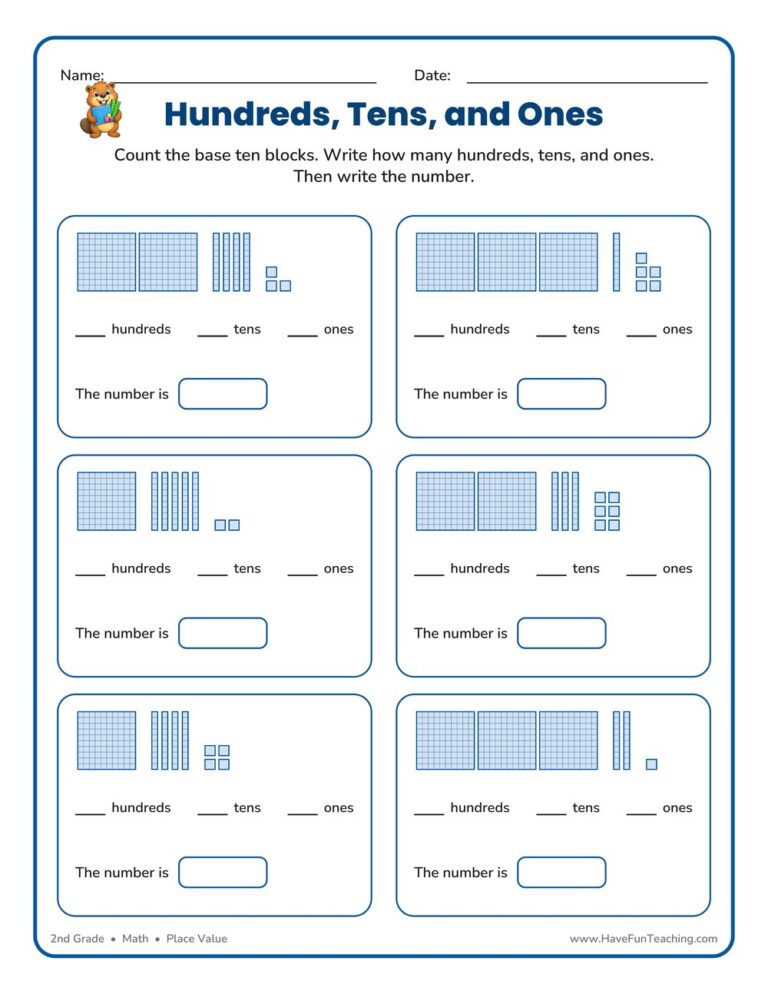
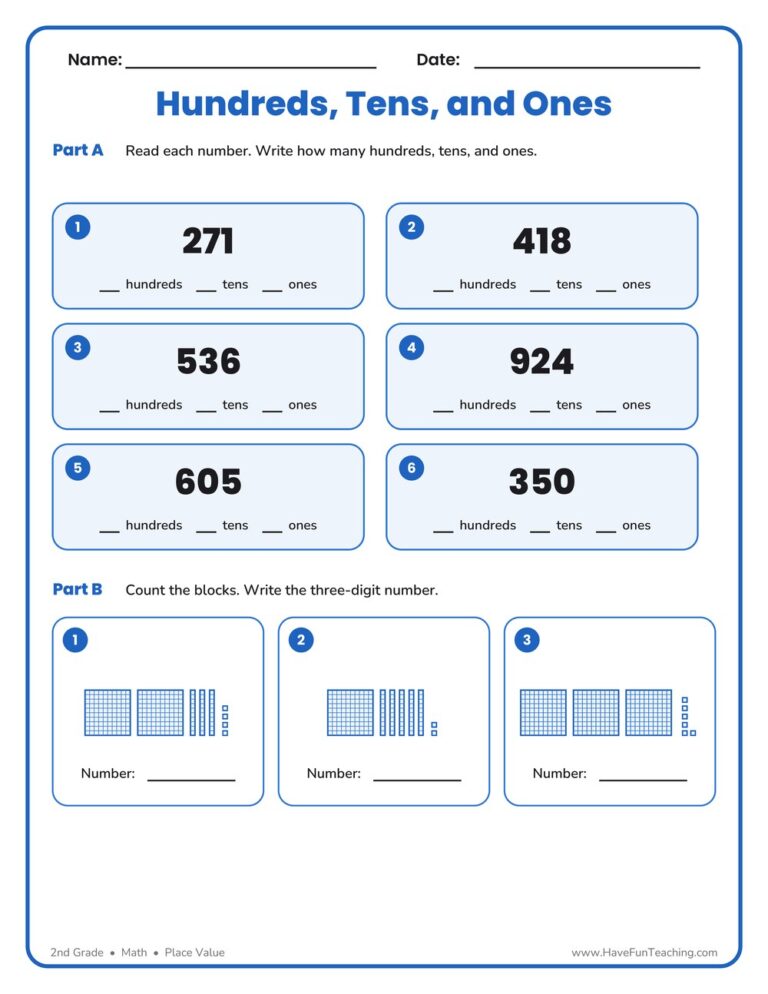
Worksheet2nd GradeBase 10 Blocks Place Value Worksheet

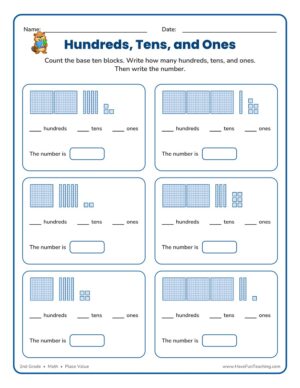
This Base 10 Blocks Place Value Worksheet helps 2nd graders count the hundreds, tens, and ones shown with base ten blocks and write each three-digit number. Answer key included for quick, no-prep place value practice.

Activity
Activity2nd GradePrintable Base 10 Blocks

This Printable Base 10 Blocks worksheet gives 2nd graders cut-out hundreds, tens, and ones blocks to build numbers by hand — a no-prep, hands-on way to make place value, counting, and addition click.

Worksheet
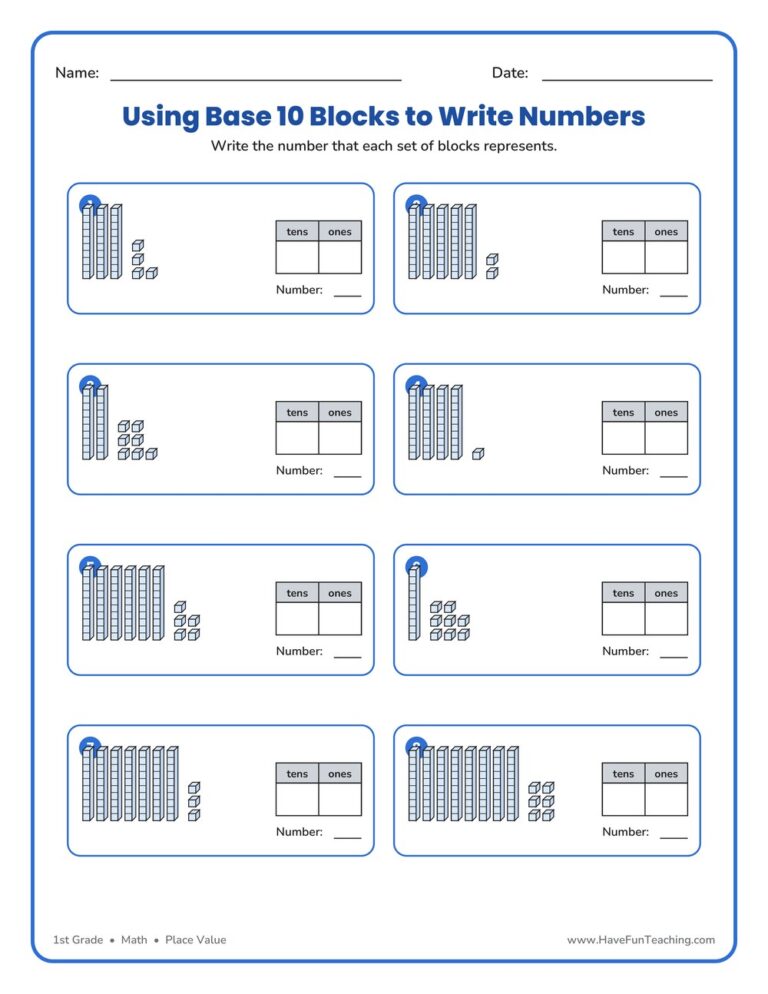
Worksheet1st GradeUsing Base 10 Blocks to Write Numbers Worksheet

This Using Base 10 Blocks to Write Numbers Worksheet helps 1st graders count tens rods and ones cubes, then record each two-digit number in a place value chart. Includes an answer key for quick, no-prep practice.

Game
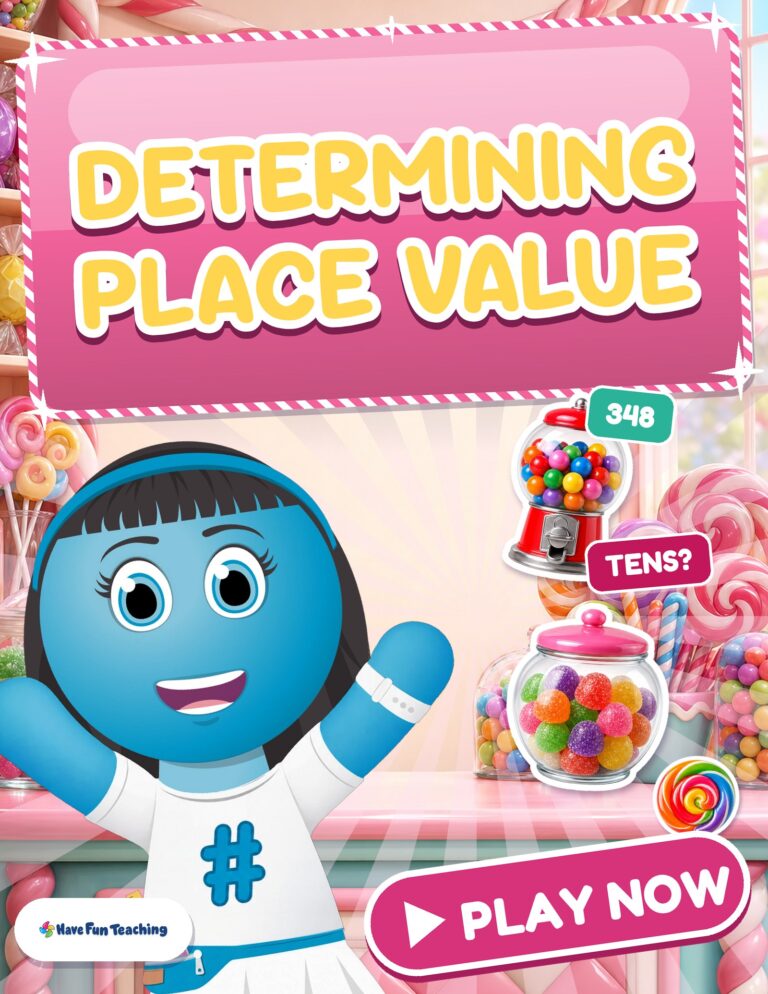
Game2nd GradeDetermining Place Value Game

A 2nd grade place value game where Penny asks how many hundreds, tens and ones are in each number and kids tap the right gumball, then watch the number built in candy flats, rods and gumdrops. Play online on any phone, tablet, Chromebook or computer.

Worksheet
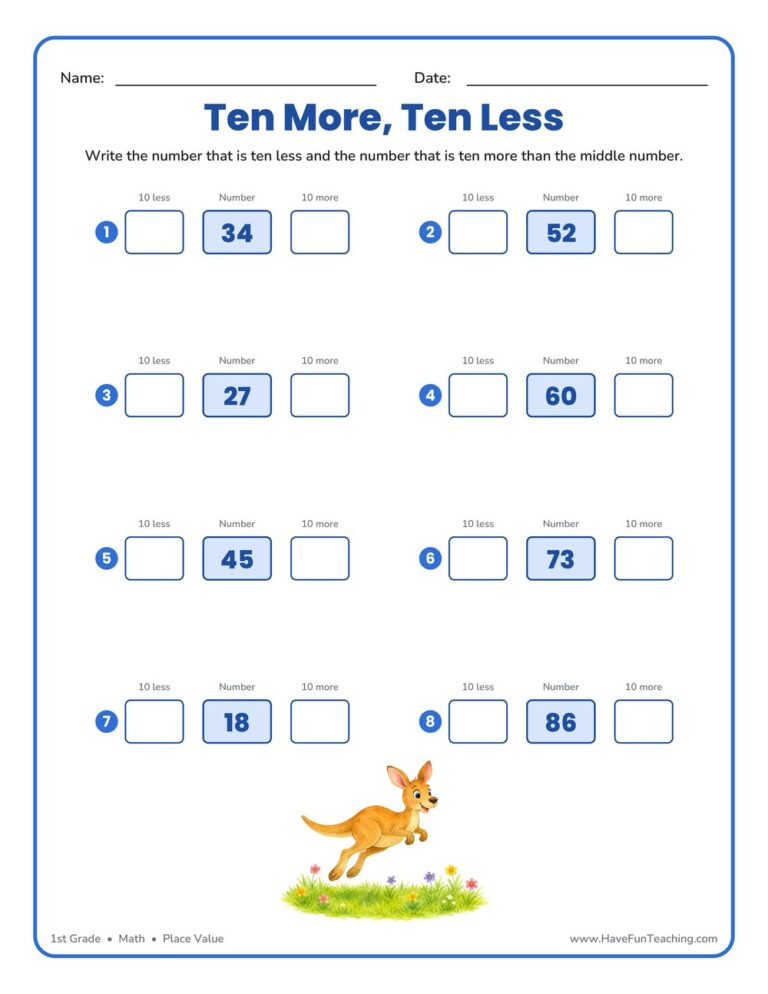
Worksheet1st GradeTen More Ten Less Worksheet

This Ten More Ten Less Worksheet gives 1st graders eight quick problems to find ten more and ten less than a two-digit number. Includes an answer key for fast, no-prep place value practice.

Worksheet
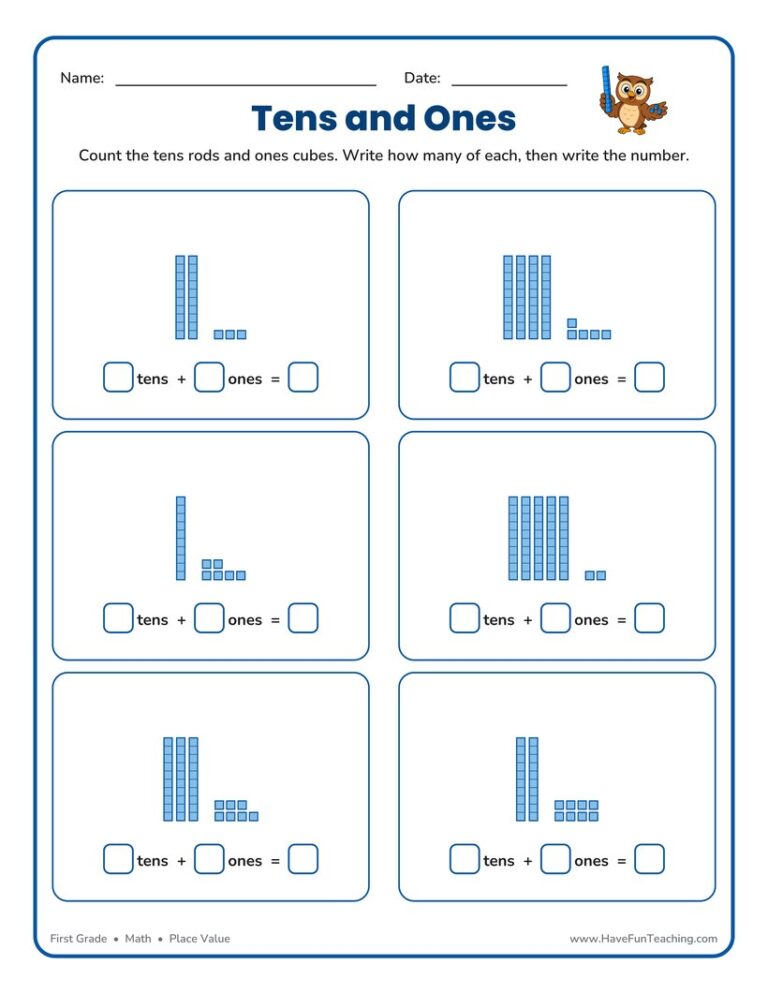
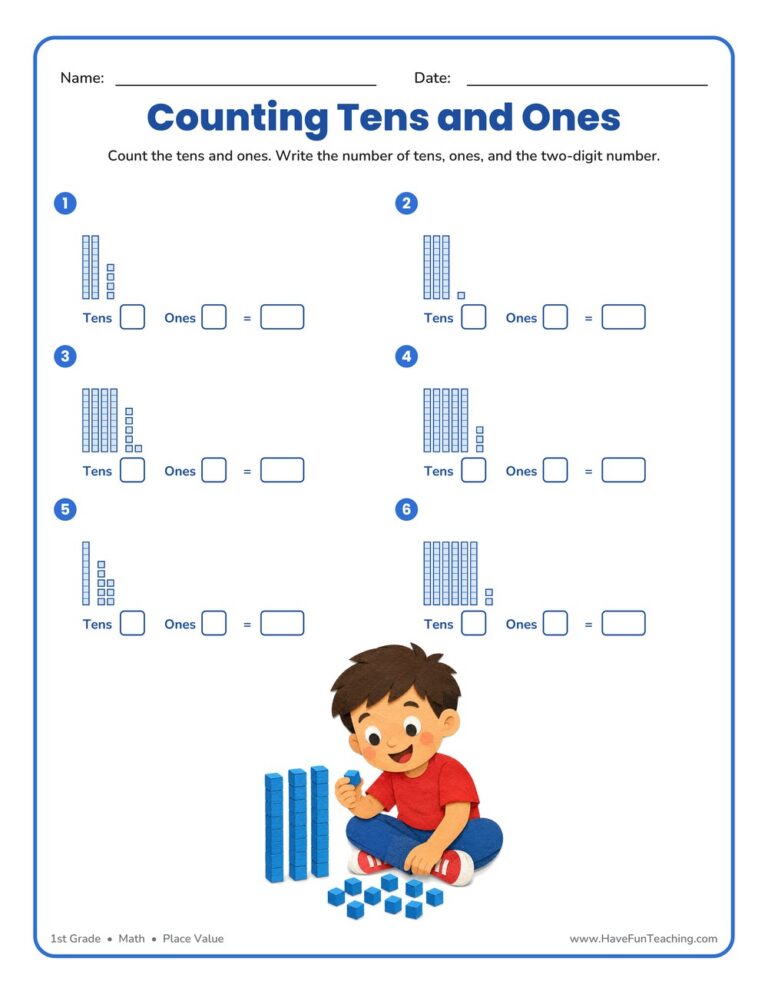
Worksheet1st GradeTens Ones Worksheet

Count the tens and ones with this tens ones worksheet made for first grade. Students use base-ten blocks to write the tens, ones, and the two-digit number, and an answer key is included to make practice simple.

Worksheet
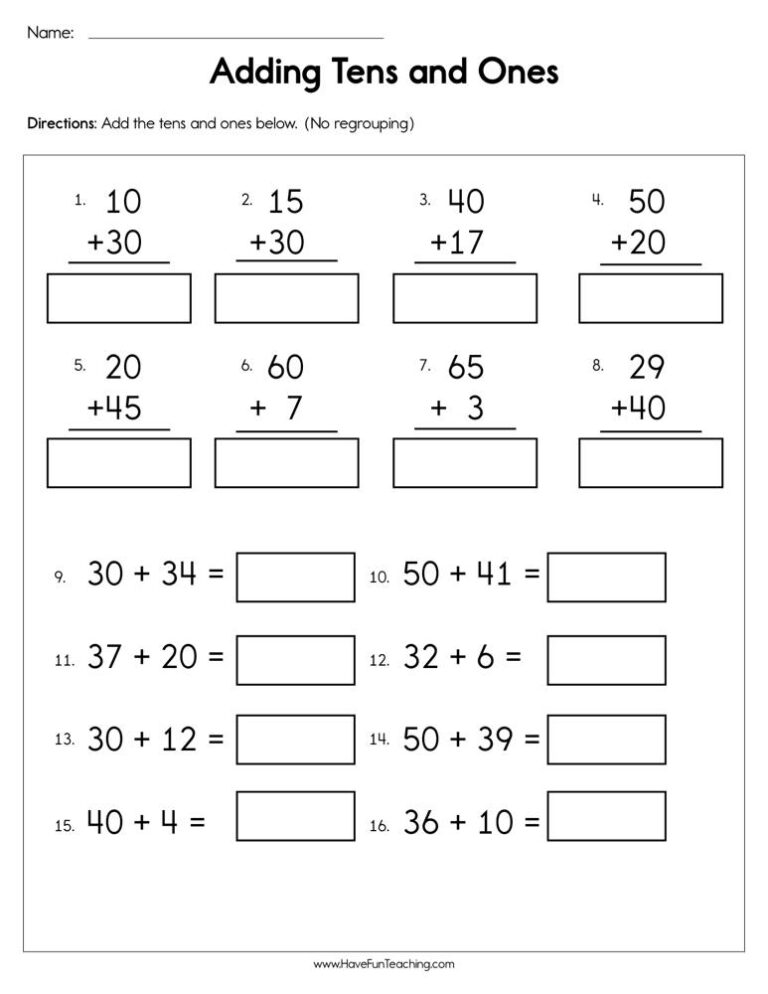
Worksheet1st GradeAdding Tens and Ones Worksheet

This adding tens and ones worksheet helps 1st graders build two-digit numbers with base ten blocks and column addition. Includes an answer key for quick, no-prep place value practice at home or school.

Worksheet
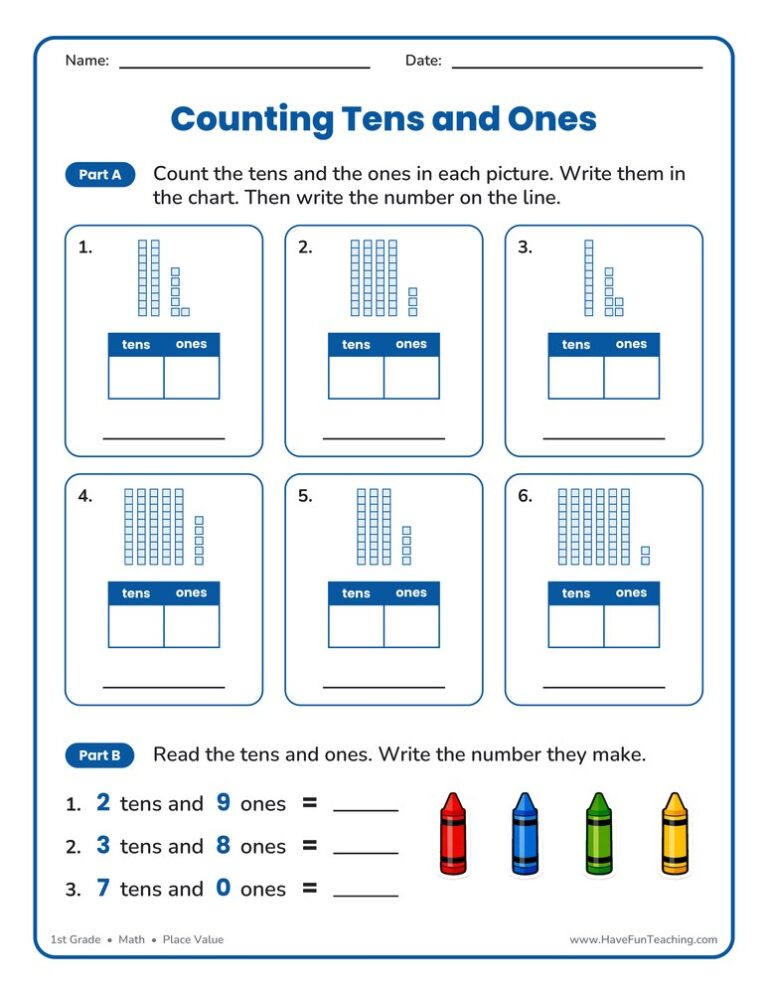
Worksheet1st GradeCount Tens and Ones Worksheet

This count tens and ones worksheet gives 1st grade students base ten block pictures to count, chart, and write as numbers. An answer key is included, so place value practice is ready to print and go.

Worksheet
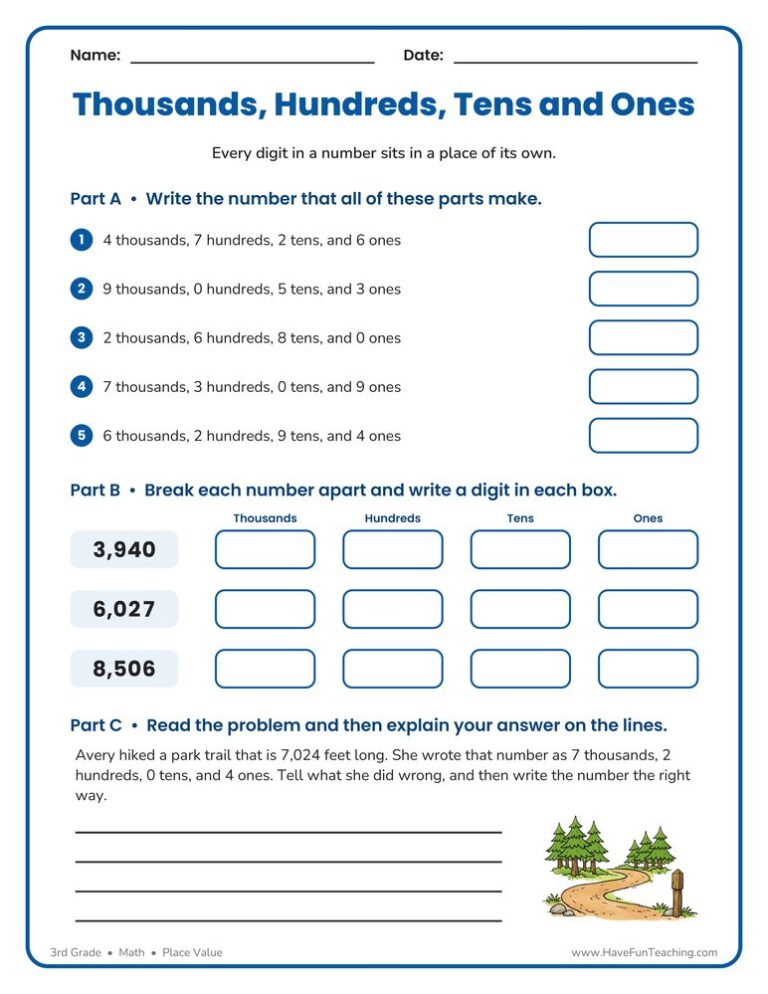
Worksheet3rd GradeBreaking Apart Thousands Hundreds Tens Ones Worksheet

A breaking apart thousands hundreds tens ones worksheet that has 3rd graders build four-digit numbers from their parts and then split them back into place value boxes. Answer key included for fast, no-prep practice.

Worksheet
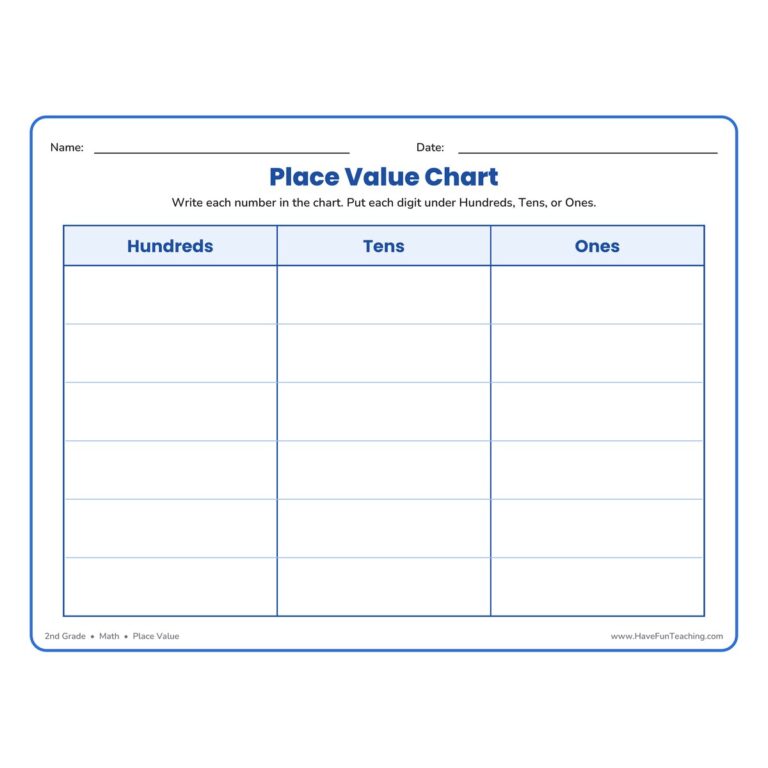
Worksheet2nd GradeHundreds, Tens, Ones Place Value Chart

A reusable Hundreds, Tens, Ones place value chart worksheet for 2nd grade. Students write the digits of each number in the hundreds, tens, and ones columns to build place value skills.

Worksheet
Worksheet2nd GradeDetermining Place Value Worksheet

A determining place value worksheet where 2nd graders read three-digit numbers and write the hundreds, tens, and ones in each. Includes a complete answer key — great for quick, no-prep place value practice.

Worksheet
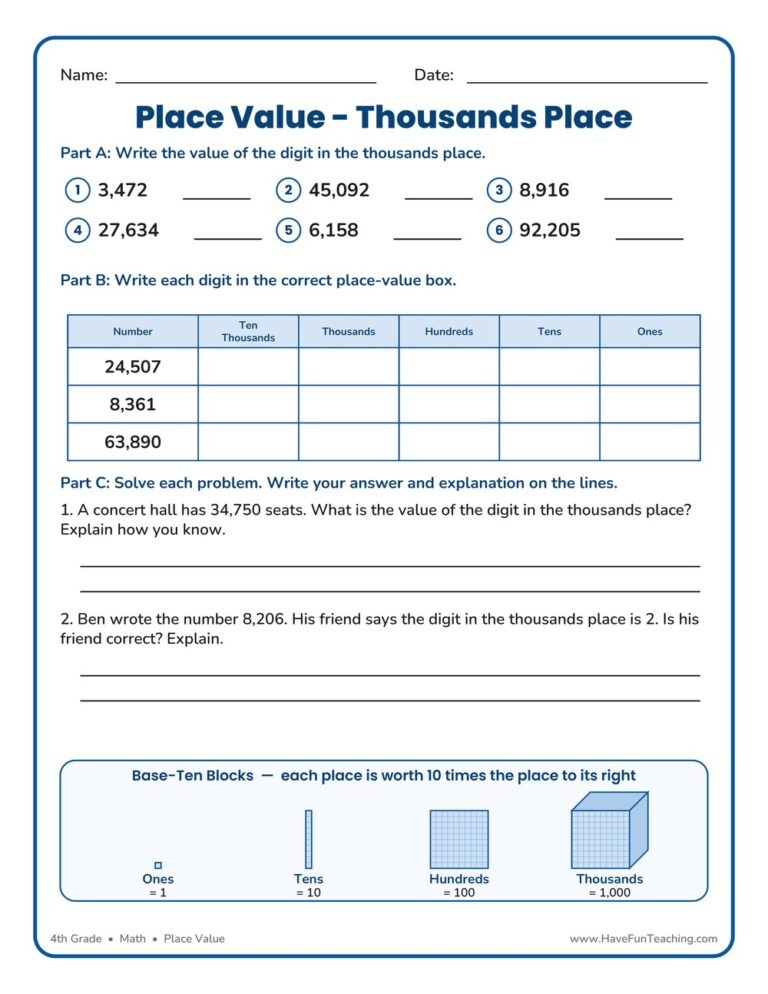
Worksheet4th GradeThousands Place Value Worksheet

This Thousands Place Value Worksheet gives 4th grade students practice finding the value of the digit in the thousands place, filling in a place-value chart, and explaining their reasoning. An answer key is included to make checking fast.

Worksheet
Worksheet1st GradeDrawing Tens and Ones Worksheet

The Drawing Tens and Ones Worksheet gives first graders hands-on practice representing two-digit numbers as tens and ones on a place value mat. Includes a complete answer key for quick, no-prep place value practice.

Worksheet
Worksheet1st GradeCounting Tens and Ones Worksheet

A first grade Counting Tens and Ones Worksheet where students count base ten blocks and write each two-digit number. Includes a complete answer key for easy, no-prep place value practice at home or school.

Activity
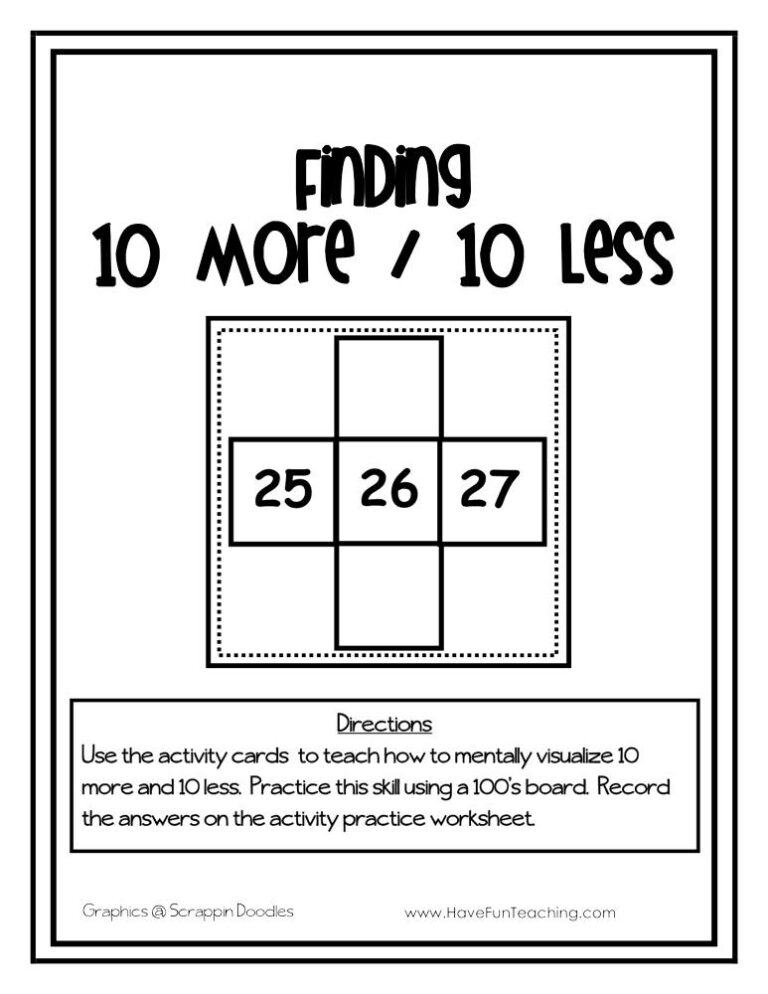
Activity1st GradeFinding 10 More 10 Less Activity

This finding 10 more 10 less activity helps 1st and 2nd grade children use a hundred chart to find 10 more and 10 less. Practice page and answer key included.

Worksheet
Worksheet2nd GradeAdd and Subtract 10 and 100 Worksheet

This Add and Subtract 10 and 100 Worksheet gives 2nd Grade students mental math practice with tens and hundreds, number patterns, and two word problems. An answer key is included, so checking work takes seconds.

Worksheet
Worksheet2nd GradeHundreds Tens and Ones Worksheet

A hundreds tens and ones worksheet where 2nd graders read three-digit numbers and count base-ten blocks to name each digit’s value. Includes an answer key for fast, no-prep place value practice.

Assessment
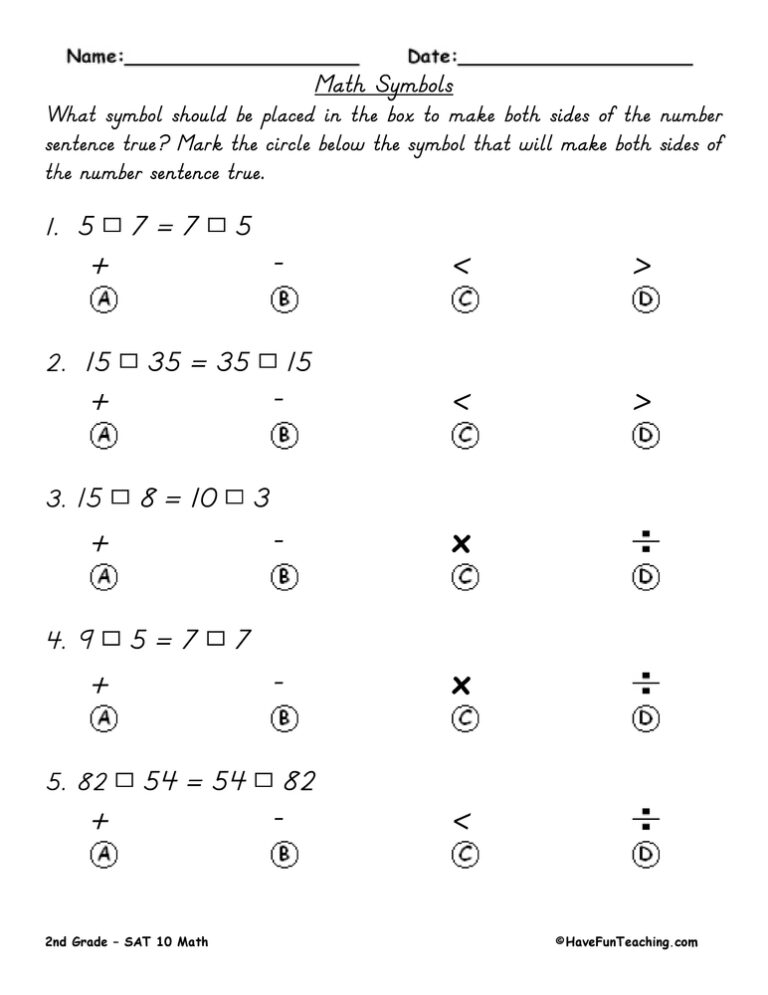
Assessment2nd GradeSecond Grade Math Skills Test Practice

This second grade math skills test practice worksheet asks students to choose the plus, minus, greater than, less than, or equal sign that makes each number sentence true. An answer key is included, so checking work takes seconds.

Worksheet
Worksheet2nd GradeIdentify Place Value Worksheet

The Identify Place Value Worksheet gives 2nd Grade students base ten block models, three-digit numbers, and a word problem to break apart into hundreds, tens, and ones. Answer key included, so practice checks itself.

Worksheet
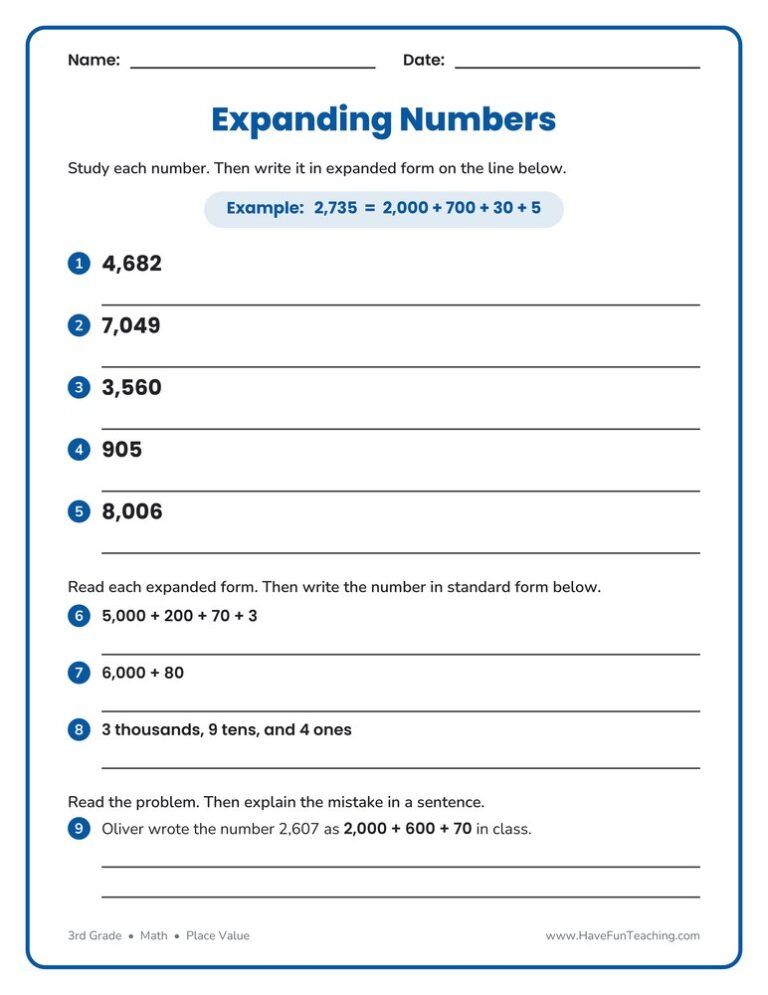
Worksheet3rd GradeExpanding Numbers Worksheet

Students use this expanding numbers worksheet to write 3- and 4-digit numbers in expanded form, switch back to standard form, and fix a mistake. Made for 3rd grade with an answer key included.

From our teachers' playbook

Numbers, patterns and lots of "I got it!"

What do kids learn in elementary math?

Math grows like a staircase. Little ones count, compare and add within 10. In 1st and 2nd grade, kids add and subtract within 100, learn place value and start regrouping: 47 + 28 = 75. Third grade brings multiplication, division and fractions, and 4th and 5th graders tackle long division, decimals and area. Every step stands on the one before it, so a strong foundation in counting and place value pays off for years.

Our favorite ways to make math click

These moves work from kindergarten counting to 5th grade decimals.

Blocks before digits

When kids are stuck on place value or regrouping, go back to base 10 blocks. Have them build 64, trade a ten for ten ones, and then take away 27. Once they see it with blocks, the written steps finally make sense.

Why it works: kids understand an idea best when they touch it, then draw it, then write it, the order the U.S. Department of Education recommends for elementary math.
Base 10 Blocks Place Value WorksheetTry it withBase 10 Blocks Place Value WorksheetWorksheetsOpen it →

Explain your thinking

With every word problem, kids answer two questions: "What is the answer?" and "How do you know?" Have partners explain their strategy to each other. Saying it out loud catches mistakes and deepens understanding.

Why it works: when kids say the precise math words, their understanding gets sharper, a recommendation of the U.S. Department of Education's elementary math guide.

Addition and Subtraction Word Problems WorksheetTry it withAddition and Subtraction Word Problems WorksheetWorksheetsOpen it →

Sing the counting

Play counting songs during transitions so kids count by 2s, 5s and 10s without thinking about it. Those patterns become the backbone of multiplication later.

Why it works: a catchy, repeating tune gives the brain a hook to hang words on, so sung text is remembered better (Wallace, 1994).

Counting Songs (Classic Video Collection)Try it withCounting Songs (Classic Video Collection)VideosOpen it →

Questions parents and teachers ask about math

What math should my child know by each grade?

Kindergarteners count and add within 10, 2nd graders add and subtract within 100 with regrouping, 3rd graders multiply and divide, and 5th graders work with decimals and fractions. Filter by grade to find resources for each level.

How can I help my child with math at home?

Use everyday moments: count snacks, measure while cooking, add up prices at the store. A quick math game after dinner keeps skills fresh.

Why does my child struggle with word problems?

Word problems mix reading with math. Have your child read it twice, draw a picture of what is happening, and say which operation fits before solving.

How do kids learn math facts?

Through short, frequent practice. Flash cards, songs and quick games a few minutes a day build fact fluency faster than long drills.

Keep exploring