Adding to 20 is a big step for first graders. Facts like 8 + 7 and 9 + 6 are too big to count on fingers, so many kids count every single dot from one, lose track, or count the first number twice. What they need is a few smart strategies and lots of friendly practice.
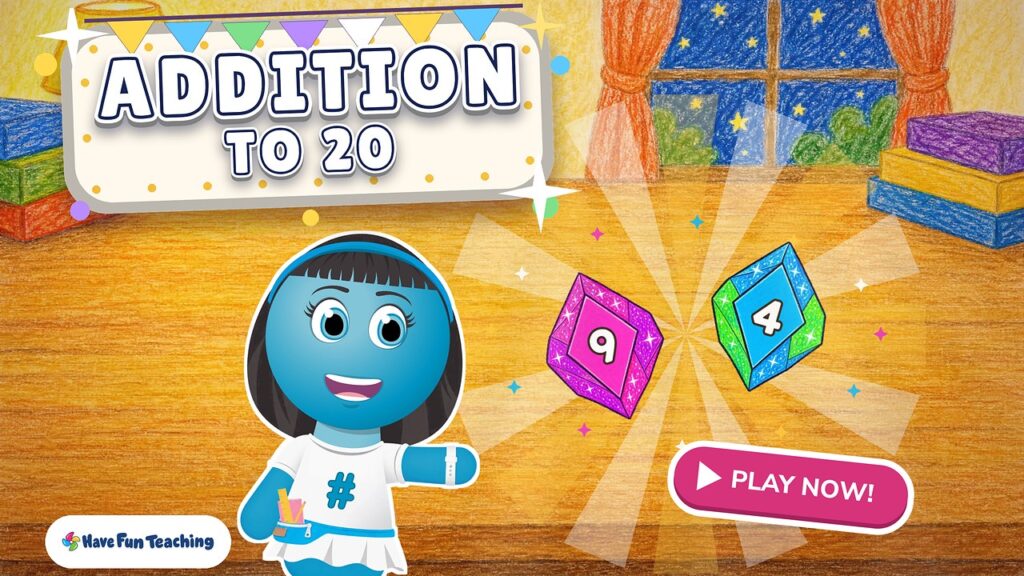
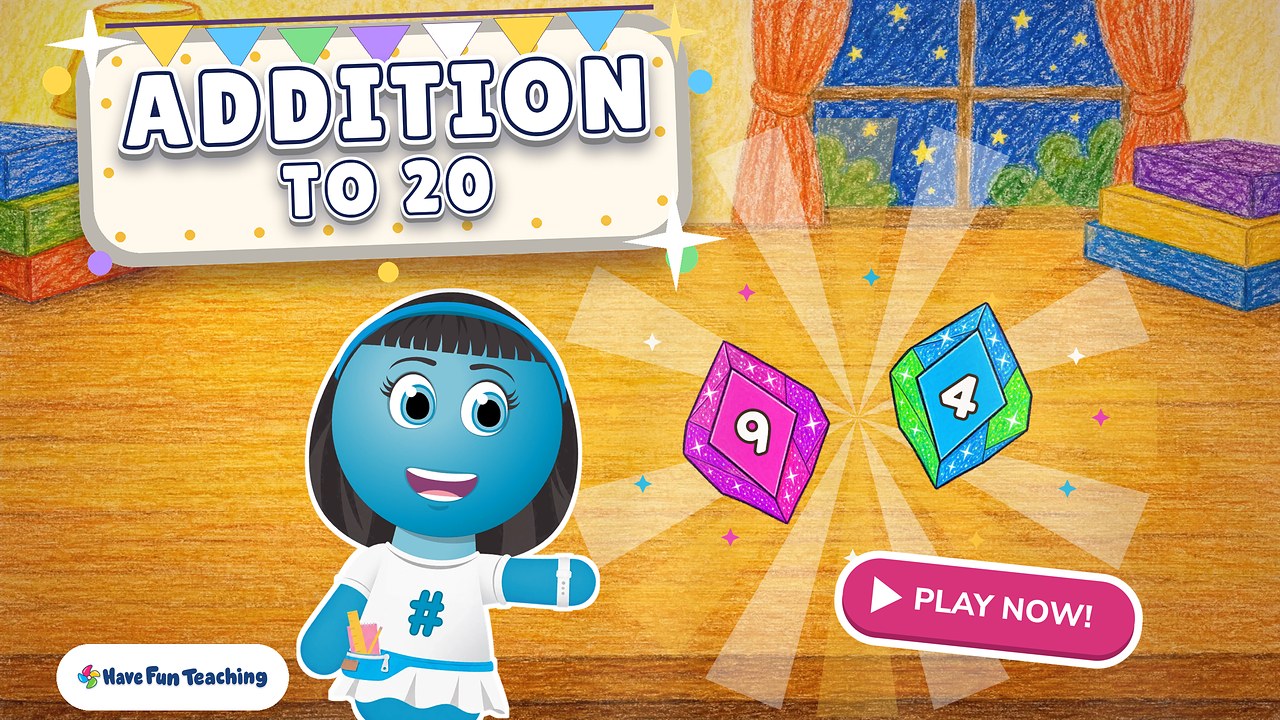
Meet Penny and the Addition to 20 Game. It is game night at Penny’s table! Kids roll sparkly dice, spin two spinners and count what lands in two jars, then tap the card that shows the sum.
Penny reads every direction out loud and gives a kind tip after each try, using the strategies teachers use: doubles, make a ten and count on. Every child finishes with stars.
- An online addition to 20 game for 1st grade, played on game night with Penny the Funzy.
- Three rounds: Dice Roll, Spin to Win and Jar Count, with 15 facts in every game.
- Practices doubles, near doubles, make a ten, adding zero and counting on (1.OA.6).
- Facts a child misses come back in Round 3 as a jar to count, so practice lands where it is needed.
Why kids love the addition to 20 game
It feels like a real game night. Kids get to throw the dice, spin the arrows and watch the jars fill up, so every fact starts with something to do, not a worksheet row.
Throw the dice
A swipe sends two sparkly ten-sided dice tumbling across the table, numbers flickering until they land.
Spin to win
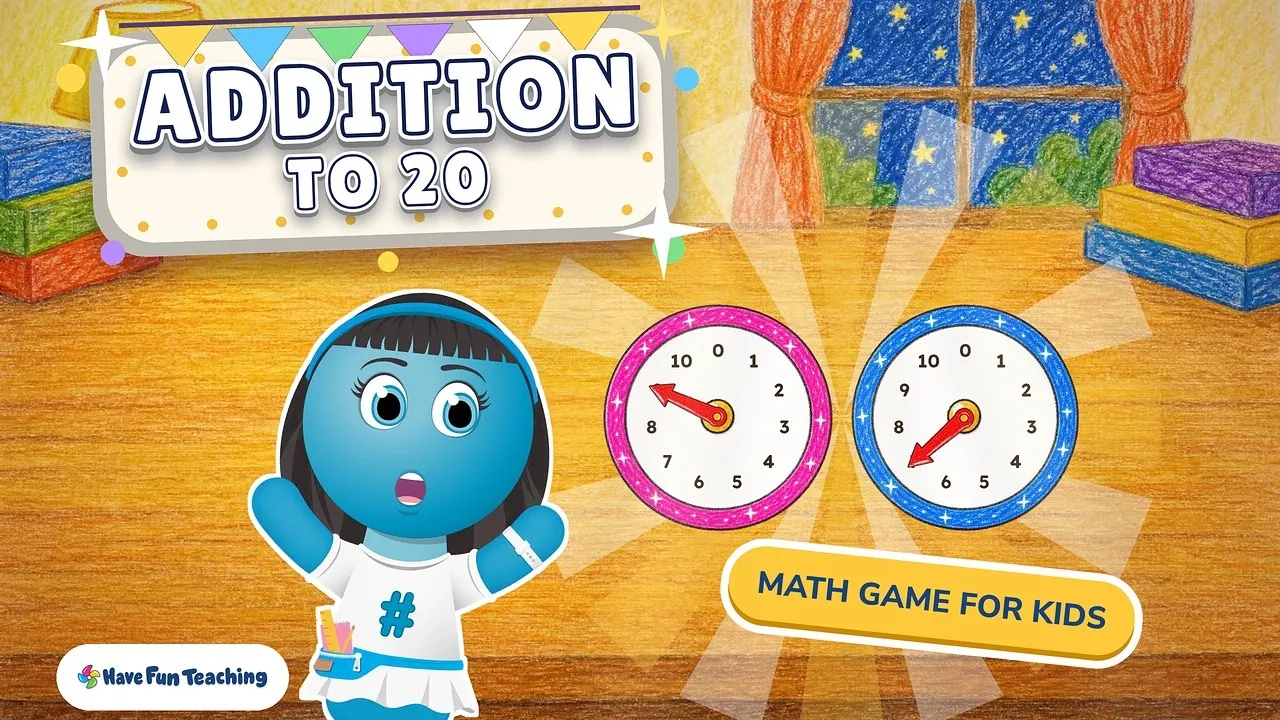
Two spinners from 0 to 10 tick around and stop. The fact shows right above them, like 6 + 7.
Count the jars
Gumballs, ladybugs, dice and pawns clink into two jars. Count them all to find how many in all.
Kind help
A wrong card names itself, then Penny gives a tip like “Start with the bigger number, and count on.”
Watch the Addition to 20 Game in action
See the quick trailer, then a full game from the first dice roll to the star score. Find more on the Have Fun Teaching YouTube channel.
How to play the Addition to 20 Game
Press Play and listen to Penny. She reads every direction out loud, so new readers can play on their own.
Round 1: Dice Roll
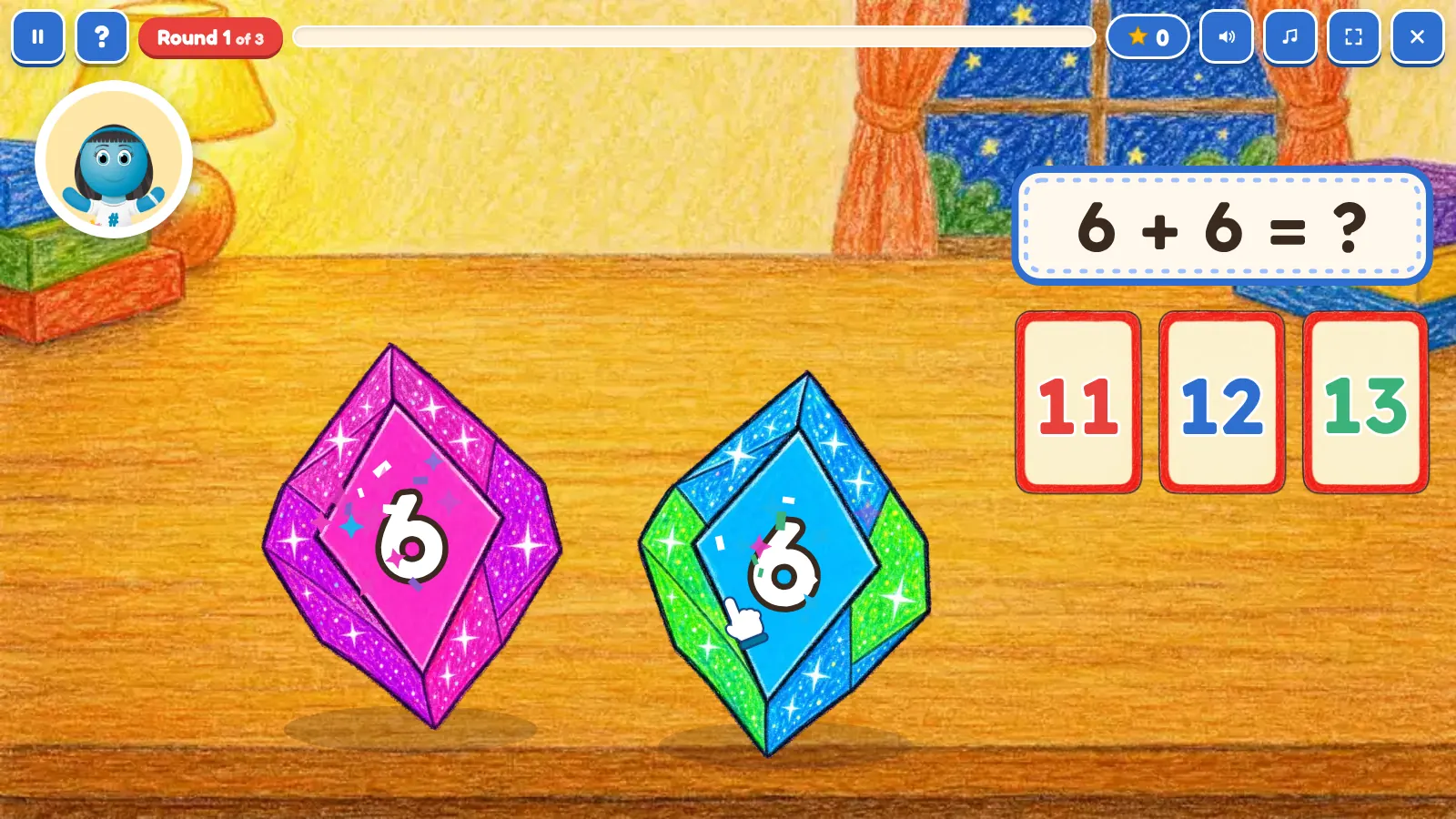
Swipe to throw the two dice. Add the two numbers, then tap the card with the sum.
Round 2: Spin to Win
Spin both spinners from 0 to 10. Add the two numbers above them and tap the sum.
Round 3: Jar Count
Watch two jars fill up. Count everything in both jars and tap how many in all.
Earn your stars
Build 3, 5 and 10 in a Row streaks, beat your High Score and finish with stars.
The Addition to 20 Game is part of the Have Fun Teaching membership. Members can open it full screen on any device and assign it to their class with a Classroom link. New here? Start your 3 free days and play it today.
What kids learn from the addition to 20 game
The game practices adding within 20 with smart strategies, from Common Core standard 1.OA.6. Kids learn to use a fact they know to find one they don’t.
Doubles
6 + 6 = 12. Penny cheers, “A double!” Doubles run all the way from 2 + 2 to 10 + 10.
Double, then one more
8 + 7 is 7 + 7 = 14, and one more is 15.
Make a ten
9 + 5 is the same as 10 + 4: “Nine and one make a ten, and four more is fourteen.”
Count on
For 2 + 9, start with the bigger number: 9, then 10, 11.
Ten and some more
10 + 7 = 17. Ten and seven make a teen number.
How many in all
Counting two jars together, like 4 ladybugs and 5 candies, shows what a sum really means.
Teacher tip: name the strategy
After each game, roll two real dice and race to say the sum. Then ask, “Which strategy did you use? A double, a ten, or counting on?” Saying it out loud makes the strategy stick. Check off each step:
More addition to 20 resources
Keep the practice going with games, activities, worksheets and flash cards that teach the same strategies as the game.
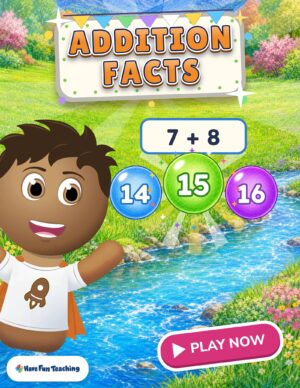 PreK–5th · GameAddition Facts GameRace the clock with Doodles and pop the right answer bubble.
 1st Grade · ActivityDoubles Addition ActivityHands-on doubles practice, the first strategy in the game.
 1st Grade · WorksheetAdding Doubles WorksheetWrite the doubles facts, from 1 + 1 up to 10 + 10.
 1st Grade · ActivityAdding to Make 10 ActivityFind the pairs that make ten, the key to the make-a-ten strategy.
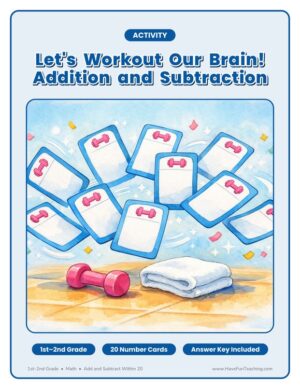 1st Grade · ActivityAdd and Subtract Within 20 WorkoutA brain workout with facts up to 20.
 1st Grade · WorksheetAdding and Subtracting Within 20Mixed facts within 20 on one page.
 1st Grade · Flash CardsAddition 0-12 Flash CardsQuick daily fact practice to warm up before game night.
Explore more resources
Get every game with a membership
Game night, every night of the year
Members play the Addition to 20 Game and every other Have Fun Teaching game, plus every addition worksheet, activity, flash card set, song and video.
- Every Have Fun Teaching game, including the Addition to 20 Game
- Every printable, song and video, Preschool–6th
- Assign games to your class with a Classroom link
- Use it with your class or your kids at home
Addition to 20 game FAQ
What is the Addition to 20 Game?
The Addition to 20 Game is an online 1st grade math game from Have Fun Teaching. On game night with Penny the Funzy, kids roll dice, spin spinners and count jars, then tap the card with the sum. It practices adding within 20 with doubles, make a ten and count on.
What grade is the Addition to 20 Game for?
It is made for 1st grade and matches Common Core standard 1.OA.6. It is also a good review for 2nd graders who still count every dot to add facts like 8 + 7.
What happens when my child taps a wrong card?
The card wobbles and names itself, like “Hmm, that card says thirteen,” and Penny gives a kind strategy tip. Kids try again, and a fact they missed comes back in Round 3 as a jar to count. There is no losing.
Can I assign the game to my class?
Yes. Members can assign the Addition to 20 Game with a Classroom link. It plays in the browser on computers, tablets, phones, Chromebooks and interactive whiteboards, with nothing to install.
How long does one game take?
About four to five minutes. There are three short rounds of five facts each, so it fits a math warm-up, a center or the last few minutes before lunch.
Ready for game night with Penny?
Roll the dice, spin the spinners and count the jars all the way to 20.
Works on computers, tablets, phones and interactive whiteboards.