

Area in Square Units Worksheet
This Area in Square Units Worksheet gives 3rd graders six grid figures to count, two garden word problems, and a write-about-it prompt. An answer key is included, so checking student work takes seconds.
$6.97
Or free with a membership — members pay $3.33/mo for all 10,000+ resources. See plans
Want this one free?
Tell us where to send it and it’s yours — no card, no catch.
One free resource per teacher. We’ll also send free teaching ideas each week — unsubscribe anytime.
Teaching is easier with a membership
Unlimited printables, games & videos for PreK–6th — for your classroom or homeschool. Cancel anytime.
Start your 3-day free trial$0 today · cancel anytime · Instant access to 10,000+ resources
About this resource
Description
Area is the amount of space a flat shape covers, and third graders meet it for the first time by counting same-size squares. This Area in Square Units Worksheet gives them a clear, hands-on way to build that idea. Every figure on the page is made of identical unit squares, so students can count, group, and eventually multiply their way to the answer instead of memorizing a formula they do not yet understand. Working with square units first is what makes the length-times-width shortcut make sense later.
This 3rd grade area worksheet moves students through three levels of thinking. Part A shows six figures drawn on a unit grid, including rectangles and two irregular shapes, and asks students to count the squares and record the area. Part B turns the skill into two garden word problems where students find an area and then compare two garden beds. Part C asks students to explain how two shapes that look completely different can still cover twelve square units. Use it as guided practice, as an exit ticket, or as review before a measurement assessment.
What’s Included
- 1 print-ready PDF worksheet
- Answer key
- 6 count-the-square-units figures, 2 garden word problems, and 1 written explanation prompt
There are three reasons this Area in Square Units Worksheet helps children learn. First, counting real squares makes area concrete, so students picture coverage rather than a rule. Second, the irregular L-shape and staircase figures stop students from assuming every area problem is a neat rectangle, which is where the concept usually breaks down. Third, the explanation prompt asks students to defend their reasoning in writing, and putting the idea into words is what turns a correct count into lasting understanding.
Teachers and parents can stretch the skill beyond the page. Hand students color tiles or square sticky notes and ask them to build a shape with an area of fifteen square units, then challenge a partner to build a different shape with the same area. Measure the area of a book cover, a placemat, or a desktop in square tiles. Draw chalk rectangles on the sidewalk and count the squares inside. Ask students to design a garden bed on grid paper and label its area, just like the problems in Part B.
Related Resources
What teachers say
Reviews
You must be logged in to post a review.
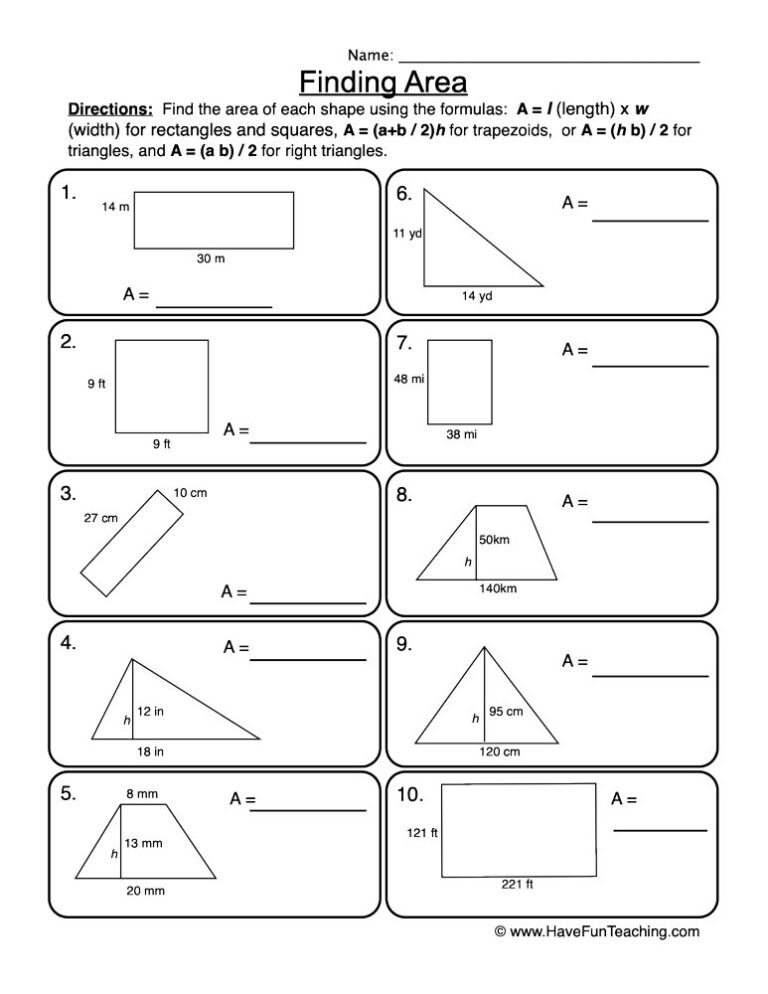
A Finding Different Shapes Area Worksheet where 3rd graders find the area of rectangles, squares, and composite shapes in square units. Answer key included—great for no-prep area practice.

This 3rd grade Finding the Area of Grid Shapes Worksheet has students count unit squares to find the area of rectangles and L-shapes. Answer key included.
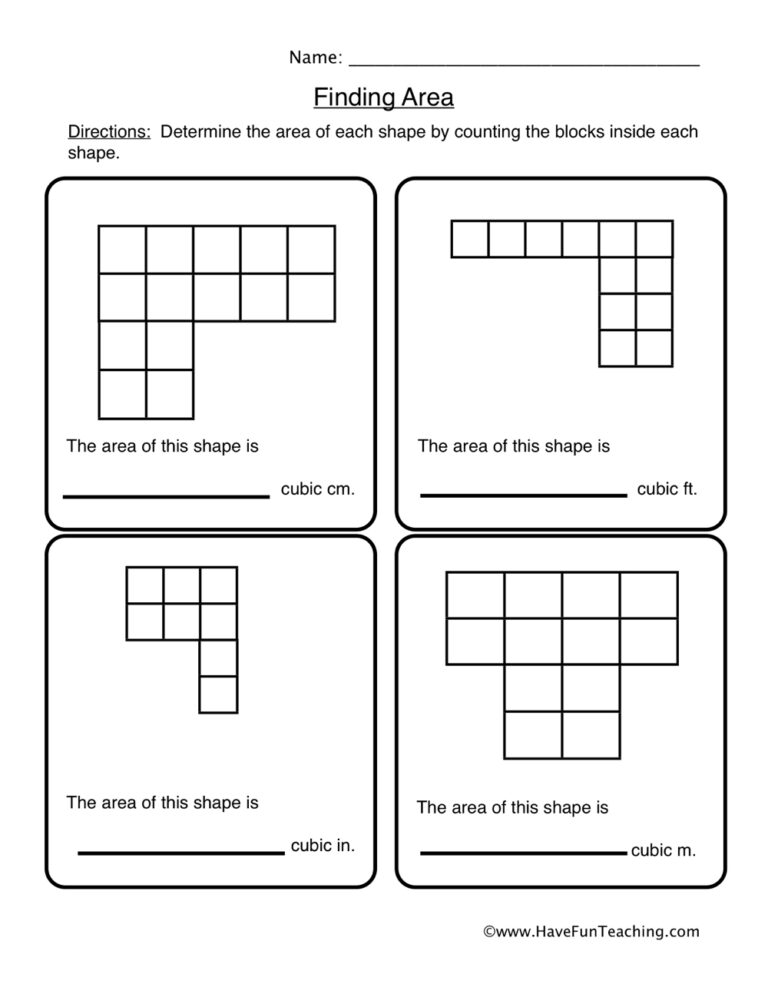
A count-the-squares finding area of irregular shapes worksheet that helps 3rd graders measure area by counting unit squares on six grid figures. Answer key included, perfect for no-prep area practice at home or school.

This Finding the Area by Multiplying Worksheet gives 3rd graders six labeled rectangles on a unit grid to practice finding area by multiplying length by width. An answer key is included for easy, no-prep geometry practice.

This Finding the Area in Square Units Worksheet lets 3rd graders count same-size squares inside six shapes to measure area. Includes a complete answer key—great for hands-on, no-prep geometry practice at home or school.
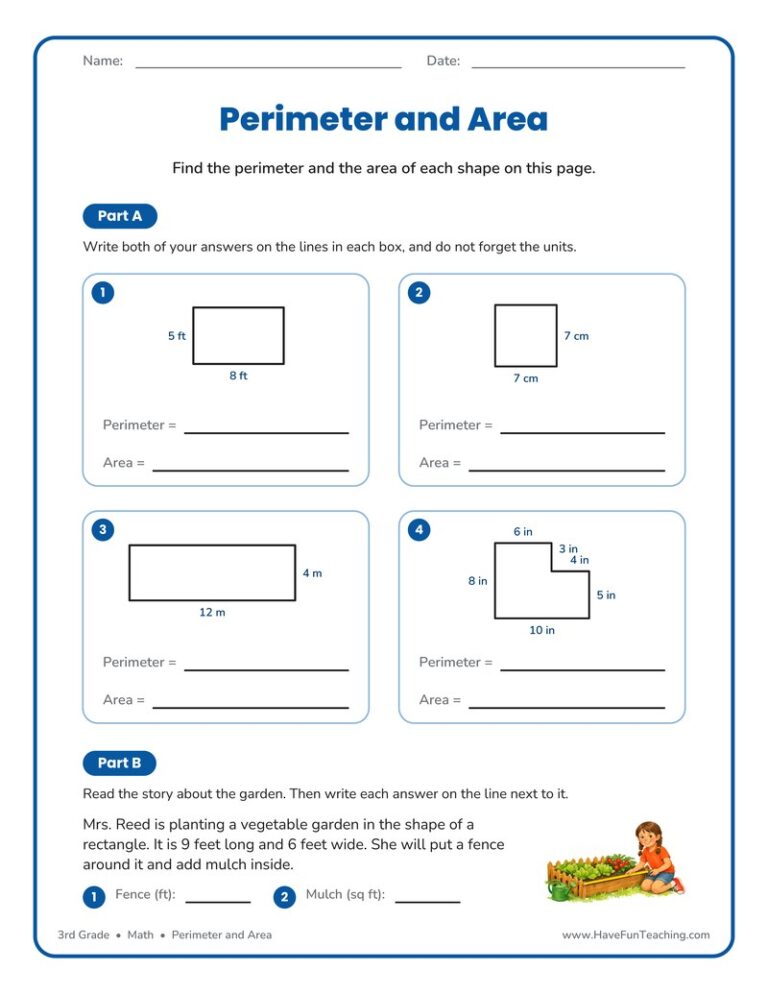
This perimeter area worksheet gives 3rd graders four labeled figures and a garden word problem for finding perimeter and area. An answer key is included, so measurement practice is ready to print and go.
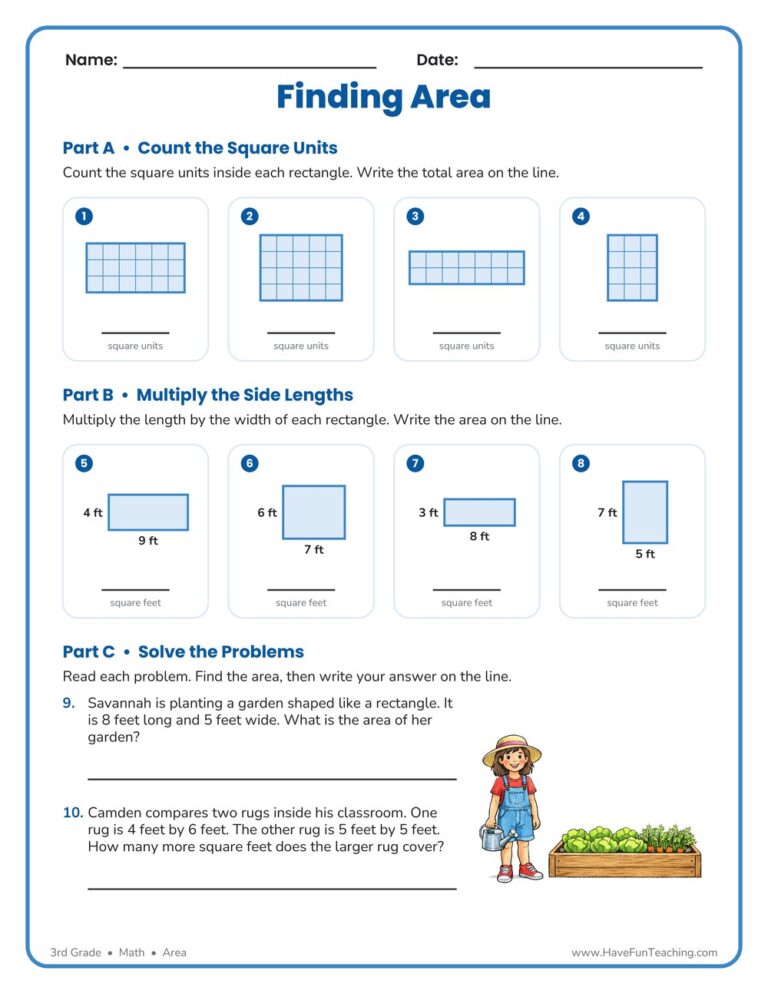
This Rectangles Area Worksheet helps 3rd graders find area by counting unit squares and by multiplying side lengths, then apply the skill to two word problems. An answer key is included, so practice is ready in a single print.
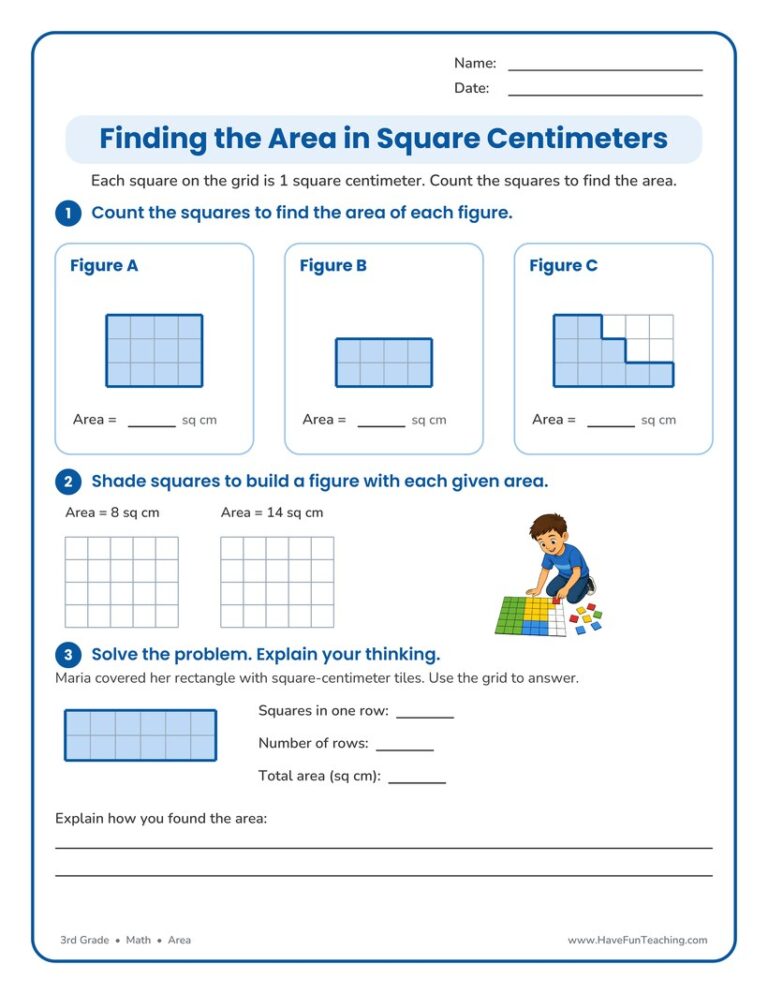
This Finding the Area in Square Centimeters Worksheet lets 3rd graders count grid squares to measure area, build their own figures, and explain their thinking. Includes an answer key for quick, no-prep practice.

Count unit squares to find the area with this finding the area in total units worksheet. Built for 3rd grade, it includes an answer key and hands-on area practice that builds real geometry confidence.

Using this Area and Perimeter Pirate Activity, students apply the area and perimeter formulas for rectangles to match each pirate with his ship.
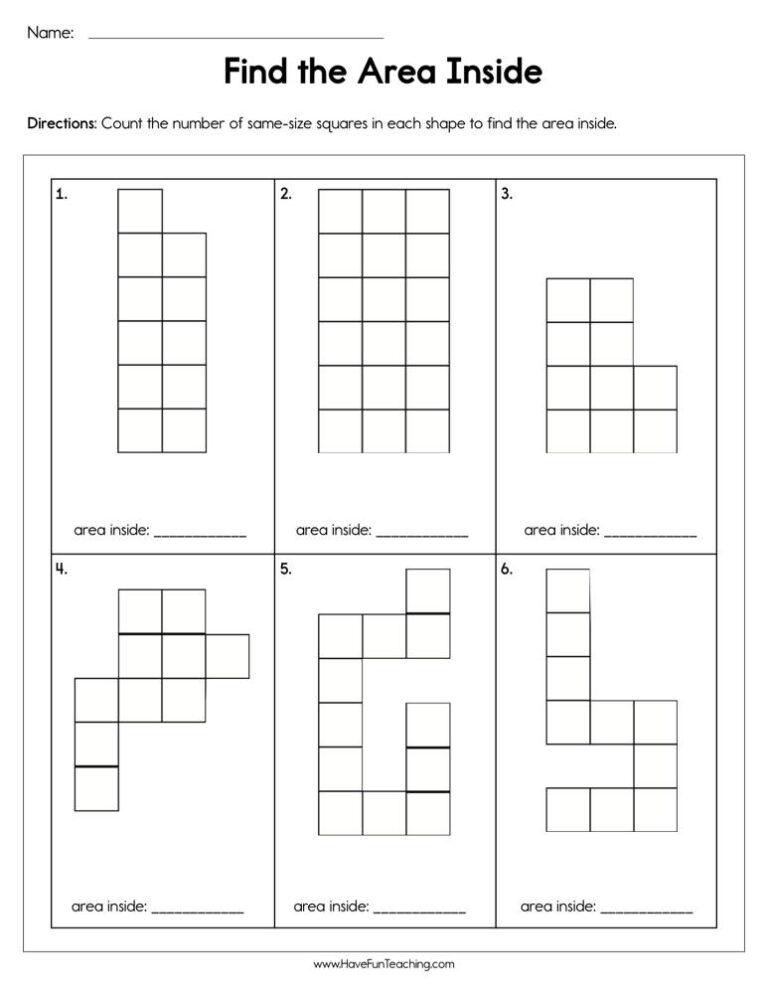
Using this Find the Area Inside Worksheet, students find the area of rectangles on a grid by counting squares inside the provided shape.
Using this Design Your Own Theme Park Unit Square Activity, students measure areas by counting unit squares.
Reviews
There are no reviews yet