
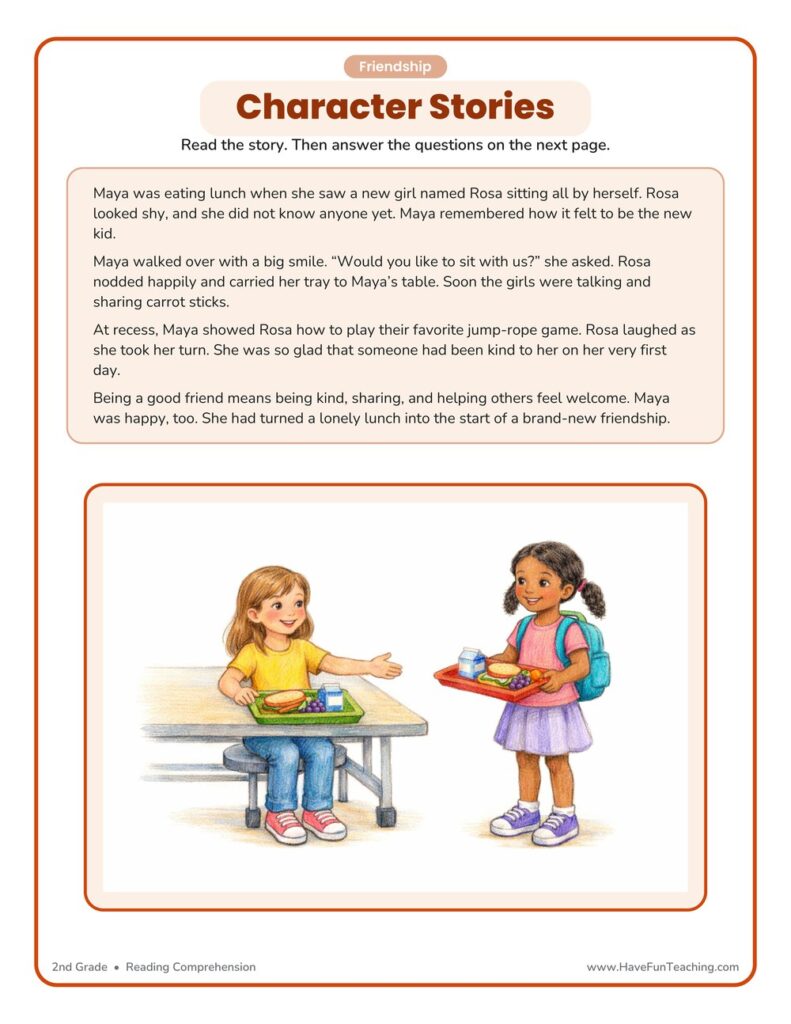
Friendship Character Reading Comprehension Worksheet
This Friendship Character Reading Comprehension Worksheet gives 2nd graders a short story about being a good friend, with questions and a complete answer key — an easy, no-prep way to build reading and character skills.
$6.97
Or free with a membership — members pay $3.33/mo for all 10,000+ resources. See plans
Want this one free?
Tell us where to send it and it’s yours — no card, no catch.
One free resource per teacher. We’ll also send free teaching ideas each week — unsubscribe anytime.
Teaching is easier with a membership
Unlimited printables, games & videos for PreK–6th — for your classroom or homeschool. Cancel anytime.
Start your 3-day free trial$0 today · cancel anytime · Instant access to 10,000+ resources
About this resource
Description
This Friendship Character Reading Comprehension Worksheet helps young readers practice understanding a story while learning what it means to be a good friend. Reading comprehension is one of the most important skills in the early grades, and pairing it with character education gives students a meaningful, wholesome story to think about. On this friendship character reading comprehension worksheet, children read a short story about welcoming a new classmate and then answer questions that check how well they understood it.
This second grade character education worksheet is simple to use at school or at home. Students first read the friendship story on page one, look closely at the picture, and then move to the questions on the next page. They fill in the bubble for the best answer, complete a sentence, and write one way they can be a good friend. Teachers can use it for guided reading, independent work, or a quick comprehension check, and the included answer key makes grading fast.
What’s Included
- 1 print-ready PDF worksheet
- Answer key
- A friendship story, 4 multiple-choice questions, 1 fill-in-the-blank, and 1 short-response question
There are many reasons this friendship character reading comprehension worksheet helps children learn. First, it builds reading comprehension by asking students to find details and recall what happened in the story. Second, it teaches character by showing kindness, sharing, and welcoming others in action. Third, the mix of multiple-choice and writing questions lets children show their understanding in more than one way, which helps every kind of learner succeed.
Teachers and parents can extend the lesson in fun ways. Talk about a time your child helped a new student feel welcome, and act out the story together with simple props like lunch trays. Ask children to draw their own friendship scene, or start a classroom kindness chart where students record friendly things they do each day. These conversations help the lessons from the story stick long after the worksheet is finished.
Related Resources
What teachers say
Reviews
You must be logged in to post a review.
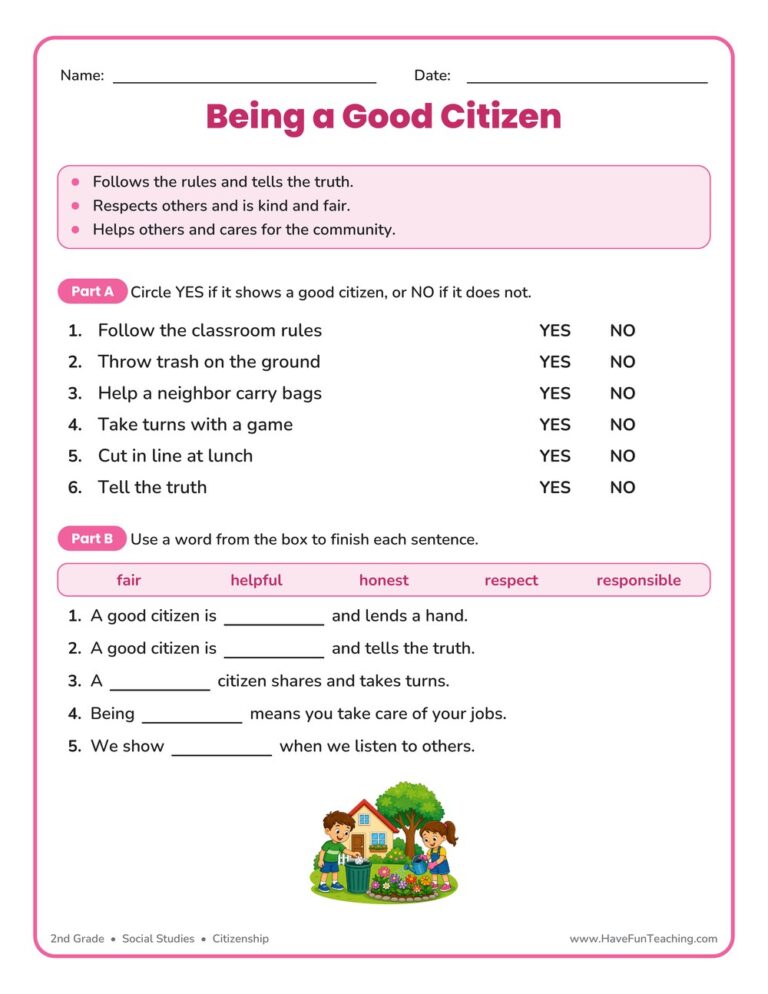
This being a good citizen worksheet helps 2nd graders spot good-citizen actions and build character words like honest, fair, and responsible. Includes an answer key for easy, no-prep social studies practice.
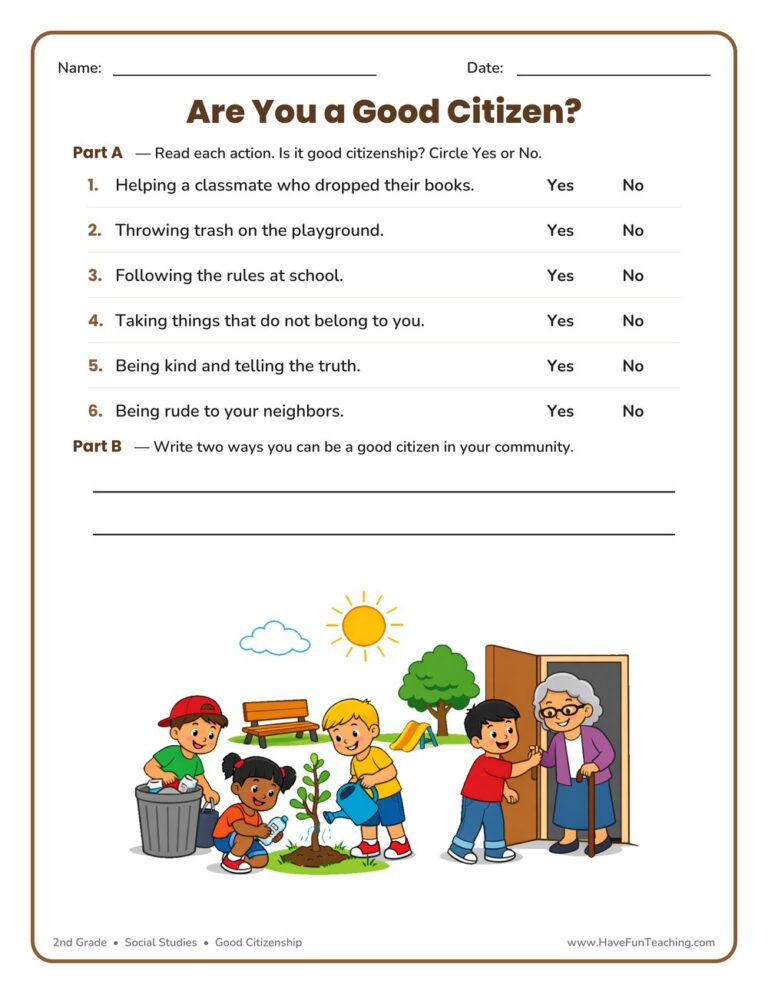
This good citizenship worksheet helps 2nd graders recognize responsible actions and write ways to help their community. An answer key is included for quick, no-prep character education practice.
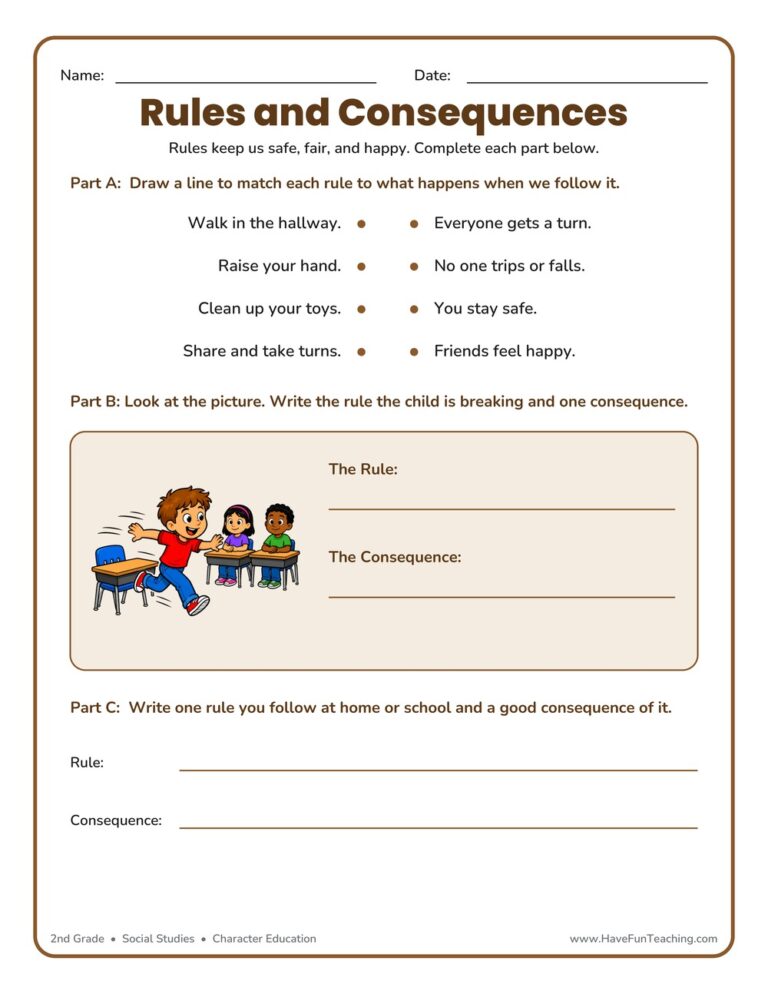
This rules consequences worksheet helps 2nd graders match rules to their results, read a picture to name a rule and consequence, and reflect on a rule of their own. Includes an answer key for quick, no-prep character education practice at home or school.
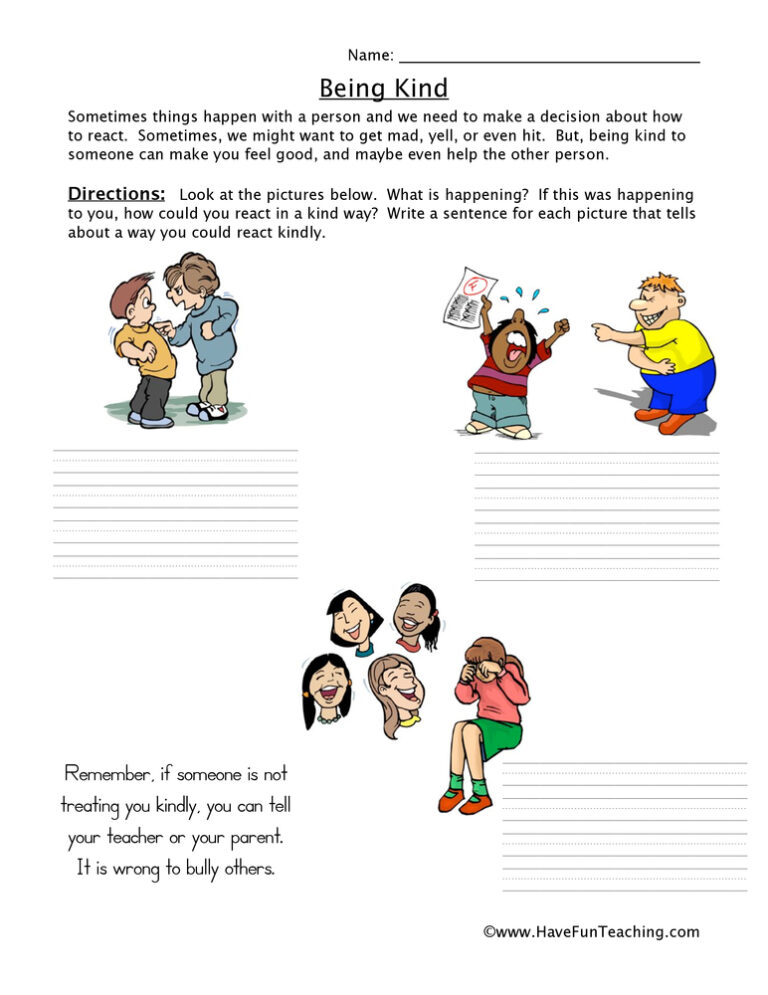
Using this Bullying Worksheet, students write a description explaining how the person could have reacted in a kind way rather than a mean way.
UsingGood Morning Song (MP3), students will have a great day at school after listening to this song in their morning circles.
The Community Song teaches kids how to be a good citizen in the community. This is a fun citizenship song that teaches kids about being a citizen and being part of their community.

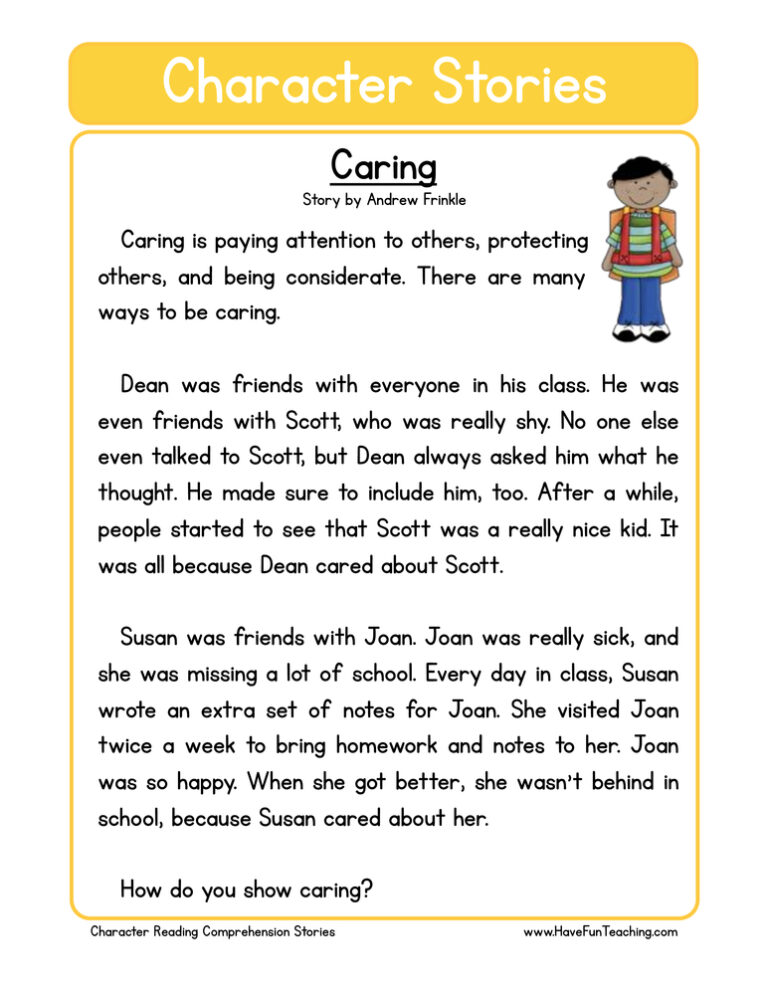
A Caring Character Reading Comprehension Worksheet built around a short lunchroom story about welcoming a new classmate. Written for 2nd grade, with an answer key included, so kindness and comprehension practice takes no prep at all.
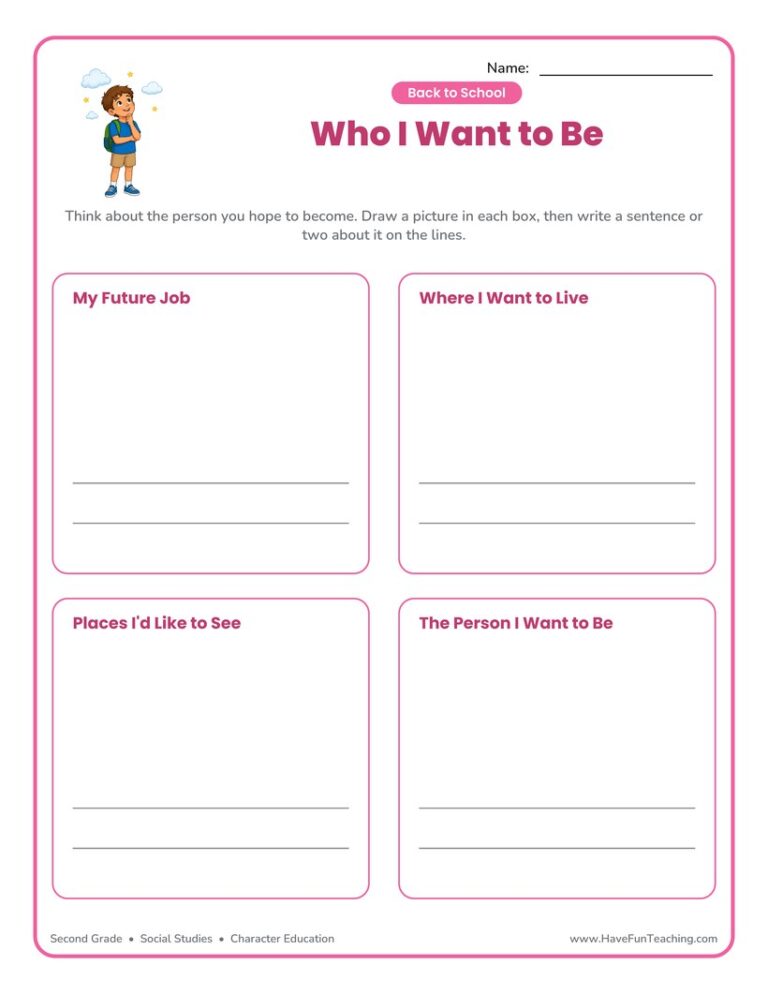
This Who I Want to Be worksheet lets second graders draw and write about their future job, home, dream destinations, and character. A warm back-to-school reflection that helps students set goals and share who they hope to become.
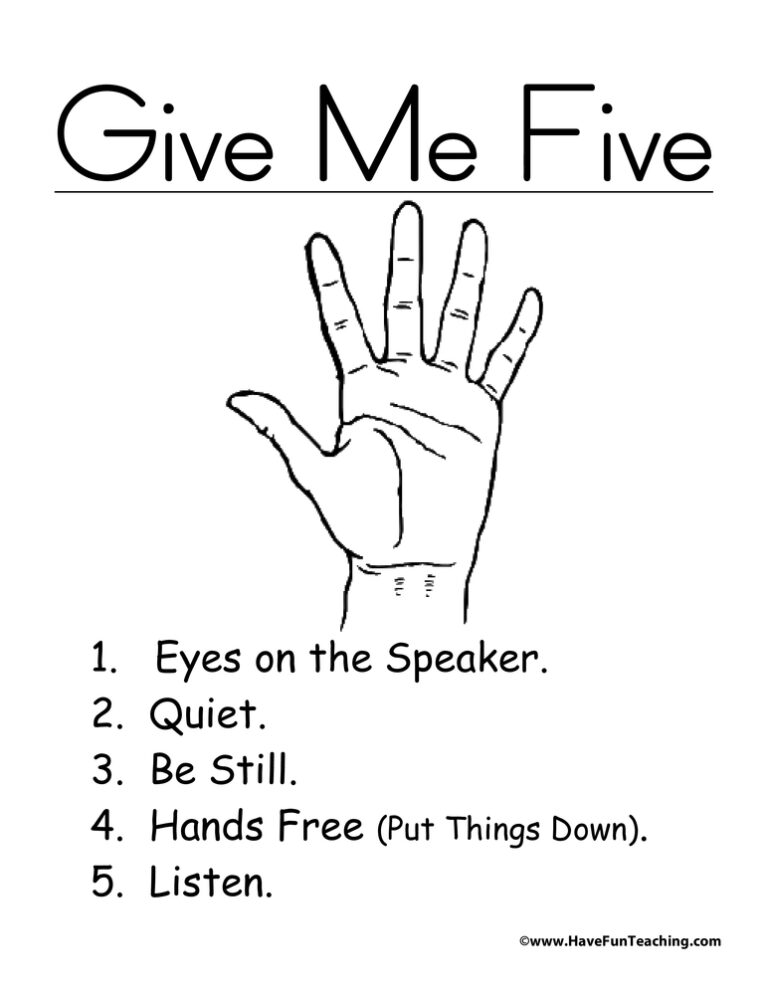
UsingGive Me Five Poster, students can know what to do when they hear their teacher say "Give me Five" and follow directions.
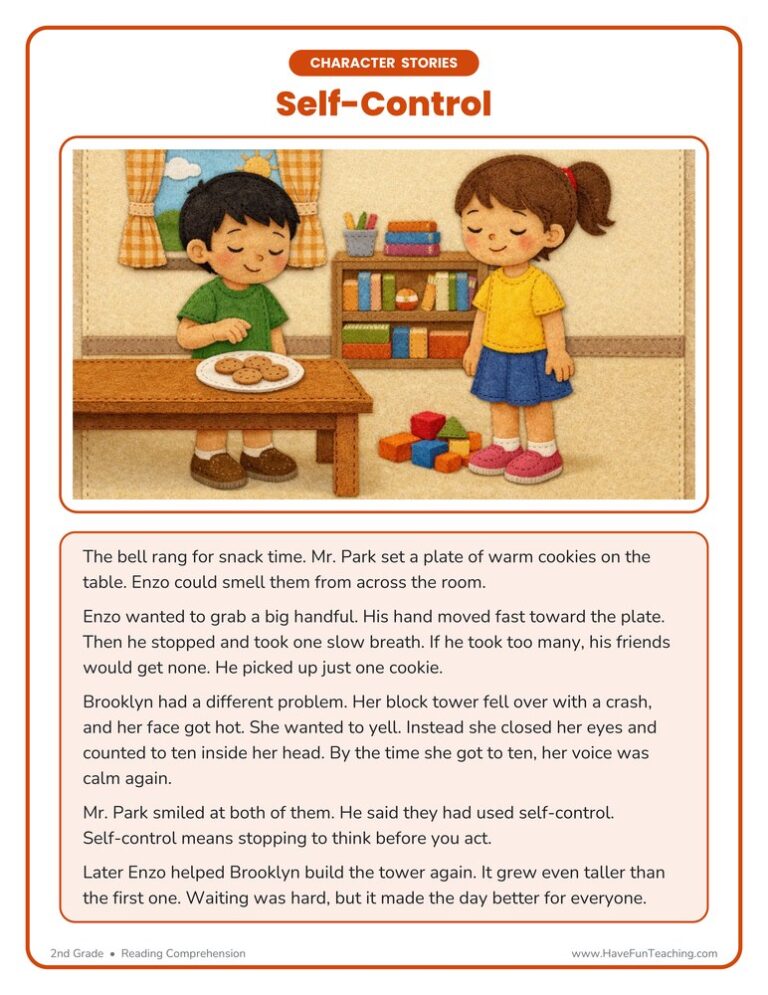
A self-control character reading comprehension worksheet where 2nd graders read a short classroom story and answer seven questions about it. Answer key included, so it is ready for no-prep character education practice.




Reviews
There are no reviews yet