
Skip to content
Start My 3 Free Days $0 today · cancel anytime

Agriculture Resources

4 agriculture resources: 3 worksheets, 2 assessments and 1 flash card. How teachers use these

Agriculture Resources

4 agriculture resources: 3 worksheets, 2 assessments and 1 flash card. How teachers use these

Worksheet
Worksheet1st GradeImportance of Farming Worksheet

Use this Importance of Farming Worksheet to help 1st Grade students sort six farm foods into plants and animals and decide what farms really give people. Answer key included for fast, no-prep science practice.

Assessment
Assessment1st GradeLiving On the Farm Reading Comprehension Worksheet

This living on the farm reading comprehension worksheet gives 1st Grade readers a short story about farm chores, five multiple choice questions, and an answer key, so comprehension practice takes only minutes.

Flash Cards
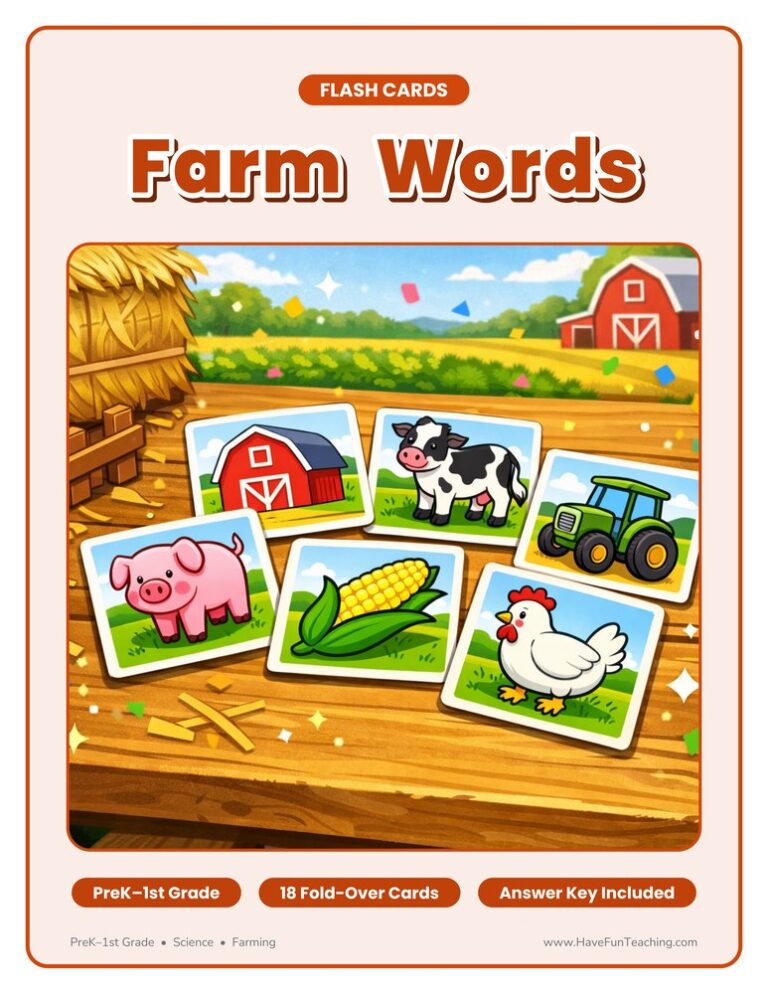
Flash CardsPreschoolFarm Flash Cards

These farm flash cards teach 18 farm animals, plants and things with a picture on the front and the word inside. Made for preschool to 1st grade, with a sorting practice page and answer key included.

Assessment
Assessment3rd GradeStrawberry Fields Reading Comprehension Worksheet

The Strawberry Fields Reading Comprehension Worksheet gives 3rd graders a true passage about a berry farm plus four questions and a written response. Answer key included for fast, no-prep reading practice.

From our teachers' playbook

From the farm to your lunchbox

What do kids learn about agriculture?

Agriculture is the science of growing plants and raising animals for food, clothing and more. Kids learn where their food really comes from: milk from cows, eggs from chickens, bread from wheat, and strawberries from plants in a field. They explore what plants need to grow (sun, water, soil and air), what farmers do through the seasons, and why farms matter to every town and city. The big click is when a child looks at a pizza and traces every topping back to a farm.

Our favorite ways to teach agriculture

Kids connect with farming when they can link it to their own plates. These moves make that link.

Farm to table pictures

Show a picture of a food, like a glass of milk, and ask kids to tell the story backward: fridge, store, truck, dairy, cow. Flash cards with farm animals and crops make the steps easy to see.

Why it works: children learn more from words and pictures together than from words alone (Mayer, 2009).
Farm Flash CardsTry it withFarm Flash CardsFlash CardsOpen it →

Which part do we eat?

Sort plant foods by the part we eat: carrots are roots, lettuce is leaves, apples are fruit, corn is seeds. Bring in a few real vegetables to sort. Kids are amazed that they eat roots and seeds every day.

Why it works: going from real objects to pictures to symbols is a core recommendation of the U.S. Department of Education's elementary math guide.

Plants We Eat Flash CardsTry it withPlants We Eat Flash CardsFlash CardsOpen it →

Read, then explain

After reading a short farm passage, kids answer one big question: "Why are farms important to people who live in the city?" They must use one fact from the text. It builds reading and science thinking together.

Why it works: a big review of study methods ranked quick self-quizzing among the most powerful ways to remember (Dunlosky and colleagues, 2013).

Importance of Farming WorksheetTry it withImportance of Farming WorksheetWorksheetsOpen it →

Questions parents and teachers ask about agriculture for kids

What is agriculture for kids?

Agriculture is growing crops and raising animals for food and other things we use, like cotton for clothes. It is how food gets from the farm to our tables.

Why should kids learn about agriculture?

It helps them understand where their food comes from, how plants and animals grow, and how farmers and communities depend on each other. It connects science to everyday life.

What grade learns about farming?

Farm units are common from preschool through 2nd grade, with a focus on animals, plants and seasons. Older grades connect agriculture to plant science, the economy and natural resources.

What is an easy agriculture activity at home?

Grow herbs or beans in a sunny window, or visit a farmers market and ask your child to guess where each food grew. Talk about which part of the plant each vegetable is.

Keep exploring


