
Skip to content
Start My 3 Free Days $0 today · cancel anytime

Fitness and Exercise Resources

12 fitness and exercise resources: 11 worksheets, 11 assessments and 1 workbook. How teachers use these

Fitness and Exercise Resources

12 fitness and exercise resources: 11 worksheets, 11 assessments and 1 workbook. How teachers use these

Assessment
Assessment5th GradeTeam Sports Health and Fitness Reading Comprehension Worksheet

This Team Sports Health and Fitness Reading Comprehension Worksheet gives 5th graders a lively non-fiction passage about staying active, plus main-idea, detail, and inference questions. An answer key is included for fast, no-prep reading practice.

Worksheet
Worksheet4th GradeExercising Health and Fitness Reading Comprehension Worksheet

This exercising health and fitness reading comprehension worksheet gives 4th graders an illustrated nonfiction passage about exercise plus multiple-choice and written questions. Answer key included for fast, no-prep reading practice at home or in class.

Assessment
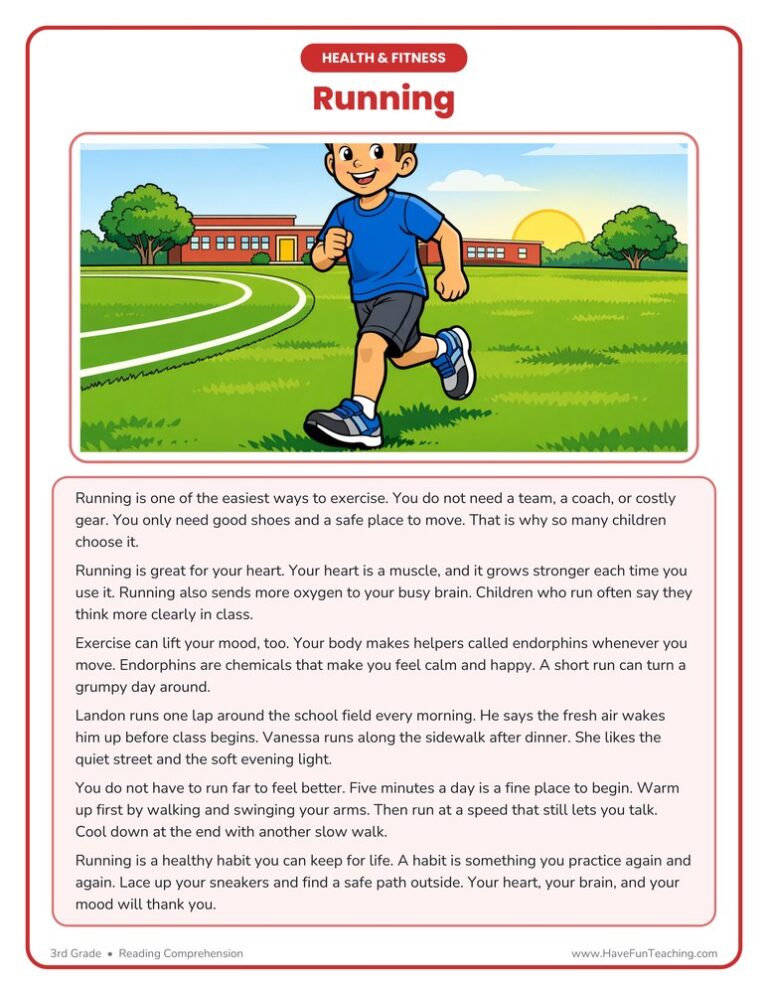
Assessment3rd GradeRunning Health and Fitness Reading Comprehension Worksheet

This running health and fitness reading comprehension worksheet gives 3rd Grade readers a nonfiction passage about exercise, plus questions and a full answer key, for no-prep practice that builds comprehension and healthy habits at once.

Assessment
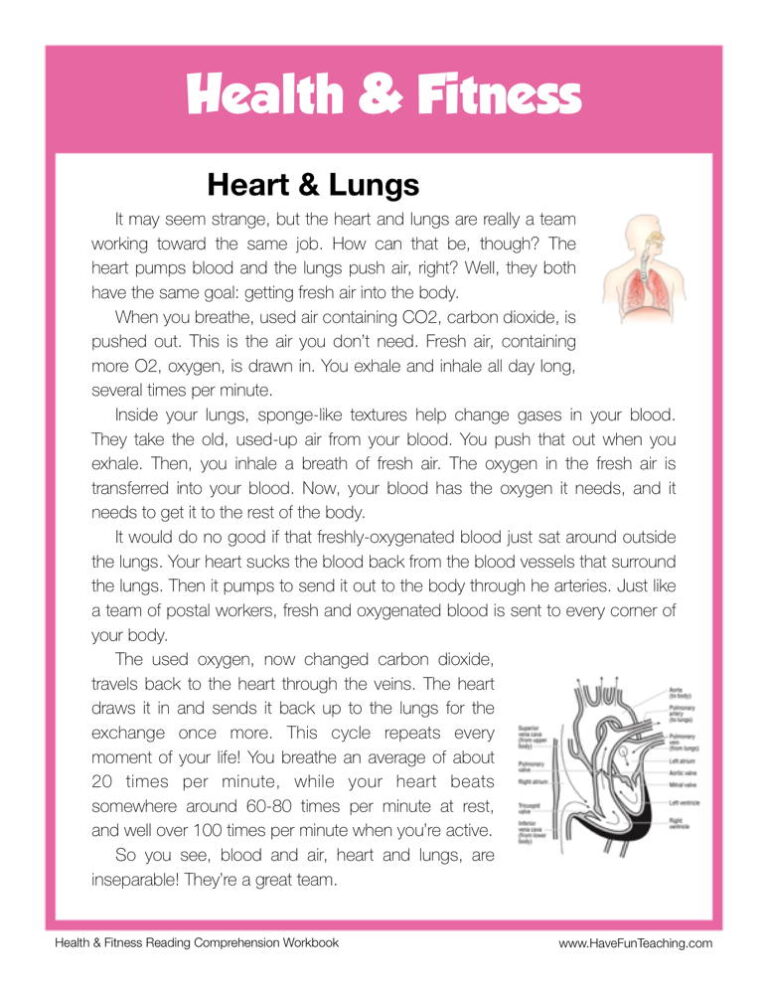
Assessment4th GradeHeart and Lungs Health and Fitness Reading Comprehension Worksheet

Build informational reading skills with this Heart and Lungs Health and Fitness Reading Comprehension Worksheet. Fourth graders read a two-page science passage, then answer questions about it. An answer key is included, so checking work takes seconds.

Assessment
Assessment5th GradeMuscles and Bones Health and Fitness Reading Comprehension Worksheet

This muscles and bones health and fitness reading comprehension worksheet gives 5th grade readers a two-page nonfiction article, four multiple choice questions, a written response and a complete answer key, so evidence-based comprehension practice is ready to assign.

Workbook
Workbook2nd GradeHealth and Fitness Reading Comprehension Workbook

Health & Fitness Reading Comprehension Workbook includes 38 Phonics-themed Stories. 5 test questions per story. Progress Reports.

Assessment
Assessment5th GradeStretching Health and Fitness Reading Comprehension Worksheet

The Stretching Health and Fitness Reading Comprehension Worksheet gives 5th graders a two-page informational passage plus four questions and a written response. Answer key included for fast, no-prep reading practice.

Assessment
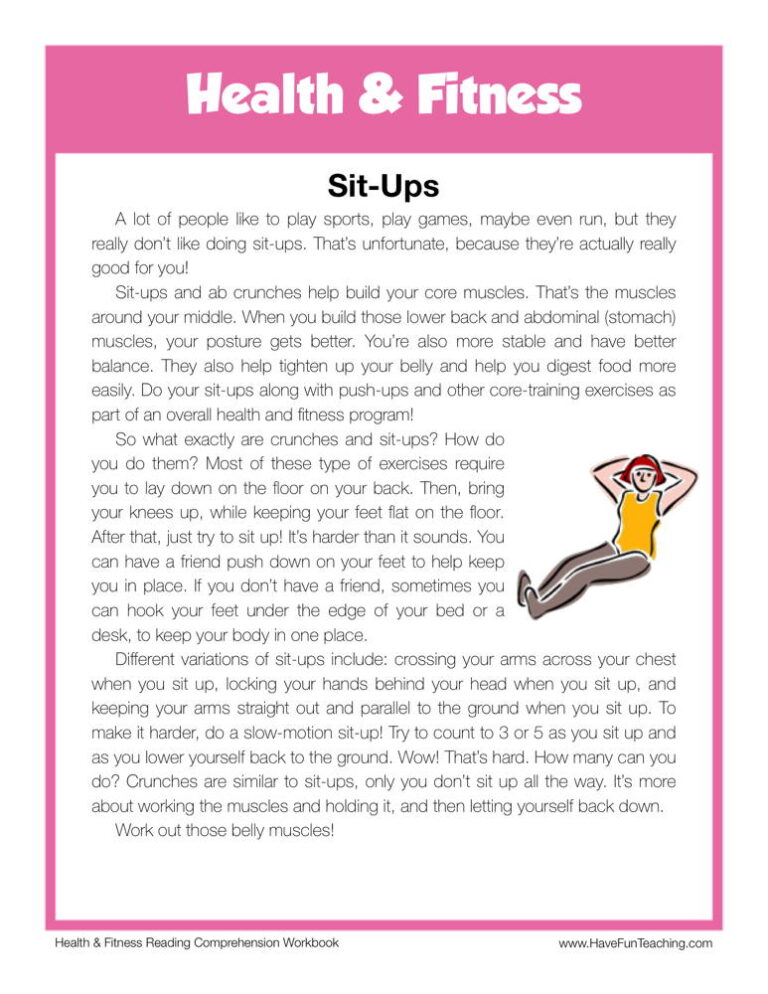
Assessment4th GradeSit Ups Health and Fitness Reading Comprehension Worksheet

The Sit Ups Health and Fitness Reading Comprehension Worksheet gives 4th Grade readers a two page nonfiction passage about core muscles and safe form, five questions, and a full answer key.

Assessment
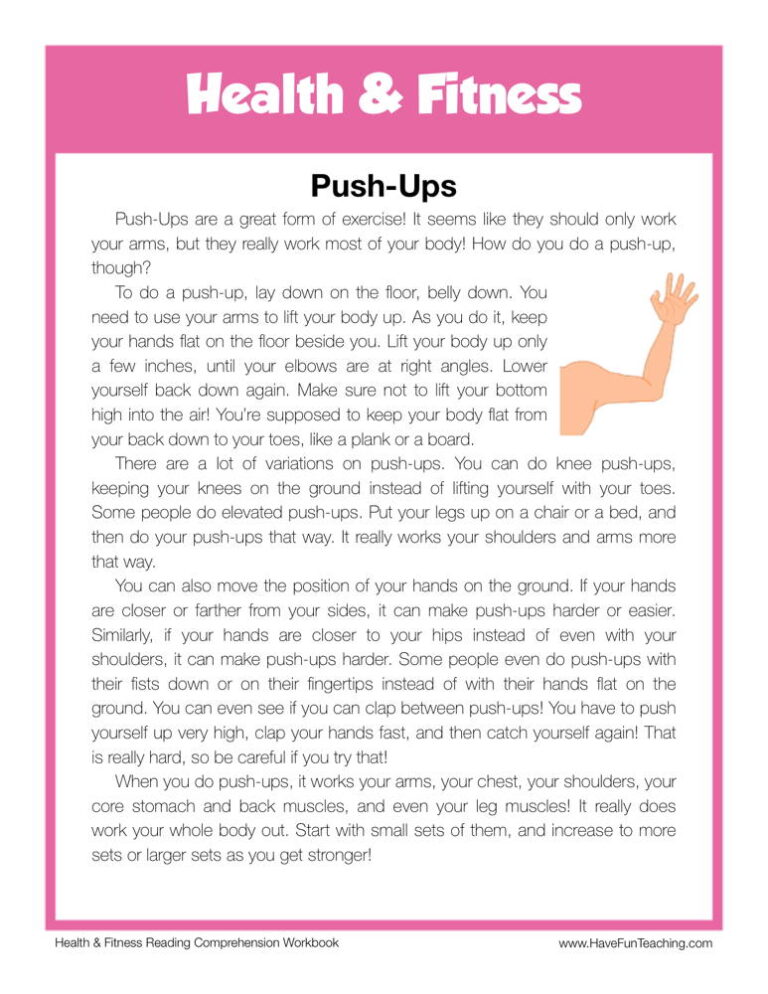
Assessment4th GradePush Ups Health and Fitness Reading Comprehension Worksheet

The Push Ups Health and Fitness Reading Comprehension Worksheet gives 4th grade readers a two-page nonfiction passage on strength and good form, five questions, and an answer key to build comprehension.

Assessment
Assessment4th GradeJumping Jacks Health and Fitness Reading Comprehension Worksheet

The Jumping Jacks Health and Fitness Reading Comprehension Worksheet gives 4th grade readers a nonfiction passage and five questions, with an answer key included, to build comprehension and healthy habits.

Assessment
Assessment4th GradeWalking Health and Fitness Reading Comprehension Worksheet

This walking health and fitness reading comprehension worksheet gives 4th grade students a two-page nonfiction article and six text-based questions, with an answer key included, so reading practice and healthy habits happen together.

Assessment
Assessment4th GradeHopping Skipping Health and Fitness Reading Comprehension Worksheet

The Hopping Skipping Health and Fitness Reading Comprehension Worksheet gives 4th grade readers a two-page nonfiction passage on balance, rhythm, and safe landings, five questions, and an answer key to build comprehension.

From our teachers' playbook

Hearts pumping, brains learning

What do kids learn about fitness and exercise?

Kids learn that exercise isn't just fun, it's how the body gets stronger. They discover that the heart is a muscle that pumps faster when we move, and the lungs work harder to bring in oxygen. They learn the difference between activities that build strength (push-ups, sit-ups), endurance (running, walking) and flexibility (stretching). Warming up, cooling down and drinking water round it out. The click moment is putting a hand on their chest after jumping jacks and feeling the heart racing: "It's working!"

Our favorite ways to make fitness stick

Fitness lessons work best when kids read a little, move a lot and notice what their bodies do.

Read it, then do it

Kids read a short passage on why we exercise, then try the moves it describes and record how they felt before and after. Linking the words to their own bodies makes the science real, and it's a reading lesson too.

Why it works: going from real objects to pictures to symbols is a core recommendation of the U.S. Department of Education's elementary math guide.

Exercising Health and Fitness Reading Comprehension WorksheetTry it withExercising Health and Fitness Reading Comprehension WorksheetWorksheetsOpen it →

Fitness Friday reading

Every Friday, read one short fitness passage and try that week's exercise as a class. Over a semester kids collect a whole routine they can do on their own. Small, steady visits build both knowledge and habits.

Why it works: short practice spread over several days beats one long session, according to a large review of learning research (Dunlosky and colleagues, 2013).

Health and Fitness Reading Comprehension WorkbookTry it withHealth and Fitness Reading Comprehension WorkbookWorkbooksOpen it →

Questions teachers and parents ask

How do you teach kids about fitness?

Combine short readings or talks with real movement. Have kids feel their heartbeat, time a stretch, or count jumping jacks. When they notice what their bodies do, the lessons make sense.

Why is exercise important for kids?

Exercise strengthens the heart, lungs, muscles and bones. It also helps kids focus, sleep better and feel good. Health guidelines recommend about an hour of activity a day for school-age children.

What are good exercises for elementary students?

Jumping jacks, hopping, skipping, running, sit-ups, push-ups against a wall and stretching are all great. Mix strength, endurance and flexibility moves for a balanced routine.

How can I add movement to a classroom day?

Use two-minute brain breaks between lessons, play movement games at transitions, and let kids act out vocabulary. A quick burst of activity often helps the next lesson go smoother.

Keep exploring



