Skip to content
Start My 3 Free Days $0 today · cancel anytime

Writing Process Resources

6 writing process resources: 5 test prep, 5 assessments, 5 workbooks and more. How teachers use these

Writing Process Resources

6 writing process resources: 5 test prep, 5 assessments, 5 workbooks and more. How teachers use these

Workbook
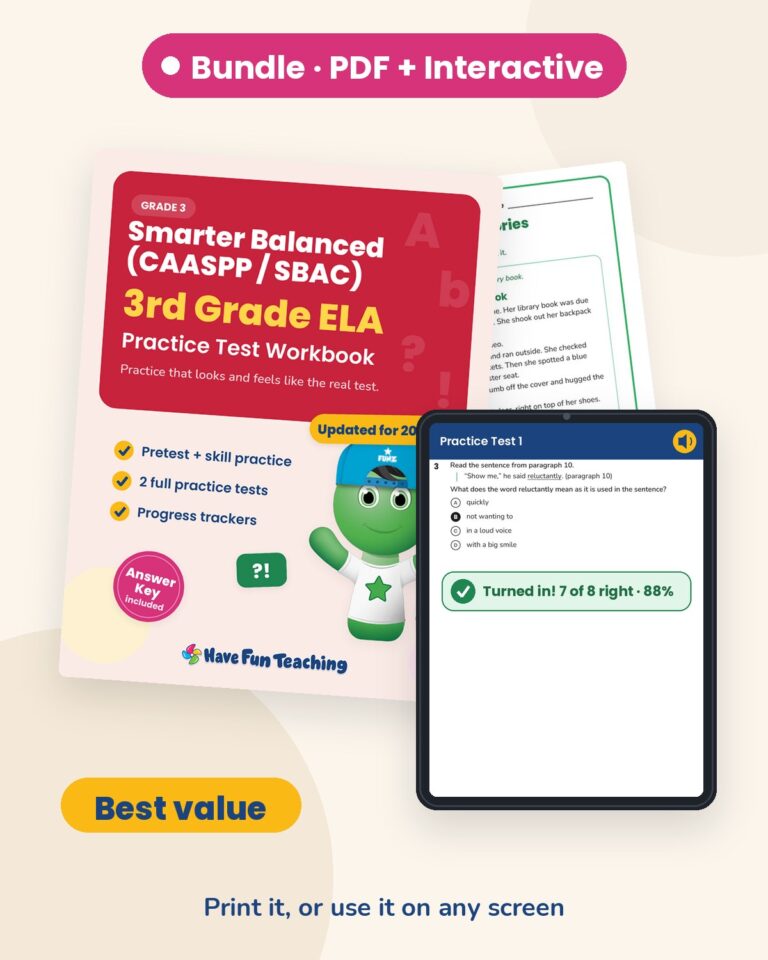
Workbook3rd GradeSmarter Balanced (CAASPP / SBAC) 3rd Grade ELA Practice Test Workbook

A Smarter Balanced (CAASPP / SBAC) 3rd grade ELA practice test workbook for teachers, with a pretest, skill practice for all 24 standards, mixed review and 2 full-length practice tests. Answer key included, so test prep is ready to go.

Workbook
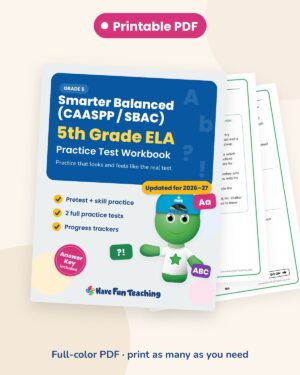
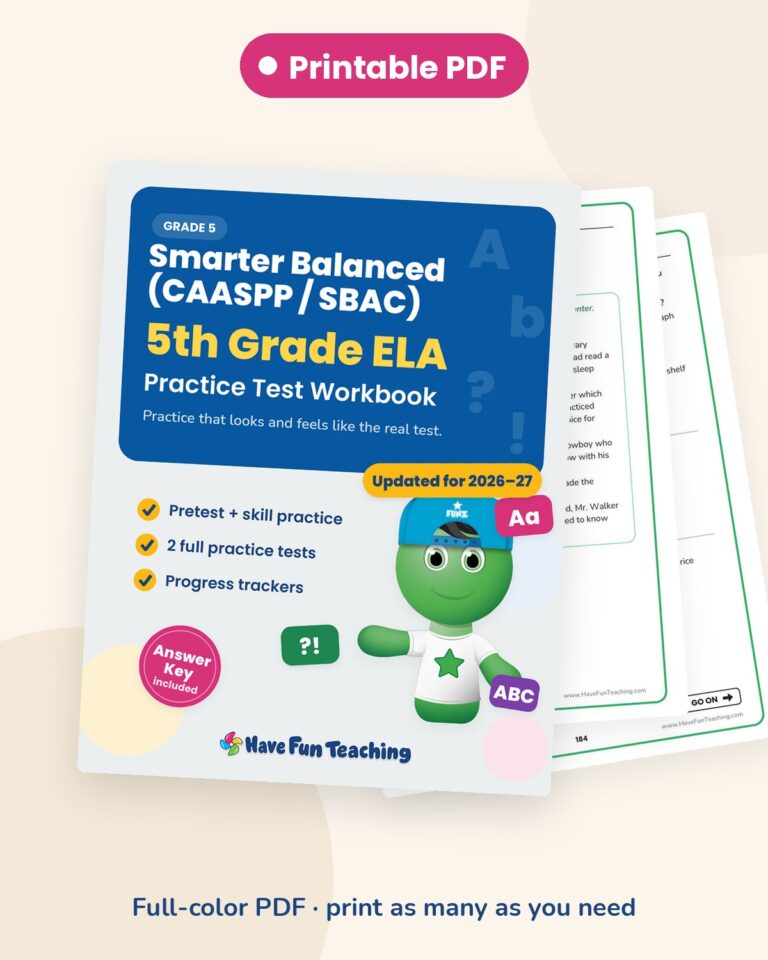
Workbook5th GradeSmarter Balanced (CAASPP / SBAC) 5th Grade ELA Practice Test Workbook

A Smarter Balanced (CAASPP / SBAC) 5th grade ELA practice test workbook for teachers, with a pretest, skill practice for all 24 standards, mixed review and 2 full-length practice tests. Answer key included, so test prep is ready to go.

Worksheet
Worksheet2nd GradeFairy Tales Planning Page Worksheet

This Fairy Tales Planning Page Worksheet gives 3rd graders one page to plan a story: a title line plus Setting, Hero, Helper, Problem and Ending boxes, so writing day starts with ideas already on paper.

Workbook
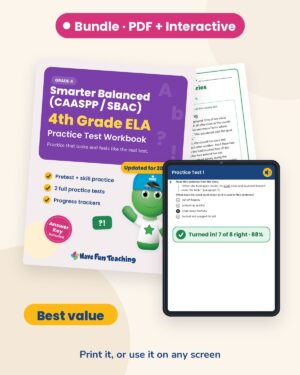
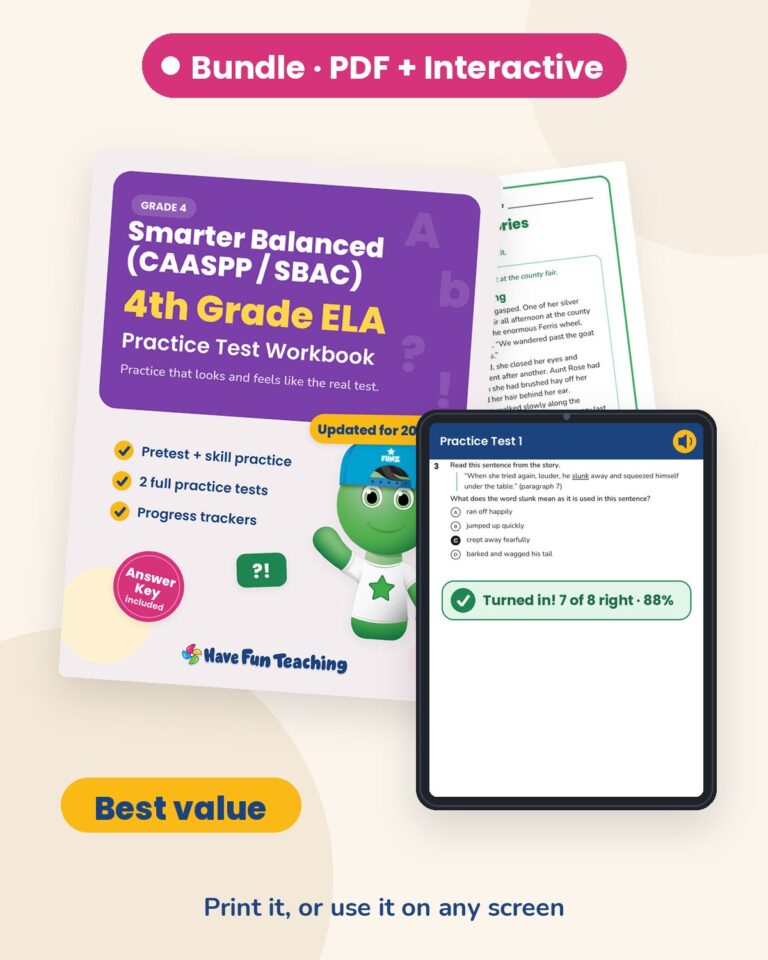
Workbook4th GradeSmarter Balanced (CAASPP / SBAC) 4th Grade ELA Practice Test Workbook

A Smarter Balanced (CAASPP / SBAC) 4th grade ELA practice test workbook for teachers, with a pretest, skill practice for all 24 standards, mixed review and 2 full-length practice tests. Answer key included, so test prep is ready to go.

Workbook
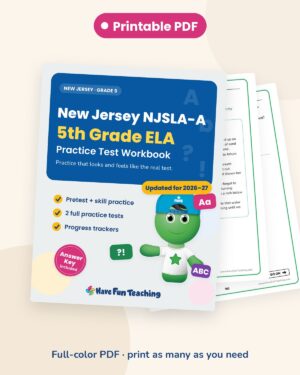
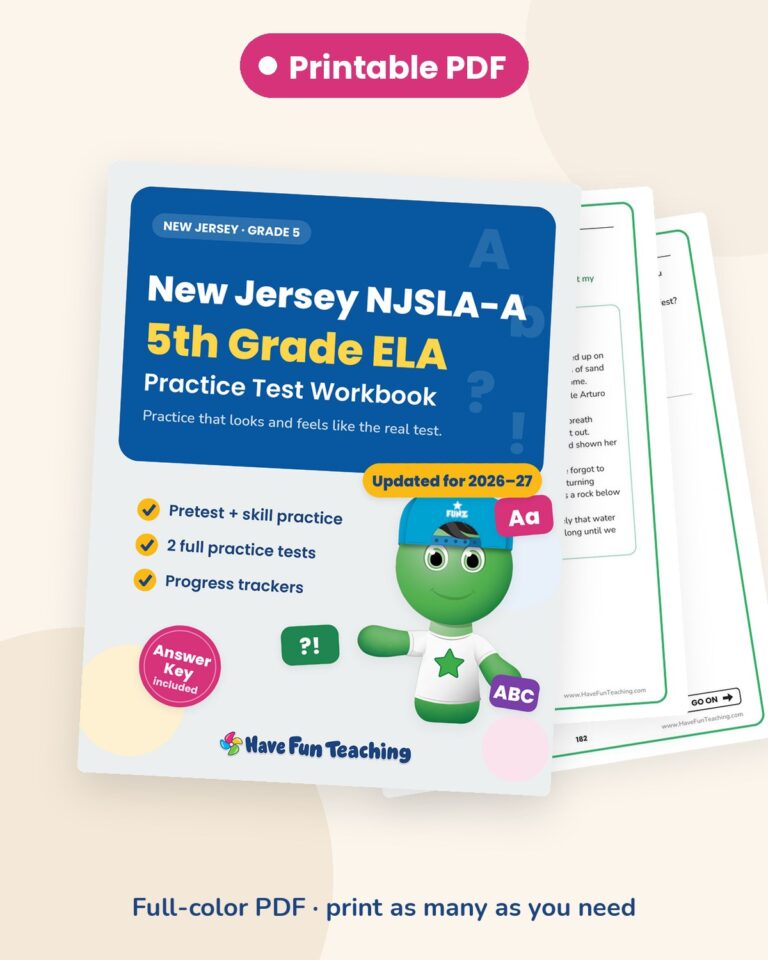
Workbook5th GradeNew Jersey NJSLA-A 5th Grade ELA Practice Test Workbook

A NJSLA-A 5th grade ELA practice test workbook for teachers, with a pretest, skill practice for all 20 standards, mixed review and 2 full-length practice tests. Answer key included, so test prep is ready to go.

Workbook
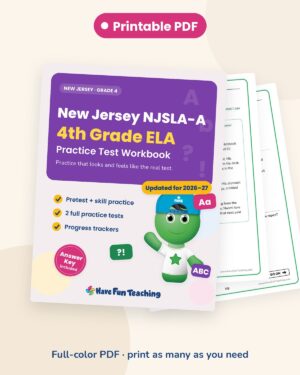
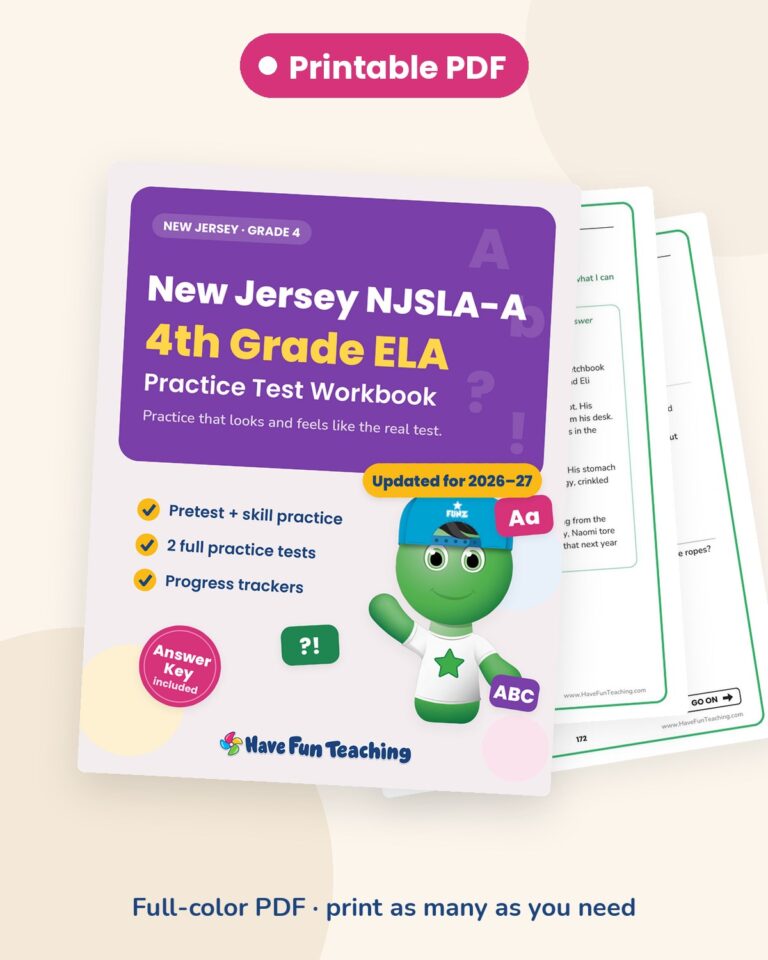
Workbook4th GradeNew Jersey NJSLA-A 4th Grade ELA Practice Test Workbook

A NJSLA-A 4th grade ELA practice test workbook for teachers, with a pretest, skill practice for all 20 standards, mixed review and 2 full-length practice tests. Answer key included, so test prep is ready to go.

From our teachers' playbook

Every great piece starts messy

What do kids learn about the writing process?

The writing process teaches kids that writers work in steps: prewrite, draft, revise, edit and publish. Young writers start by drawing and talking about their ideas, then label pictures and write simple sentences. By upper elementary, kids plan with organizers, write longer drafts, revise for stronger words and better organization, and edit for grammar and spelling. At every age, the big lesson is the same: a first draft is just the beginning.

How we teach the writing process

These moves work at any grade level. Just adjust how much kids write at each step.

Organize before you draft

Give kids a planning page that fits the kind of writing: a story map for stories, a web for informational writing. Familiar stories like fairy tales make a great first plan. Kids with a plan write longer and more focused drafts.

Why it works: going from real objects to pictures to symbols is a core recommendation of the U.S. Department of Education's elementary math guide.

Fairy Tales Planning Page WorksheetTry it withFairy Tales Planning Page WorksheetWorksheetsOpen it →
Revise out loud

Put a short, plain paragraph on the board and revise it together. Ask "Where can we add a detail? Is there a stronger word?" Cross out and add right on the board. Seeing a draft get better shows kids what revising really looks like.

Why it works: handing over the work step by step, from teacher to student, is one of the most widely used teaching frameworks (Pearson and Gallagher, 1983).

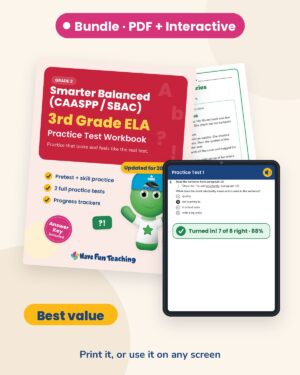
Smarter Balanced (CAASPP / SBAC) 3rd Grade ELA Practice Test WorkbookTry it withSmarter Balanced (CAASPP / SBAC) 3rd Grade ELA Practice Test WorkbookTest PrepOpen it →

Questions teachers and parents ask

What are the 5 steps of the writing process?

Prewrite (plan), draft, revise, edit and publish. Writers plan their ideas, write a first draft, improve the content, fix mistakes and share a final copy.

At what age do kids learn the writing process?

Kids start in kindergarten by drawing, talking and labeling their ideas. Each year they add more to each step, and by 3rd to 5th grade they use the full process on their own.

Why is the writing process important?

It breaks writing into manageable steps, so kids don't feel they have to get it perfect the first time. It also teaches them that good writing comes from revising.

How do I get kids to revise instead of just recopying?

Give them one clear job, like adding two details or changing three boring words. Colored pens for revisions make the changes visible and show kids their thinking.

Keep exploring