

Animals Plurals Worksheet
An animals plurals worksheet where 2nd graders turn 13 farm and forest animal words into plurals using s, es, y to ies, and irregular forms. Answer key included, so practice checks itself.
$6.97
Or free with a membership — members pay $3.33/mo for all 10,000+ resources. See plans
Want this one free?
Tell us where to send it and it’s yours — no card, no catch.
One free resource per teacher. We’ll also send free teaching ideas each week — unsubscribe anytime.
Teaching is easier with a membership
Unlimited printables, games & videos for PreK–6th — for your classroom or homeschool. Cancel anytime.
Start your 3-day free trial$0 today · cancel anytime · Instant access to 10,000+ resources
About this resource
Description
Learning to make a noun mean more than one is one of the first grammar rules a young writer really owns, and animals are the friendliest way in. This Animals Plurals Worksheet gives 2nd Grade students a clear, step-by-step look at how a singular animal name turns into a plural noun. Children practice the three patterns they meet most often: adding s to most nouns, adding es to a noun that ends in s, x, ch, or sh, and changing a final y to i before adding es. The sheet then finishes with the irregular plurals that follow no rule at all, so students learn to check a word instead of guessing at it.
The worksheet is organized into three short parts that build on one another, which makes it easy to use as guided practice, independent seatwork, morning work, or homework. Each part opens with the rule stated in plain language, and every animal word sits above its own wide writing line so children have real room to form the plural in their best handwriting. Because it doubles as a 2nd grade nouns worksheet, it fits neatly into a parts-of-speech unit as well as a spelling block. Read the rule aloud together, model the first item, then let students work down the page while you circulate.
What’s Included
- 1 print-ready PDF worksheet
- Answer key
- 13 write-the-plural animal words across three rules: s, es, y to ies, plus irregular plurals
There are three reasons this animals plurals worksheet helps children hold on to the skill. First, the rules are separated into their own sections, so a student is never asked to sort out which rule applies before knowing what the rules are. Second, every item is an animal a 2nd grader can already picture, which frees all of their attention for the spelling change rather than the vocabulary. Third, the irregular section at the end teaches something a rule cannot: some plurals simply have to be remembered, and noticing that early keeps students from over-applying a pattern to words like mouse, goose, and sheep.
Teachers and parents can stretch the skill well past the page. Play a quick sorting game by writing animal names on cards and having children drop each one into an s, es, or ies basket. Take a plural walk around the classroom or the house and count what you see: two chairs, three brushes, four boxes. Ask students to write a silly sentence using three plural animals from the sheet, then illustrate it. During read-aloud time, pause and let children spot a plural noun and say which rule made it. Short, repeated exposure like this turns a rule into a habit.
Related Resources
What teachers say
Reviews
You must be logged in to post a review.
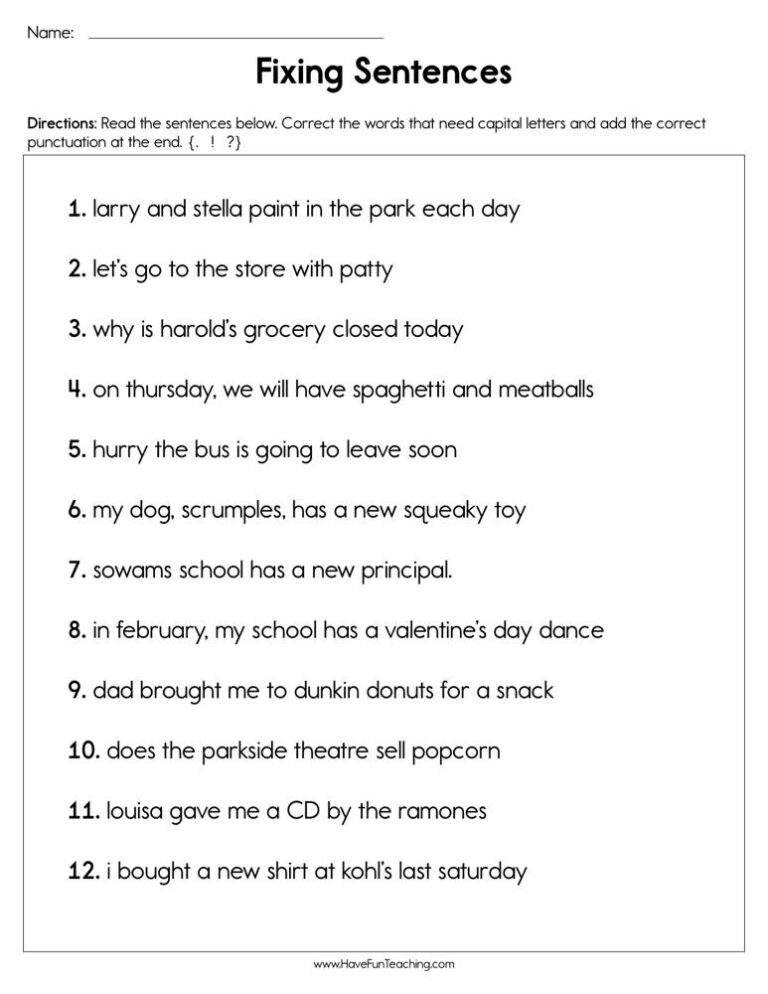
This editing sentences worksheet gives 2nd graders eight sentences to rewrite with the correct capital letters and end marks. Includes a complete answer key—perfect for quick, no-prep proofreading practice at home or school.
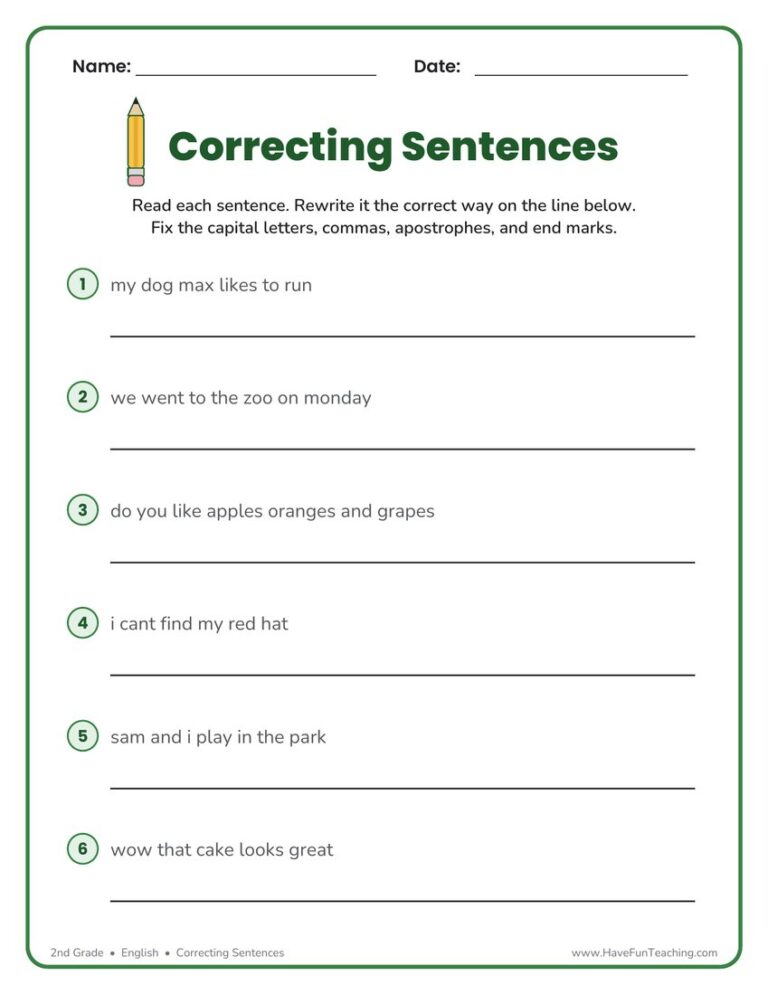
A 2nd grade correcting sentences worksheet where students rewrite six sentences to fix capital letters, commas, apostrophes, and end marks. Includes an answer key for quick, no-prep proofreading practice.
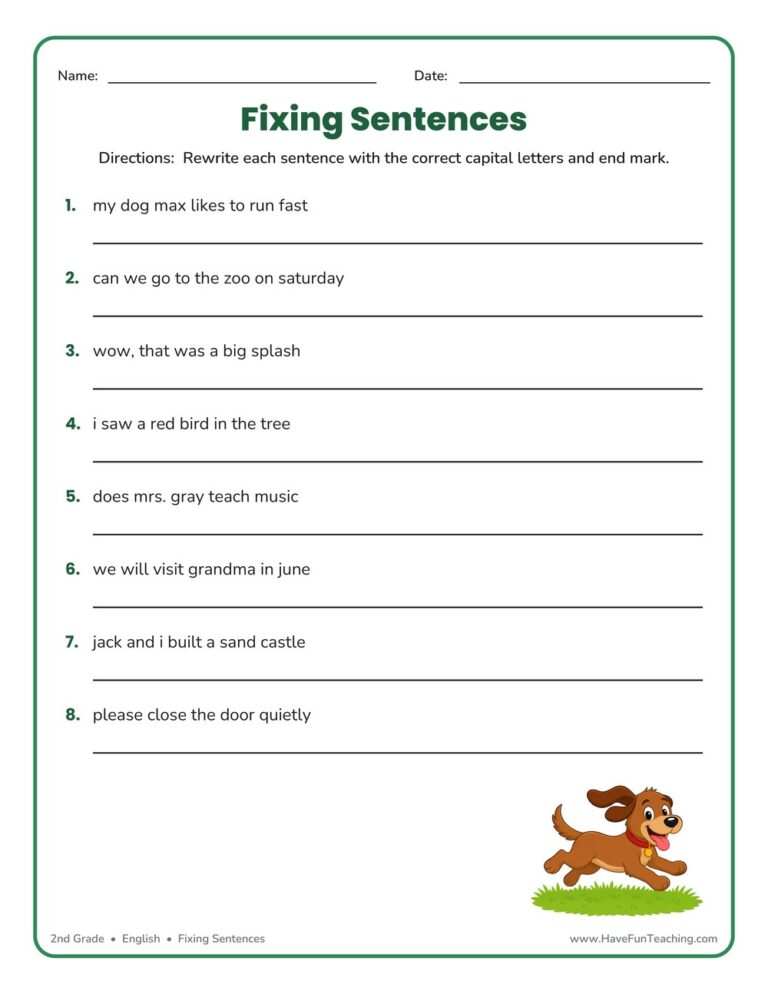
This Fixing Sentences Worksheet gives 2nd graders eight sentences to rewrite with the correct capital letters and end marks. Includes a complete answer key — perfect for no-prep grammar and editing practice.
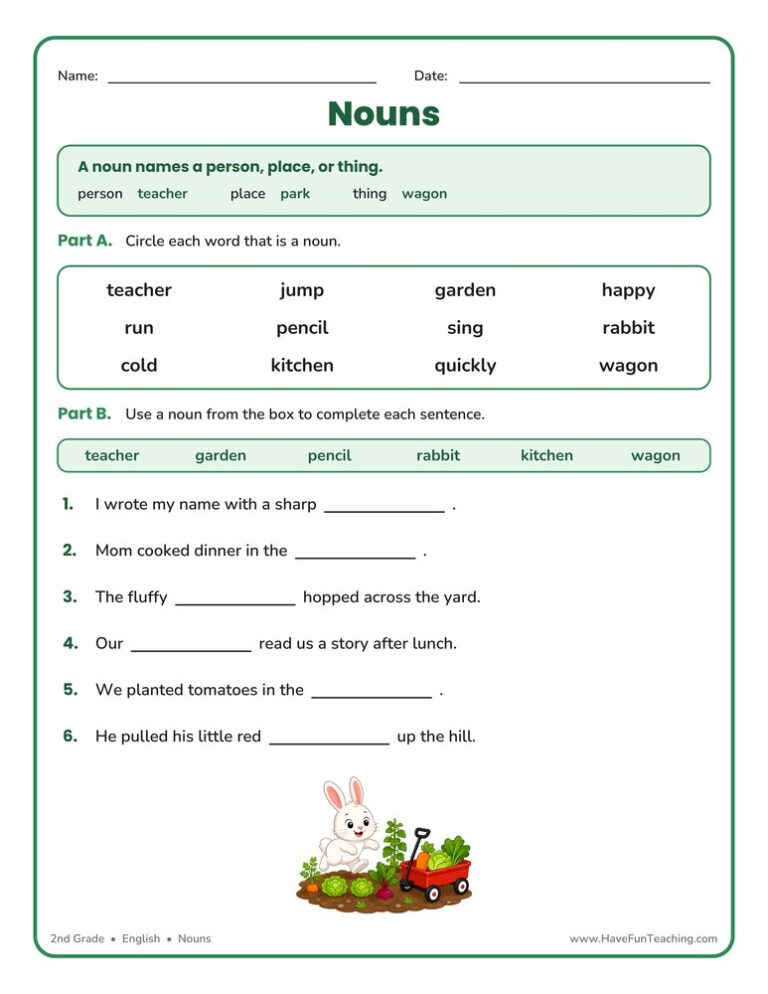
This Noun Fill in the Blanks Worksheet helps 2nd grade students identify nouns in a word box and complete sentences with the correct noun. Includes a complete answer key for quick, no-prep grammar practice at home or in the classroom.
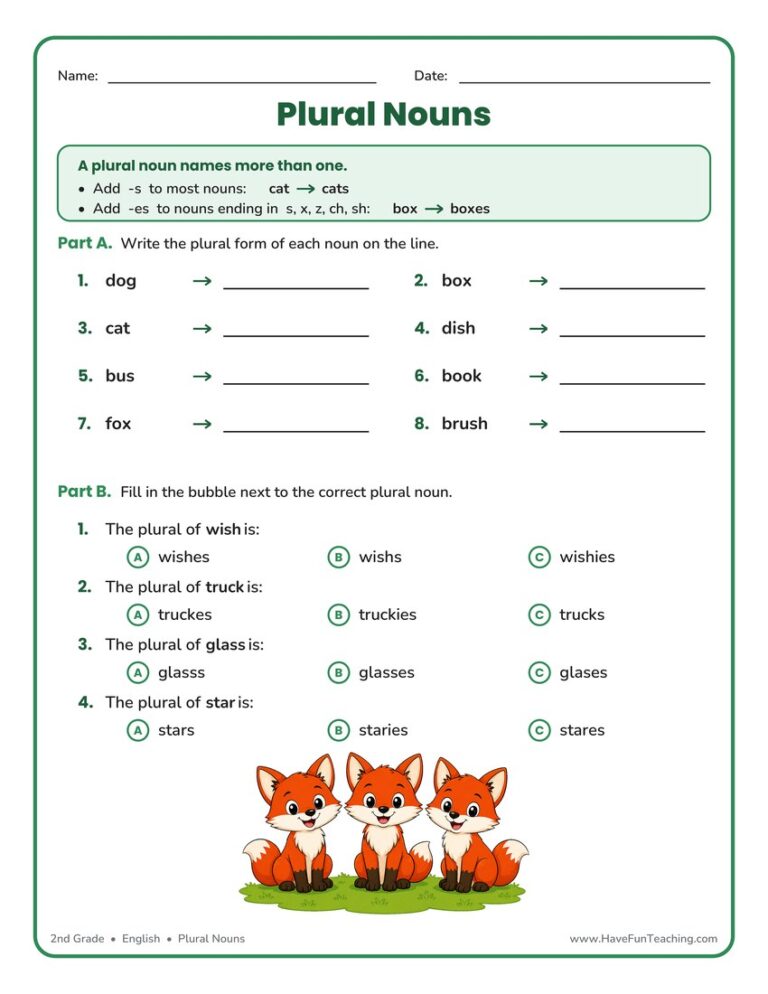
The Creating Plural Nouns Worksheet gives 2nd graders two-part practice turning singular nouns into plurals with the -s and -es rules. Includes a complete answer key for quick, no-prep grammar practice at home or school.

This Correcting Capitalization Worksheet gives 2nd graders six sentences to fix, rewriting each one with capital letters for names, places, months, and sentence beginnings. Answer key included for quick, no-prep grammar practice.

A free second grade using irregular nouns worksheet where students circle the correct irregular plural in eight sentences. Includes a complete answer key for quick, no-prep grammar practice.

This Correcting Punctuation Worksheet helps 2nd graders rewrite eight sentences with correct capital letters, commas, and apostrophes. Includes an answer key for quick, no-prep editing practice.
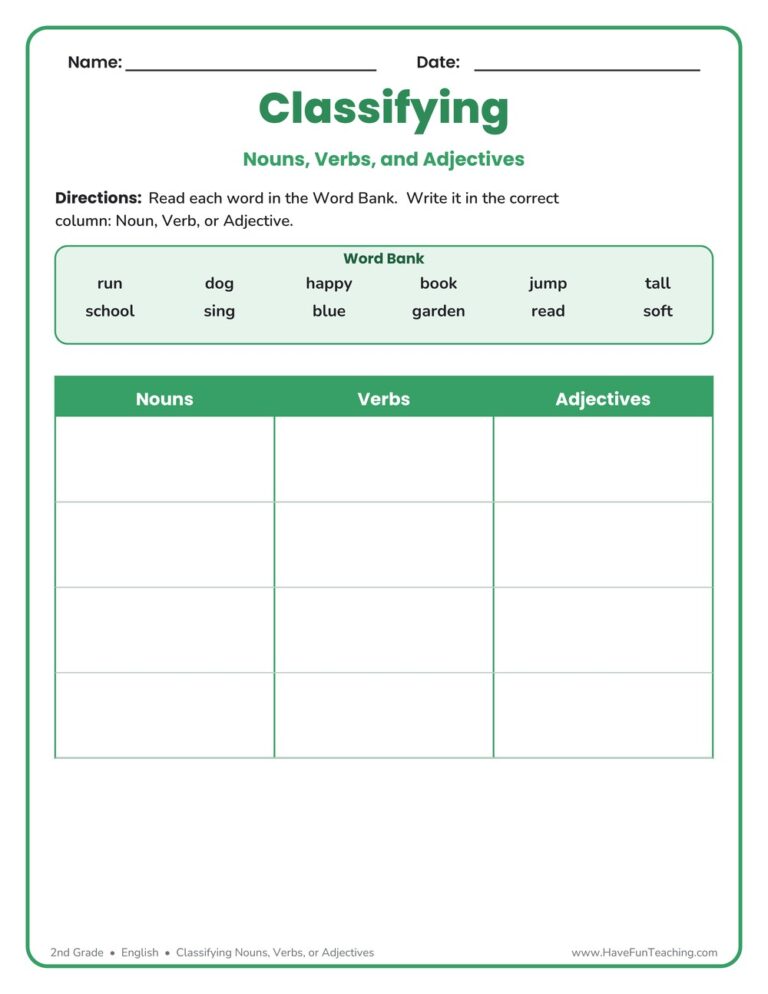
Sort twelve everyday words into nouns, verbs, and adjectives with this Classifying Nouns, Verbs, or Adjectives Worksheet for 2nd grade. Includes a complete answer key for quick, no-prep grammar practice.
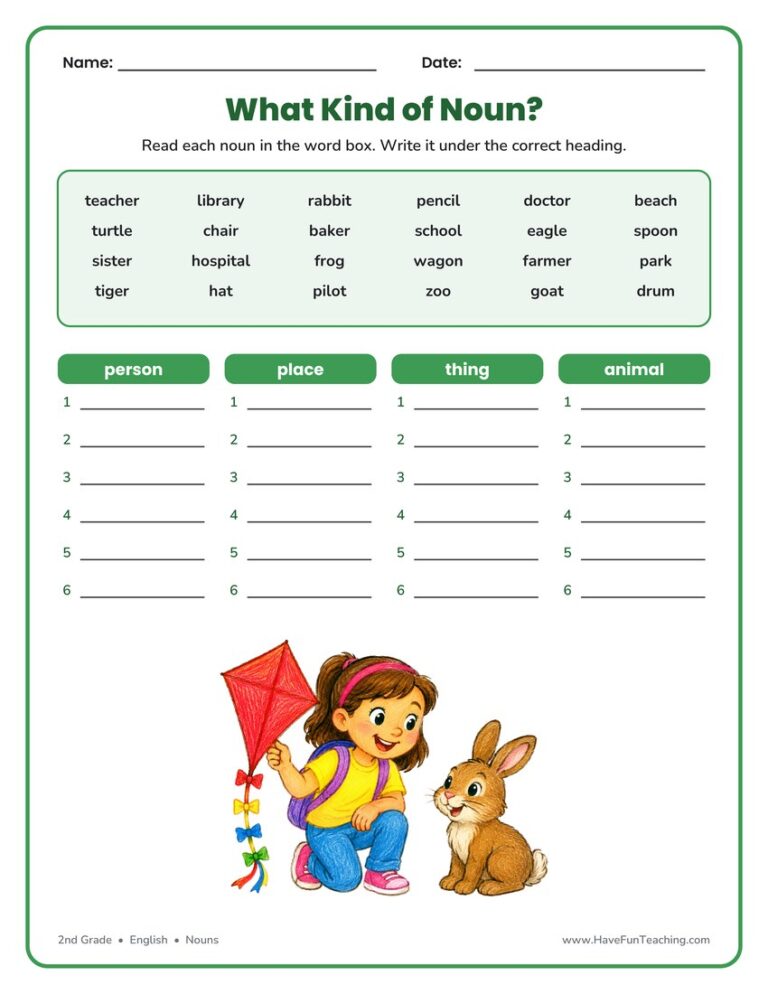
Students sort twenty-four nouns into person, place, thing, and animal categories on this 2nd grade sorting nouns worksheet. Includes a complete answer key for fast, no-prep grammar practice.

This finding nouns worksheet asks 2nd graders to circle nine nouns inside a short story, then sort each one under Person, Place, or Thing. Answer key included for quick, no-prep grammar practice.

This Noun Adjective and Verb Worksheet gives 2nd graders clear practice labeling words and finding the part of speech in a sentence. Includes an answer key — a simple, no-prep way to build grammar confidence.

Reviews
There are no reviews yet