

Area Circles Worksheet
This area circles worksheet has 5th graders use A = 3.14 x r x r on six labeled circles, then solve two real-world area problems. An answer key is included, so practice is quick to check.
$6.97
Or free with a membership — members pay $3.33/mo for all 10,000+ resources. See plans
Want this one free?
Tell us where to send it and it’s yours — no card, no catch.
One free resource per teacher. We’ll also send free teaching ideas each week — unsubscribe anytime.
Teaching is easier with a membership
Unlimited printables, games & videos for PreK–6th — for your classroom or homeschool. Cancel anytime.
Start your 3-day free trial$0 today · cancel anytime · Instant access to 10,000+ resources
About this resource
Description
Finding the area of a circle is one of the first times students multiply a decimal by a squared measurement, and this area circles worksheet gives them the guided practice they need. Students use the formula A = π × r × r with 3.14 for pi, work from both radius and diameter measurements, and label every answer in square units so the meaning of area is never lost behind the arithmetic.
This 5th grade area worksheet opens with a short reference panel that defines the radius and the diameter and states the formula, so students can get started on their own. Part A gives six labeled circles: four list a radius, and two list a diameter that students must halve before they multiply. Part B moves the skill into two real-world problems, including a two-step comparison of a round pond and a round patio. Use it as morning work, as guided practice after a mini-lesson, as homework, or as review before a test, and let students show their multiplication beside each problem.
What’s Included
- 1 print-ready PDF worksheet
- Answer key
- 6 labeled circle diagrams and 2 real-world area problems
Three things make this area circles worksheet effective. First, the formula and the vocabulary stay on the page, so students spend their thinking on the computation instead of hunting for a definition. Second, mixing radius and diameter measurements makes students read carefully and decide what to do first, which is exactly the kind of reasoning tested on state assessments. Third, the two-step problem in Part B asks for two areas and a comparison, so the skill is applied rather than repeated.
Teachers and parents can keep the practice going away from the page. Measure the radius of round objects around the room, such as a clock, a plate, or a jar lid, find each area, then order the objects from smallest to largest. Trace a circle on grid paper and count the squares inside it to see why the formula gives a sensible answer. Compare a small pizza with a large one to decide which is the better buy, or challenge students to find an area when only the diameter is given. Short hands-on tasks like these build the number sense that makes the formula stick.
Related Resources
What teachers say
Reviews
You must be logged in to post a review.

A 5th grade finding the area of triangles worksheet with six labeled figures students solve using A = ½ × base × height. Complete answer key included for no-prep geometry practice.

This Volume, Surface Area Rectangular Prisms Worksheet gives 5th Grade students four labeled prisms plus an applied box comparison, with an answer key included, so measurement practice builds real reasoning.
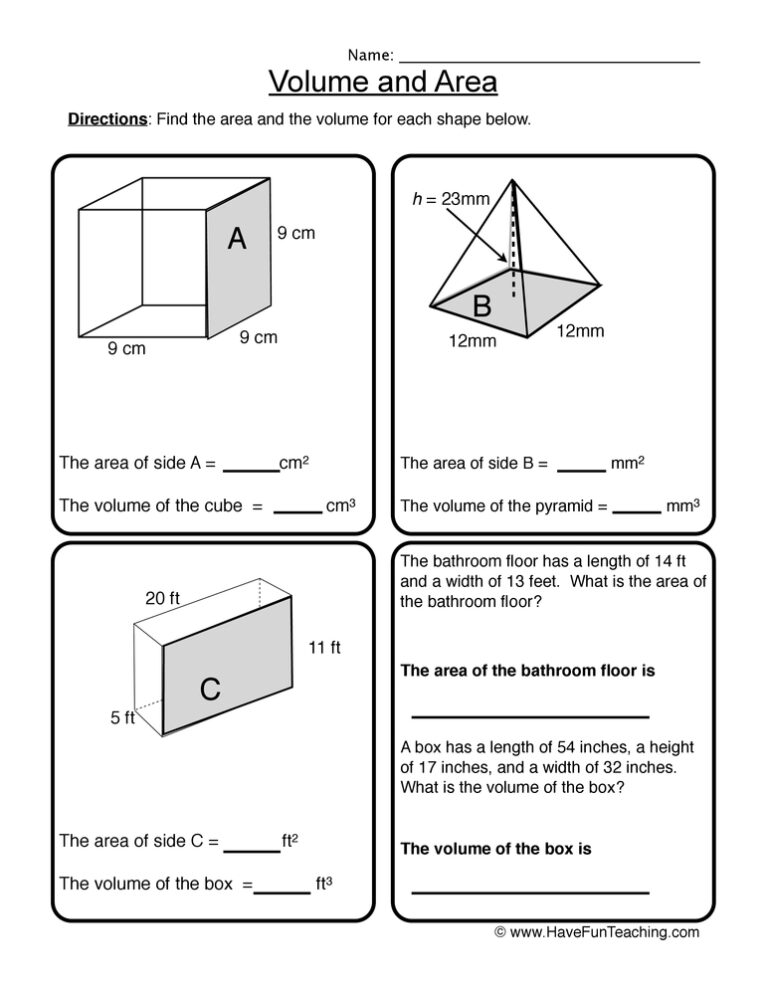
This Volume Area Worksheet gives 5th graders four labeled prisms and an applied box problem, with the volume and face-area formulas supplied. An answer key is included for fast, no-prep marking.

Using this Area and Perimeter Pirate Activity, students apply the area and perimeter formulas for rectangles to match each pirate with his ship.
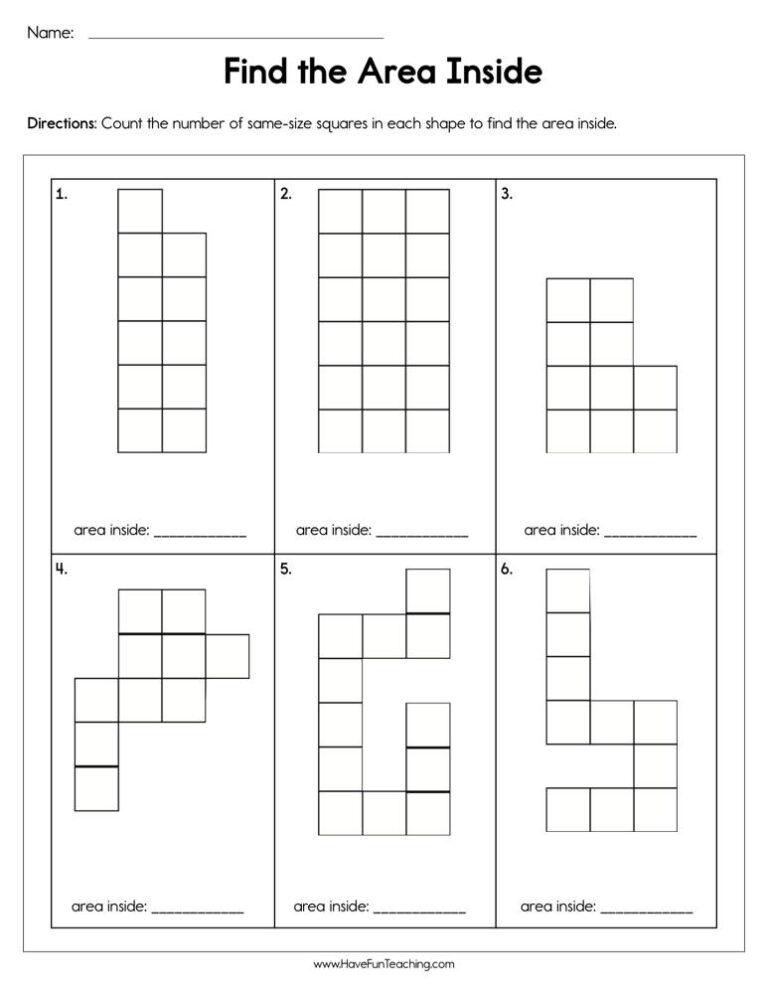
Using this Find the Area Inside Worksheet, students find the area of rectangles on a grid by counting squares inside the provided shape.
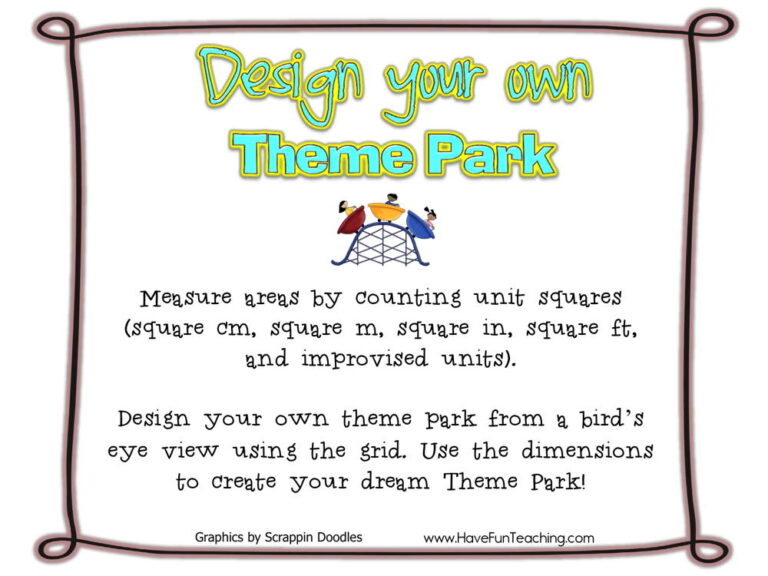
Using this Design Your Own Theme Park Unit Square Activity, students measure areas by counting unit squares.

Using this Geometric Measurement Understanding Unit Squares Activity, match area terms and definitions in order to be able to find area.
Using this Geometric Measurement Area Activity, students measure areas by counting unit square and matching square units to pictures.

Using Adding Perimeters Worksheet, students find the perimeter of two separate rectangles and then add to find the combined perimeter.

Using this Geometric Measurement Estimate and Count Unit Squares Activity, studentsestimate how many tiles it will take to cover each plane figure.
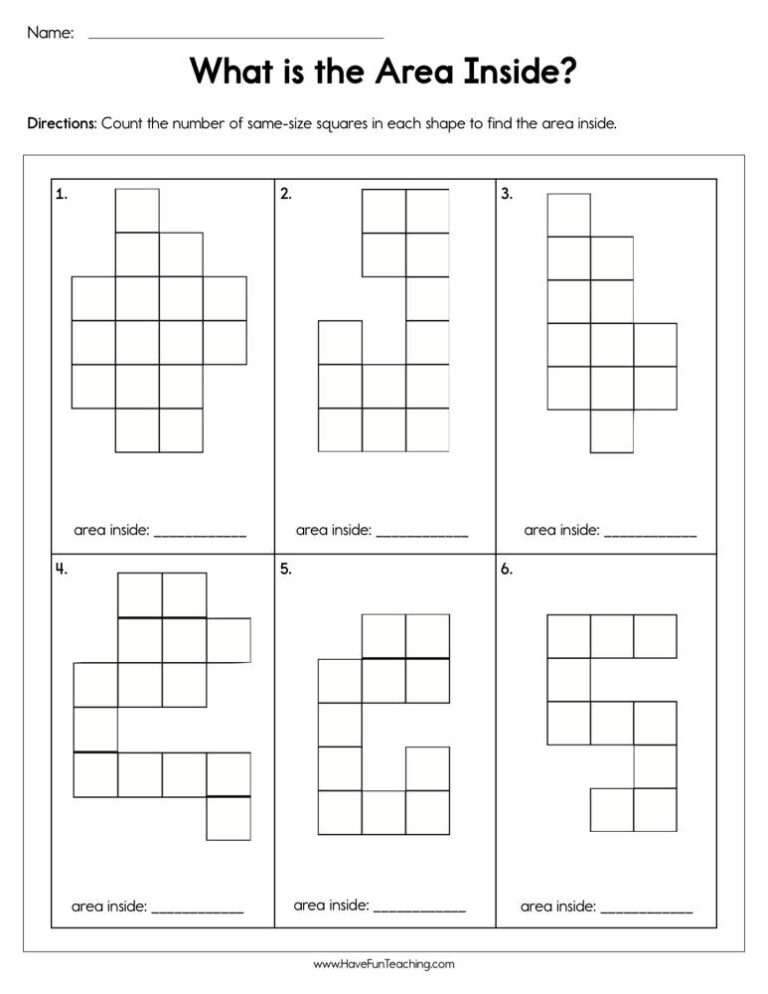
Using this What is the Area Inside Worksheet, students find the area of rectangles on a grid by counting squares inside the provided shape.

Using this Solving Area Problems Worksheet, studentscreate designs, draw them, and then find the area of each structure using inch tiles.

Reviews
There are no reviews yet