

Canoeing Chaos – Reading Comprehension Worksheet
This Canoeing Chaos reading comprehension worksheet has 4th graders read a nonfiction passage about why canoes tip and how to stay safe, then answer questions. An answer key is included for quick checking.
$6.97
Or free with a membership — members pay $3.33/mo for all 10,000+ resources. See plans
Want this one free?
Tell us where to send it and it’s yours — no card, no catch.
One free resource per teacher. We’ll also send free teaching ideas each week — unsubscribe anytime.
Teaching is easier with a membership
Unlimited printables, games & videos for PreK–6th — for your classroom or homeschool. Cancel anytime.
Start your 3-day free trial$0 today · cancel anytime · Instant access to 10,000+ resources
About this resource
Description
This Canoeing Chaos reading comprehension worksheet helps students build strong reading skills with a nonfiction passage about why canoes tip over and how paddlers keep them steady. Reading comprehension means understanding what a text says, finding the key details, and using those details to answer questions. Students who practice with real informational text learn to slow down, reread, and look back for evidence.
The Canoeing Chaos reading comprehension worksheet opens with a two-page passage that explains the parts of a canoe, the idea of a center of gravity, and the simple rules that keep a canoe from rolling over. After reading, students answer four multiple choice questions and write a short constructed response using details from the text. Use it for independent reading, small groups, homework, or test prep.
What’s Included
- A two-page nonfiction passage about canoe balance and water safety
- Four multiple choice questions on cause and effect, steps, details, and main idea
- One written response question that asks students to explain with evidence
- A complete answer key with a sample written response
Why This Worksheet Helps Kids
First, it strengthens comprehension by asking students to connect a cause to its effect, such as why standing up makes a canoe top-heavy. Second, it builds academic vocabulary, since each new word, such as capsize or stern, is explained right in the sentence where it appears. Third, the written response gives students practice explaining their thinking and supporting it with evidence from the passage.
Ideas for Teachers and Parents
Before reading, stack blocks tall and short and let students see which one tips first, then connect the stack to a person standing in a canoe. After reading, have children list the canoe safety rules on a poster, or talk about water safety before a summer trip. This 4th grade reading comprehension worksheet also pairs nicely with a science lesson on balance and gravity.
Related Resources
What teachers say
Reviews
You must be logged in to post a review.
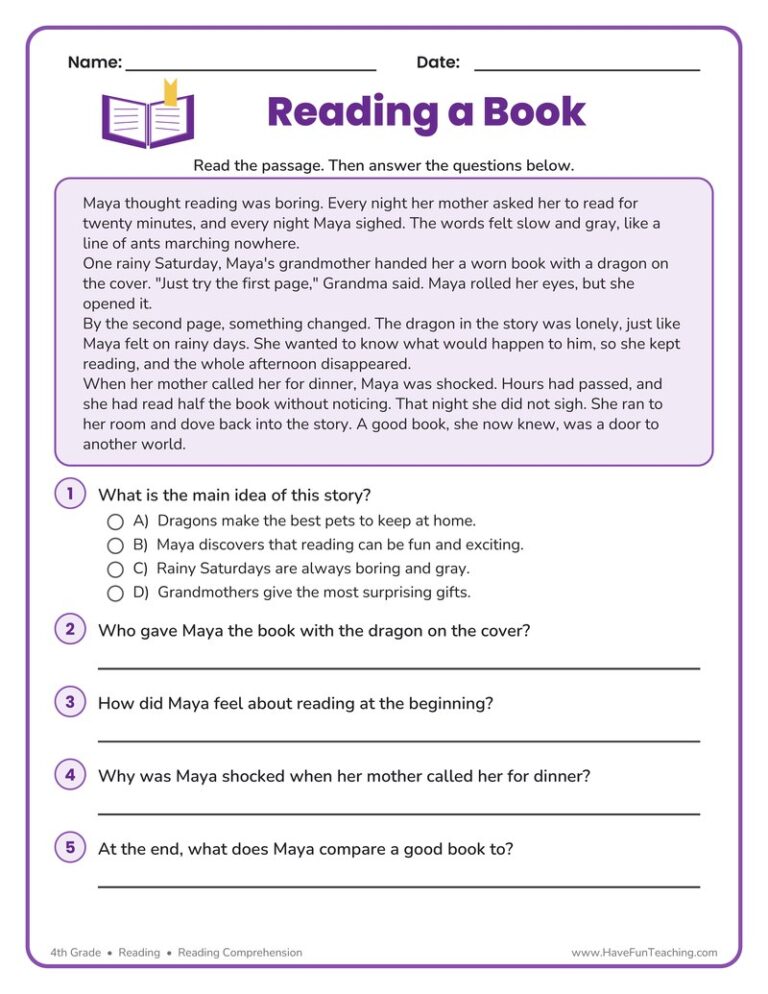
A Reading a Book Reading Comprehension Worksheet that helps 4th graders read a fun story about a girl who learns to love reading, then answer multiple-choice and short-answer questions. Includes a complete answer key for quick, no-prep practice.
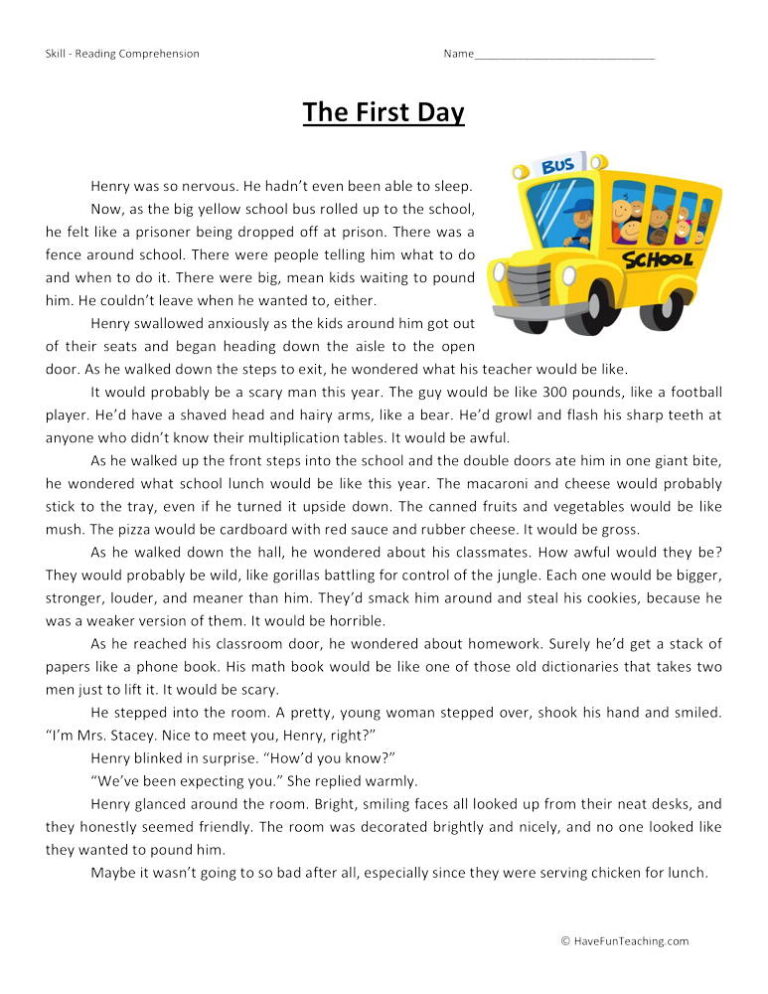
The First Day Reading Comprehension Worksheet follows a nervous new student through his first day of 4th grade, then asks readers to prove each answer with evidence from the text. Answer key included, ideal for the first week of school.

This exercising health and fitness reading comprehension worksheet gives 4th graders an illustrated nonfiction passage about exercise plus multiple-choice and written questions. Answer key included for fast, no-prep reading practice at home or in class.
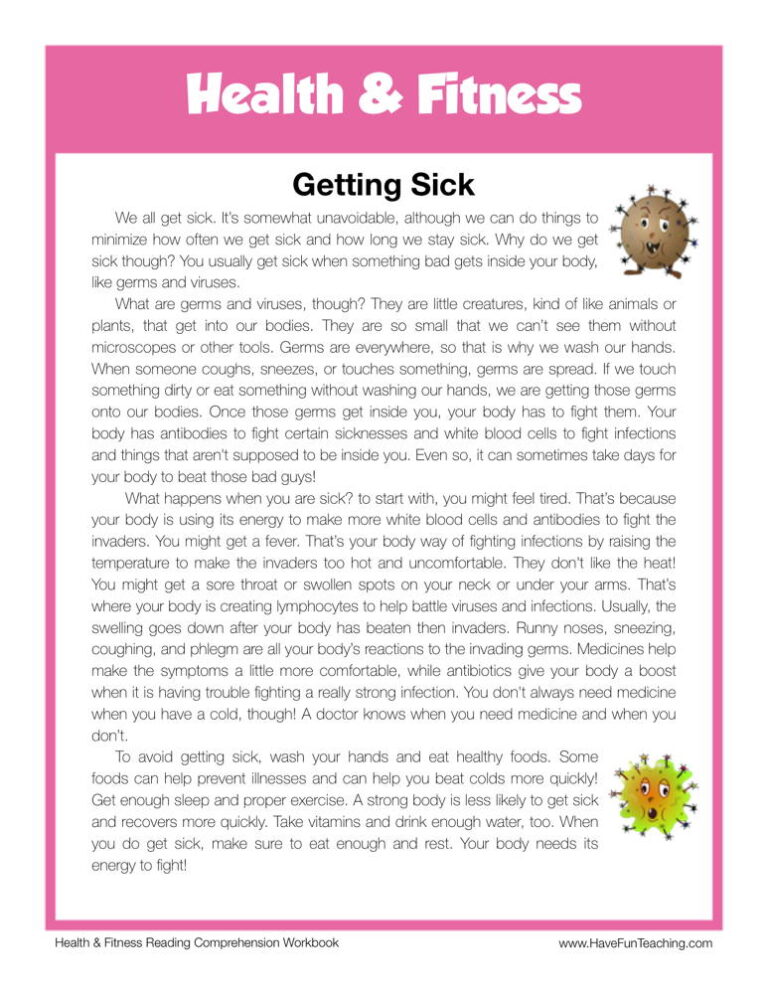
This Getting Sick Health and Fitness Reading Comprehension Worksheet gives 4th graders a non-fiction passage about germs and the immune system, plus main idea, vocabulary, and written-response questions. Answer key included for quick, no-prep practice.
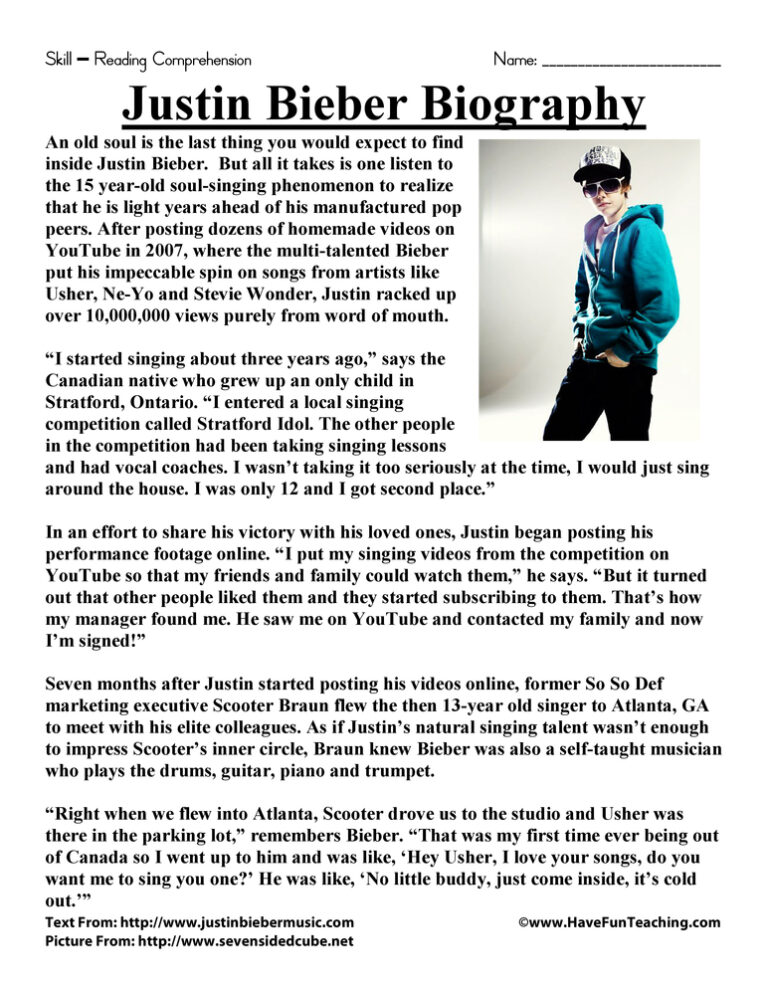
This Justin Bieber Biography Reading Comprehension Worksheet will help your students build their reading comprehension skills while reading a biography about Justin Bieber.

An original fiction story about a laptop that dies the night before a big report is due. This My Computer Died Reading Comprehension Worksheet builds 4th grade text-evidence skills, and a complete answer key is included.

The Eating Healthy Health and Fitness Reading Comprehension Worksheet gives 4th graders a nonfiction passage about nutrition plus five questions to answer. An answer key is included, making it perfect for no-prep reading and health practice.
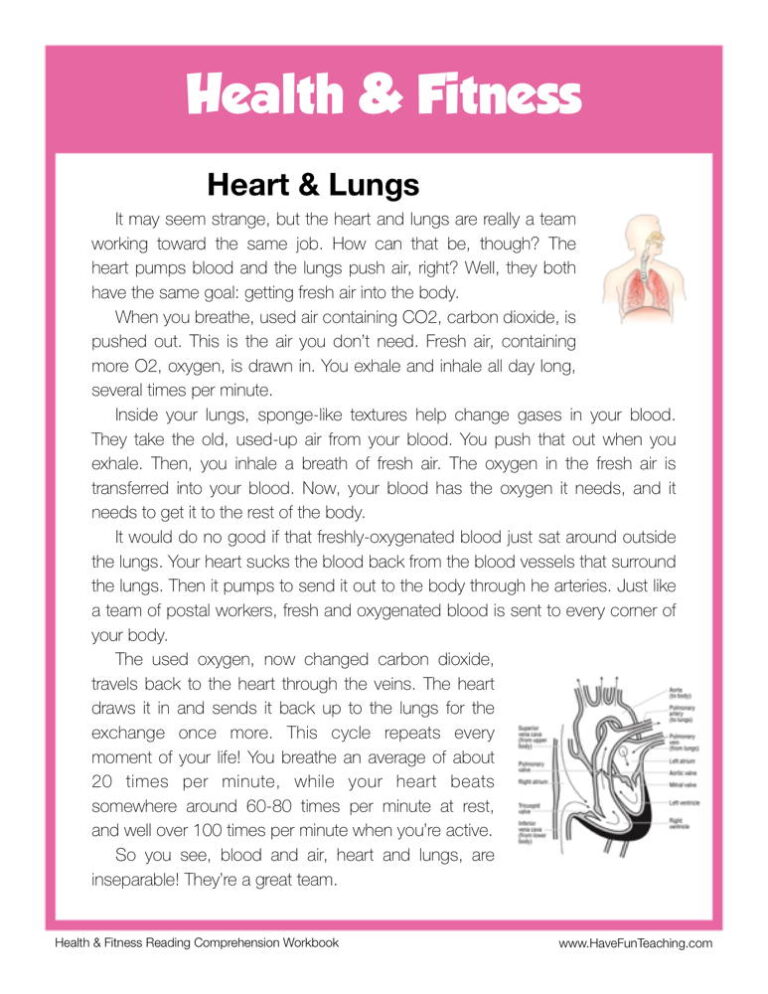
Build informational reading skills with this Heart and Lungs Health and Fitness Reading Comprehension Worksheet. Fourth graders read a two-page science passage, then answer questions about it. An answer key is included, so checking work takes seconds.
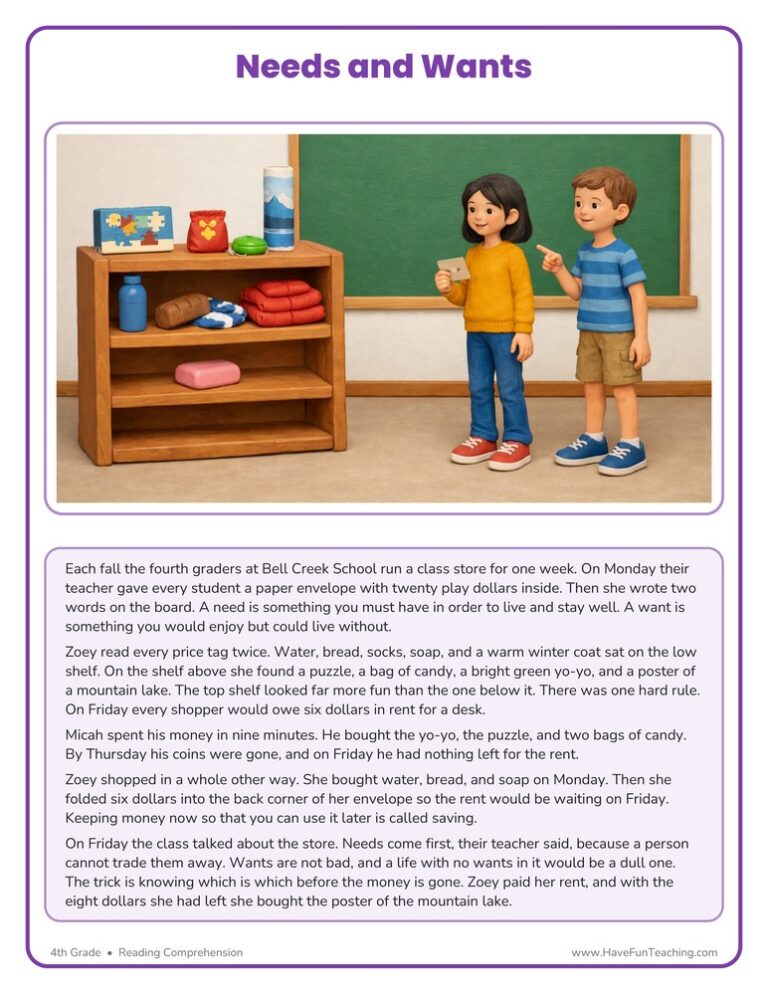
A needs and wants reading comprehension worksheet for 4th grade: read a short story about a classroom store, then answer bubble and written-response questions. Answer key included, so students can check their own evidence.
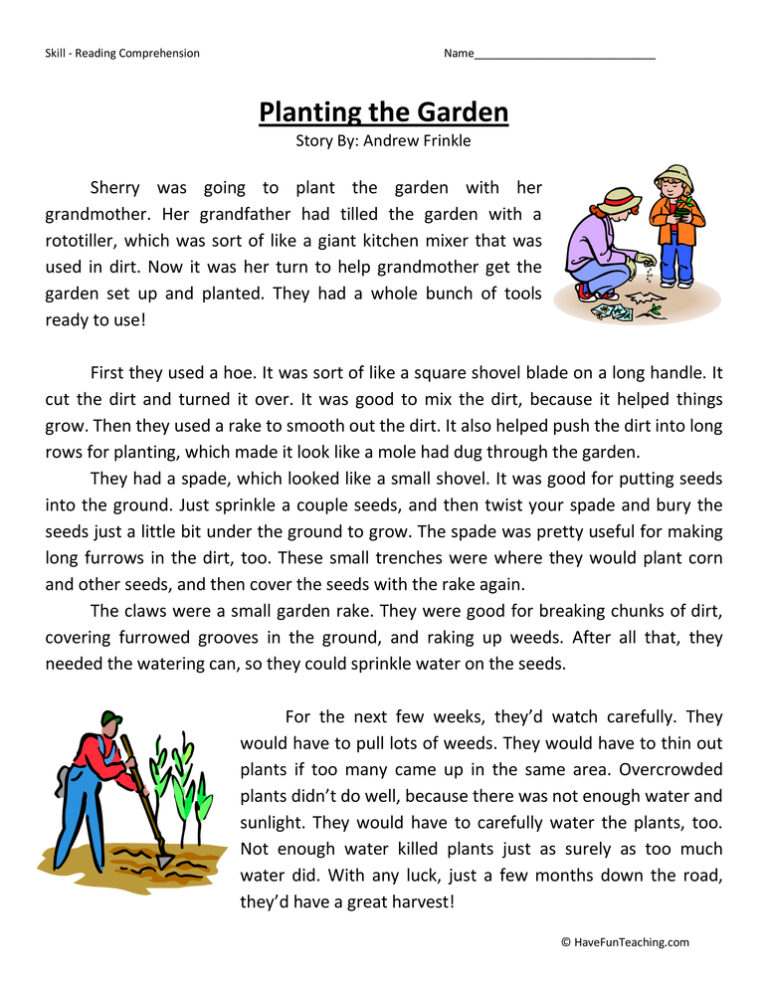
A Planting Gardens Reading Comprehension Worksheet for 4th grade, built around an original garden story with multiple-choice, sequencing, and written-response questions. Answer key included for fast, no-prep comprehension practice.
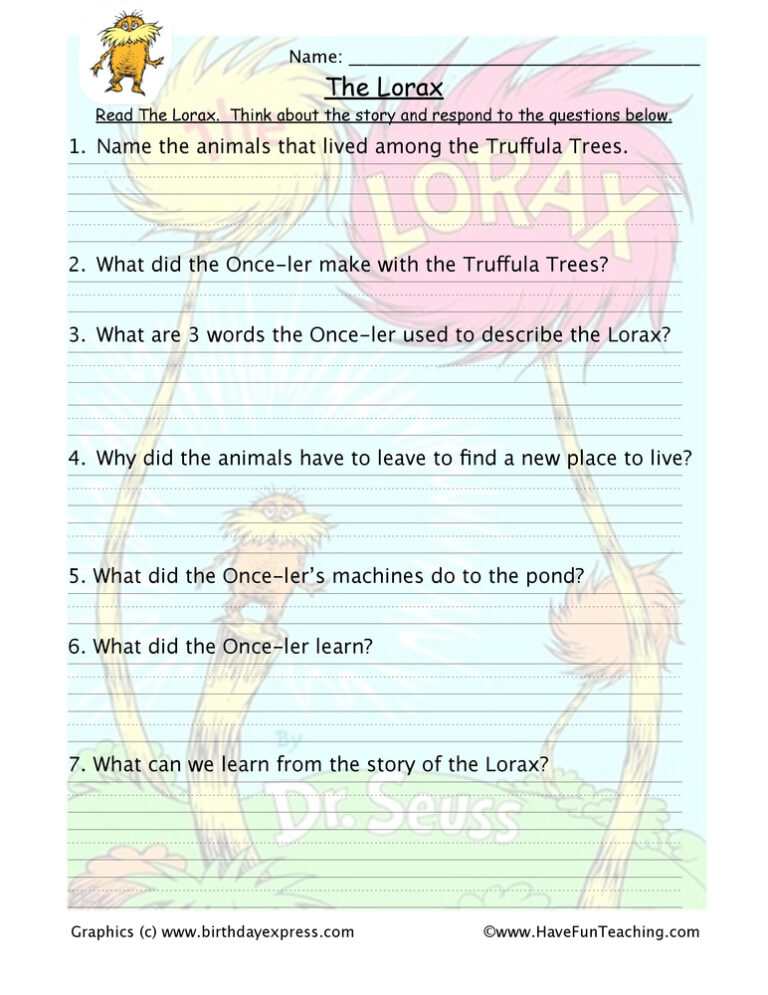
Using The Lorax Reading Comprehension Worksheet, students read and then answer questions using support from The Lorax.
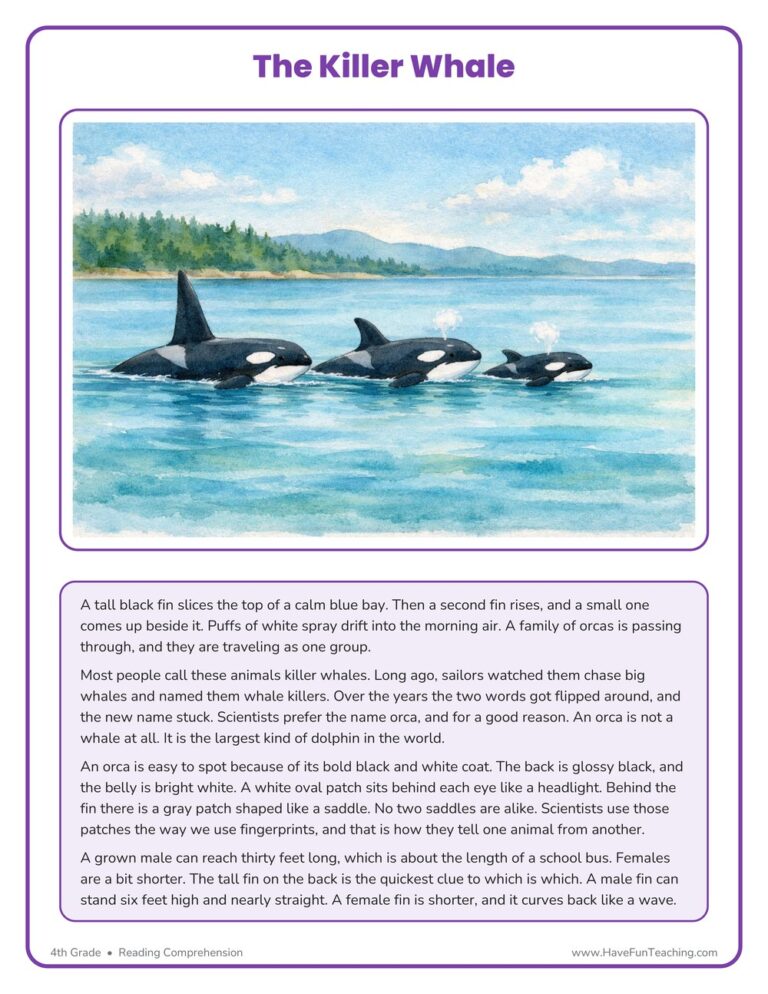
This Killer Whales Reading Comprehension Worksheet gives 4th grade students a two-page nonfiction passage about orcas plus six text-evidence questions. Answer key included, so learning about the ocean stays easy to check.
Reviews
There are no reviews yet