
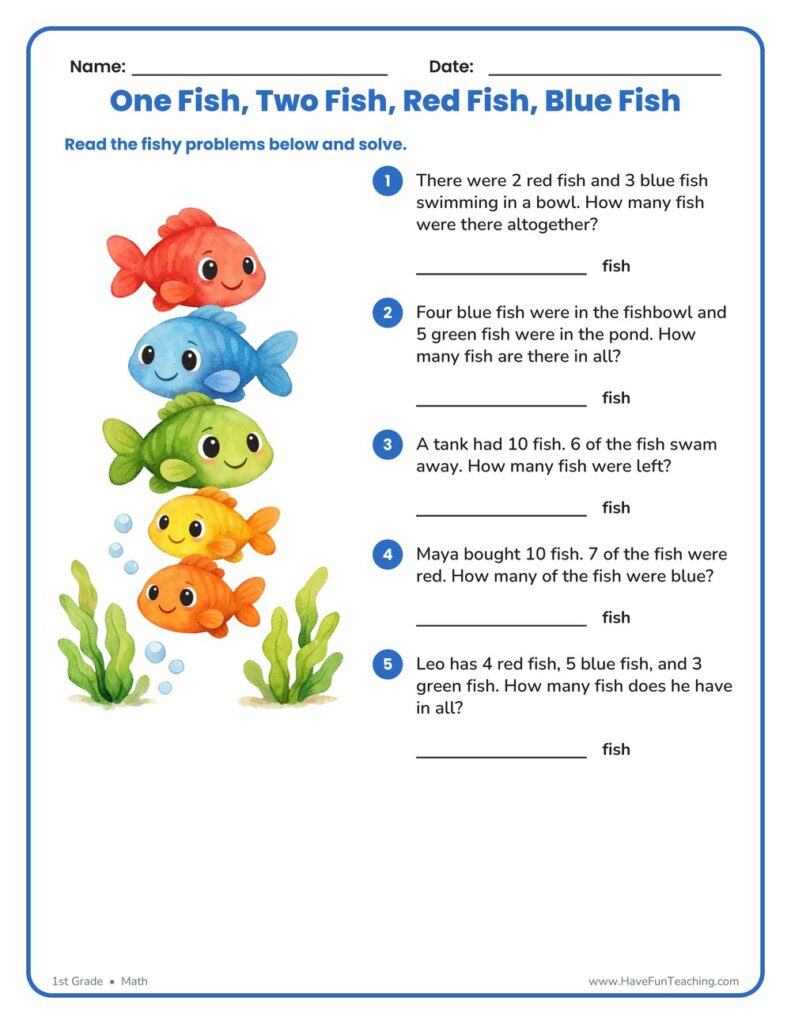
Dr. Seuss One Fish, Two Fish Math Worksheet
The Dr. Seuss One Fish, Two Fish Math Worksheet gives first graders five fish-themed word problems for adding and subtracting within 20. A complete answer key is included, perfect for no-prep math practice during Read Across America.
$6.97
Or free with a membership — members pay $3.33/mo for all 10,000+ resources. See plans
Want this one free?
Tell us where to send it and it’s yours — no card, no catch.
One free resource per teacher. We’ll also send free teaching ideas each week — unsubscribe anytime.
Teaching is easier with a membership
Unlimited printables, games & videos for PreK–6th — for your classroom or homeschool. Cancel anytime.
Start your 3-day free trial$0 today · cancel anytime · Instant access to 10,000+ resources
About this resource
Description
The Dr. Seuss One Fish, Two Fish Math Worksheet makes first grade addition and subtraction practice feel like a splashy underwater adventure. Inspired by the classic counting rhyme and perfect for Read Across America, this fishy activity invites young learners to read short story problems and figure out how many colorful fish are swimming, hiding, or getting added together. Solving real-world word problems helps first graders connect numbers to pictures and language, building the number sense they need to add and subtract within 20 with confidence.
This first grade Dr. Seuss math worksheet features five friendly fish word problems, each with its own answer line and a cheerful hand-painted fish illustration. To use it, print the page and have students read each problem out loud, underline the important numbers, and decide whether to add or subtract before writing their answer. It works wonderfully as morning work, a math center, homework, or a fun theme-day activity during Dr. Seuss week. A complete answer key is included so grading takes just seconds.
What’s Included
- 1 print-ready PDF worksheet
- Answer key
- 5 fish-themed addition and subtraction word problems
There are three big reasons teachers love this resource. First, the Dr. Seuss One Fish, Two Fish Math Worksheet blends reading and math, so students practice comprehension and computation at the same time. Second, the mix of joining, separating, and three-addend problems gently stretches first graders beyond simple facts. Third, the bright, original fish artwork keeps children motivated and makes math feel playful instead of stressful.
Teachers and parents can extend the fun in lots of ways. Act the problems out with plastic counters or paper fish, then have children build and solve their own fishbowl stories. Read a favorite rhyming fish book together and pause to invent addition and subtraction questions about the characters. Challenge students to draw their own fish tank and write a word problem for a partner to solve, or count real-world groups of objects around the room to reinforce adding and taking away.
Related Resources
What teachers say
Reviews
You must be logged in to post a review.
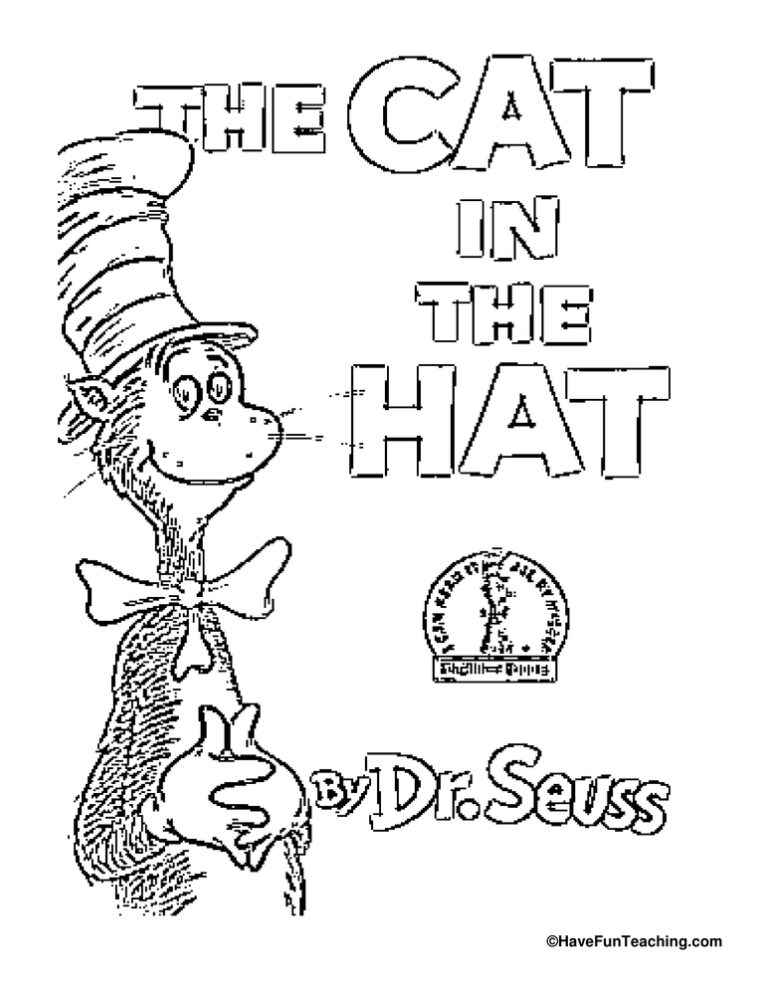
Using this Cat in the Hat Coloring Page, students can color a picture of the Cat in the Hat as they learn about Dr. Seuss.

This Dr. Seuss The Lorax Maze is a fun addition to your students' Read Across America celebration tohelp the Lorax find his way to the Truffula Tree.

UsingDr. Seuss ING Word Family Worksheet, students fill in the blanks using ING words from the word bank with help from Thing 1 and Thing 2!
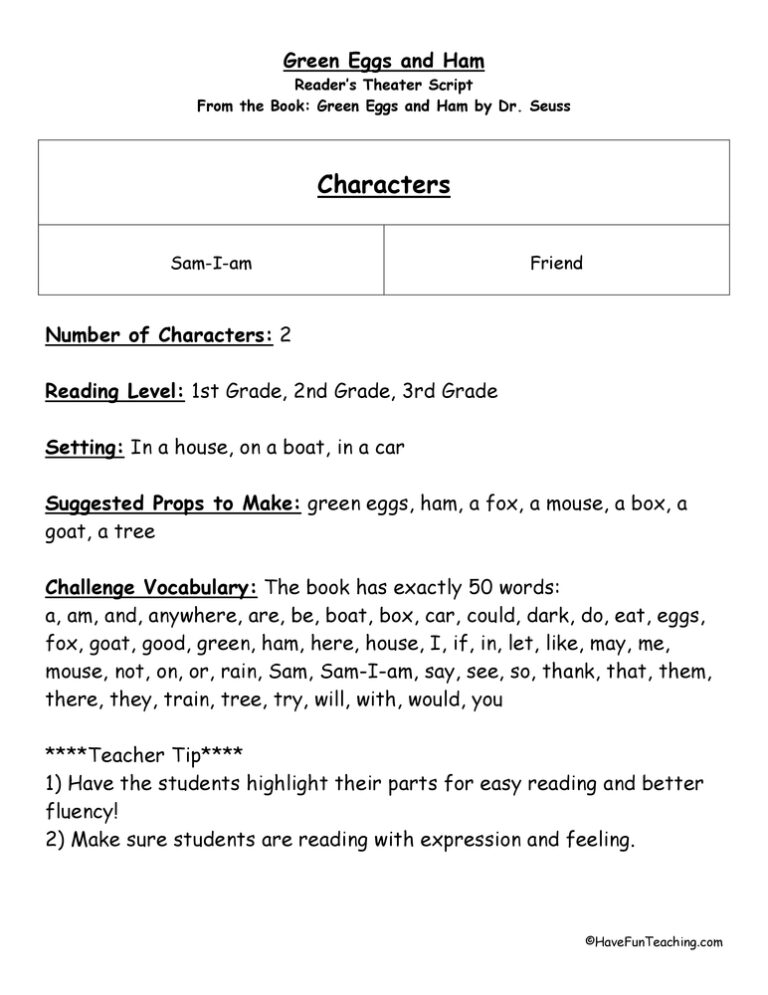
Using Green Eggs and Ham Reader's Theater, students act out different parts in the story Green Eggs and Hall to learn more about Dr. Seuss.

This Dr. Seuss Books Alphabetical Order Worksheet will teach your students how to put seven Dr. Seuss books words in ABC order.
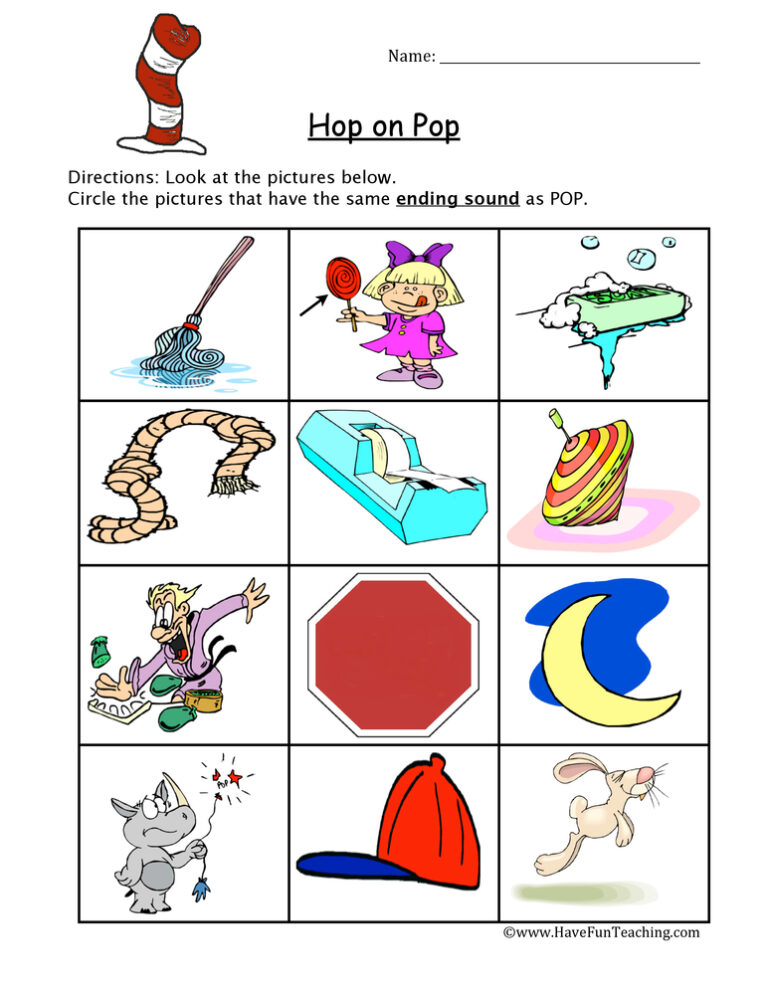
UsingDr. Seuss OP Word Family Worksheet, students circle the OP pictures in the chart using the help of Hop on Pop!
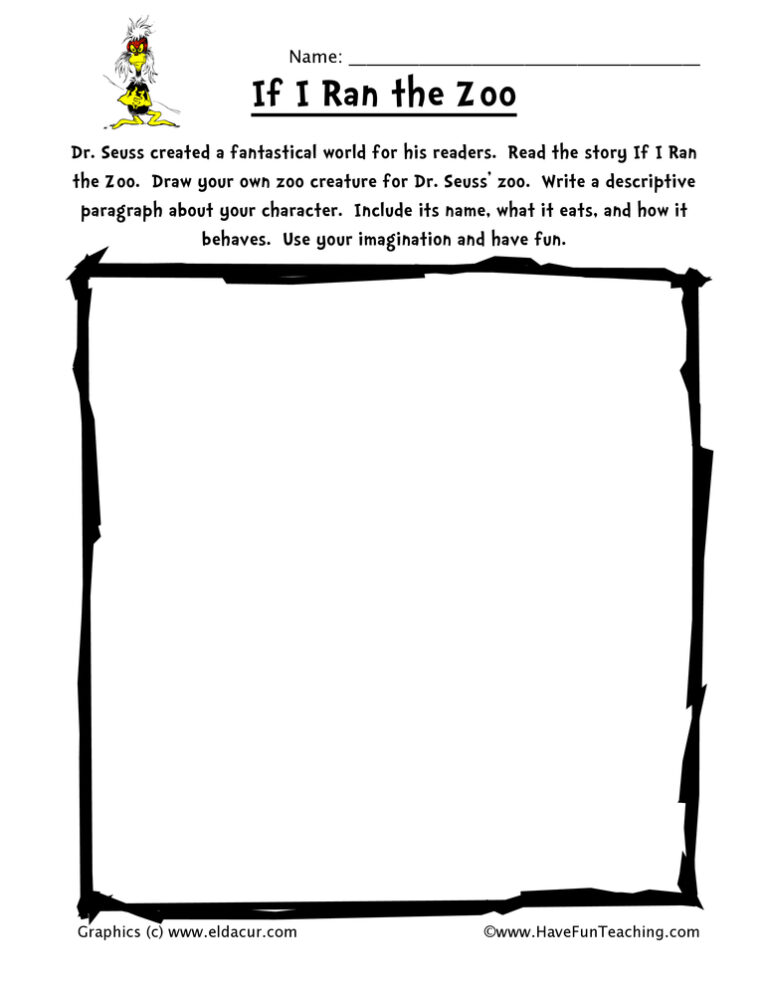
UsingDr. Seuss Creative Writing Worksheet, studentstrite a descriptive paragraph about your character after reading the Dr. Seuss classic, If I ran the Zoo.

Using Connecting Events In The Lorax Worksheet, students make a connection between to events in The Lorax to understand how events are related.
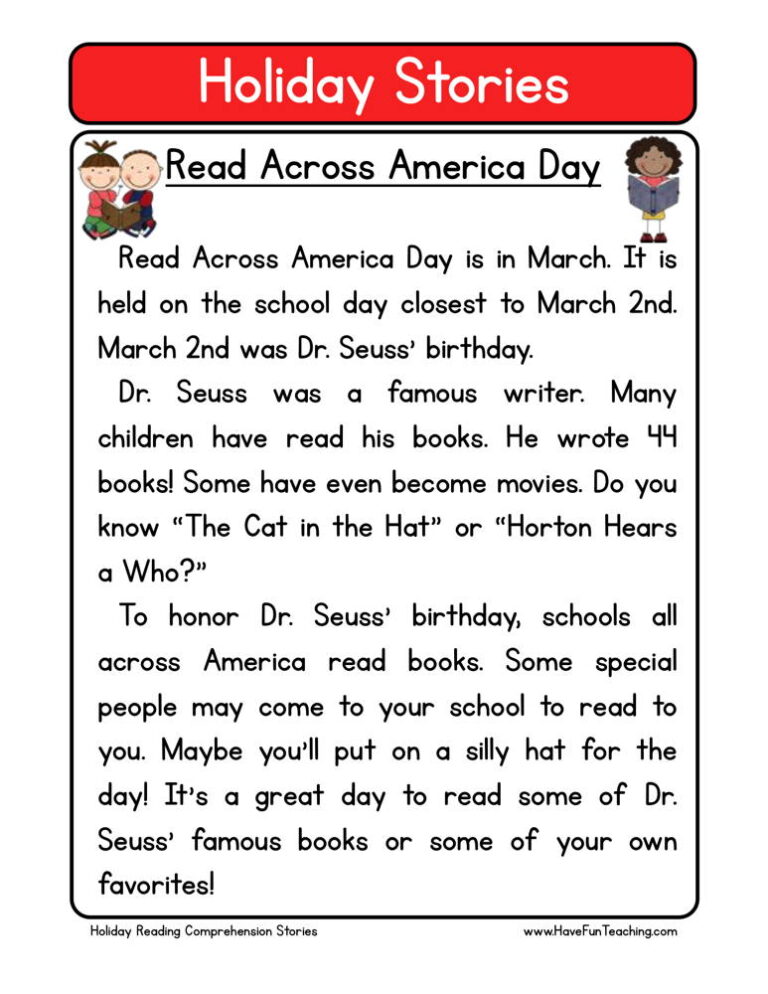
This Read Across America Day Reading Comprehension Worksheet will help your students build their reading comprehension skills while reading about Read Across America Day.
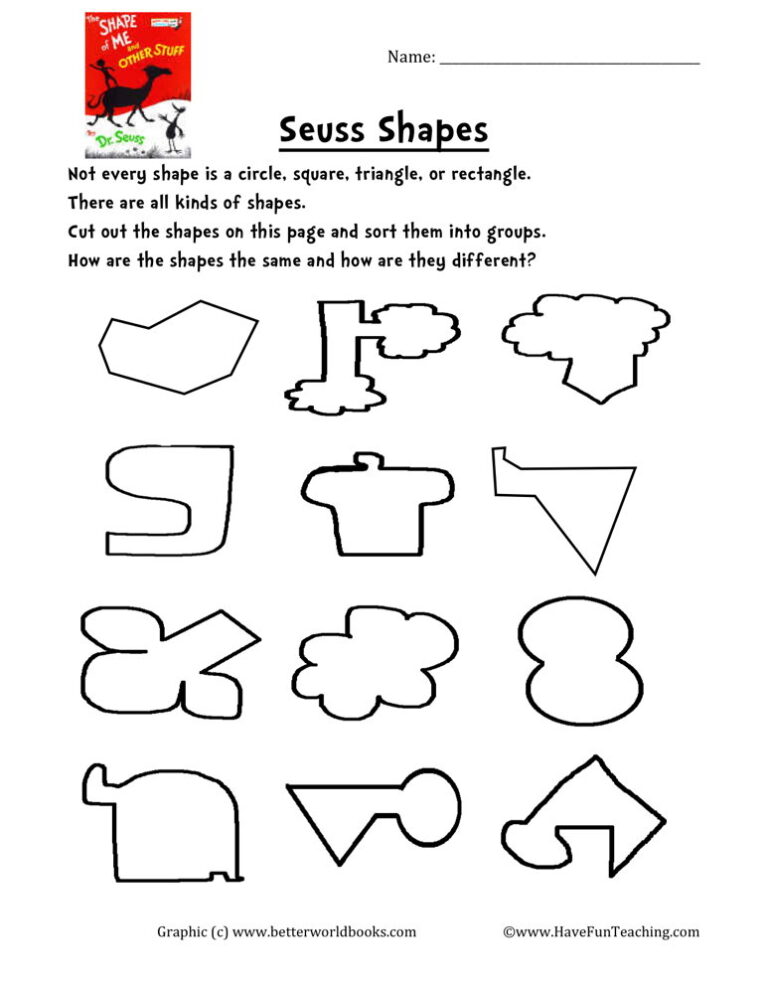
Using Dr. Seuss Shapes Worksheet, students cut out shapes in order to sort and compare them based on the Dr. Seuss book, The Shape of Me and Other Stuff.
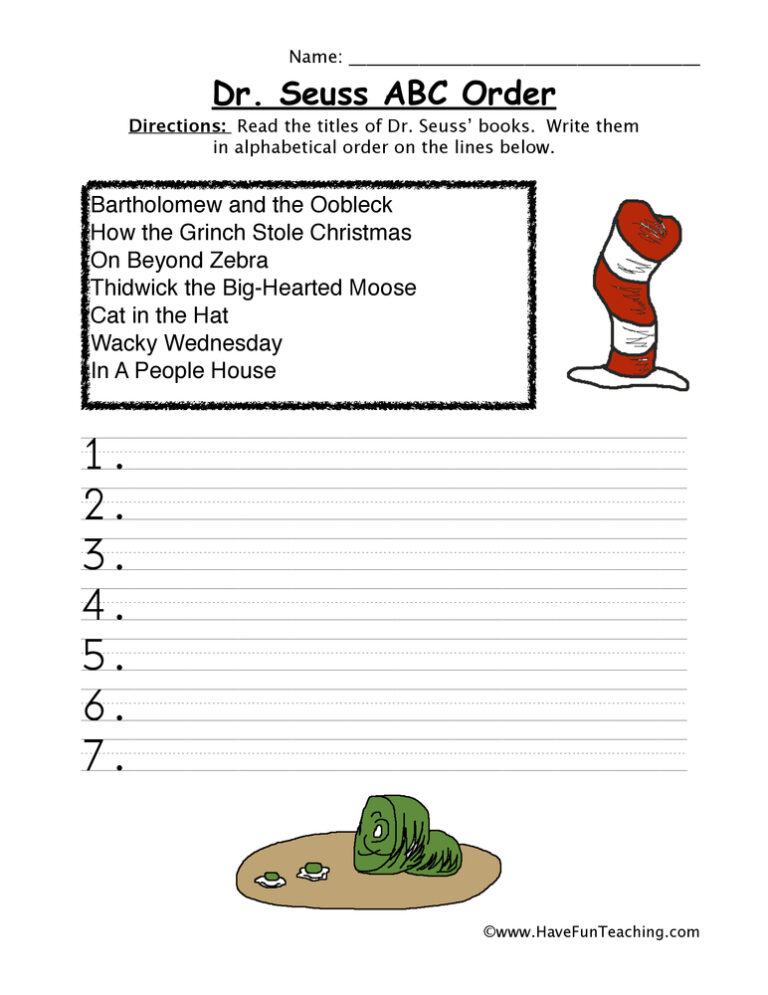
This Dr. Seuss Titles Alphabetical Order Worksheet will teach your students how to put seven Dr. Seuss books words in ABC order.
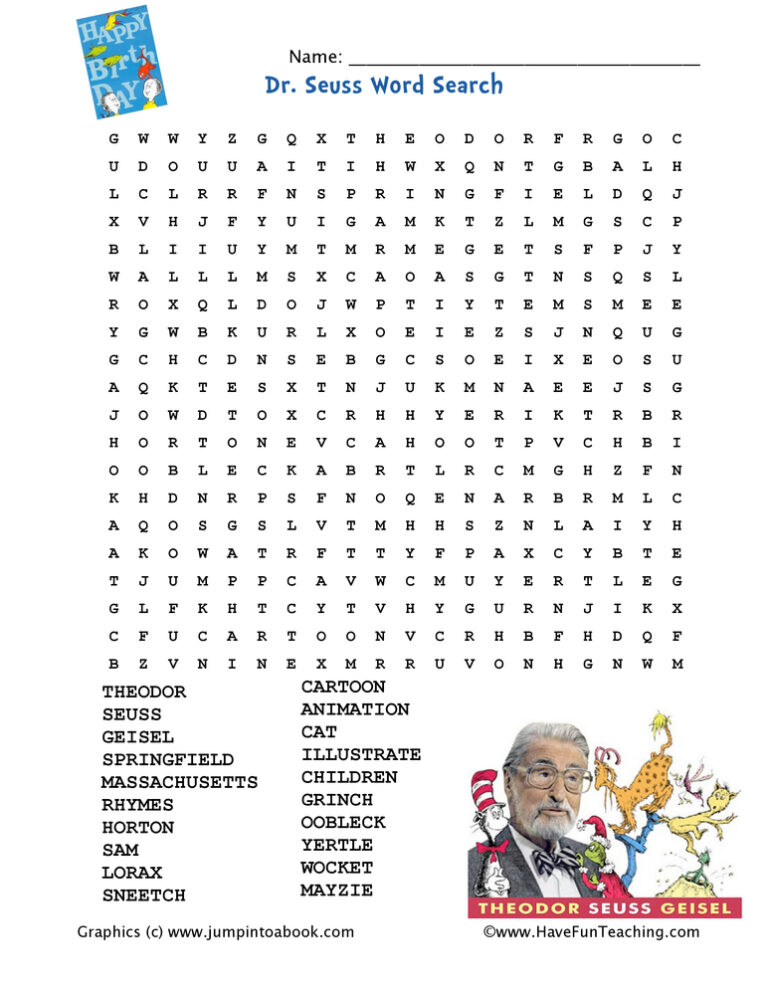
This Dr. Seuss Word Search is a fun way for students to learn about Dr. Seuss vocabulary and celebrate Read Across America Day!




Reviews
There are no reviews yet