Skip to content
Start My 3 Free Days $0 today · cancel anytime

Preschool Dr. Seuss Resources

3 preschool Dr. Seuss resources: 3 worksheets. How teachers use these

Preschool Dr. Seuss Resources

3 preschool Dr. Seuss resources: 3 worksheets. How teachers use these

Worksheet
WorksheetPreschoolCat in the Hat Coloring Page

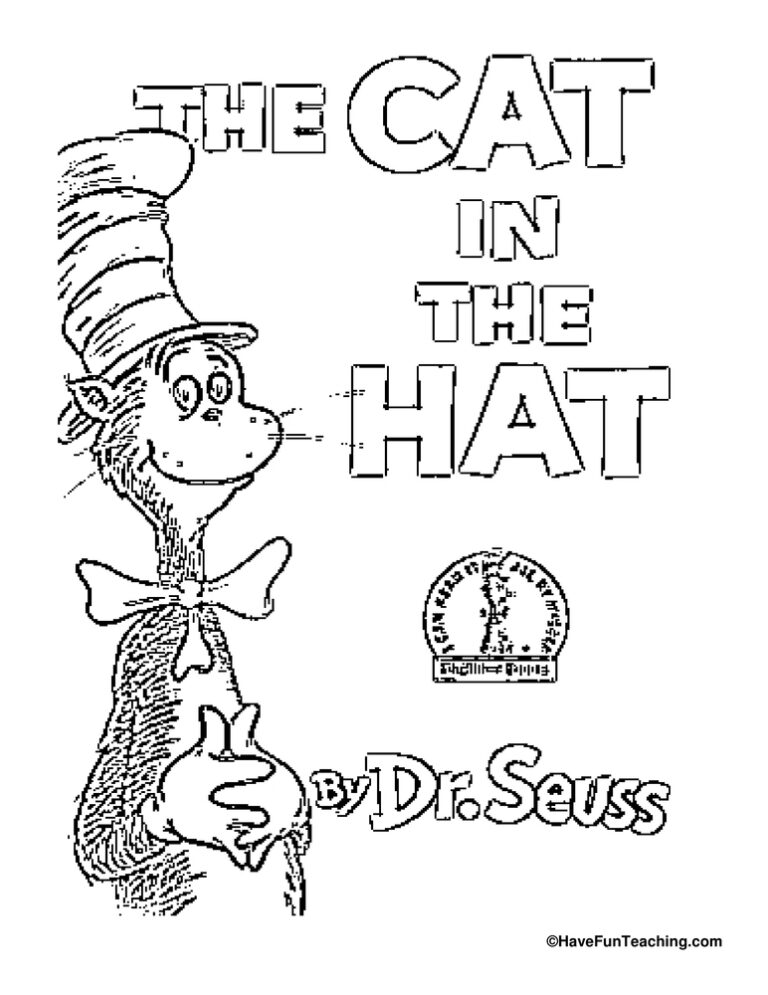
Using this Cat in the Hat Coloring Page, students can color a picture of the Cat in the Hat as they learn about Dr. Seuss.

Worksheet
WorksheetPreschoolGreen Eggs and Ham Coloring Page

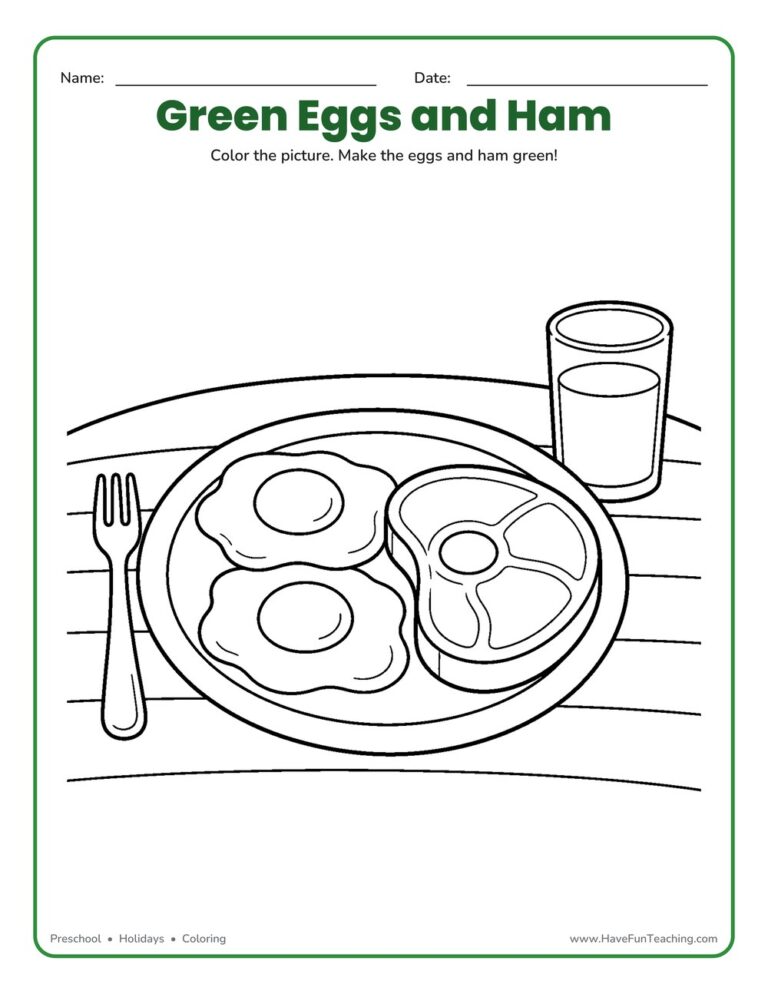
This green eggs and ham coloring page gives preschoolers a silly breakfast scene to color — make the eggs and ham green! A no-prep printable that builds fine-motor skills, perfect for Dr. Seuss Day.

Worksheet
WorksheetPreschoolDr. Seuss Coloring Page

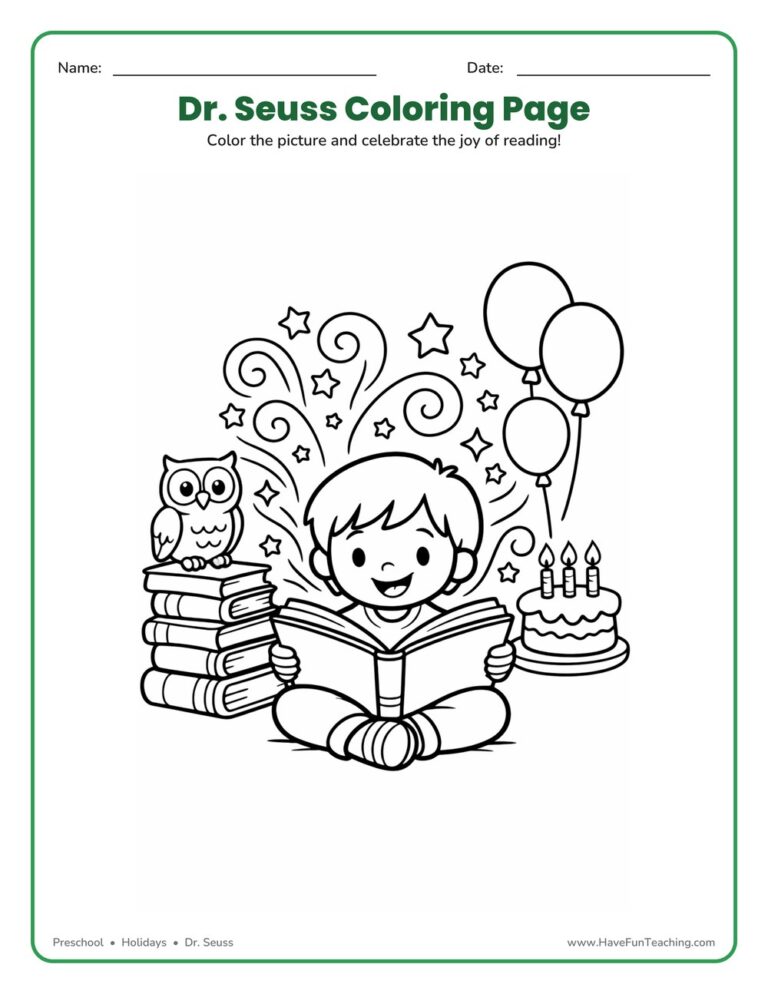
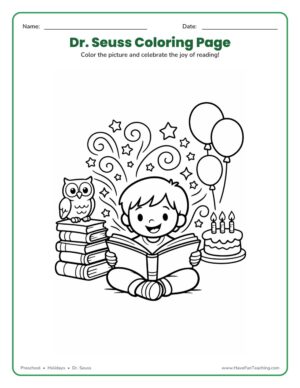
A Dr. Seuss Coloring Page for preschoolers that celebrates reading with a cheerful child, books, an owl, balloons, and a birthday cake to color. A screen-free, no-prep way to build fine-motor skills and a love of books.

From our teachers' playbook

Rhymes, hats and silly fun!

What do preschoolers learn on Dr. Seuss day?

Dr. Seuss week (around Read Across America Day on March 2) is a perfect excuse to fall in love with books. Preschoolers hear the bouncy rhymes, and that playful sound is real reading readiness: they start to hear that cat, hat and bat end the same way. They retell simple stories, name the characters and guess what silly thing happens next. Coloring and crafts give tired little hands a fun fine-motor workout. The click moment is when a child finishes a rhyme before you do!

Our favorite ways to celebrate Dr. Seuss with little ones

We keep the week light and playful, with rhyme in everything we do.

Finish my rhyme

Read a page aloud and stop before the last rhyming word: "I do not like them, Sam-I-..." Kids shout the answer. Then try made-up ones: "I saw a cat wearing a ..." Hearing rhyme is one of the first steps toward reading.

Why it works: teaching letter sounds directly and in order is one of the best-supported findings in reading research (National Reading Panel, 2000).

Cat in the Hat Coloring PageTry it withCat in the Hat Coloring PageWorksheetsOpen it →
Color and retell

While kids color a favorite character, ask them to tell you one thing that character did. "What did the Cat in the Hat do with the fish?" The picture keeps the story in front of them so even shy talkers join in.

Why it works: pairing a picture with each word gives kids two ways to remember it, a well-tested principle of how people learn (Mayer, 2009).

Dr. Seuss Coloring PageTry it withDr. Seuss Coloring PageWorksheetsOpen it →

Green eggs taste test

Make green scrambled eggs (a drop of food coloring does it) and let kids decide: yum or yuck? Graph the votes with sticky notes. It's silly, it's memorable and it sneaks in a little math.

Why it works: playful practice with a clear goal keeps kids practicing longer, and simple learning games have been shown to build real skills (Ramani and Siegler, 2008).

Green Eggs and Ham Coloring PageTry it withGreen Eggs and Ham Coloring PageWorksheetsOpen it →

Questions parents and teachers ask

When is Dr. Seuss Day?

It's celebrated on or around March 2, his birthday, as part of Read Across America. Many preschools turn it into a whole week of rhyming books and crafts.

Are Dr. Seuss books good for preschoolers?

Yes! The strong rhythm and rhyme help kids hear the sounds in words. Shorter titles like Hop on Pop and Green Eggs and Ham are great first picks.

What Dr. Seuss activities work for 3- and 4-year-olds?

Keep it simple: coloring pages, rhyme games, counting fish and making striped hats. Short activities that last 10 to 15 minutes fit little attention spans.

How does rhyming help preschoolers learn to read?

Rhyming teaches kids to listen to the ending sounds of words. That listening skill makes it easier to learn letter sounds and word families later.