

Drawing Ovals Worksheet
This Drawing Ovals Worksheet has kindergarten students trace three ovals, color the ovals in a mixed shape sort, and find an oval in real life. Answer key included for quick, no-prep shape practice.
$6.97
Or free with a membership — members pay $3.33/mo for all 10,000+ resources. See plans
Want this one free?
Tell us where to send it and it’s yours — no card, no catch.
One free resource per teacher. We’ll also send free teaching ideas each week — unsubscribe anytime.
Teaching is easier with a membership
Unlimited printables, games & videos for PreK–6th — for your classroom or homeschool. Cancel anytime.
Start your 3-day free trial$0 today · cancel anytime · Instant access to 10,000+ resources
About this resource
Description
Learning to recognize and form an oval is one of the first steps a young child takes into geometry, and this Drawing Ovals Worksheet gives them a gentle, hands-on way to do it. An oval is a curved, closed shape that is longer in one direction than the other, which makes it easy to confuse with a circle. Kindergarten students who practice tracing the curve with their own hand begin to feel the difference long before they can explain it in words. That physical memory is what makes the shape stick.
This kindergarten geometry worksheet moves through three short activities that build on one another. Students begin by tracing three dotted ovals of different sizes and orientations, so they meet the shape wide, tall, and large rather than in only one form. Next they color every oval in a mixed group of six shapes, sorting ovals from a triangle, a circle, and a square. Finally they look at three everyday pictures and circle the one that is shaped like an oval. Print it, hand out crayons, and the lesson is ready to go.
What’s Included
- 1 print-ready PDF worksheet
- Answer key
- 3 activities: tracing ovals, coloring ovals in a shape sort, and identifying a real-world oval
There are three reasons this Drawing Ovals Worksheet helps children learn the skill so quickly. First, tracing builds the fine motor control a child needs to draw a smooth curve, which is the same control they will use to form letters. Second, mixing ovals in with circles, squares, and triangles forces real discrimination instead of simple copying, so students have to look carefully at each outline. Third, the closing picture activity connects the abstract shape to an object children already know, which is exactly how young learners transfer a new idea into everyday life.
Teachers and parents can stretch this lesson well past the page. Go on an oval hunt around the room or the kitchen and count what you find: an egg, a serving platter, a bar of soap, a mirror. Roll out play dough snakes and bend them into ovals, then compare them to circles made the same way. Draw a giant oval on the sidewalk with chalk and let children walk the outline heel to toe. Sort shape blocks into an oval pile and a not-an-oval pile, and ask children to explain each choice out loud. Finish by singing a shapes song together so the vocabulary sticks.
Related Resources
What teachers say
Reviews
You must be logged in to post a review.
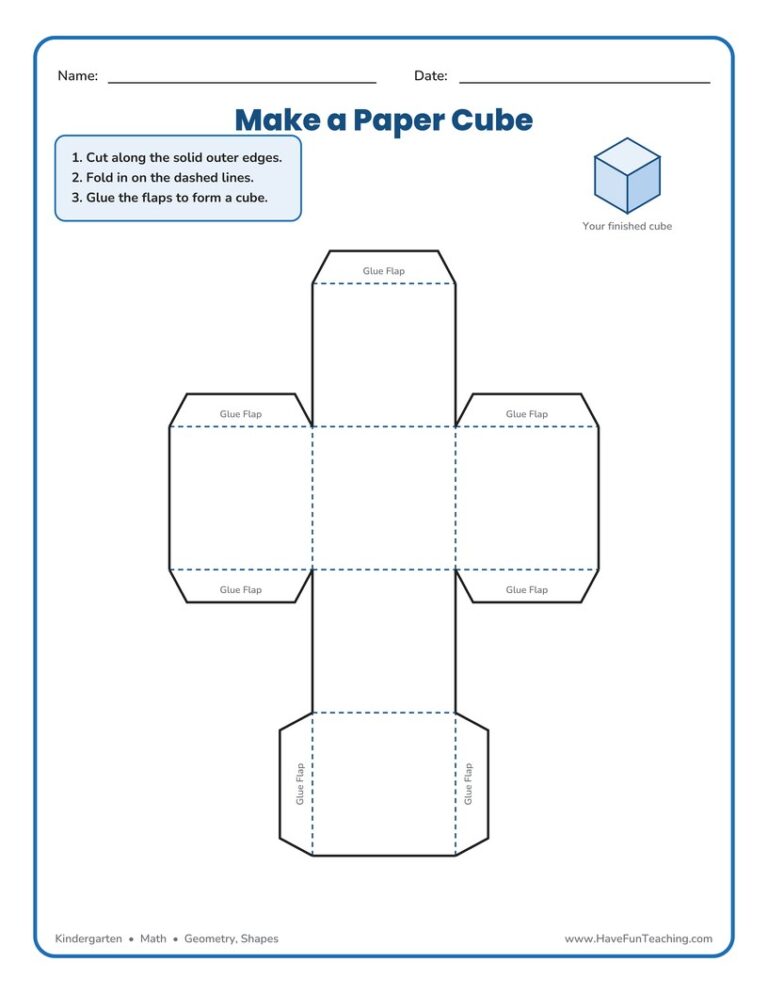
A hands-on paper cube template worksheet for Kindergarten geometry. Students cut, fold, and glue a printable cube net into a real 3D cube — a fun, no-prep way to explore solid shapes and build fine motor skills.
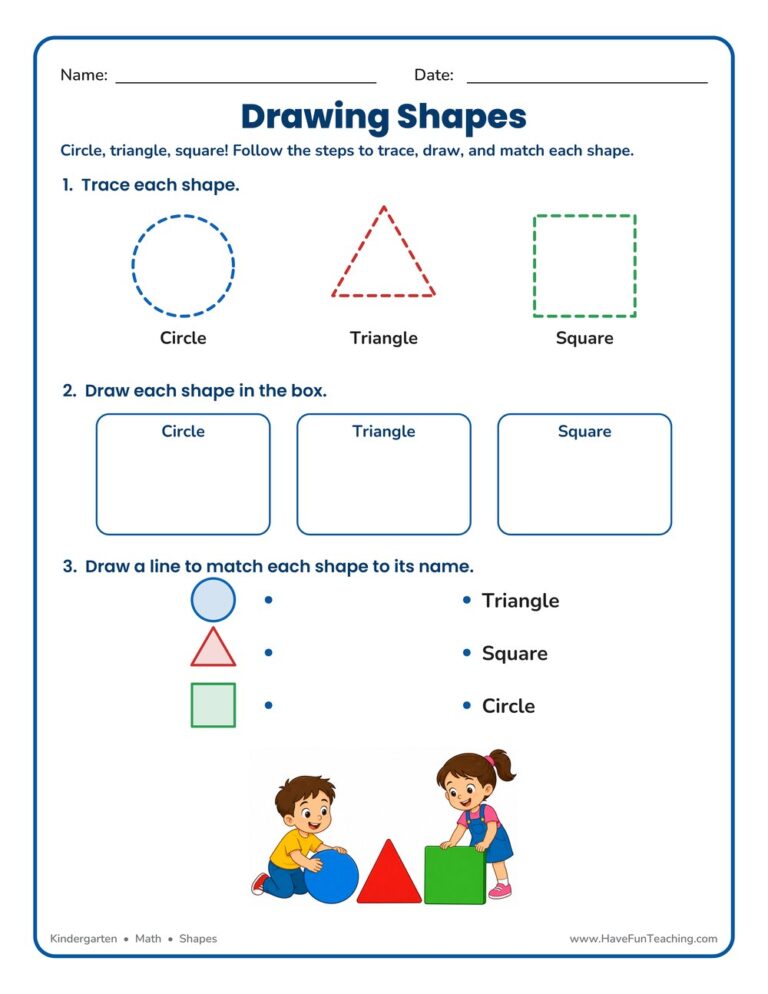
A Kindergarten drawing circle, triangle, square shapes worksheet where children trace, draw, and match a circle, triangle, and square. Includes an answer key — a simple, no-prep way to build early shape skills.

Using the Shapes Song, students learn all about shapes, including Shape Names and Shape Recognition. The Shapes Song by Have Fun Teaching is a song that teaches the shapes. Shapes have names their made of angles and lines, there are flat shapes and solid shapes we see them all the…
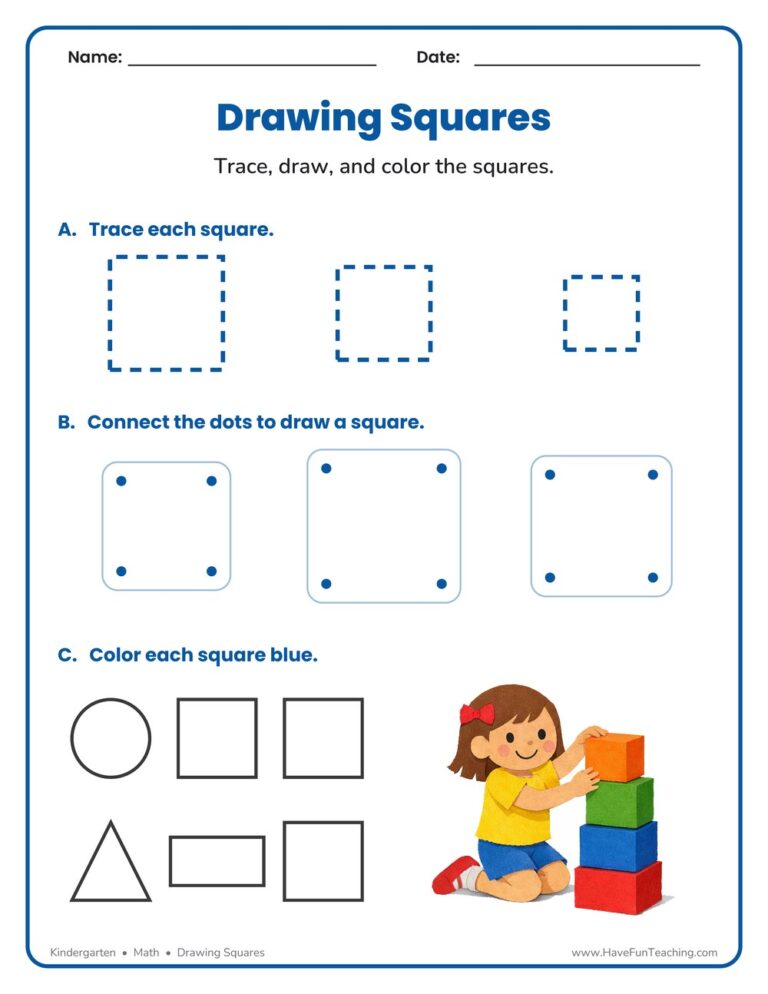
A Kindergarten drawing squares worksheet where students trace three squares, connect the dots to draw their own, and color the squares blue. Answer key included for quick, no-prep shape practice.
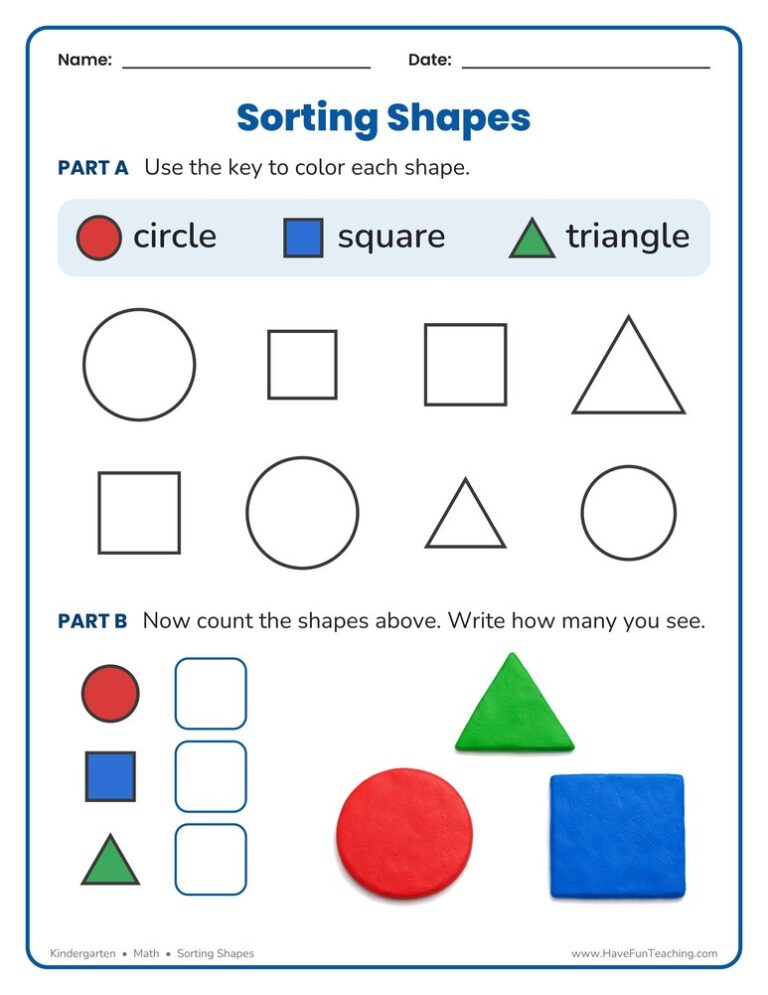
This Sorting Shapes Worksheet gives Kindergarten students eight shapes to color by category and three groups to count, using a simple red, blue and green key. An answer key is included, so shape practice is ready to print and go.

This Drawing Triangles Worksheet gives Kindergarten students dotted triangles to trace, open boxes to draw in, and real-world pictures to sort. Answer key included, so shape practice is ready in one print.

Using the Circle Song, students will learn all about circles. A circle is a shape that goes around and around. It's like a pizza, and a cookie, a ring, and a coin. A circle is a shape that goes around and around. In this song, your kids will also draw…

Using the Square Song (MP3), students learn all about squares, including Shape Names and Shape Recognition through a catchy song!
Using the Shape Song (MP3), students learn all about shapes, including Shape Names and Shape Recognition through a catchy song!

This Drawing Diamonds Worksheet gives Kindergarten students three ways to master the diamond shape: trace it, find it, and draw it. An answer key is included, so shape practice is ready to hand out with no prep.
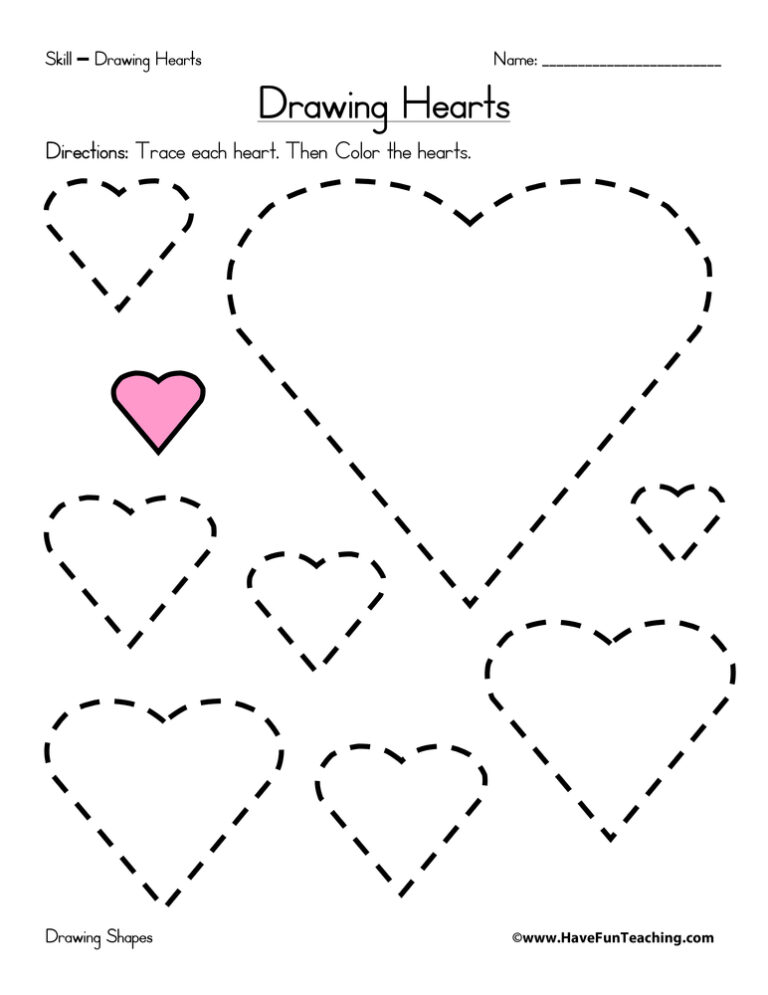
With this Drawing Hearts Worksheet, Kindergarten students trace three heart outlines, draw hearts of their own, and pick the hearts out of a group of shapes. Answer key included for fast checking.

This 2D and 3D shapes worksheet helps Kindergarten students sort flat and solid shapes with a fun fill-in-the-bubble activity. Includes an answer key to make practice simple and rewarding.
Reviews
There are no reviews yet