

Drawing Rectangles Worksheet
This Drawing Rectangles Worksheet gives Kindergarten students three ways to practice one shape: trace it, draw it, then find it in everyday pictures. An answer key is included, so checking work takes seconds.
$6.97
Or free with a membership — members pay $3.33/mo for all 10,000+ resources. See plans
Want this one free?
Tell us where to send it and it’s yours — no card, no catch.
One free resource per teacher. We’ll also send free teaching ideas each week — unsubscribe anytime.
Teaching is easier with a membership
Unlimited printables, games & videos for PreK–6th — for your classroom or homeschool. Cancel anytime.
Start your 3-day free trial$0 today · cancel anytime · Instant access to 10,000+ resources
About this resource
Description
Learning to see and draw rectangles is one of the very first geometry skills a young child masters. This Drawing Rectangles Worksheet gives Kindergarten students a clear, hands-on way to learn what makes a rectangle a rectangle: four straight sides, four square corners, two long sides and two short sides. When children trace a shape before they draw it, they build the fine motor control and the visual memory they need to reproduce it on their own, and they begin to notice that a rectangle can be wide, tall, big, or small and still be a rectangle.
This kindergarten geometry worksheet moves children through three short steps on a single page. In Part A they trace three dashed rectangles of different sizes and orientations. In Part B they draw a rectangle of their own inside each of two large, open boxes. In Part C they look at four everyday pictures — a book, a ball, an egg, and a window — and circle the ones shaped like a rectangle. Read the directions aloud, work through Part A together, then let students finish the page on their own while you check with the included answer key.
What’s Included
- 1 print-ready PDF worksheet
- Answer key
- 3 rectangles to trace, 2 draw-your-own boxes, and 4 real-world picture items
There are three reasons this Drawing Rectangles Worksheet helps children learn the skill so quickly. First, tracing comes before drawing, so a child feels the length of each side and the turn of each corner before being asked to produce the shape from memory. Second, the rectangles vary in size and direction, which stops children from memorizing one fixed picture instead of the real rule about sides and corners. Third, the picture section moves the skill out of the shape world and into the real world, where a book and a window are rectangles a child can point to at home. Together those three steps carry a Kindergarten student from recognizing a rectangle to producing one to finding one.
Away from the page, go on a rectangle hunt around the classroom or the house and count how many rectangles you can find in five minutes — doors, books, tables, screens, and windows all count. Build rectangles with craft sticks or pipe cleaners so children can feel that two sides are long and two are short. Draw rectangles in a tray of sand or shaving cream, or trace them in the air with a big arm motion before picking up a pencil. Sing a shape song together, and ask children to say the shape name out loud each time they draw one.
Related Resources
What teachers say
Reviews
You must be logged in to post a review.
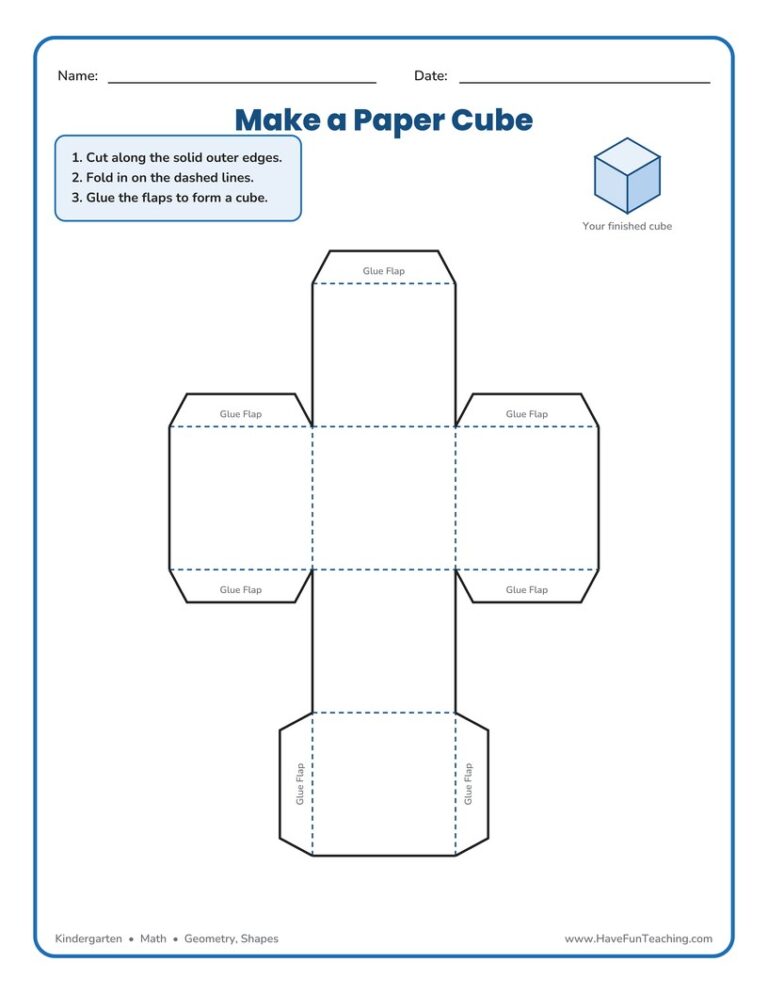
A hands-on paper cube template worksheet for Kindergarten geometry. Students cut, fold, and glue a printable cube net into a real 3D cube — a fun, no-prep way to explore solid shapes and build fine motor skills.
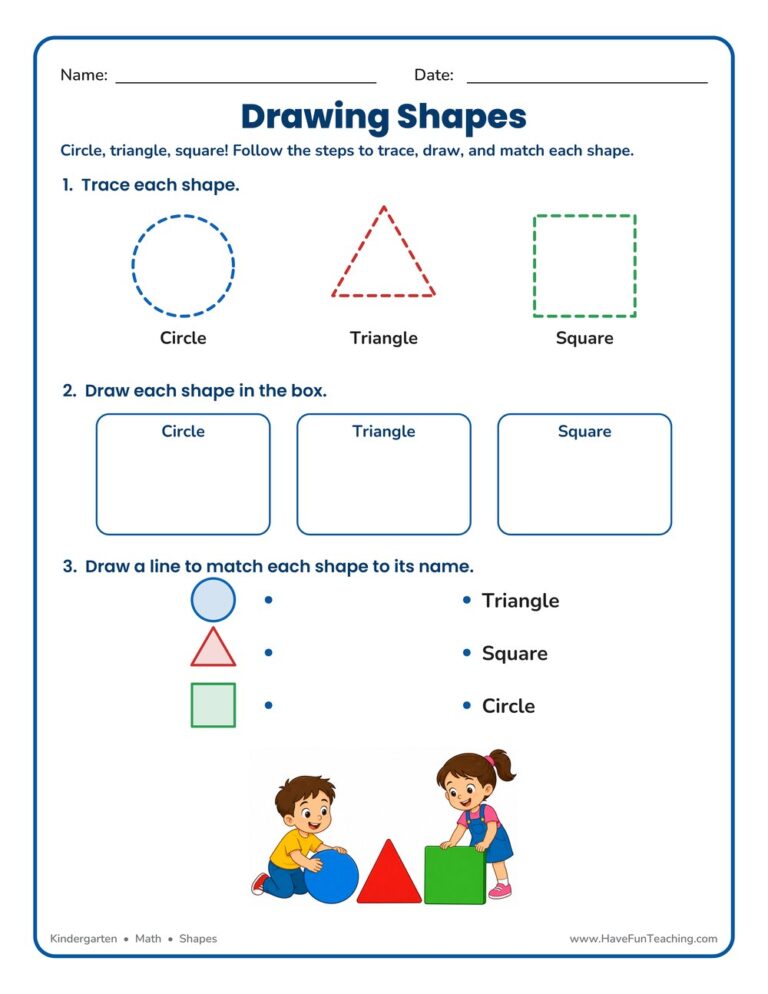
A Kindergarten drawing circle, triangle, square shapes worksheet where children trace, draw, and match a circle, triangle, and square. Includes an answer key — a simple, no-prep way to build early shape skills.

Using the Shapes Song, students learn all about shapes, including Shape Names and Shape Recognition. The Shapes Song by Have Fun Teaching is a song that teaches the shapes. Shapes have names their made of angles and lines, there are flat shapes and solid shapes we see them all the…
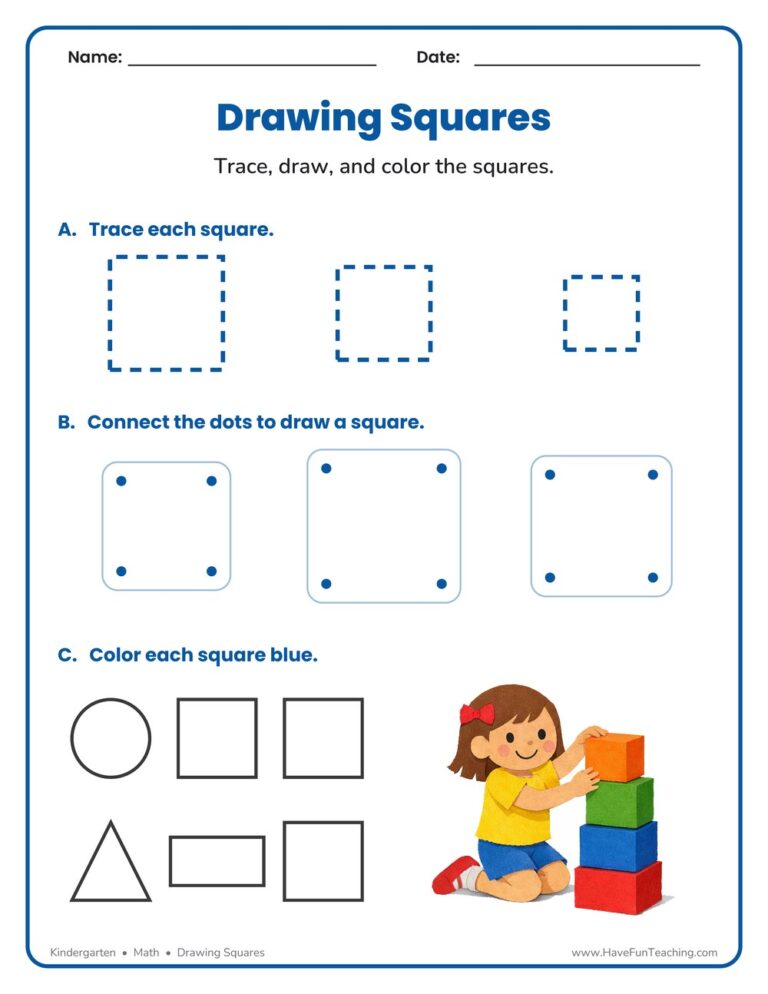
A Kindergarten drawing squares worksheet where students trace three squares, connect the dots to draw their own, and color the squares blue. Answer key included for quick, no-prep shape practice.
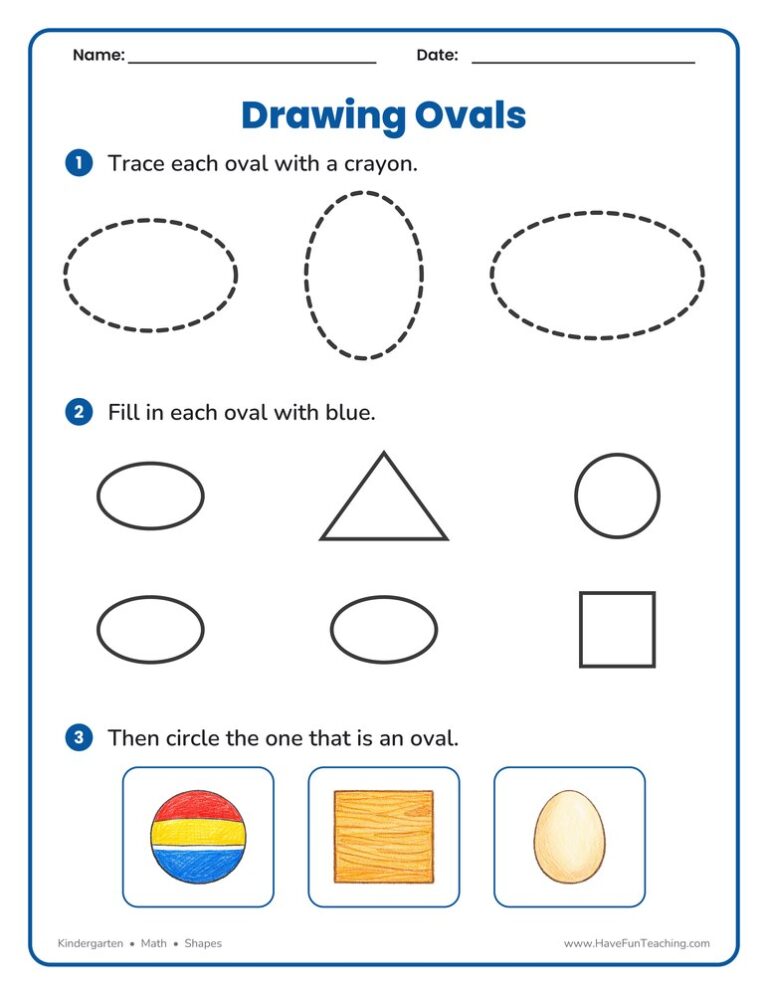
This Drawing Ovals Worksheet has kindergarten students trace three ovals, color the ovals in a mixed shape sort, and find an oval in real life. Answer key included for quick, no-prep shape practice.
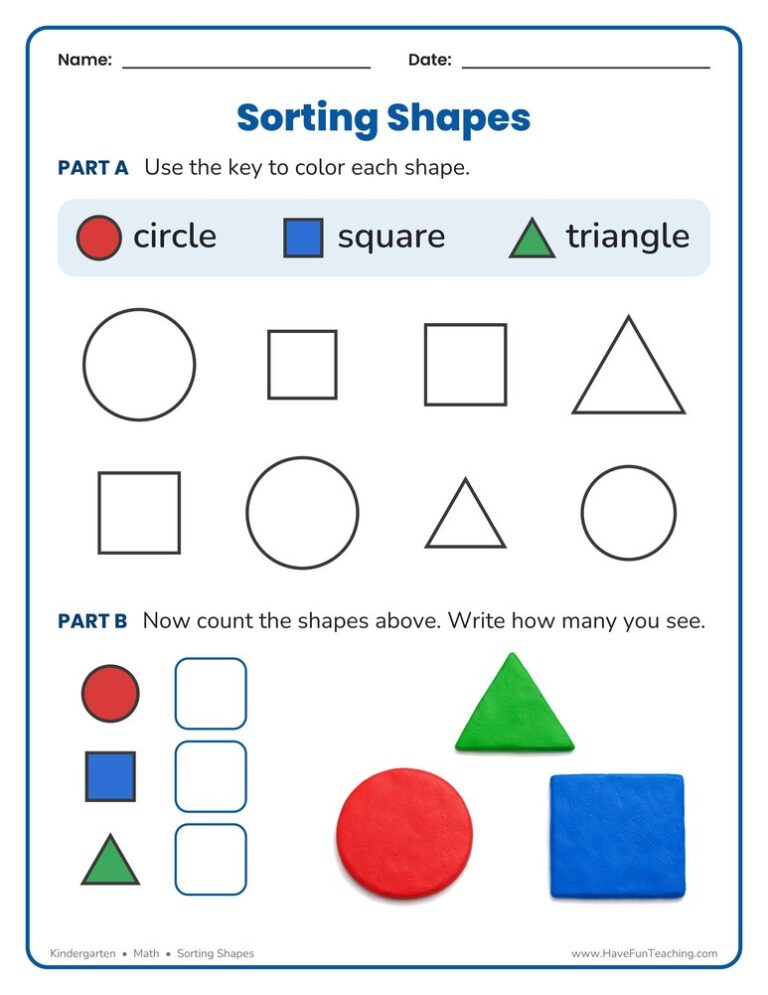
This Sorting Shapes Worksheet gives Kindergarten students eight shapes to color by category and three groups to count, using a simple red, blue and green key. An answer key is included, so shape practice is ready to print and go.

This Drawing Triangles Worksheet gives Kindergarten students dotted triangles to trace, open boxes to draw in, and real-world pictures to sort. Answer key included, so shape practice is ready in one print.

Using the Circle Song, students will learn all about circles. A circle is a shape that goes around and around. It's like a pizza, and a cookie, a ring, and a coin. A circle is a shape that goes around and around. In this song, your kids will also draw…

Using the Square Song (MP3), students learn all about squares, including Shape Names and Shape Recognition through a catchy song!
Using the Shape Song (MP3), students learn all about shapes, including Shape Names and Shape Recognition through a catchy song!

This Drawing Diamonds Worksheet gives Kindergarten students three ways to master the diamond shape: trace it, find it, and draw it. An answer key is included, so shape practice is ready to hand out with no prep.
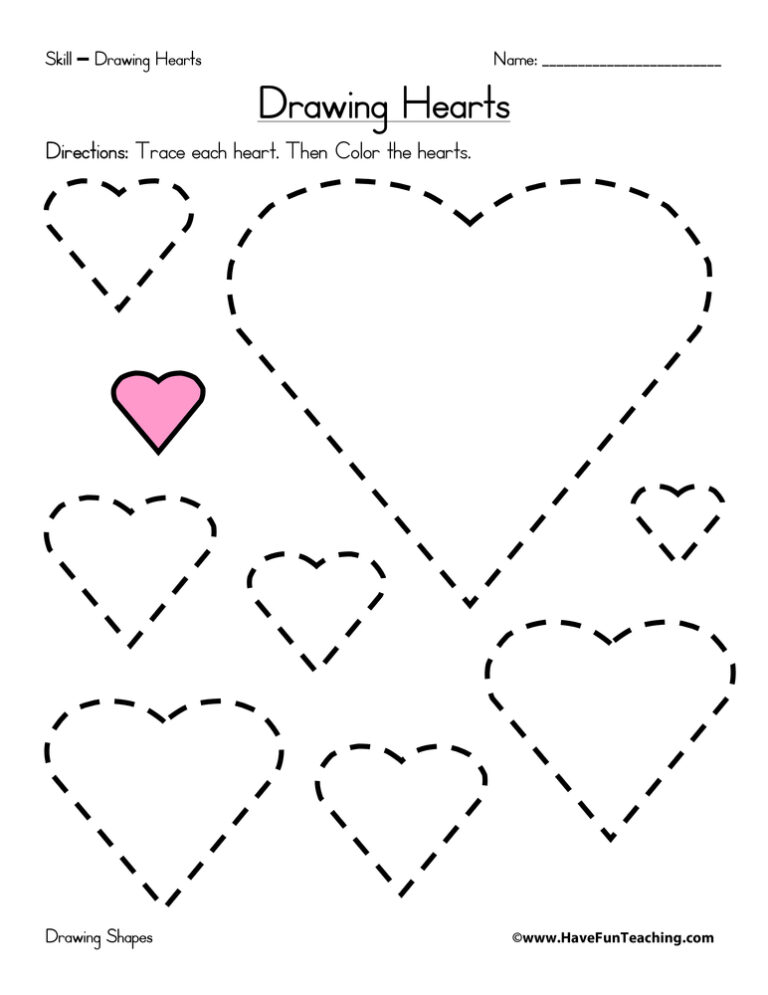
With this Drawing Hearts Worksheet, Kindergarten students trace three heart outlines, draw hearts of their own, and pick the hearts out of a group of shapes. Answer key included for fast checking.
Reviews
There are no reviews yet