

Fruit Counting Worksheet
This fruit counting worksheet asks Kindergarten students to count small groups of apples, berries, and citrus, then write the matching number. An answer key is included, so checking work takes seconds.
$6.97
Or free with a membership — members pay $3.33/mo for all 10,000+ resources. See plans
Want this one free?
Tell us where to send it and it’s yours — no card, no catch.
One free resource per teacher. We’ll also send free teaching ideas each week — unsubscribe anytime.
Teaching is easier with a membership
Unlimited printables, games & videos for PreK–6th — for your classroom or homeschool. Cancel anytime.
Start your 3-day free trial$0 today · cancel anytime · Instant access to 10,000+ resources
About this resource
Description
Counting is the very first math skill a child truly owns, and it grows one careful number at a time. Before a student can add, subtract, or compare, they have to look at a small group of things, touch each one exactly once, and understand that the last number they say tells how many there are. This fruit counting worksheet gives young learners a friendly, familiar set of objects to practice that idea with. Apples, strawberries, lemons, oranges, and pears are things children already recognize from the kitchen and the lunchbox, so nothing about the picture gets in the way of the math.
Each of the six picture cards on this kindergarten counting worksheet holds a group of two to five pieces of fruit. Students count the fruit in the picture and write the matching numeral on the solid handwriting line below it. The line is sized for a beginning writer, so there is real room to form the number instead of squeezing it into a tiny space. Use the page as morning work, as a math-center task, as a quick check after a counting lesson, or as a take-home review. Encourage students to point to each piece of fruit as they count out loud, then say the total one more time before they write it down.
What’s Included
- 1 print-ready PDF worksheet
- Answer key
- 6 fruit counting picture cards with numeral writing lines
There are three reasons this fruit counting worksheet helps young mathematicians. First, it builds one-to-one correspondence: the groups are small and clearly separated, so a child can tag each item once without losing their place. Second, it connects the spoken count to the written symbol, which is the bridge between saying the word four and writing the numeral 4. Third, the arrangements change from card to card, from a neat pair to a cluster of five, so students learn that the total stays the same no matter how the objects are placed. That flexibility is what separates real counting from memorized reciting.
Away from the page, counting practice is everywhere. Set out a bowl of grapes and ask your child to count five of them into a snack cup. Count the steps to the mailbox, the buttons on a coat, or the crackers on a plate. Play a quick game where you clap a number and your child holds up that many fingers. At school, pair this page with linking cubes or counting bears so students build the same group with objects before they write the number. Sing a counting song together, then hunt for small sets of things around the room and record how many you find.
Related Resources
What teachers say
Reviews
You must be logged in to post a review.
Using the Counting Songs (Classic Video Collection), students practice skip counting by all of the numbers by singing and counting along to these thirteen videos.

Using the Counting By Fives Song (Original Music Video), students practice skip counting by 5s by singing and counting along to this fun and engaging video!
Using the Counting By Ones Song (Original Music Video), students practice counting by 1s by singing and counting along to this fun and engaging video!
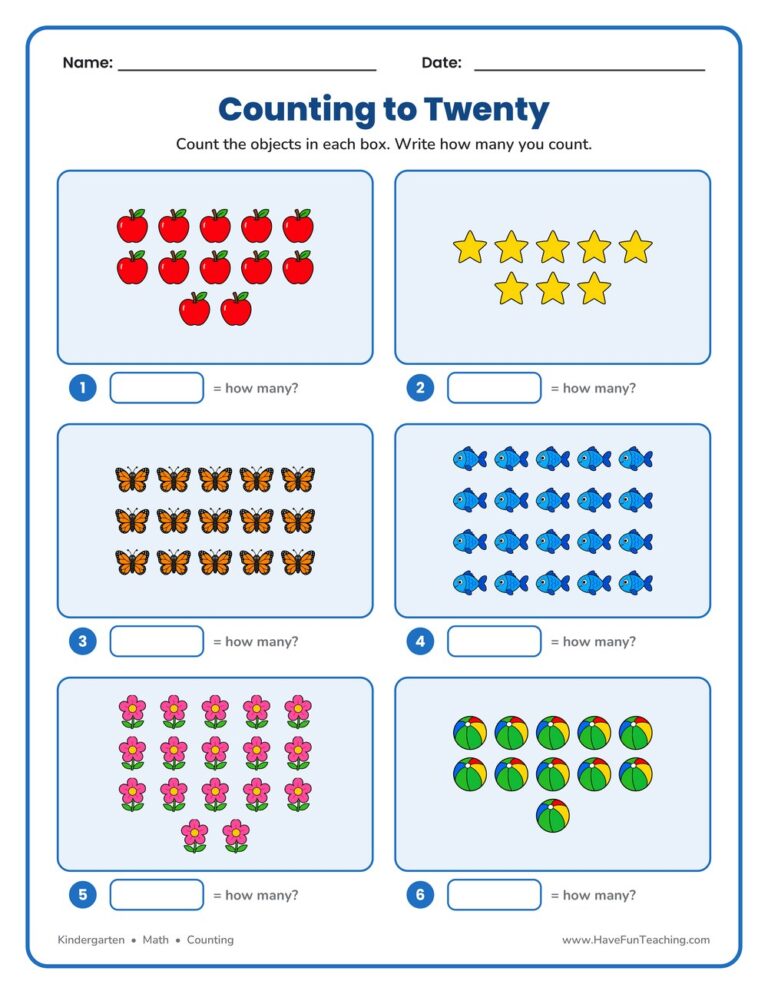
The Count to 20 Objects Worksheet lets kindergarten students count sets of fun pictures up to twenty and write how many. Includes a complete answer key for a colorful, no-prep way to build counting confidence.
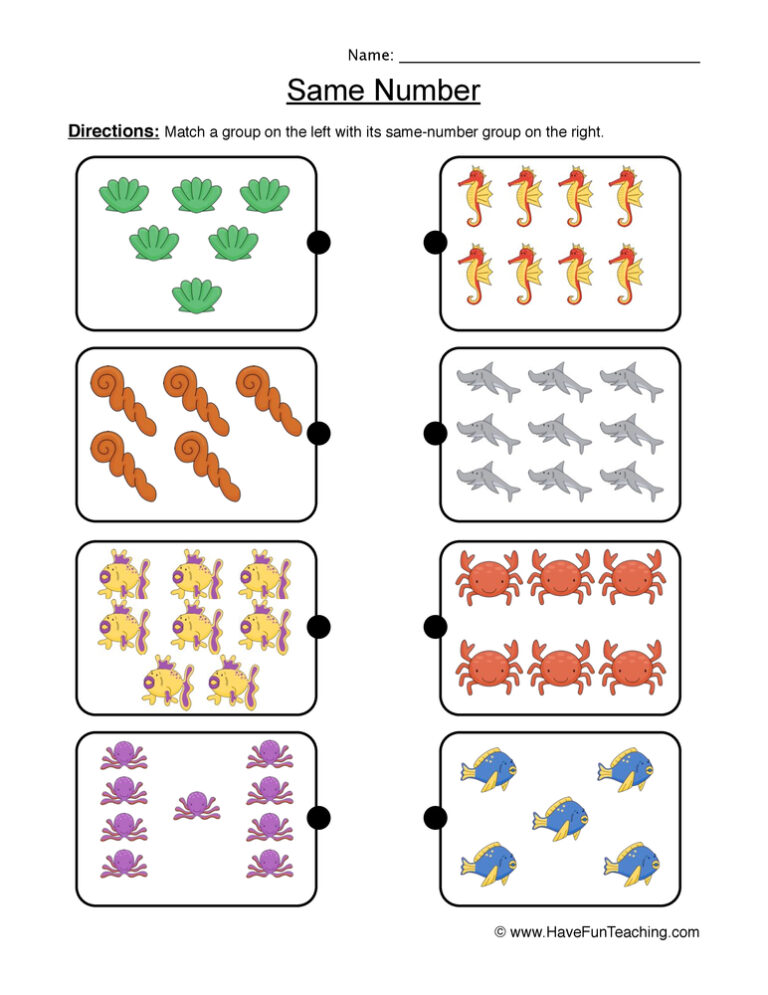
This same number picture representations worksheet has Kindergarten students count ten picture groups and match the pairs that hold the same amount. Answer key included, so counting practice is ready to print and check in seconds.

This Counting to 100 Assessment Worksheet asks kindergarten students to fill in the missing numbers on a hundreds chart, all the way to 100. Includes an answer key for quick, no-prep number check-ins.
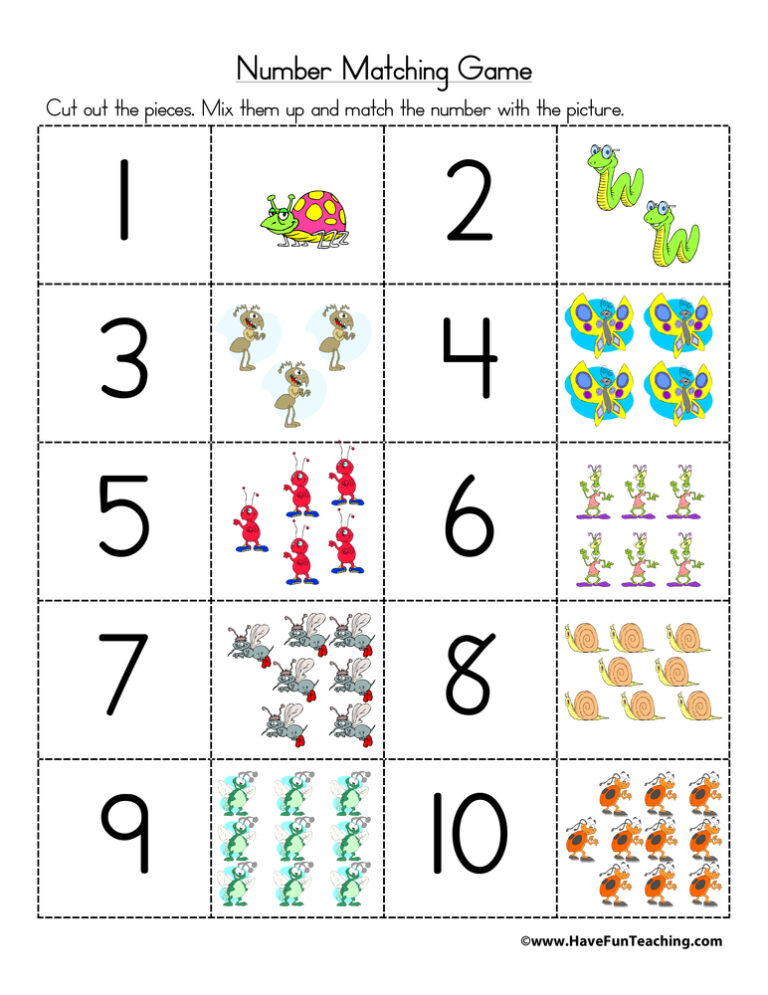
Using Number Matching Puzzle Activity, students match the number with the number picture in order to build their counting fluency.

Using the Counting By Ones Song, students practice counting by ones to fifty by singing and counting along to this fun and engaging video!
Using the Counting Songs (MP3 Album), students practice skip counting by all of the numbers by singing and counting along to these thirteen songs.
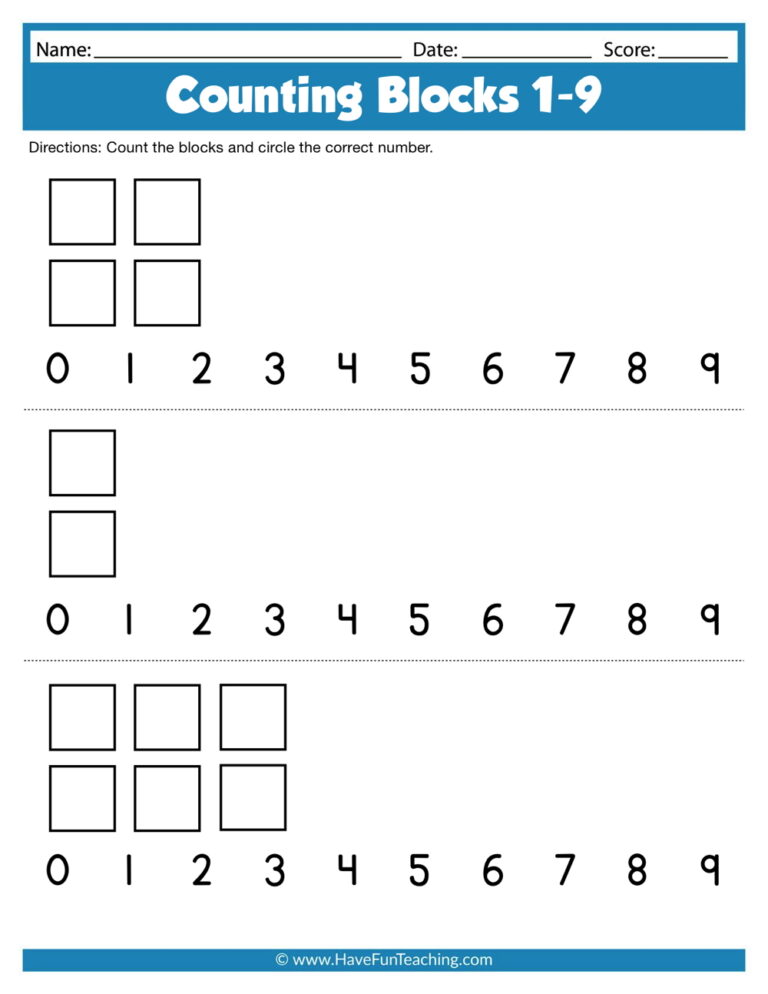
Counting Blocks 1-9 Worksheets ask Kindergarten students to count blocks, write the number, and draw sets of their own. An answer key is included, so counting practice takes no prep at all.
Using theCount to 100 Song (MP3), students practice counting to 100 by singing and counting along to this fun and engaging song!
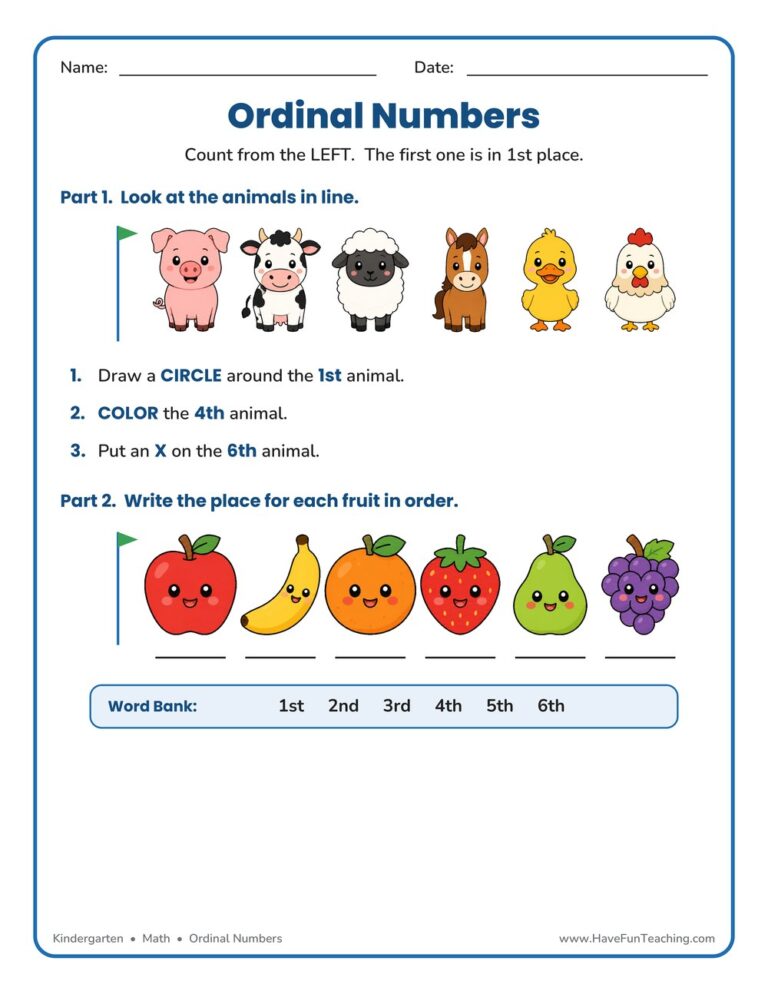
A picture-based labeling ordinal numbers worksheet that helps kindergarten students count from the left and name positions from first to sixth using farm animals and fruit. Answer key included for quick, no-prep math practice.




Reviews
There are no reviews yet