

Identifying Verbs Worksheet
This identifying verbs worksheet gives 1st graders practice circling the action word in a sentence and matching verbs to pictures. Answer key included for fast, no-prep grammar review.
$6.97
Or free with a membership — members pay $3.33/mo for all 10,000+ resources. See plans
Want this one free?
Tell us where to send it and it’s yours — no card, no catch.
One free resource per teacher. We’ll also send free teaching ideas each week — unsubscribe anytime.
Teaching is easier with a membership
Unlimited printables, games & videos for PreK–6th — for your classroom or homeschool. Cancel anytime.
Start your 3-day free trial$0 today · cancel anytime · Instant access to 10,000+ resources
About this resource
Description
Identifying verbs is one of the first grammar skills first graders master, and this identifying verbs worksheet gives them focused practice doing exactly that. A verb is an action word: it tells what someone or something does. Once children can spot the action word in a sentence, they begin to see how sentences are built, and reading and writing both get easier. This printable gives students clear, friendly practice finding verbs in short sentences and naming the action in a picture.
This 1st grade verbs worksheet is split into two short parts so it never feels overwhelming. In Part A, students read five simple sentences and circle the verb in each one. The action word moves around from sentence to sentence, so children have to read carefully instead of guessing by position. In Part B, students look at four illustrations of children running, digging, riding, and painting, then choose the matching action word from a word box and write it on the line. One extra word in the box is a distractor, so students must think about what each picture really shows.
What’s Included
- 1 print-ready PDF worksheet
- Answer key
- 5 circle-the-verb sentences
- 4 picture-and-word-box writing items
This identifying verbs worksheet helps children in three ways. First, it builds grammar vocabulary: students learn that verbs name actions and start using that language when they talk about their own writing. Second, it strengthens reading comprehension, because finding the action in a sentence is the same thinking students use to work out what is happening in a story. Third, the picture section links words to real actions, which helps visual learners and English language learners connect meaning to print. The included answer key makes checking quick, so students get feedback while the lesson is still fresh.
Teachers and parents can stretch this lesson well past the page. Play a quick game of verb charades: act out an action and let children name the verb. Take a walk and have students call out every action they see, then write the best ones on a class chart. During shared reading, pause and ask children to point to the action word in a sentence. Ask students to write one sentence about their day and underline their own verb. Small, playful repetitions like these help the skill stick long after the worksheet is finished.
Related Resources
What teachers say
Reviews
You must be logged in to post a review.
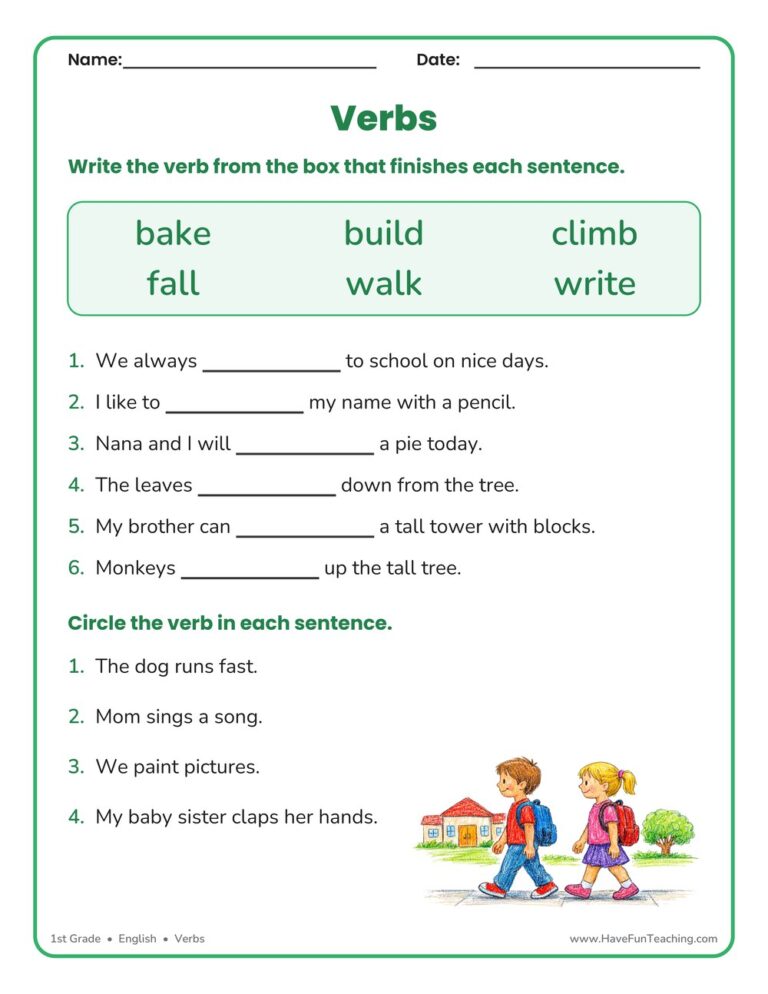
This Verbs Fill in the Blank Worksheet gives 1st graders six word-bank sentences to complete and four verbs to circle. An answer key is included, so grammar practice is ready to print and easy to check.
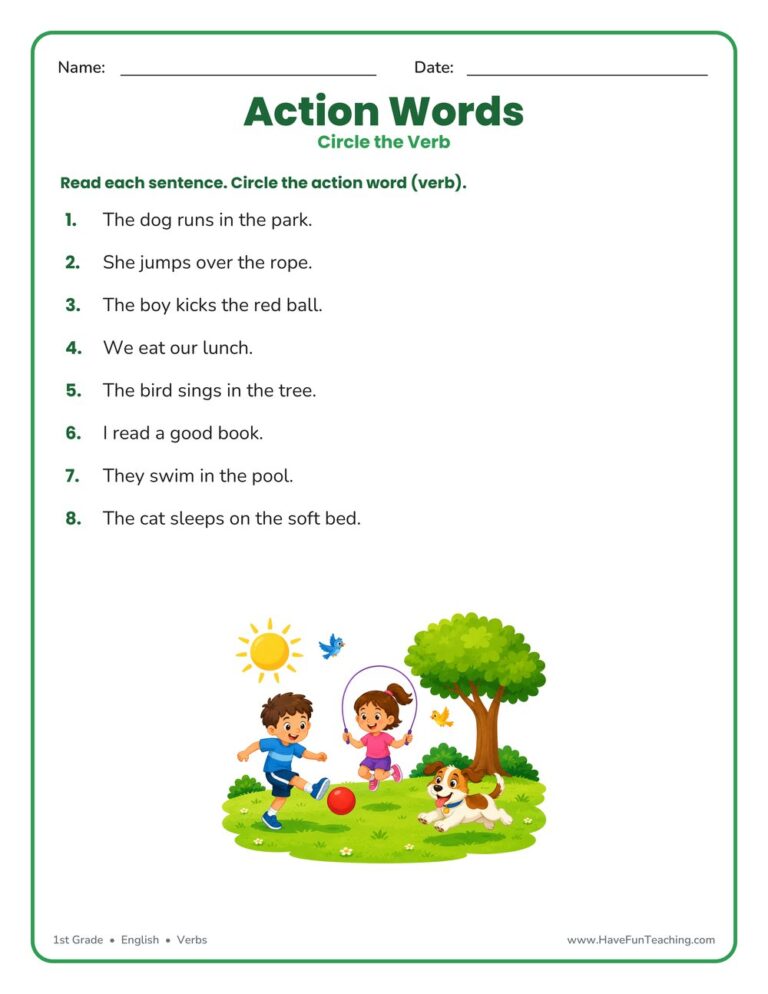
The Identifying Action Words Worksheet has 1st graders circle the verb in eight simple sentences. Includes an answer key — a fun, no-prep way to practice action words and early grammar.
Using the Verb Rap Song (MP3), students will be able to define, give examples and use verbs in their own writing using the catchy and memorable lyrics.

Using these Action Verbs Flash Cards, students improve their verb vocabulary by having a set of words they can use in their writing.

Using the Verb Rap Song (Original Music Video), students will be able to define, give examples and use verbs in their own writing using the catchy and memorable lyrics.
Using Past Present Future Tense Activity, students match the Yesterday, Today, and Tomorrow Cards with the correct Past, Present or Future statement.
Using this Noun, Adjective, and Verb Activity, students sort examples of nouns, verbs, and adjectives into categories to build their parts of speech understanding.
Using L.1.1 First Grade Common Core Lesson, students use verbs to convey a sense of past, present, and future tenses.

Using Charades Verb Activity, studentsplay Charades to practice reading and acting out action words!

Using Raking Leaves Verbs Activity, studentsplaya match game to match the pictures of verbs to the action word.
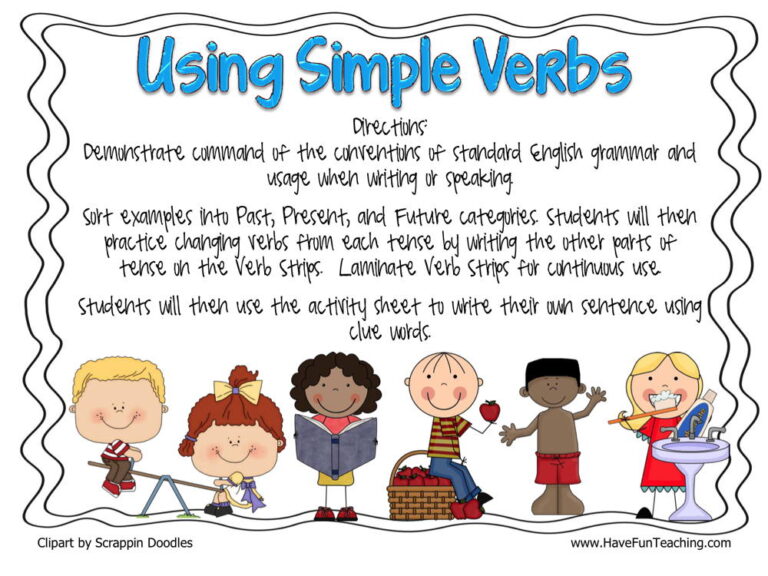
Using Using Simple Verbs Past Present Future Activity, students sort examples into Past, Present, and Future categories in order to be able to use verbs correctly in their writing.
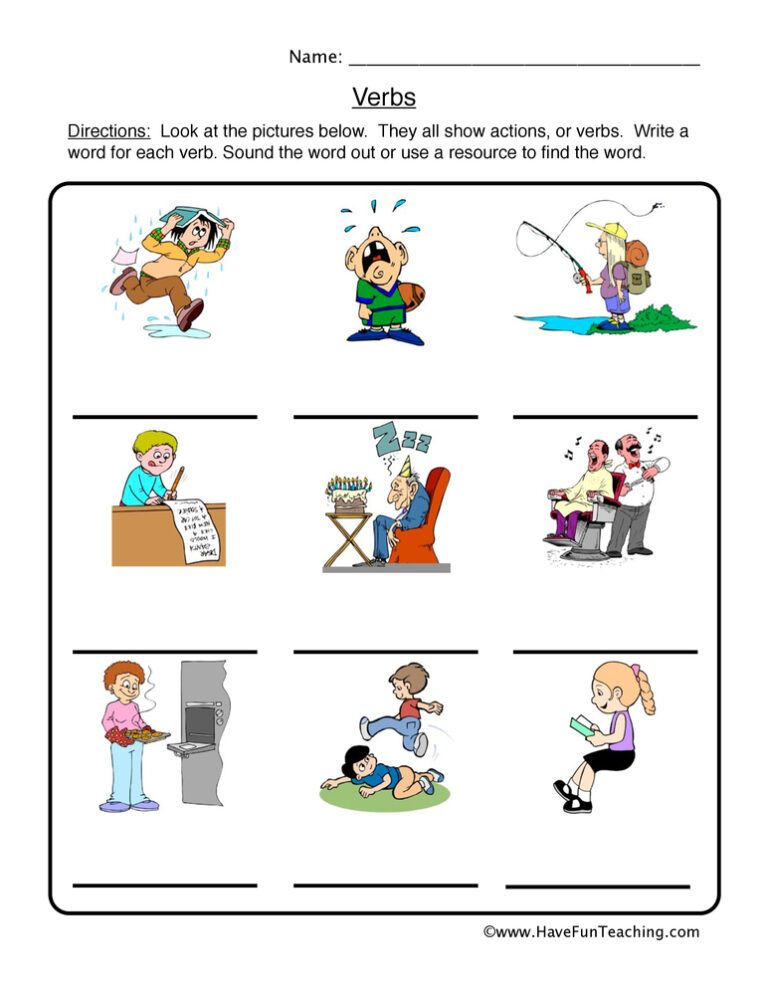
The Write the Verb Verb Worksheet asks 1st graders to look at six pictures and write the matching action verb from the word box. An answer key is included, so practice with action words takes no prep at all.

Reviews
There are no reviews yet