

Paper Cube Template
A hands-on paper cube template worksheet for Kindergarten geometry. Students cut, fold, and glue a printable cube net into a real 3D cube — a fun, no-prep way to explore solid shapes and build fine motor skills.
$6.97
Or free with a membership — members pay $3.33/mo for all 10,000+ resources. See plans
Want this one free?
Tell us where to send it and it’s yours — no card, no catch.
One free resource per teacher. We’ll also send free teaching ideas each week — unsubscribe anytime.
Teaching is easier with a membership
Unlimited printables, games & videos for PreK–6th — for your classroom or homeschool. Cancel anytime.
Start your 3-day free trial$0 today · cancel anytime · Instant access to 10,000+ resources
About this resource
Description
Learning about three-dimensional shapes becomes hands-on and memorable with this paper cube template worksheet. A cube is one of the first solid shapes children meet in geometry, and building one from a flat net helps young learners see how six equal square faces fold together to form a 3D solid. As students cut, fold, and glue, they connect the flat shapes they already know with the solid shapes they can hold, turning an abstract math idea into something they build with their own hands.
This kindergarten geometry worksheet gives students a ready-to-build cube net printed with clear solid cut lines and dashed fold lines. Print the page, have children cut along the solid outside edges, fold inward along the dashed lines, and glue the labeled flaps to hold the cube together. A small finished-cube preview in the corner shows exactly what the shape should look like when it is done, so students always have a goal to work toward.
What’s Included
- 1 print-ready PDF cube template
- A six-square cube net with seven labeled glue flaps
- Simple cut, fold, and glue directions
This paper cube template worksheet helps children learn in three important ways. First, folding a flat net into a solid cube builds spatial reasoning and helps students understand the difference between two-dimensional and three-dimensional shapes. Second, cutting on the lines and folding carefully strengthens fine motor skills and hand-eye coordination. Third, finishing a real cube they can hold gives children a proud sense of accomplishment that keeps them excited about geometry and shapes.
Teachers and parents can extend the activity in many playful ways. Make several cubes and compare their edges, faces, and corners, or write numbers, letters, or sight words on the faces to turn the cube into a roll-and-say game. Decorate the faces with drawings before folding to create story dice, or build a small set of cubes to explore how solid shapes can be combined. These simple extensions turn one template into a week of shape learning.
Related Resources
What teachers say
Reviews
You must be logged in to post a review.
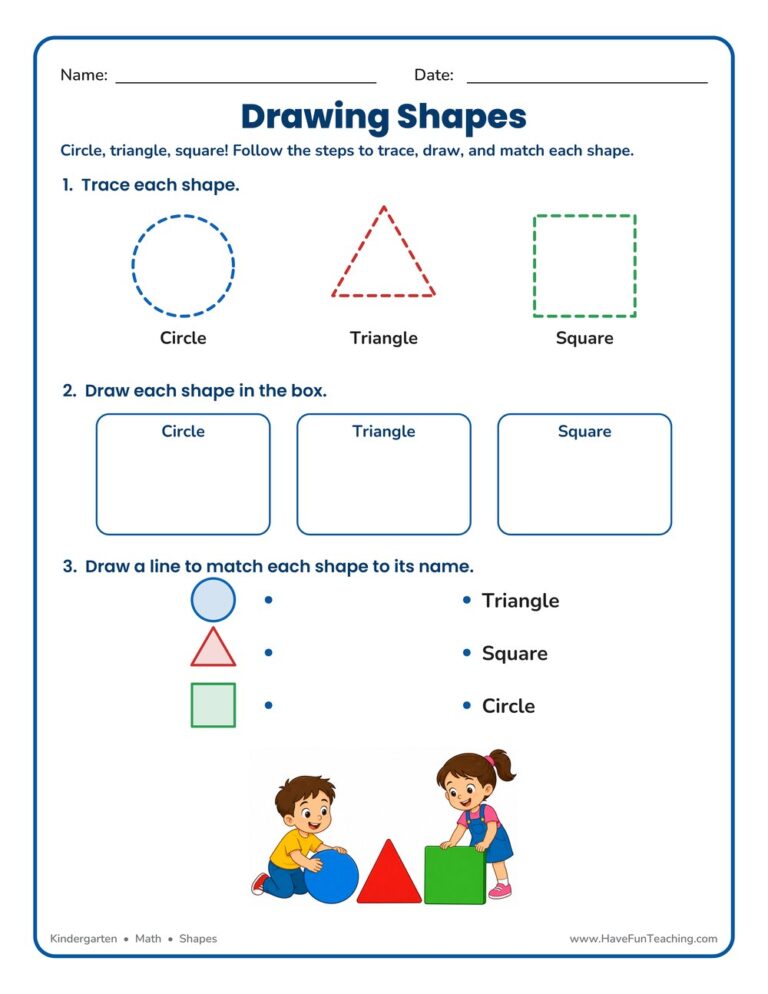
A Kindergarten drawing circle, triangle, square shapes worksheet where children trace, draw, and match a circle, triangle, and square. Includes an answer key — a simple, no-prep way to build early shape skills.

Using the Shapes Song, students learn all about shapes, including Shape Names and Shape Recognition. The Shapes Song by Have Fun Teaching is a song that teaches the shapes. Shapes have names their made of angles and lines, there are flat shapes and solid shapes we see them all the…
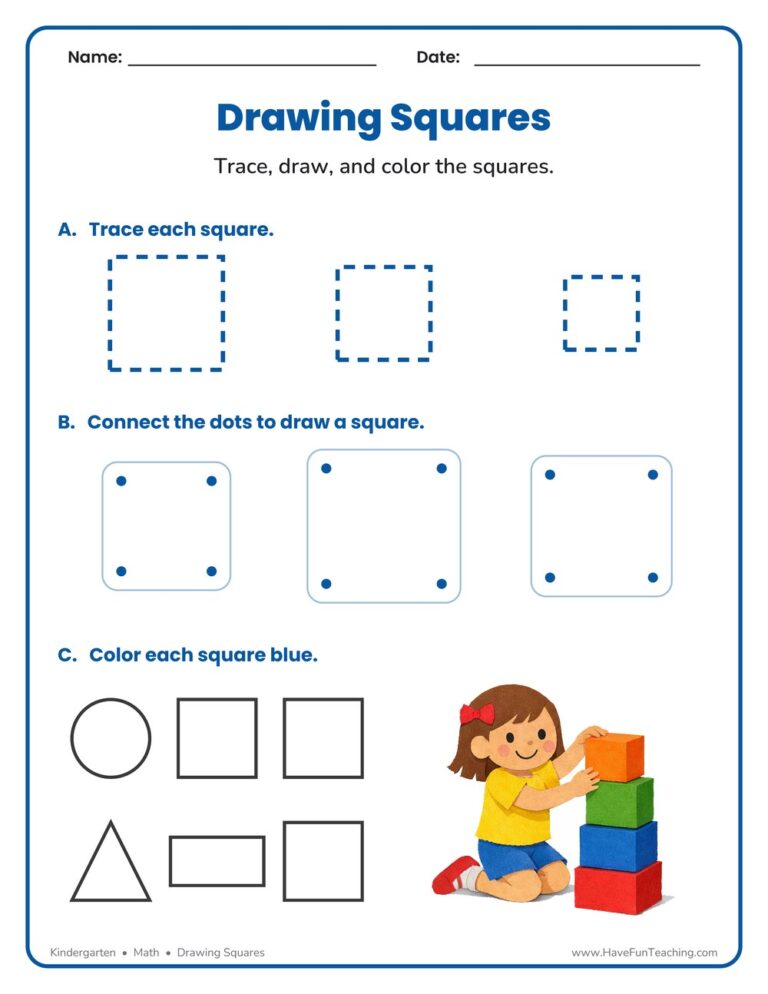
A Kindergarten drawing squares worksheet where students trace three squares, connect the dots to draw their own, and color the squares blue. Answer key included for quick, no-prep shape practice.
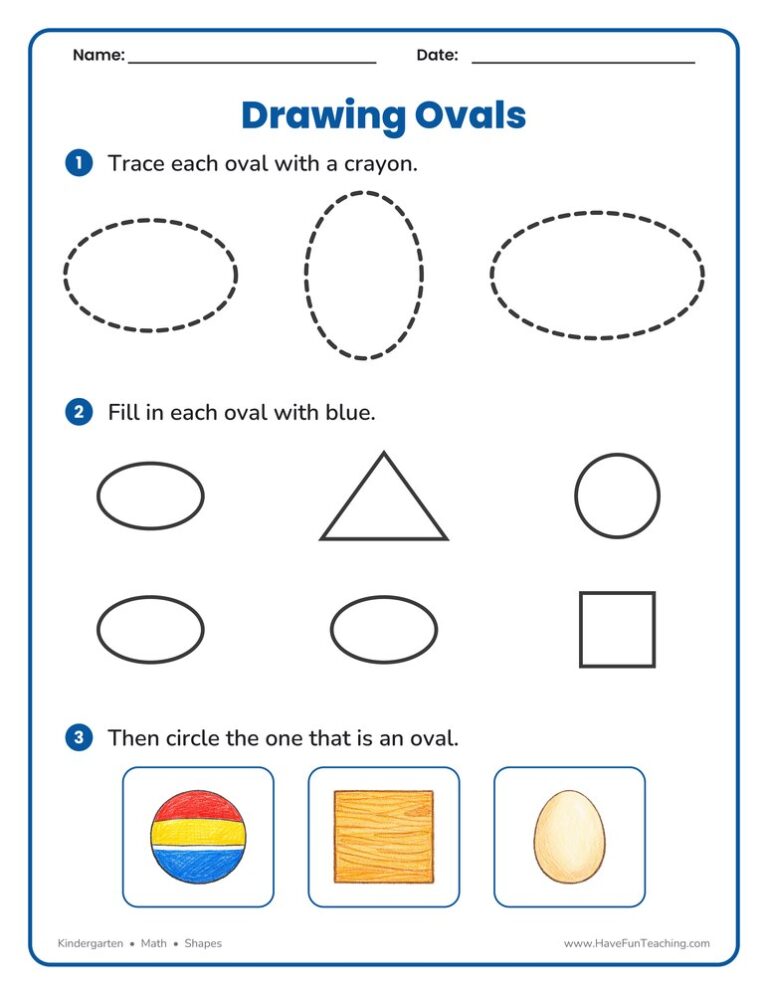
This Drawing Ovals Worksheet has kindergarten students trace three ovals, color the ovals in a mixed shape sort, and find an oval in real life. Answer key included for quick, no-prep shape practice.
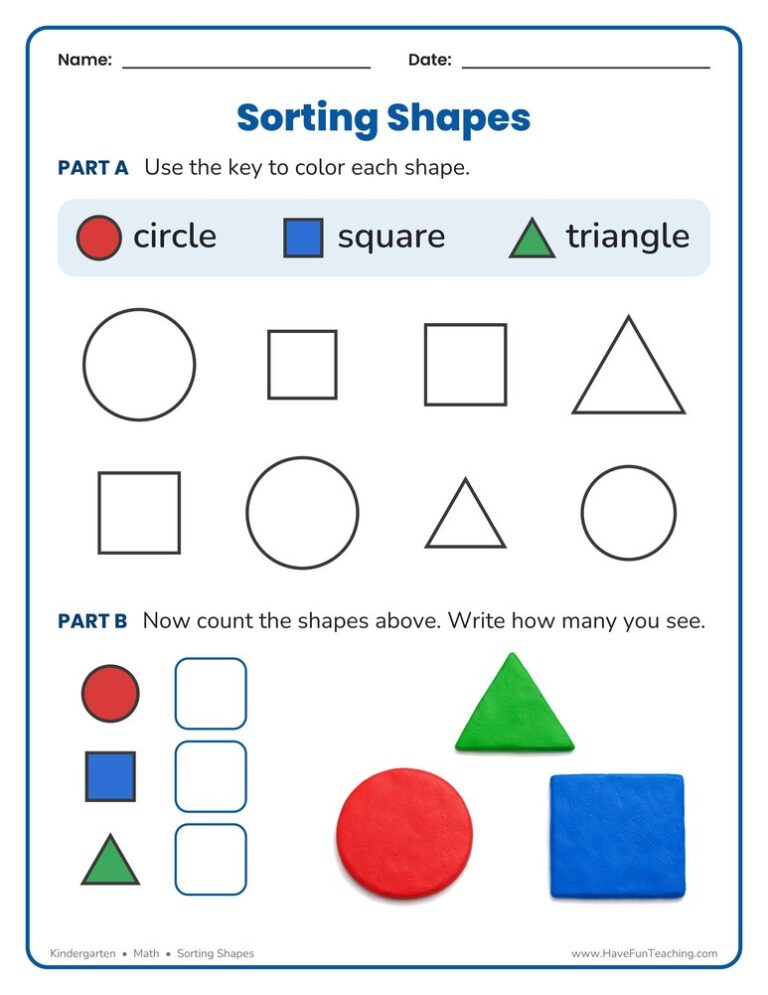
This Sorting Shapes Worksheet gives Kindergarten students eight shapes to color by category and three groups to count, using a simple red, blue and green key. An answer key is included, so shape practice is ready to print and go.

This Drawing Triangles Worksheet gives Kindergarten students dotted triangles to trace, open boxes to draw in, and real-world pictures to sort. Answer key included, so shape practice is ready in one print.

Using the Circle Song, students will learn all about circles. A circle is a shape that goes around and around. It's like a pizza, and a cookie, a ring, and a coin. A circle is a shape that goes around and around. In this song, your kids will also draw…

Using the Square Song (MP3), students learn all about squares, including Shape Names and Shape Recognition through a catchy song!
Using the Shape Song (MP3), students learn all about shapes, including Shape Names and Shape Recognition through a catchy song!

This Drawing Diamonds Worksheet gives Kindergarten students three ways to master the diamond shape: trace it, find it, and draw it. An answer key is included, so shape practice is ready to hand out with no prep.
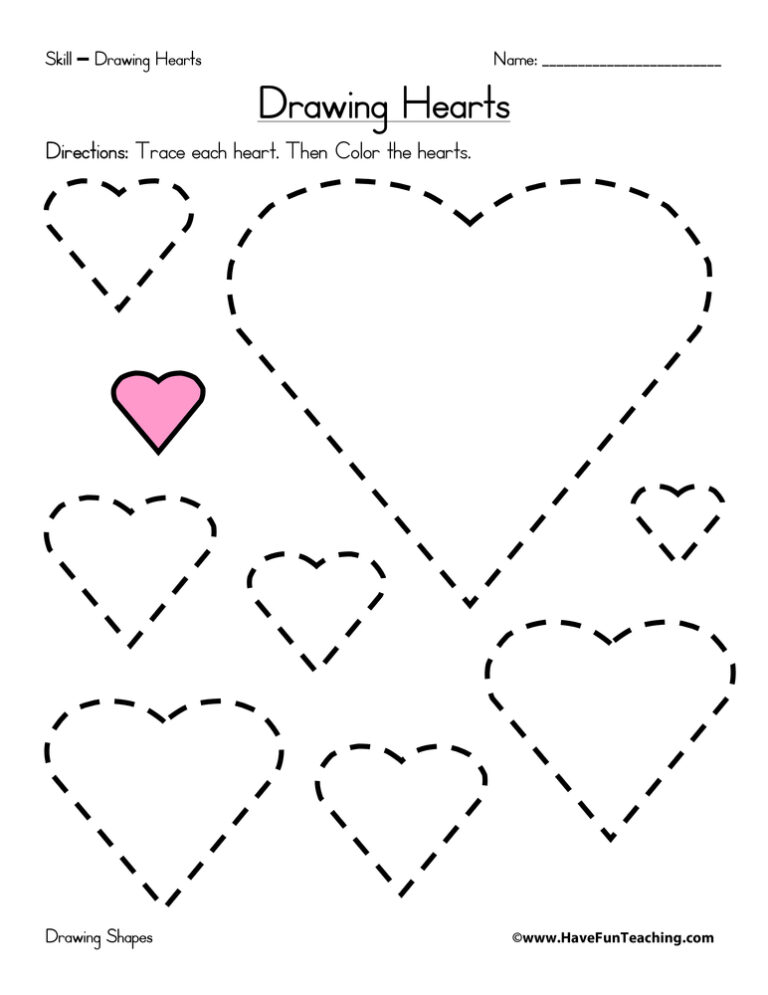
With this Drawing Hearts Worksheet, Kindergarten students trace three heart outlines, draw hearts of their own, and pick the hearts out of a group of shapes. Answer key included for fast checking.

This 2D and 3D shapes worksheet helps Kindergarten students sort flat and solid shapes with a fun fill-in-the-bubble activity. Includes an answer key to make practice simple and rewarding.
Reviews
There are no reviews yet