

The Metric System Worksheet
The Metric System Worksheet gives 4th grade students ruler reading, unit conversions, and a banner word problem in one page. An answer key is included, so metric length practice takes no prep.
$6.97
Or free with a membership — members pay $3.33/mo for all 10,000+ resources. See plans
Want this one free?
Tell us where to send it and it’s yours — no card, no catch.
One free resource per teacher. We’ll also send free teaching ideas each week — unsubscribe anytime.
Teaching is easier with a membership
Unlimited printables, games & videos for PreK–6th — for your classroom or homeschool. Cancel anytime.
Start your 3-day free trial$0 today · cancel anytime · Instant access to 10,000+ resources
About this resource
Description
The metric system is the measuring language that most of the world shares, and it is built on tens, which makes it a natural fit for fourth grade place-value thinking. Once students see that ten millimeters make a centimeter, one hundred centimeters make a meter, and one thousand meters make a kilometer, converting between units stops feeling like memorizing and starts feeling like multiplying. The metric system worksheet on this page gives 4th grade students focused practice with metric length: reading a ruler down to the millimeter, converting a larger unit into a smaller one, and using those conversions to answer a real classroom question.
This metric measurement worksheet moves from reading to converting to applying. Part A puts four labeled arrows on a centimeter ruler and asks students to write each length in millimeters, which forces them to count the small marks instead of guessing. Part B supplies a metric length reference chart and six conversions, three of which cross two steps, such as meters to millimeters. Part C tells the story of a class taping paper strips into a banner for the library door, then asks students to find the total length and explain, in writing, how they know the banner reaches across a three-meter doorway. Print it as morning work, a lesson follow-up, homework, or a small-group review, and use the answer key to check the whole page in under a minute.
What’s Included
- 1 print-ready PDF worksheet
- Answer key
- A coded centimeter ruler with 4 labeled measuring points
- A metric length reference chart plus 6 unit conversions
- A 2-part word problem with a written explanation
Three things make the metric system worksheet effective. First, it starts with a real ruler, so the units are something students can see and count rather than an abstract rule they repeat. Second, the reference chart stays on the page while students work, which keeps the cognitive load on the conversion itself instead of on remembering the relationships. Third, the closing word problem asks for reasoning in words, so students have to defend a comparison between 360 centimeters and 3 meters rather than simply circling a number. That written explanation is where teachers can see whether a student truly understands that a bigger unit always produces a smaller count.
Keep the learning going away from the page. Hand out meter sticks and let students measure doorways, desks, and hallway tiles, recording each length twice, once in centimeters and once in millimeters. Play an estimation game where students guess a length in metric units before measuring, then score how close they came. Walk or run a measured stretch of the playground and add the distances until the class reaches one kilometer. At home, cooking, gardening, and building projects all offer natural reasons to reach for a metric tape measure, and a quick conversion question at the end turns any of them into practice.
Related Resources
What teachers say
Reviews
You must be logged in to post a review.
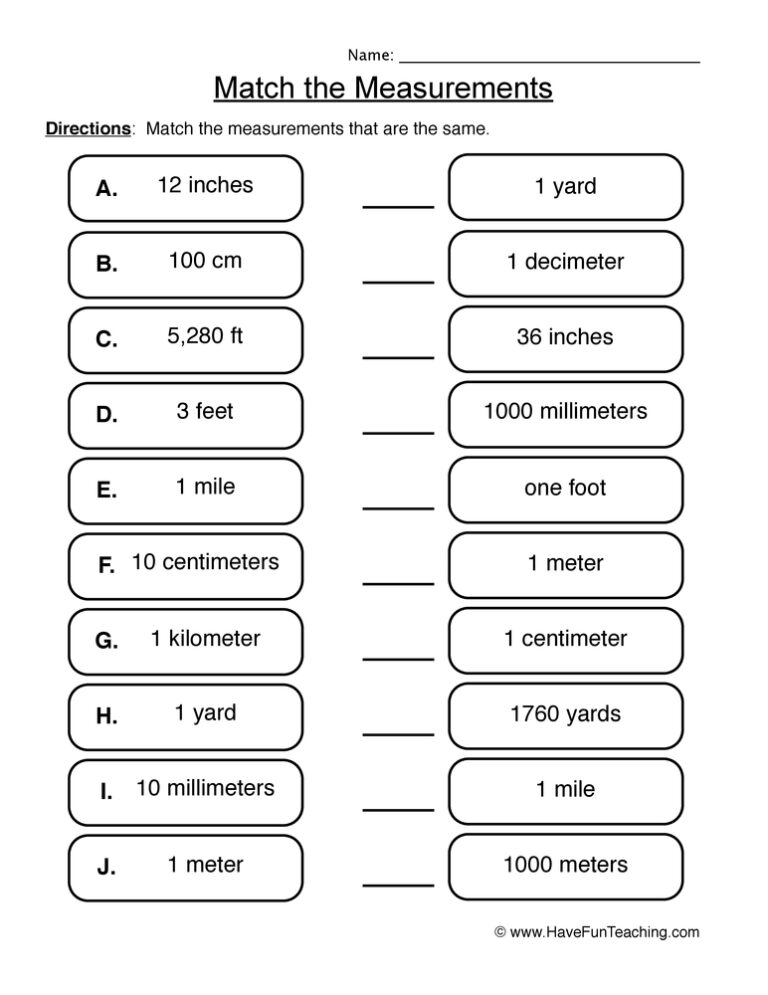
A Match the Measurements Worksheet where 4th graders pair equal metric amounts, finish six unit conversions, and explain a classmate's mistake in writing. An answer key is included, so a quick check takes seconds.

A fourth grade mass and volume worksheet where students fill in the bubble to choose the best unit of measure for weight and capacity. Includes an answer key — perfect for quick, no-prep measurement practice at home or school.

This measurement fractions of inches worksheet has 4th graders read an inch ruler to the nearest eighth, write each length in simplest form, and explain their thinking. Answer key included for fast, no-prep practice.

In this Pirate Problems Math Word Problems Activity, students use the four operations to solve word problems

This Perimeter Equation Problems Worksheet has 4th Grade students solve one-step equations for each side length, then find the perimeter of five figures and two real-world problems. Answer key included.
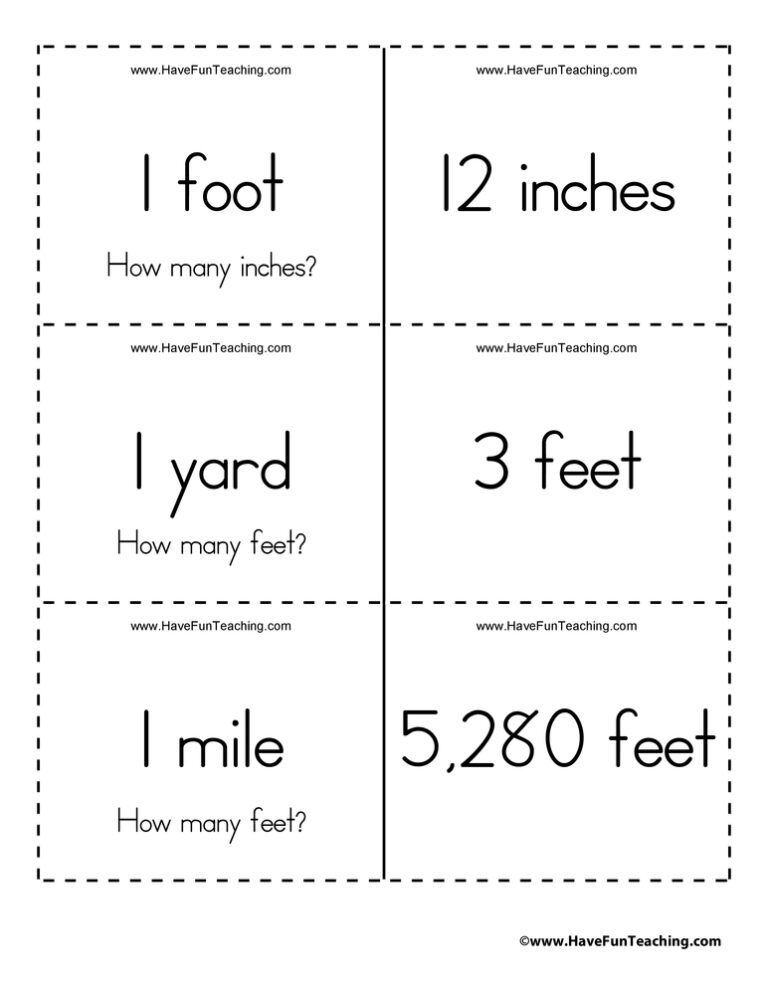
Using Measurement Flash Cards, students build their understanding of unit conversions by matching two units.
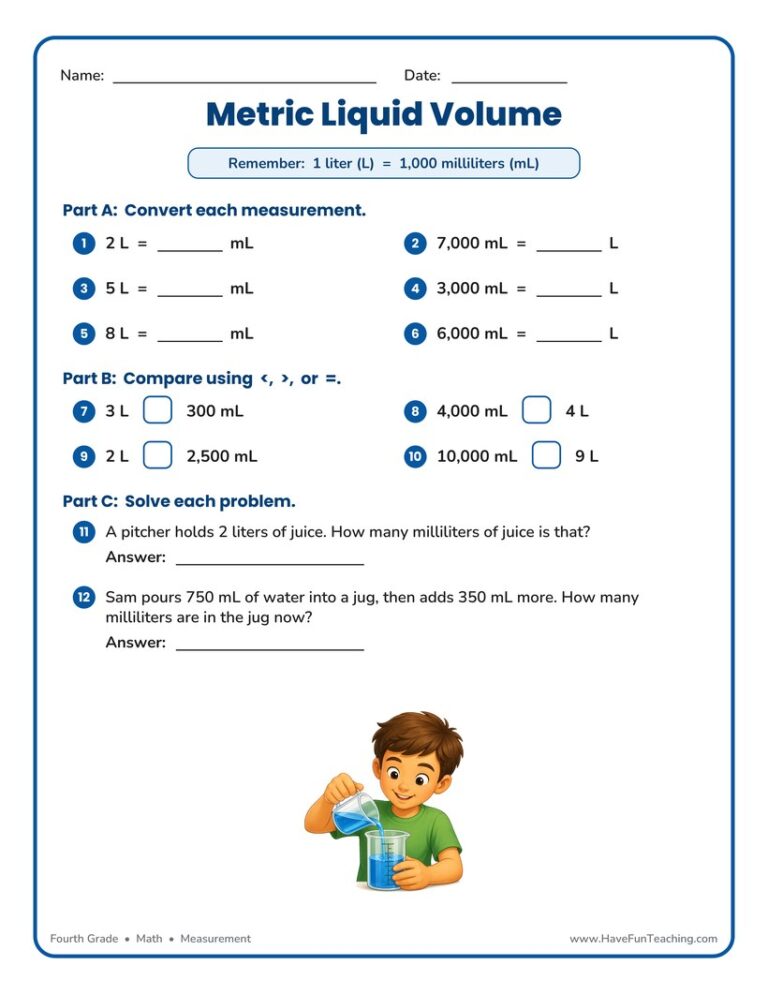
Practice metric liquid volume with this fourth grade worksheet. Students convert liters and milliliters, compare volumes, and solve word problems, with an answer key included to make review simple.

This Degrees on a Thermometer Worksheet has 4th graders read Celsius and Fahrenheit thermometers and solve temperature change word problems, with an answer key for quick checking.
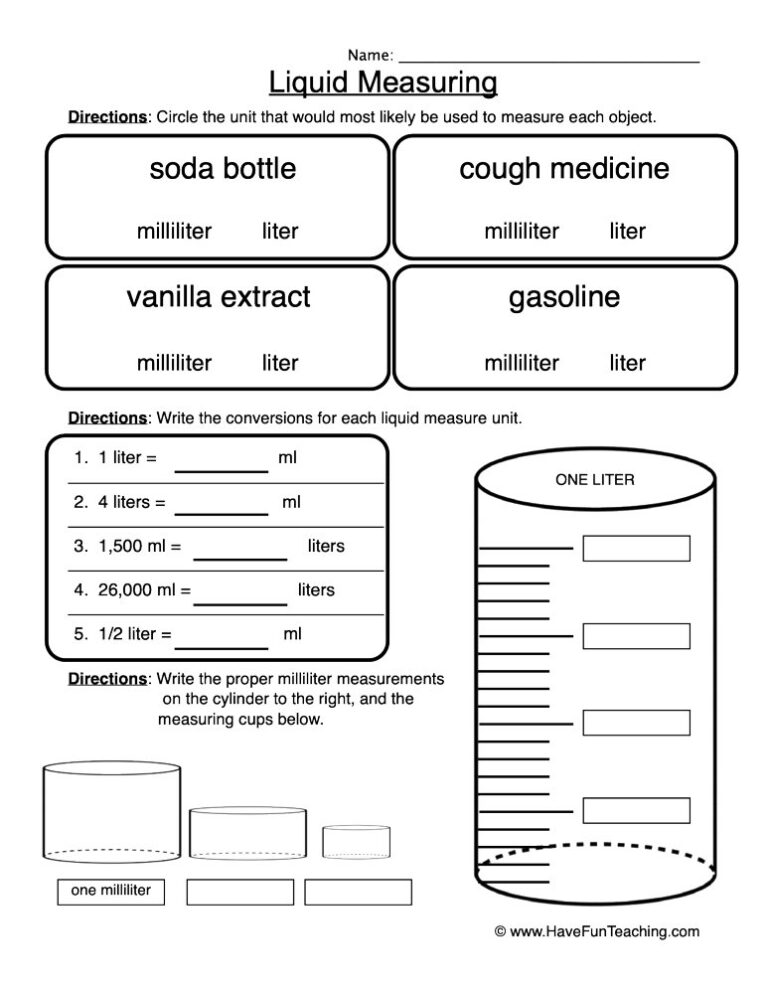
This Choosing Milliliter or Liter Worksheet has 4th graders pick the right metric unit for six everyday containers, convert liters and milliliters, and solve a word problem. Answer key included.
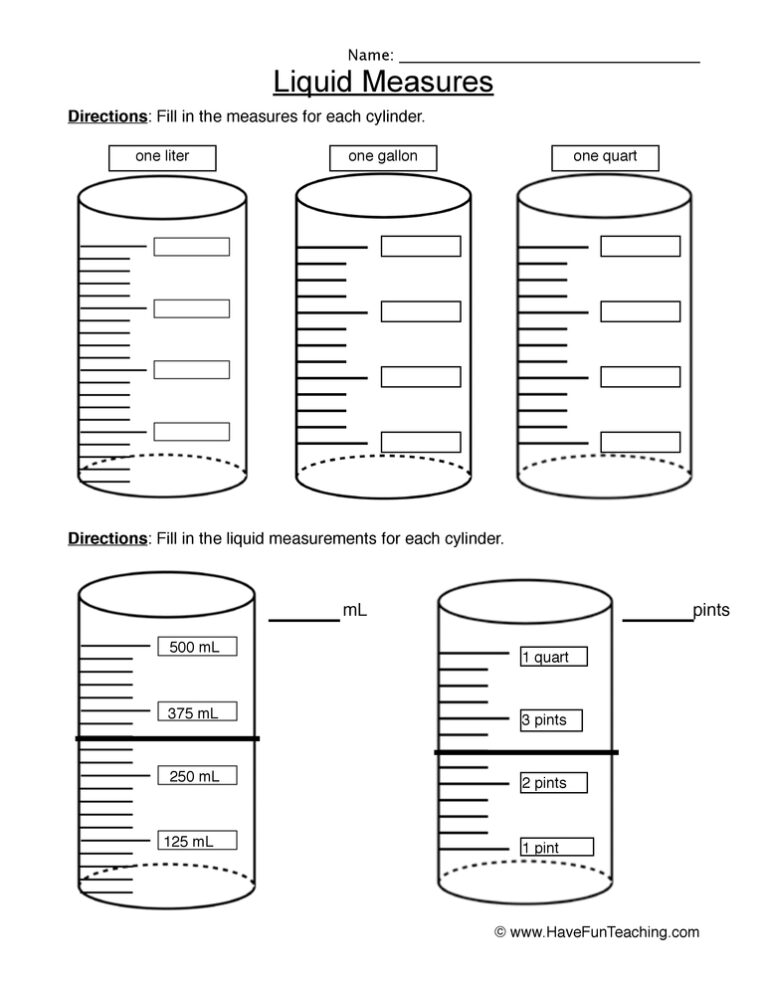
This liquid measures worksheet gives 4th grade students practice reading measuring containers and converting capacity units. An answer key is included, so children build real measurement sense with very little prep.

This Volume Conversions Worksheet gives 4th grade students practice labeling a capacity chart and converting gallons, quarts, pints, and cups. An answer key is included, so measurement practice checks itself.

A measuring metric word problems worksheet where 4th graders solve five real-world grams, kilograms, milliliters and liters problems, including two that need a unit conversion first. Answer key included, so practice is quick and no-prep.

Reviews
There are no reviews yet