

St. Patrick’s Day Math Worksheet
Four shamrock-themed story problems give 3rd graders multiplication, division, and two-step practice, plus a place to explain their thinking. This St. Patrick’s Day math worksheet includes an answer key, so checking work takes seconds.
$6.97
Or free with a membership — members pay $3.33/mo for all 10,000+ resources. See plans
Want this one free?
Tell us where to send it and it’s yours — no card, no catch.
One free resource per teacher. We’ll also send free teaching ideas each week — unsubscribe anytime.
Teaching is easier with a membership
Unlimited printables, games & videos for PreK–6th — for your classroom or homeschool. Cancel anytime.
Start your 3-day free trial$0 today · cancel anytime · Instant access to 10,000+ resources
About this resource
Description
Word problems ask a student to read a short story, decide which operation fits, and then solve it. That thinking is exactly what this St. Patrick’s Day math worksheet gives students room to practice. Third graders work with multiplication and division within 100, and two of the four stories take two steps to finish, so students have to plan before they compute. Wrapping the practice in a familiar holiday theme keeps the reading friendly while the math stays honest.
This 3rd grade St. Patrick’s Day worksheet holds four story problems in clean, roomy cards. Each card gives the student open space to show their thinking and a solid line for the final answer. Part B asks students to look back at problem four and explain how they found the answer, using numbers or words. Use it as morning work in March, as a small-group warm-up, as homework, or as a quick check before a unit test. The answer key on page two lets a teacher or parent grade the page in seconds.
What’s Included
- 1 print-ready PDF worksheet
- Answer key
- 4 St. Patrick’s Day story problems plus a written explanation task
There are three reasons this St. Patrick’s Day math worksheet helps students grow. First, the stories mix multiplication, division, addition, and subtraction, so students cannot fall into repeating one operation down the page. Second, the two-step problems build the planning habit that state assessments measure. Third, the explanation task in Part B turns a right answer into evidence of real understanding, and it gives teachers a window into how each student is reasoning.
Teachers and parents can stretch this practice in simple ways. Read one story aloud and ask students to act it out with counters, buttons, or dried beans before anyone writes. Cover the question and ask students to invent their own question from the same facts. Let partners trade papers and check each other’s work, explaining any step that differs. Ask students to write a brand-new story problem about a class party and swap it with a friend. Skip counting by threes, sixes, and eights also makes the multiplication inside these stories much faster.
Related Resources
What teachers say
Reviews
You must be logged in to post a review.

This St. Patrick's Day How to Catch a Leprechaun Worksheet has 3rd graders number six mixed-up how-to steps, then plan a trap of their own. Answer key included for fast, no-prep sequencing practice.

Using St. Patrick's Day Words Worksheet, students create new words using the letters found in ST. PATRICKS DAY!

The St. Patrick's Day ABC Order Worksheet gives 3rd grade students ten holiday words to put in alphabetical order, plus four word pairs to compare. An answer key is included.

A St. Patrick’s Day Limerick Worksheet where 3rd graders label a poem’s rhyme pattern, match rhyming words, and write a limerick of their own. Answer key included, so poetry practice ends in a laugh instead of a blank page.

Using St. Patrick's Day Writing Activity, students brainstorm the sequence of events of how to catch a leprechaun, then publish using them St. Patrick's Day themed writing.
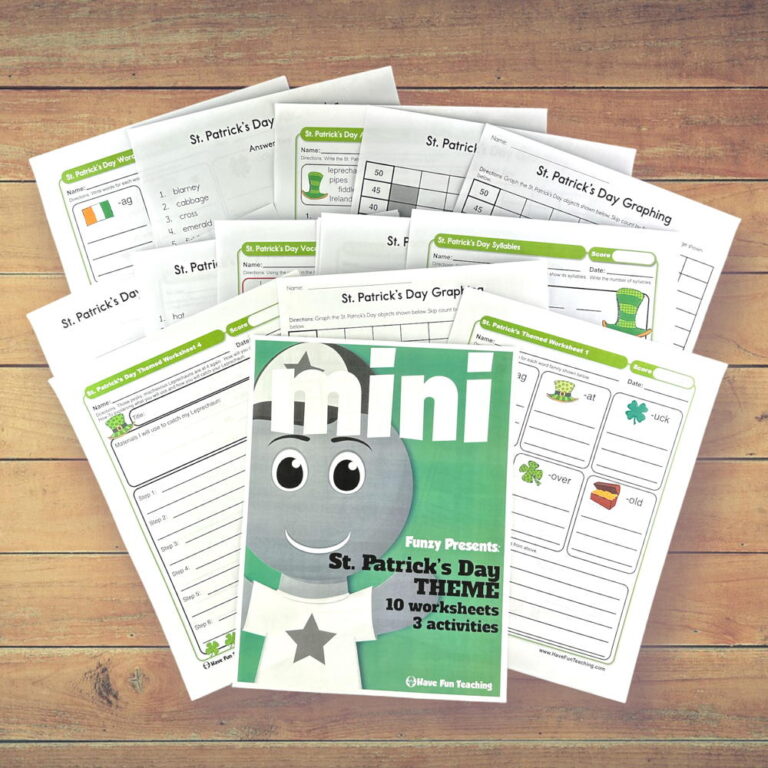
Using this St. Patrick's Day Mini Pack, students learn about St. Patrick's Day through ten fun worksheets and three activities.
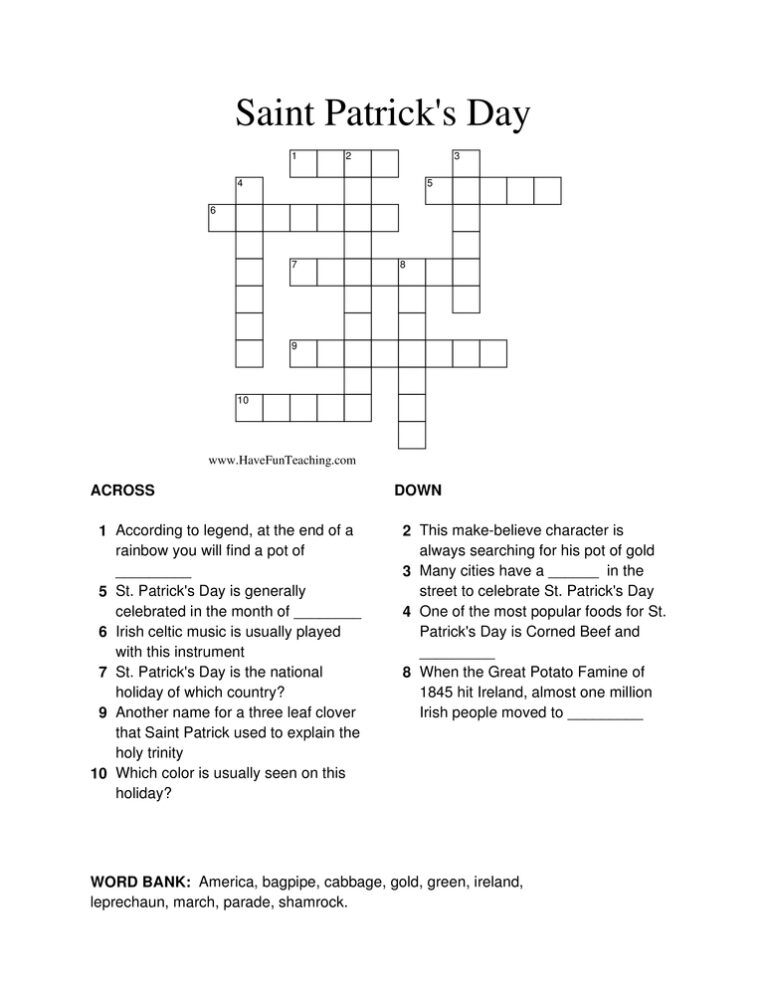
This st. patrick's day crossword puzzle worksheet gives 3rd grade students eight clue-only answers to fit into the grid, then one written question about the holiday. Answer key included.

This St. Patrick's Day Word Search Worksheet gives 3rd Grade students a ten-word puzzle, four sentence blanks, and a short written response. Answer key included, so holiday vocabulary practice is ready to print and go.

This St. Patrick's Day syllables worksheet has 3rd grade students write seven holiday words in parts and mark the syllable count. An answer key is included.

This St. Patrick's Day Reading Comprehension Digital Worksheet is an online digital worksheet for Google Classroom & online distance learning.
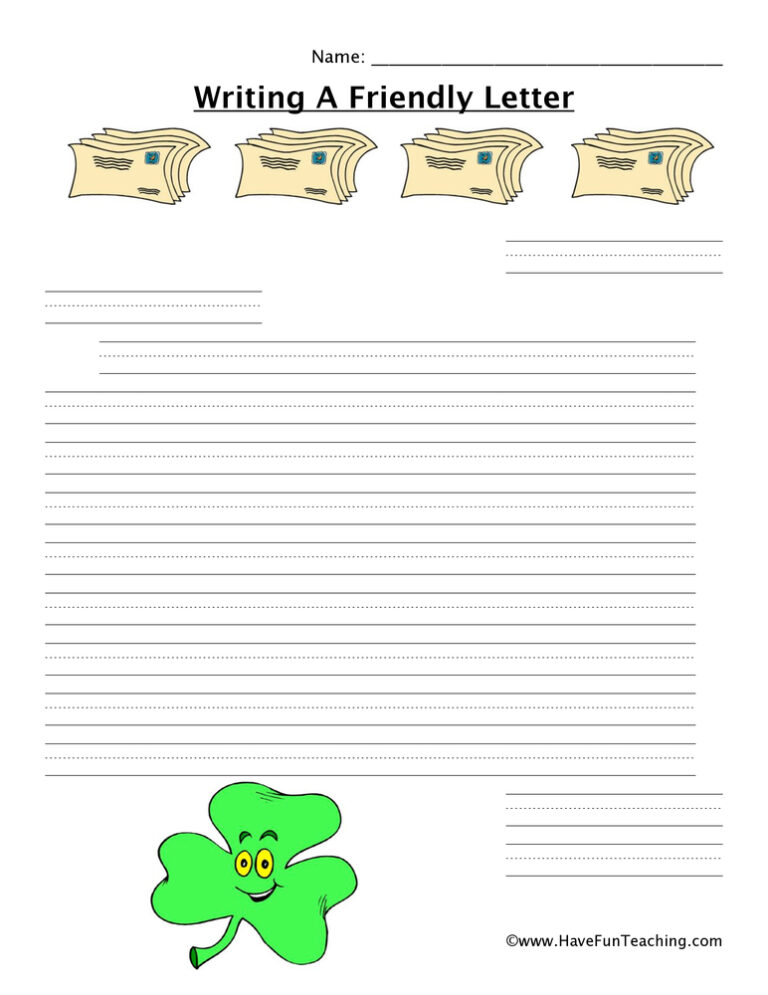
Using this Writing a St Patrick's Day Letter Worksheet, students write a letter using blank friendly letter template with some simple graphics.

Reviews
There are no reviews yet