

Word Problem Practice Worksheet
This word problem practice worksheet gives 1st graders five real-life addition and subtraction problems to solve within 20. An answer key is included, so checking work takes seconds.
$6.97
Want this one free?
Tell us where to send it and it’s yours — no card, no catch.
One free resource per teacher. We’ll also send free teaching ideas each week — unsubscribe anytime.
Free teacher account · no credit card
Membership
Get every game, song, & printable
- Every game, on any device
- 10,000+ printables
- Assign online with HFT Classroom
Then $39.97/year · cancel anytime · See plans
- Instant digital download
- Printable PDF + answer key
- Made by real teachers
Teacher / Family membership
Teaching is easier with every resource
One membership for your whole year: 10,000+ worksheets, games, songs and videos for Preschool–6th, for your classroom or homeschool.
- Unlimited printables & downloads
- Every game, on any device
- Assign online with HFT Classroom
- Cancel anytime
Teacher / Family membership · 3 days free
Yearly
Monthly would be $119.64 a year
$3.33/month
Billed $39.97 once a year
You save $79.67 every year
Start My 3 Free Days$0 today · cancel anytime
Monthly
$9.97/month
Flexible, month to month
Yearly is just $3.33/mo. Switch and save $79.67
Start My 3 Free Days$0 today · cancel anytime
About this resource
Description
Word problems are where number sense turns into real thinking. A first grader who can add and subtract within 20 still has to read a story, picture what is happening, decide whether a group is growing or shrinking, and only then reach for the numbers. That decision is the skill, and it is the one that shows up on every early math assessment. This word problem practice worksheet gives students five short, friendly stories built around things they already know — a fish tank, a batch of muffins, a stack of baseball cards, a penny jar, and a hungry pet hamster — so the reading never gets in the way of the math.
The worksheet holds five numbered problems, each in its own card with a clear answer line and the unit already printed beside it. Two problems ask students to join two groups, one asks them to take away, one asks how many more, and one asks for a missing part — a genuine mix of 1st grade addition and subtraction word problems rather than five copies of the same question. Read the first problem together, model how to underline the numbers and circle the question, then let students finish the rest independently. It works as morning work, a math-center task, homework, or a quick check before a unit test.
What’s Included
- 1 print-ready PDF worksheet
- Answer key
- 5 addition and subtraction word problems within 20 (join, separate, compare, and missing-addend)
Three things make this word problem practice worksheet work for young students. First, the problems are written at a first-grade reading level with short sentences, so students spend their effort on the math instead of decoding the text. Second, the operations are deliberately mixed, which means students cannot solve the page on autopilot — they have to reread and decide every time. Third, every card leaves a wide, well-spaced writing line at first-grade handwriting size, so answers stay neat and students never run out of room.
Keep the thinking going away from the page. Act the problems out with counters, cereal, or coins so students can physically join and separate the groups. Ask students to write their own story problem about a pet, a snack, or a collection, then trade papers with a partner and solve. Turn problem three into a class survey — compare two rows of cubes and ask how many more. At home, narrate real math out loud at the grocery store or the dinner table, and let your child answer before you do.
Related Resources
What teachers say
Reviews
You must be logged in to post a review.

This adding and subtracting within 20 worksheet gives first graders mixed addition and subtraction fact practice with a helpful number line. Includes a complete answer key for quick, no-prep math review.
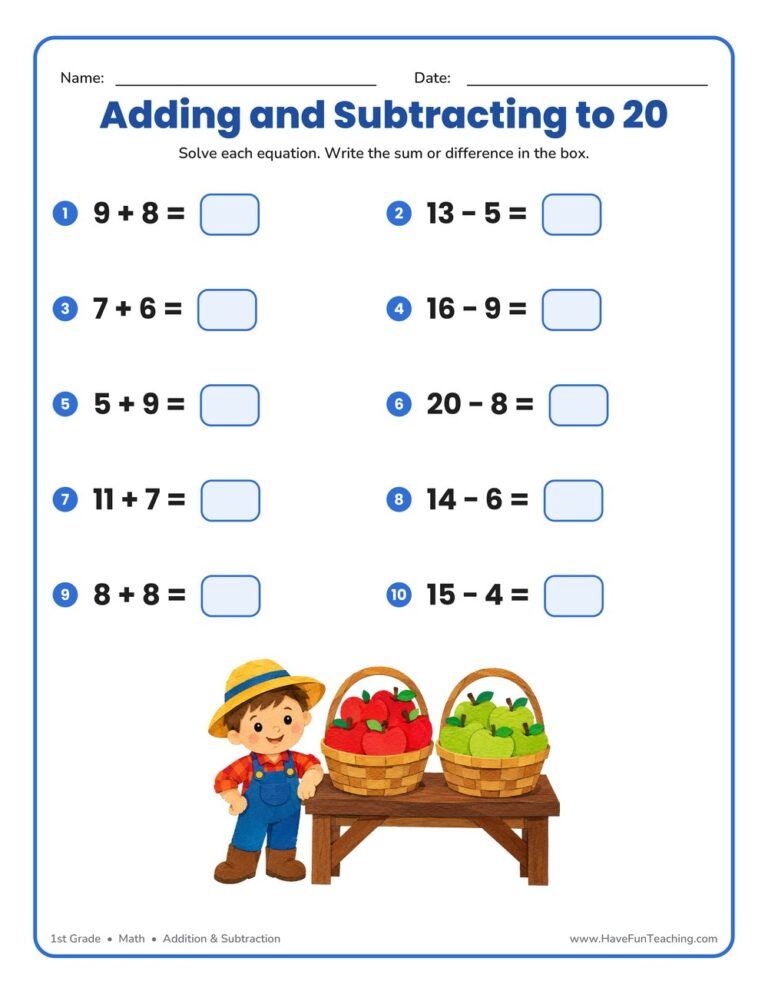
This adding and subtracting to 20 worksheet gives 1st graders ten mixed addition and subtraction equations to solve within 20. Answer key included — perfect for quick, no-prep math fact practice at home or school.
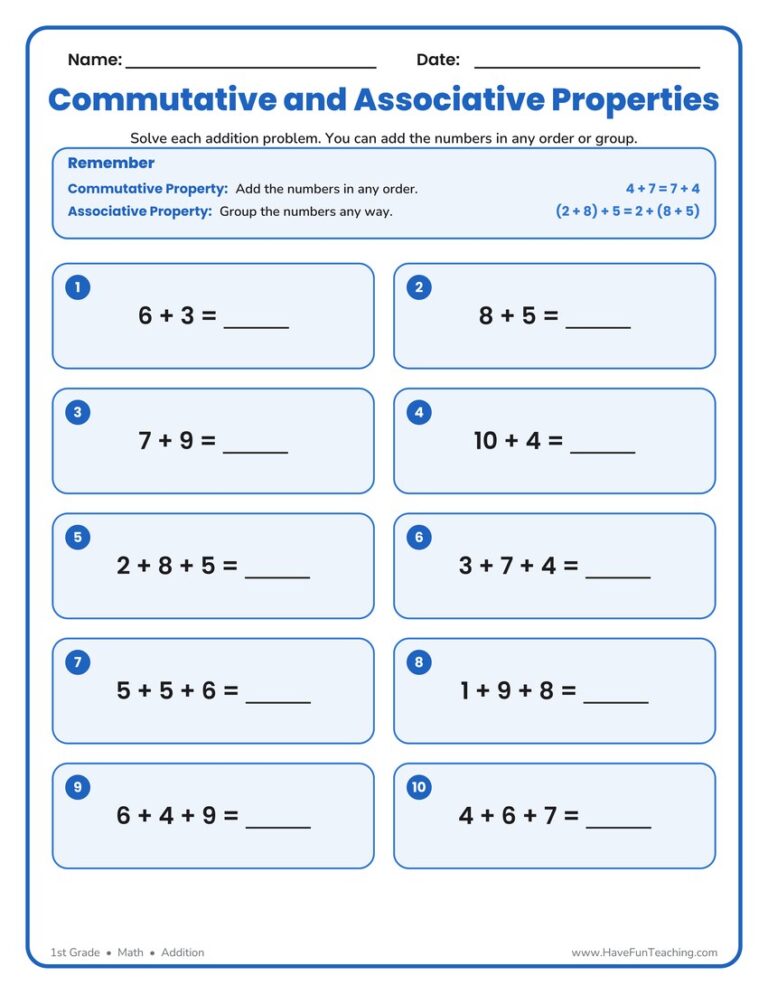
A first-grade commutative and associative properties worksheet where students solve ten addition problems by adding the numbers in any order or group. Includes an answer key and a handy reminder box for no-prep math practice.

This counting on to add worksheet helps 1st graders start from the bigger number and count forward on a number line to twenty. An answer key is included, so checking work takes seconds.
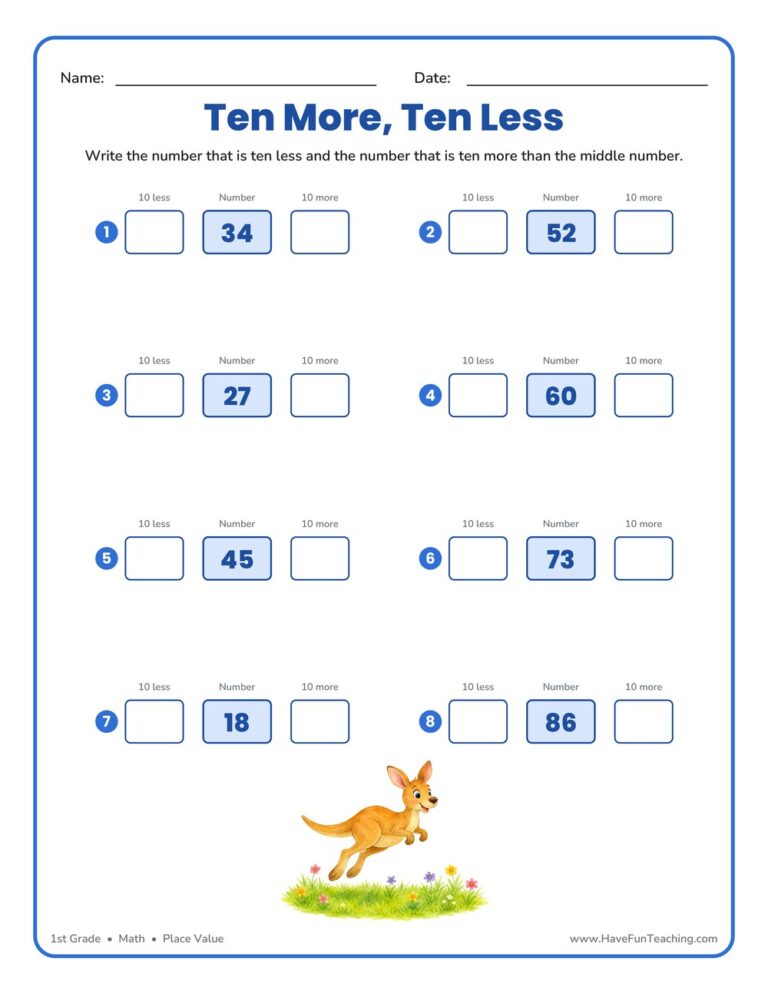
This Ten More Ten Less Worksheet gives 1st graders eight quick problems to find ten more and ten less than a two-digit number. Includes an answer key for fast, no-prep place value practice.

This Adding 3 Whole Numbers Within 20 Worksheet gives 1st graders twelve problems to practice adding three single-digit numbers for sums up to 20. Includes a complete answer key for fast, no-prep addition practice.

This Adding In Any Order Worksheet helps 1st graders see that 3 + 4 and 4 + 3 always match, using picture groups first and quick fact flips second. Answer key included, so practice takes minutes to check.

This finding the missing number worksheet gives first graders focused practice solving for the unknown number in addition and subtraction equations within 20. Includes an answer key — a quick, no-prep way to build number sense and fact fluency.

This Adding Word Problems with 3 Numbers Worksheet helps 1st graders add three single-digit numbers using fun story problems about ducks, apples, and more. Includes a complete answer key for quick, no-prep addition practice.
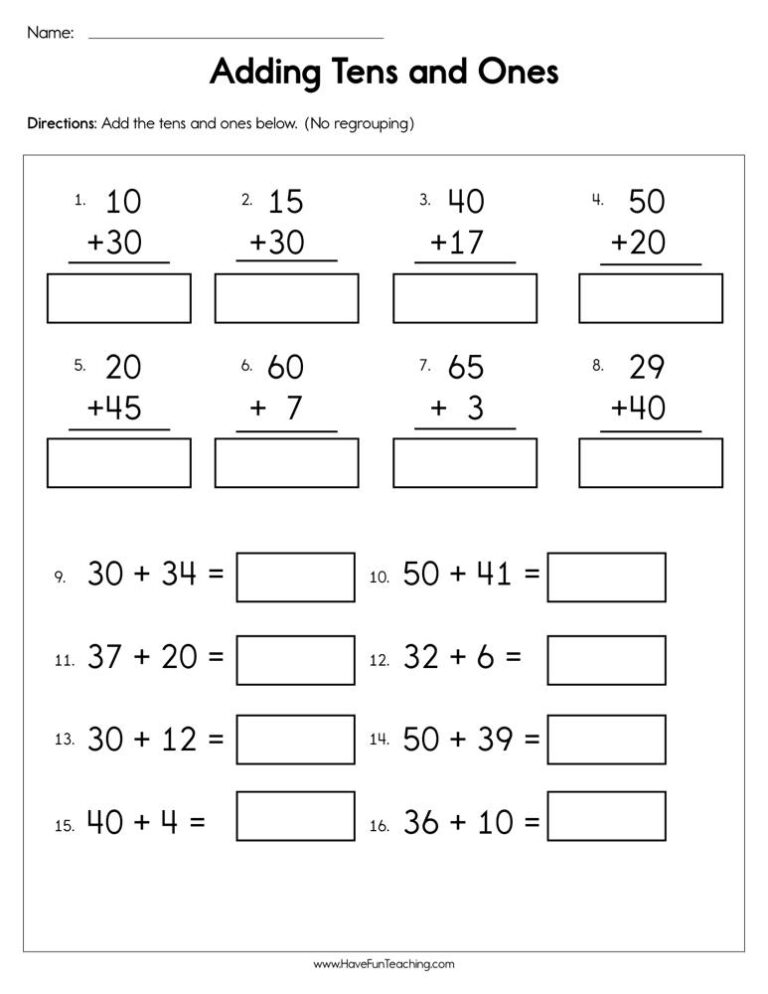
This adding tens and ones worksheet helps 1st graders build two-digit numbers with base ten blocks and column addition. Includes an answer key for quick, no-prep place value practice at home or school.

This Make It True Missing Number Addition Subtraction Worksheet gives 1st graders ten equations to complete by filling in the missing number. Answer key included for fast, no-prep practice.

This Adding to Ten with Fluency Worksheet gives 1st Grade students twelve addition facts, four make-ten problems, and an illustrated story problem, with an answer key included, so fact recall becomes quick and automatic.




Reviews
There are no reviews yet