
Skip to content
Start My 3 Free Days $0 today · cancel anytime

5th Grade Plants Resources

2 5th grade plants resources: 2 worksheets. How teachers use these

5th Grade Plants Resources

2 5th grade plants resources: 2 worksheets. How teachers use these

Worksheet
Worksheet5th GradeAnimal and Plant Cells Worksheet

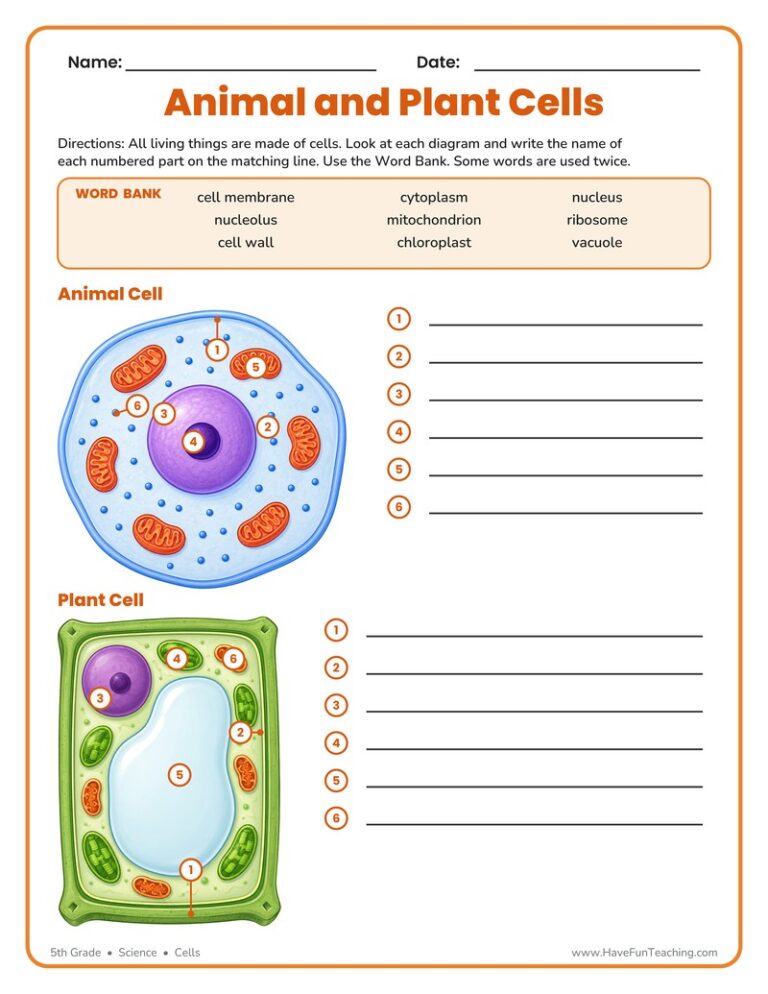
This Animal and Plant Cells Worksheet asks 5th grade students to label the organelles of an animal cell and a plant cell using a word bank. Answer key included for fast, no-prep science review.

Worksheet
Worksheet5th GradePhotosynthesis Diagram Worksheet

A photosynthesis diagram worksheet for 5th grade: students label four arrows for sunlight, carbon dioxide, water, and oxygen, then explain the process in writing. An answer key makes checking fast.

From our teachers' playbook

Food made from air and light

What do 5th graders learn about plants?

Fifth graders learn one of the most surprising facts in science: plants get most of the material they need to grow from air and water, not soil. Through photosynthesis, leaves use sunlight to turn carbon dioxide and water into sugar and oxygen. Kids also learn that plants are made of cells, with special parts like chloroplasts and a cell wall that animal cells don't have. They trace how energy from the sun moves from plants to the animals that eat them. The click moment comes when kids realize a giant tree is mostly made of air!

Our favorite ways to teach plants

Plants work quietly, so we help kids see what's happening inside.

Label the leaf factory

Kids label a photosynthesis diagram with what goes in (sunlight, water, carbon dioxide) and what comes out (sugar, oxygen). Then they explain it to a partner in their own words. Drawing and explaining together builds lasting understanding.

Why it works: children learn more from words and pictures together than from words alone (Mayer, 2009).

Photosynthesis Diagram WorksheetTry it withPhotosynthesis Diagram WorksheetWorksheetsOpen it →

Cell compare

Kids compare plant and animal cells side by side and circle the parts only plants have. Ask why a plant needs a cell wall and chloroplasts but we don't.

Why it works: kids understand an idea best when they touch it, then draw it, then write it, the order the U.S. Department of Education recommends for elementary math.

Animal and Plant Cells WorksheetTry it withAnimal and Plant Cells WorksheetWorksheetsOpen it →

Where does the mass come from?

Ask "Where does a tree get the stuff to grow?" at the start and end of the unit. Most kids say soil at first. Revisiting the question shows how their thinking changed.

Why it works: a big review of study methods ranked quick self-quizzing among the most powerful ways to remember (Dunlosky and colleagues, 2013).

What's on this page

Teacher favorites right now: Animal and Plant Cells Worksheet and Photosynthesis Diagram Worksheet.

Questions parents and teachers ask about plants

What do 5th graders learn about plants?

They learn that plants make their own food through photosynthesis, that most of a plant's matter comes from air and water, and that plant cells have parts animal cells don't.

How do you explain photosynthesis to a 5th grader?

Plants use sunlight to turn water and carbon dioxide from the air into sugar for food. They release oxygen as a bonus, which we breathe.

Do plants get their food from soil?

No. Soil gives plants water and small amounts of minerals, but most of what a plant is made of comes from carbon dioxide in the air.

What is the difference between plant and animal cells?

Plant cells have a cell wall and chloroplasts, and usually one big vacuole. Animal cells don't have a cell wall or chloroplasts.


