Skip to content
Start My 3 Free Days $0 today · cancel anytime

1st Grade Prefixes Resources

5 1st grade prefixes resources: 3 activities, 1 flash card and 1 worksheet. How teachers use these

1st Grade Prefixes Resources

5 1st grade prefixes resources: 3 activities, 1 flash card and 1 worksheet. How teachers use these

Flash Cards
Flash Cards1st GradePrefix Flash Cards

These prefix flash cards help kindergarten to 4th grade students learn 24 common prefixes, their meanings and an example word for each. Fold-over cards, a practice page and an answer key are included.

Worksheet
Worksheet1st GradeWord Meanings with Affixes Worksheet

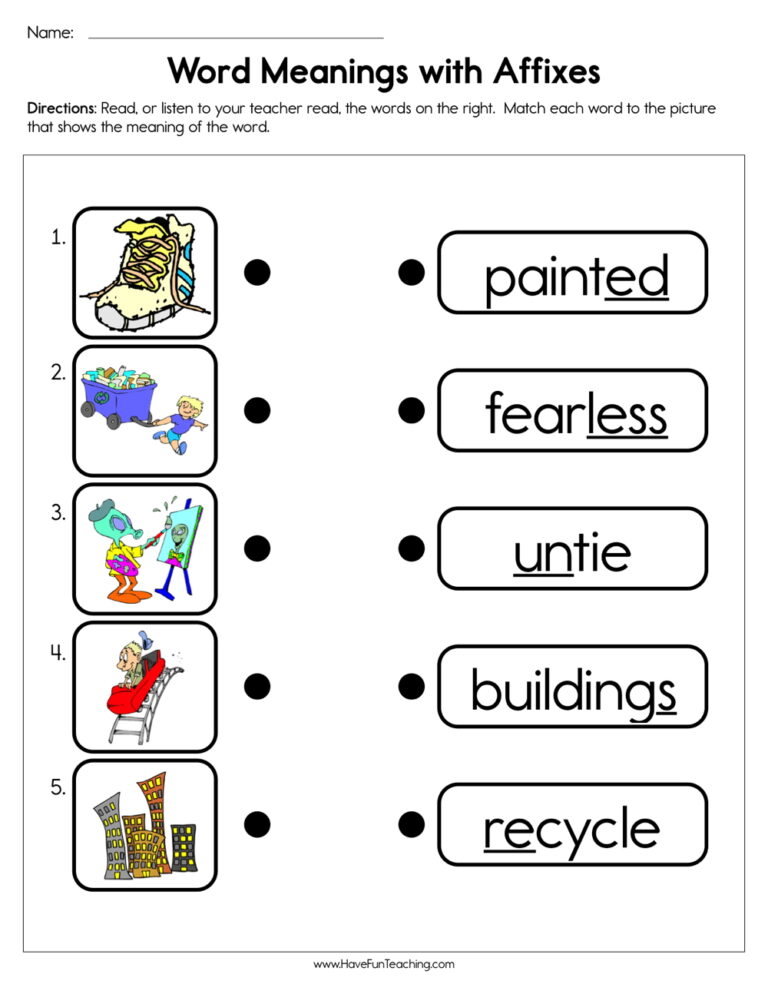
Students match pictures to words with prefixes and suffixes and write base words in this word meanings with affixes worksheet for 1st grade, with an answer key included.

Activity
Activity1st GradeRoot Words and Endings Activity

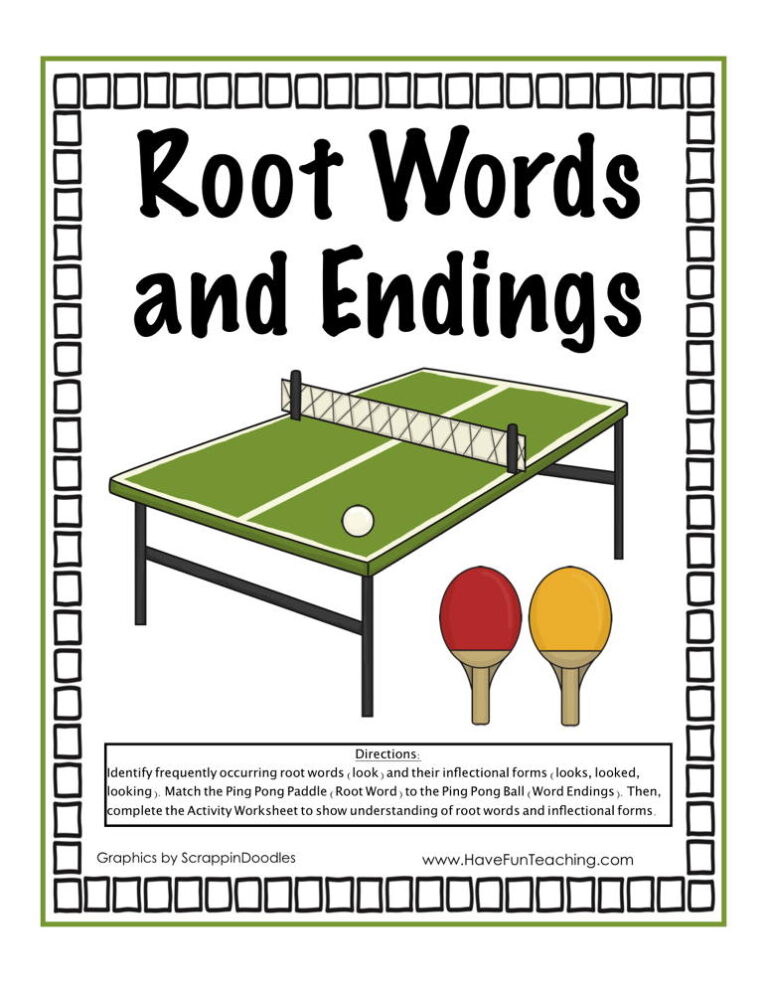
This Root Words and Endings activity has kindergarten and 1st grade students sort ping pong ball word cards by -s, -ed and -ing and find each root word, with a practice page and answer key included.

Activity
Activity1st GradeWord Meanings Affixes Activity

Using Word Meanings Affixes Activity, students use the most frequently occurring inflections and affixes as a clue to the meaning of an unknown word.

Activity
Activity1st GradeExploring New Words Prefix Activity

Using Exploring New Words Prefix Activity, students will use prefix and base cards to create new words and then define the each new word.

From our teachers' playbook

Add a little, change a lot

What do 1st graders learn about prefixes?

First graders meet their very first word parts. They learn that adding a few letters to the front of a word can flip its meaning: un + lock = unlock, re + do = do again. They practice the friendliest prefixes like un- and re-, alongside endings like -s, -ed and -ing. The aha moment is when a child reads "untie" and says, "Oh! That means the opposite of tie!"

Our favorite ways to teach prefixes

With 1st graders, keep it to one or two prefixes and lots of hands-on matching.

Barnyard prefix match

Kids match a prefix animal to a base word animal and read the new word aloud. Start with just un- so it feels easy, then add re- the next day. Matching makes a new idea feel like a game.

Why it works: in a well-known study, a few short sessions of a simple number board game measurably boosted young children's number skills (Ramani and Siegler, 2008).

Prefix Barnyard Matching ActivityTry it withPrefix Barnyard Matching ActivityActivitiesOpen it →

One prefix a day

Flash a prefix card in the morning and ask, "What does un- mean?" Then give three base words and let kids make the new words out loud. A two-minute warm-up keeps it fresh.

Why it works: pulling an answer out of memory makes it stick far better than rereading it, one of the strongest findings in learning research (Dunlosky and colleagues, 2013).

Prefix Flash CardsTry it withPrefix Flash CardsFlash CardsOpen it →

Word meanings out loud

Model how to cover the prefix, read the base word, then add the prefix back and think about the meaning. Use the word meanings worksheet to practice the same steps. It is a simple routine kids can use on their own.

Why it works: handing over the work step by step, from teacher to student, is one of the most widely used teaching frameworks (Pearson and Gallagher, 1983).

Word Meanings with Affixes WorksheetTry it withWord Meanings with Affixes WorksheetWorksheetsOpen it →

Questions teachers and parents ask about prefixes

Do 1st graders learn prefixes?

Yes, in a simple way. First graders learn a few common prefixes like un- and re- and how they change a word's meaning, along with endings like -ed and -ing.

What does the prefix un- mean?

Un- means "not" or "the opposite of." Unhappy means not happy, and unlock means the opposite of lock.

How do I explain a prefix to a young child?

Tell them a prefix is a little word part at the front that changes what the word means. Show them with real actions, like tie and untie or pack and unpack.

How can I practice prefixes at home?

Use everyday actions: pack and unpack groceries, zip and unzip a coat, fill and refill a cup. Say both words and ask what changed.