
Skip to content
Start My 3 Free Days $0 today · cancel anytime

1st Grade Cause and Effect Resources

3 1st grade cause and effect resources: 1 micro lesson, 1 worksheet and 1 activity. How teachers use these

1st Grade Cause and Effect Resources

3 1st grade cause and effect resources: 1 micro lesson, 1 worksheet and 1 activity. How teachers use these

Micro Lesson
Micro Lesson1st GradeIdentifying Cause and Effect Micro Lesson

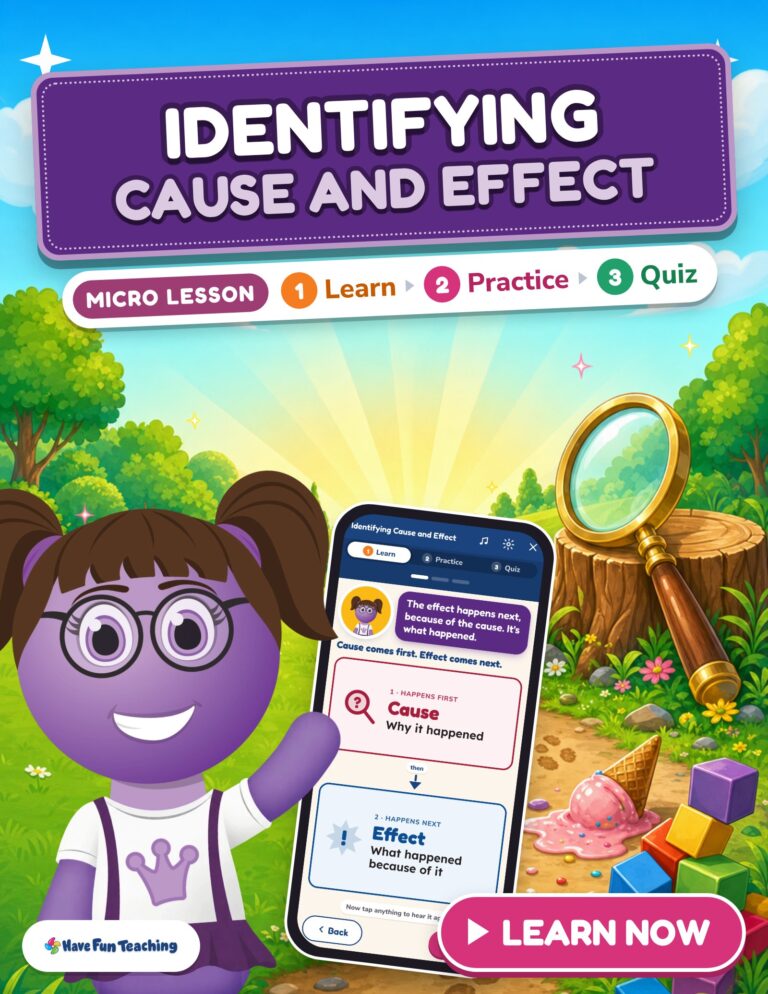
Lexy teaches kids how to find the cause and the effect, one step at a time. Kids practice with friendly hints, then show what they know in a 5-question quiz. Quiz scores go to HFT Classroom automatically.

Worksheet
Worksheet1st GradeConnecting Events In The Lorax Worksheet

Using Connecting Events In The Lorax Worksheet, students make a connection between to events in The Lorax to understand how events are related.

Activity
Activity1st GradeCause and Effect Sequencing Activity

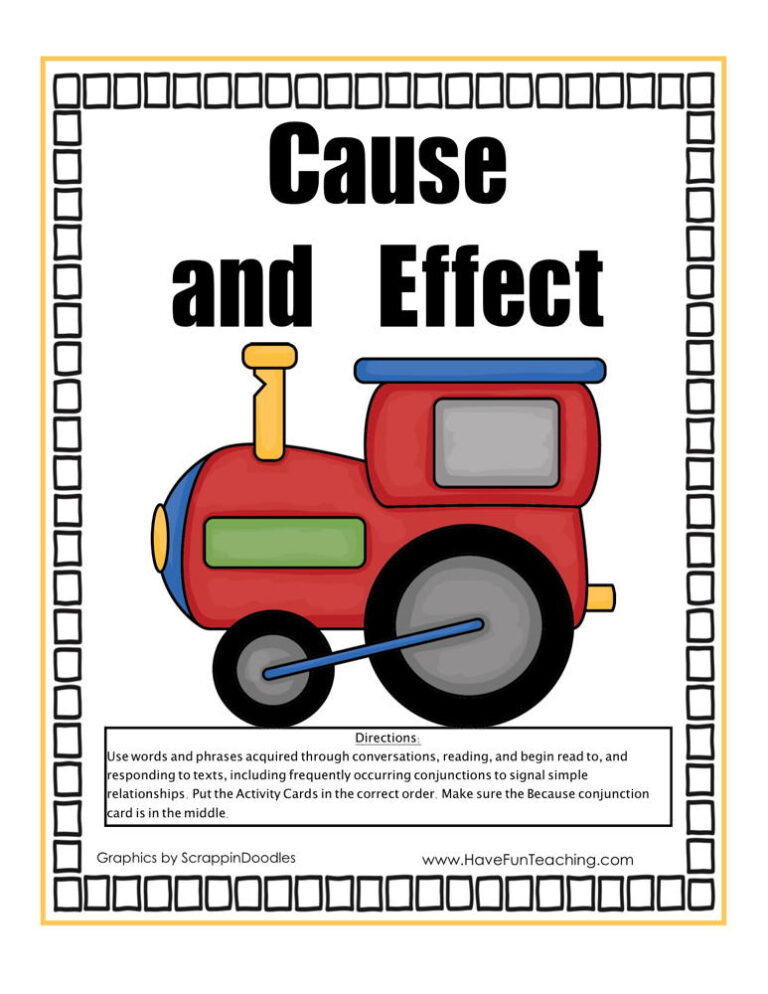
Kids build trains of Effect, because, and Cause cards in this cause and effect sequencing activity for 1st to 3rd grade. Answer key included so checking each train is quick.

From our teachers' playbook

This happened, so that happened!

What do 1st graders learn about cause and effect?

In 1st grade, cause and effect is all about one simple question: why did it happen? The cause is what made something happen, and the effect is what happened. "It rained, so the ground got wet." Kids learn to spot these pairs in stories and in real life, and to use helpful words like because and so. They connect events in a story to see how one leads to the next. The click comes when a child explains a character's choice with "because..." all on their own.

Our favorite ways to teach cause and effect in 1st grade

First graders understand cause and effect best when they can see it happen. Try these moves.

Learn it step by step

Start with a short screen lesson that shows a cause and its effect with pictures and read-aloud. Pause after each example and ask, "What happened? Why?" Kids answer before the lesson shows them.

Why it works: showing first, practicing together, then letting kids try alone is the "gradual release" model teachers have relied on for decades (Pearson and Gallagher, 1983).
Identifying Cause and Effect Micro LessonTry it withIdentifying Cause and Effect Micro LessonMicro LessonsOpen it →

Act it out

Drop a ball, blow on a pinwheel, or knock over a tower of blocks. Ask "What did I do?" for the cause and "What happened?" for the effect. Then kids act out their own and the class names both parts.

Why it works: going from real objects to pictures to symbols is a core recommendation of the U.S. Department of Education's elementary math guide.

Cause and Effect Sequencing ActivityTry it withCause and Effect Sequencing ActivityActivitiesOpen it →

Because and so

Teach two sentence frames: "___ happened because ___" and "___, so ___." Read a story and stop at big moments. Kids use the frames to explain what happened to a partner.

Why it works: playful practice with a clear goal keeps kids practicing longer, and simple learning games have been shown to build real skills (Ramani and Siegler, 2008).

Connecting Events In The Lorax WorksheetTry it withConnecting Events In The Lorax WorksheetWorksheetsOpen it →

Questions parents and teachers ask about 1st grade cause and effect

How do you explain cause and effect to a first grader?

Tell them the cause is why something happened and the effect is what happened. Use real examples: "You were hungry, so you ate a snack." Hunger is the cause, eating is the effect.

What are clue words for cause and effect?

The easiest ones for first graders are because, so and if... then. They help kids find the cause and the effect in a sentence.

How can I practice cause and effect at home?

Talk about everyday moments. "Why is the ice cream melting?" "What happens if we forget to water the plant?" Ask your child to use because or so in the answer.

Why is cause and effect important for reading?

It helps kids understand why characters act and how a story moves from beginning to end. It's a building block for comprehension and retelling.



