Skip to content
Start My 3 Free Days $0 today · cancel anytime

4th Grade Insects Resources

3 4th grade insects resources: 1 flash card and 1 worksheet. How teachers use these

4th Grade Insects Resources

3 4th grade insects resources: 1 flash card and 1 worksheet. How teachers use these

Flash Cards
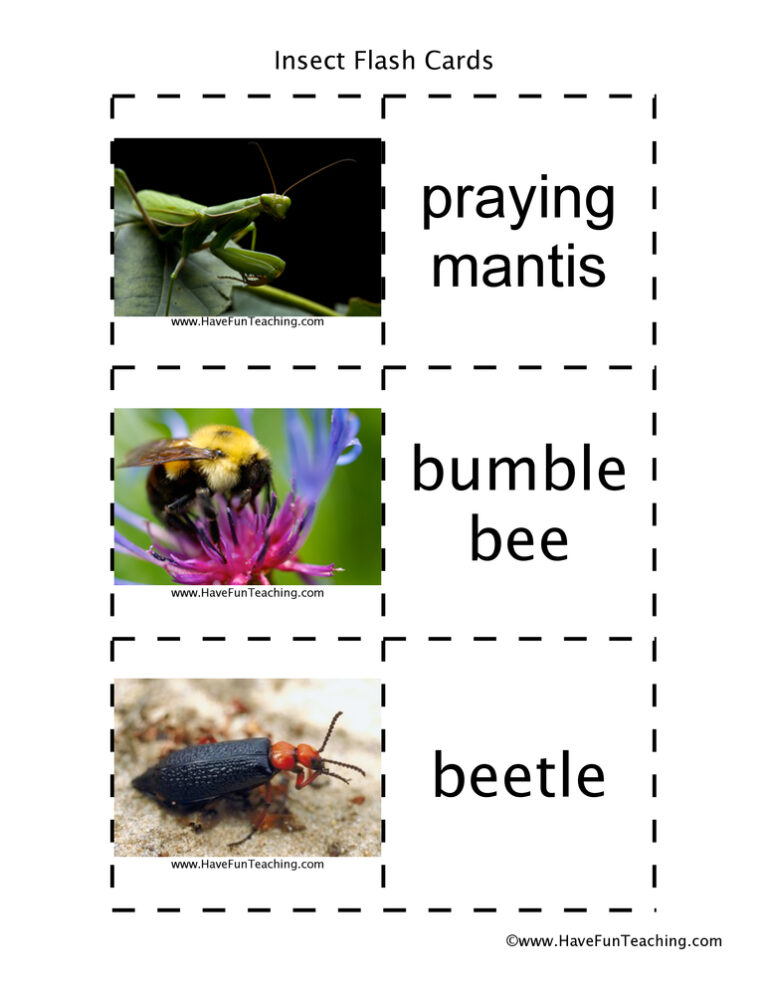
Flash Cards4th GradeInsect Flash Cards

Using these Insect Flash Cards, students improve their Insect vocabulary by having a complete set of insect names they can use in their writing and discussions.

Worksheet
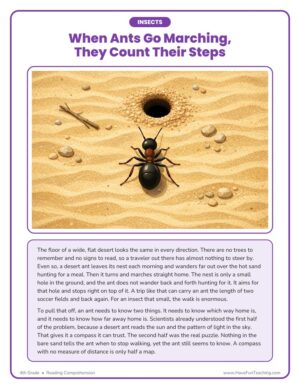
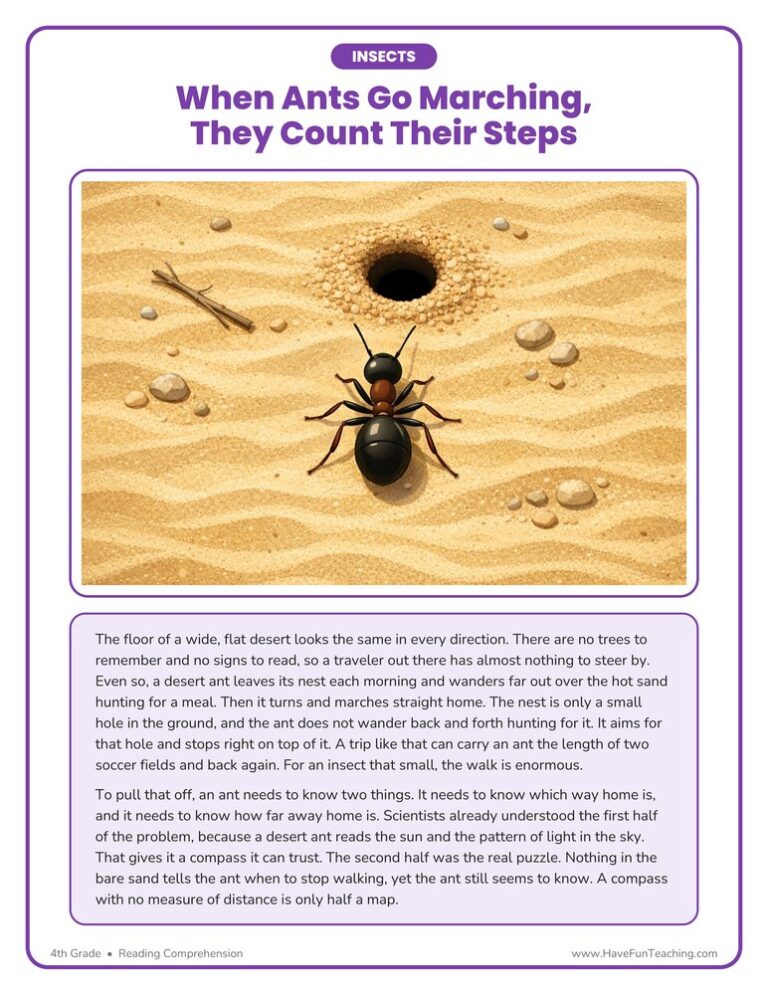
Worksheet4th GradeWhen the Ants Go Marching Reading Comprehension Worksheet

This When the Ants Go Marching Reading Comprehension Worksheet gives 4th grade readers a two-page nonfiction passage, five questions, and an answer key, so students build real stamina with science text.

4th GradeButterfly Clip Art

This Butterfly Clip Art is a perfect addition to any bulletin board, flyer, or other printable that you use in your classroom while learning about butterflies.

From our teachers' playbook

Six legs, three parts, endless wonder

What do 4th graders learn about insects?

In 4th grade, insects become a study in structure and function: how each body part helps the insect survive. Kids learn that every insect has three body parts, the head, thorax and abdomen, plus six legs, antennae and a hard outer exoskeleton. They compare complete metamorphosis, egg → larva → pupa → adult, like a butterfly, with incomplete metamorphosis, egg → nymph → adult, like a grasshopper. They also learn why a spider is not an insect: it has eight legs and only two body parts! The click moment comes when a child looks at a beetle and explains exactly what each part is for.

Our favorite ways to teach insects in 4th grade

Insects are tiny, but they are full of science. These moves get kids observing like real entomologists.

Insect or not?

Flash a card of a bug and have kids decide in five seconds: insect or not? Then they prove it by counting legs and body parts. Quick checks like this help them apply the rules instead of just memorizing them.

Why it works: a big review of study methods ranked quick self-quizzing among the most powerful ways to remember (Dunlosky and colleagues, 2013).

Insect Flash CardsTry it withInsect Flash CardsFlash CardsOpen it →

Build a labeled word wall

Post a big insect picture and add vocabulary cards around it: thorax, abdomen, antennae, exoskeleton. Kids label their own drawings to match. Seeing the words next to the real parts makes science vocabulary easy to remember.

Why it works: children learn more from words and pictures together than from words alone (Mayer, 2009).

Insects Word WallTry it withInsects Word WallFlash CardsOpen it →

Build an insect model

Kids use clay or recycled materials to build an insect with three body parts, six legs and antennae. Then they explain how one part helps it survive. Building forces them to think about every single structure.

Why it works: kids understand an idea best when they touch it, then draw it, then write it, the order the U.S. Department of Education recommends for elementary math.

When the Ants Go Marching Reading Comprehension WorksheetTry it withWhen the Ants Go Marching Reading Comprehension WorksheetWorksheetsOpen it →

4th grade insect questions

What are the three body parts of an insect?

Every insect has a head, a thorax and an abdomen. The legs and wings attach to the thorax.

Why is a spider not an insect?

Spiders have eight legs and two body parts, and they have no antennae. Insects have six legs, three body parts and antennae, so spiders belong to a different group called arachnids.

What is the difference between complete and incomplete metamorphosis?

In complete metamorphosis there are four stages: egg, larva, pupa and adult, like a butterfly. In incomplete metamorphosis there are three: egg, nymph and adult, like a grasshopper.

How do I teach insects to 4th graders?

Pair close observation with structure and function. Have students look at real insects or pictures, label the parts and explain how each one helps the insect survive.