Skip to content
Start My 3 Free Days $0 today · cancel anytime

4th Grade Oceans Resources

2 4th grade oceans resources: 1 worksheet, 1 assessment and 1 workbook. How teachers use these

Find the perfect resource in seconds

4th Grade Oceans Resources

2 4th grade oceans resources: 1 worksheet, 1 assessment and 1 workbook. How teachers use these

Assessment
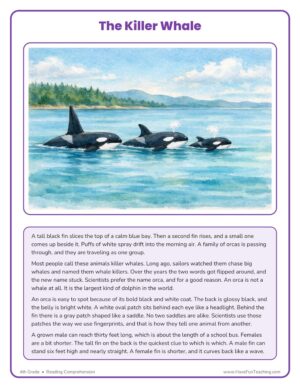
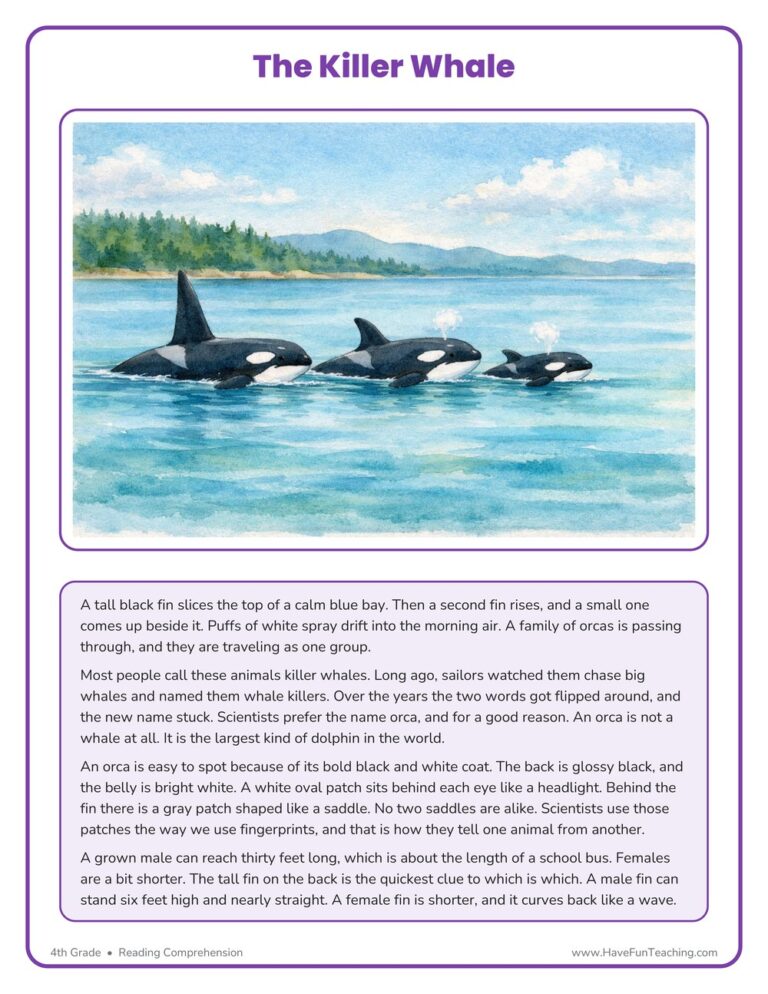
Assessment4th GradeKiller Whales Reading Comprehension Worksheet

This Killer Whales Reading Comprehension Worksheet gives 4th grade students a two-page nonfiction passage about orcas plus six text-evidence questions. Answer key included, so learning about the ocean stays easy to check.

Workbook
Workbook4th GradeOceans Mini Pack

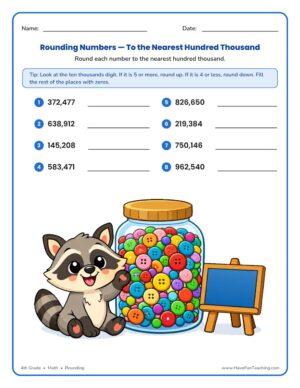
Using this Oceans Mini Pack, students learn about Oceans through ten fun worksheets and three activities.

From our teachers' playbook

Dive in, the water's fine

What do 4th graders learn about oceans?

Fourth graders learn that oceans cover about 71% of Earth and that there are five of them: the Pacific, Atlantic, Indian, Southern and Arctic. They explore ocean zones from the sunny surface down to the dark deep, and how animals like killer whales, anglerfish and sea turtles are adapted to live where they do. Many classes also connect oceans to Earth's surface: waves and currents shape coastlines through weathering and erosion. The click moment comes when kids realize the deep ocean is mostly unexplored, and suddenly every student wants to be an oceanographer.

Our favorite ways to teach oceans

The ocean is huge, so we break it into pieces kids can hold onto.

Layer the zones

Hang a long strip of paper from the ceiling to the floor and shade it from light blue to black. Kids add pictures of animals at the depth where they live. A ceiling-to-floor ocean makes "deep" something they can see.

Why it works: pairing a picture with each word gives kids two ways to remember it, a well-tested principle of how people learn (Mayer, 2009).
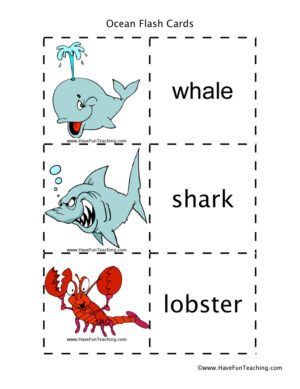
Ocean Flash CardsTry it withOcean Flash CardsFlash CardsOpen it →
A mini pack ocean study

Spend a week on one pack: map the five oceans on day one, then add one animal or zone each day. A steady, small focus beats a single overloaded ocean day.

Why it works: going from real objects to pictures to symbols is a core recommendation of the U.S. Department of Education's elementary math guide.

Oceans Mini PackTry it withOceans Mini PackWorkbooksOpen it →

Read, then quiz yourself

After reading about killer whales, students write two questions for a partner before answering any printed ones. Writing the questions makes them reread for the important facts.

Why it works: researchers who compared ten study methods found practice testing is one of the two that work best (Dunlosky and colleagues, 2013).

Killer Whales Reading Comprehension WorksheetTry it withKiller Whales Reading Comprehension WorksheetAssessmentsOpen it →

Questions about teaching oceans

What are the five oceans?

The Pacific, Atlantic, Indian, Southern and Arctic Oceans. The Pacific is the largest and deepest, and the Arctic is the smallest.

What are the ocean zones?

The main zones are the sunlight zone at the top, the twilight zone, and the midnight zone, with the abyss and trenches below. Sunlight only reaches the top layer, which is why most plants and many animals live there.

How do oceans change the land?

Waves and currents wear away rock and sand along the shore and carry it to new places. Over time this weathering and erosion shapes beaches, cliffs and sea caves.

How can I make an ocean unit hands-on?

Try saltwater density experiments, a wave tank in a plastic bin, or a ceiling-to-floor ocean zone chart. Pair each one with a short reading so kids connect the activity to the facts.