Skip to content
Start My 3 Free Days $0 today · cancel anytime

Groundhog Day Resources

1 Groundhog Day resources: 1 worksheet and 1 assessment. How teachers use these

Groundhog Day Resources

1 Groundhog Day resources: 1 worksheet and 1 assessment. How teachers use these

Assessment
Assessment2nd GradeGroundhog Day Reading Comprehension Worksheet

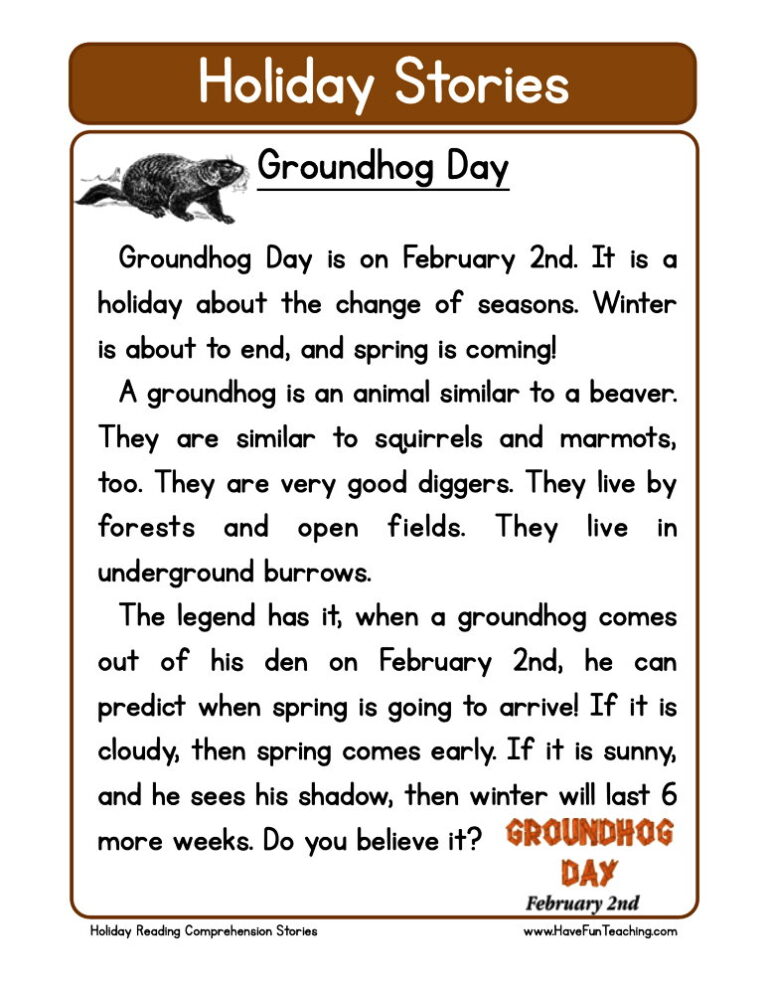
This Groundhog Day Reading Comprehension Worksheet gives 2nd graders a fun nonfiction passage about Groundhog Day plus multiple-choice, fill-in-the-blank, and short-response questions. A complete answer key is included for quick, no-prep reading practice.

From our teachers' playbook

Shadow or no shadow?

What do kids learn about Groundhog Day?

Every February 2, a groundhog pops out of its burrow, and legend says that if it sees its shadow, we get six more weeks of winter. No shadow means an early spring! Kids love the suspense, and the holiday is packed with real learning. Younger children explore shadows, light and the seasons, and make their own predictions. Older kids read about the tradition, compare the groundhog's "forecast" with real weather and learn about groundhogs as hibernating animals. The big idea: a fun tradition is not the same as science, and kids can test the difference.

Our favorite ways to teach Groundhog Day

One furry weather forecaster can lead to reading, science and math. Here is how we use him.

Read, then check yourself

Have kids read the Groundhog Day passage and answer the questions without looking back first. Then let them reread to check and fix answers. Pulling facts from memory before checking makes the reading stick.

Why it works: researchers who compared ten study methods found practice testing is one of the two that work best (Dunlosky and colleagues, 2013).
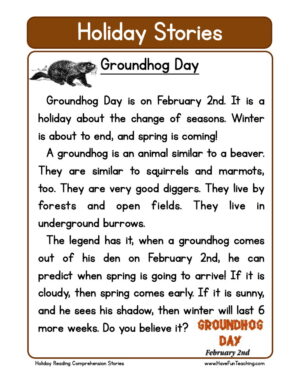
Groundhog Day Reading Comprehension WorksheetTry it withGroundhog Day Reading Comprehension WorksheetAssessmentsOpen it →
Make your own shadow

Take the class outside or shine a flashlight on a paper groundhog. Move the light and watch the shadow grow and shrink. Kids learn that shadows need light, which is exactly why a sunny morning means the groundhog sees one.

Why it works: kids understand an idea best when they touch it, then draw it, then write it, the order the U.S. Department of Education recommends for elementary math.

Track the six weeks

Post the groundhog's prediction, then record the weather each week until mid-March. Was he right? Checking in once a week keeps the lesson going and turns a one-day holiday into real data collection.

Why it works: short practice spread over several days beats one long session, according to a large review of learning research (Dunlosky and colleagues, 2013).

What's on this page

Teacher favorites right now: Groundhog Day Reading Comprehension Worksheet.

Questions about Groundhog Day

What is Groundhog Day?

Groundhog Day is February 2. Legend says if a groundhog sees its shadow when it comes out of its burrow, there will be six more weeks of winter; if not, spring comes early.

Is the groundhog's prediction accurate?

Not really. It is a fun tradition, not science. Comparing the prediction with real weather is a great way to teach kids the difference between folklore and evidence.

How do you explain Groundhog Day to kids?

Tell the story of the groundhog and its shadow, then show how shadows work with a flashlight. Let kids make their own prediction and check it in a few weeks.

What can kids learn from Groundhog Day?

Shadows and light, seasons, hibernating animals, making predictions and collecting weather data. Older kids can also practice reading comprehension with a passage about the tradition.

Keep exploring