
Skip to content
Start My 3 Free Days $0 today · cancel anytime

Kindergarten Agriculture Resources

1 kindergarten agriculture resources: 1 flash card. How teachers use these

Kindergarten Agriculture Resources

1 kindergarten agriculture resources: 1 flash card. How teachers use these

Flash Cards
Flash CardsKindergartenFarm Flash Cards

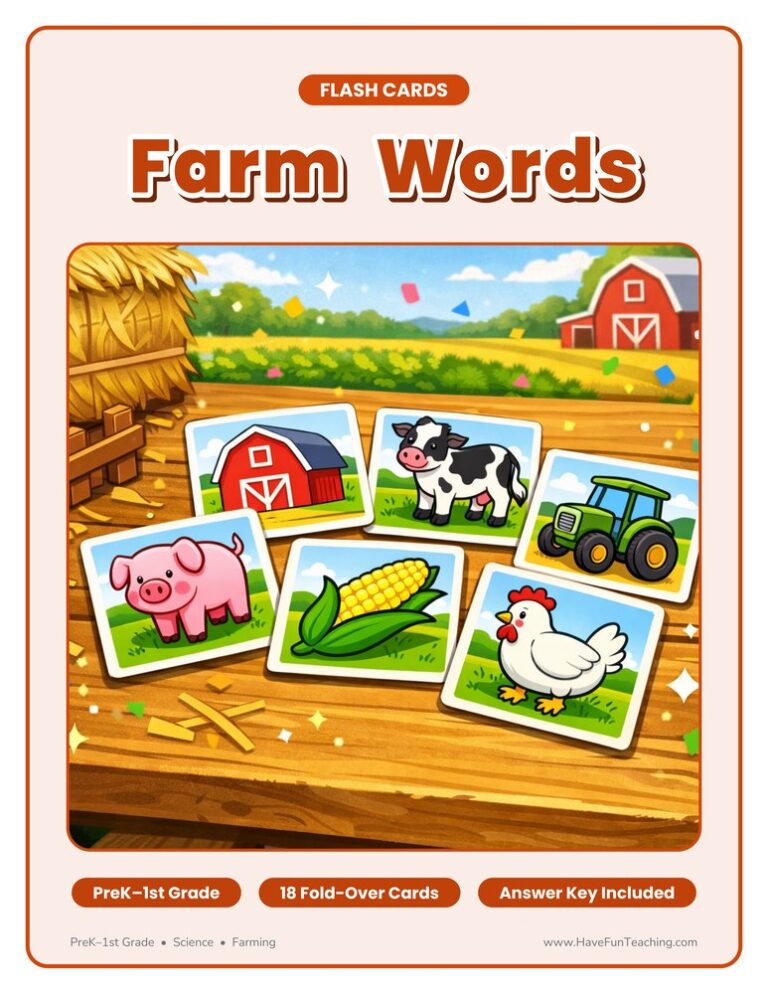
These farm flash cards teach 18 farm animals, plants and things with a picture on the front and the word inside. Made for preschool to 1st grade, with a sorting practice page and answer key included.

From our teachers' playbook

From the farm to your plate

What do kindergartners learn about agriculture?

Kindergartners learn that farms grow the food we eat. They meet farm animals and find out what each one gives us: cows give milk, chickens lay eggs, sheep give wool. They learn that crops like corn, wheat and apples grow from seeds and need sun, water and soil. Then they trace food back to its start: wheat → flour → bread. The click moment is when a five-year-old looks at their lunch and says, "This came from a farm!"

Our favorite ways to teach agriculture

Kindergartners love animals and food, which makes farm units an easy win.

Who gives us what?

Hold up a farm flash card, like a cow, and ask "What do we get from a cow?" Kids answer and match it to a food picture: milk, cheese, butter. Pairing animal and food cards builds the farm-to-table idea.

Why it works: pairing a picture with each word gives kids two ways to remember it, a well-tested principle of how people learn (Mayer, 2009).
Farm Flash CardsTry it withFarm Flash CardsFlash CardsOpen it →

Plant a farm in a cup

Each child plants a bean or grass seed in a cup and waters it on a schedule. They draw it each week. Growing something themselves shows that farmers take care of crops day after day.

Why it works: the U.S. Department of Education's guide for teaching elementary math recommends moving from hands-on objects to drawings to numbers.

Farm stand pretend

Set up a pretend farm stand with play food. Kids take turns as farmer and shopper, naming where each food came from. Pretend play gives them lots of chances to use the new words.

Why it works: in a well-known study, a few short sessions of a simple number board game measurably boosted young children's number skills (Ramani and Siegler, 2008).

What's on this page

Teacher favorites right now: Farm Flash Cards.

Questions parents and teachers ask

How do I explain agriculture to kindergarten?

Agriculture means farming: growing plants and raising animals for food and other things we use. Keep it simple by connecting it to foods kids eat every day.

What do kids learn in a farm unit?

Farm animals and what they give us, how crops grow, what farmers do, and how food travels from the farm to the store.

What is a good farm activity for kindergarten?

Visit a local farm or pumpkin patch if you can. In class, plant seeds, make butter in a jar, or sort foods by whether they came from a plant or an animal.

Why should young kids learn about farms?

It helps them understand where food comes from, appreciate the people who grow it, and connect science to everyday life.


