Skip to content
Start My 3 Free Days $0 today · cancel anytime

Kindergarten Sound Resources

1 kindergarten sound resources: 1 worksheet. How teachers use these

Kindergarten Sound Resources

1 kindergarten sound resources: 1 worksheet. How teachers use these

Worksheet
WorksheetKindergartenCan You Hear It? Worksheet

The Can You Hear It? Worksheet asks kindergarten students to circle loud sounds and cross out soft sounds across nine picture cards, with an answer key for quick, easy checking.

From our teachers' playbook

Loud, soft, high and low

What do kindergartners learn about sound?

Kindergartners explore sound with their ears and their hands. They learn that we hear with our ears, and that sounds can be loud or soft and high or low. Kids sort sounds they hear every day, like a dog barking, a whisper or a fire truck. They also discover that sound happens when something shakes: when they hum with their fingers on their throat, they can feel it buzz! That "I can feel it!" moment is where the science clicks.

How we explore sound in kindergarten

Sound is perfect for hands-on science. These moves keep kids listening, touching and wondering.

Can you hear it?

Show pictures of things that make sound and things that don't, like a drum and a rock. Kids sort them and explain why. A picture page like this one makes a quick, focused check after your listening walk.

Why it works: children learn more from words and pictures together than from words alone (Mayer, 2009).
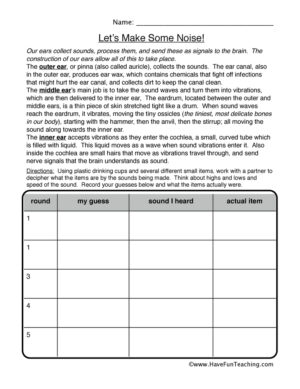
Can You Hear It? WorksheetTry it withCan You Hear It? WorksheetWorksheetsOpen it →
Feel the buzz

Have kids put two fingers gently on their throat and hum. Then stretch a rubber band over a box and pluck it. Ask, "What do you see and feel?" Kids learn that sounds come from things shaking, called vibrations.

Why it works: the U.S. Department of Education's guide for teaching elementary math recommends moving from hands-on objects to drawings to numbers.

Listening walk

Take a quiet walk around the school. Kids stop, close their eyes and name every sound they hear. Back in class, sort the sounds into loud and soft. It builds listening skills and great science talk.

Why it works: playful practice with a clear goal keeps kids practicing longer, and simple learning games have been shown to build real skills (Ramani and Siegler, 2008).

What's on this page

Teacher favorites right now: Can You Hear It? Worksheet.

Questions teachers and parents ask

What do kindergartners learn about sound?

They learn that we hear sounds with our ears, that sounds can be loud or soft and high or low, and that sound comes from things vibrating, or shaking.

How do I explain vibration to a kindergartner?

Say that sound happens when something shakes really fast. Have them hum with fingers on their throat or touch a speaker playing music so they can feel the shaking.

What is an easy sound experiment for kindergarten?

Stretch rubber bands over an open box and pluck them. Thick and thin bands make different sounds, and kids can see the bands shake while they hear them.

How can I teach sound at home?

Go on a listening walk, make shakers from containers and dry beans, or play a guessing game with sounds from around the house. Ask "Is it loud or soft? High or low?"