Skip to content
Start My 3 Free Days $0 today · cancel anytime

Kindergarten Physical Education Resources

6 kindergarten physical education resources: 2 flash cards, 2 songs, 2 videos and more. How teachers use these

Kindergarten Physical Education Resources

6 kindergarten physical education resources: 2 flash cards, 2 songs, 2 videos and more. How teachers use these

Worksheet
WorksheetKindergartenSports Matching Worksheet

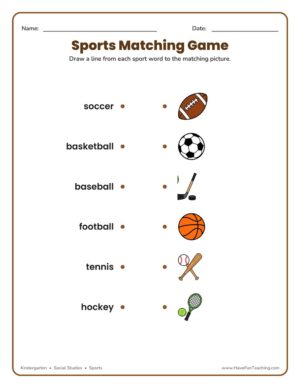
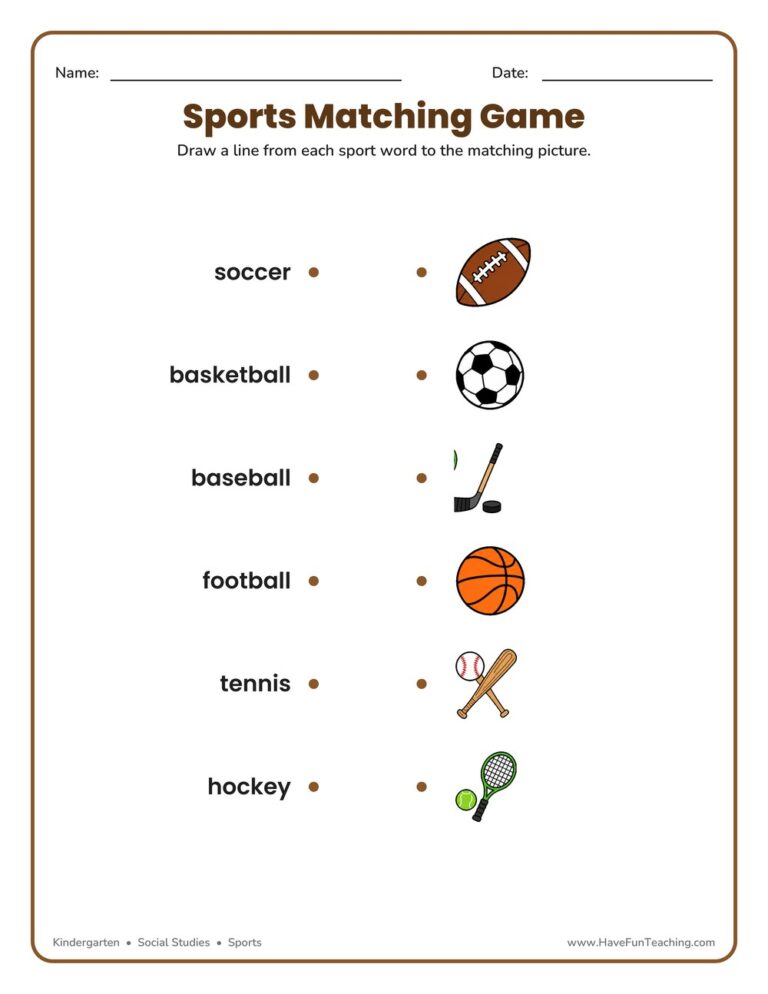
A kindergarten sports matching worksheet where children draw a line from each sport word—soccer, basketball, baseball, football, tennis, and hockey—to its picture. Answer key included for quick, no-prep vocabulary practice.

KindergartenFitness Package Download

This Fitness Package Download provides you and your students with all of the Have Fun Teaching Fitness DVDs, CDs, and Reading Comprehension Workbook.

Flash Cards
Flash CardsKindergartenSports Flash Cards

These sports flash cards help PreK to 3rd Grade students name 18 sports from pictures of their gear, with an answer key included, to grow everyday vocabulary.

Bundle
BundleKindergartenFitness Songs (MP3 Album)

This Fitness Songs (MP3 Album) provides you and your students with seven fitness songs to get your class moving and fit in a fun and musical way!

Video
VideoKindergartenFitness Songs (Classic Video Collection)

This Fitness Songs (Classic Video Collection) provides you and your students with seven fitness songs to get your class moving and fit in a fun and musical way!

Flash Cards
Flash CardsKindergartenBaseball Flash Cards

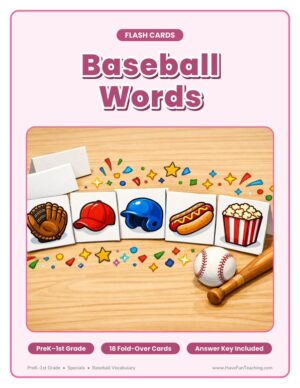
These baseball flash cards for PreK to 1st Grade pair 18 baseball pictures with their words and a wear, play or ballpark tag. Answer key included for easy checking.

From our teachers' playbook

Hop, skip, jump and wiggle!

What do kindergartners learn in physical education?

Kindergartners learn basic movement skills like running, hopping, skipping, galloping, jumping and balancing. They practice tossing and catching a ball, moving safely in their own space, and following simple rules in group games. PE is also where little ones learn to take turns, be a good sport and listen for directions while their bodies are moving. Many classes start learning the names of popular sports and what equipment goes with each one. The best moment is when a child finally gets the hang of skipping and won't stop doing it all the way down the hall!

Our favorite ways to teach physical education

Five-year-olds learn by moving, so we keep the talking short and the wiggling long. These are our go-to moves.

Move to the music

Start with a fitness song and have kids copy each move. Songs tell kids exactly when to jump, stretch and freeze, so you can focus on cheering them on. Great for warm-ups and indoor recess.

Why it works: a catchy, repeating tune gives the brain a hook to hang words on, so sung text is remembered better (Wallace, 1994).

Fitness Songs (Classic Video Collection)Try it withFitness Songs (Classic Video Collection)SongsOpen it →

Sports card charades

Flash a sports card and have kids act out that sport. Kicking a soccer ball, swinging a bat, shooting a basket! It builds sports vocabulary and gets every body moving.

Why it works: in a well-known study, a few short sessions of a simple number board game measurably boosted young children's number skills (Ramani and Siegler, 2008).

Sports Flash CardsTry it withSports Flash CardsActivitiesOpen it →

Picture it, then try it

Show a baseball card and talk about what players do: throw, catch, hit and run. Then practice one of those moves together. Seeing a picture first helps little ones copy the movement.

Why it works: children learn more from words and pictures together than from words alone (Mayer, 2009).

Baseball Flash CardsTry it withBaseball Flash CardsFlash CardsOpen it →

Questions parents and teachers ask

What do kindergartners learn in PE?

Kindergartners learn basic movements like running, hopping, skipping and jumping, plus tossing and catching. They also learn to play safely, take turns and follow game rules.

How long should kindergartners be active each day?

Health guidelines recommend about an hour of active play every day for young children. PE, recess and movement breaks in class all count toward that.

What are good PE games for kindergarten?

Freeze dance, Simon says, animal walks, follow the leader and simple tag games are great. They build movement skills and listening at the same time.

How can I help my kindergartner with movement skills at home?

Play catch with a soft ball, set up a hopscotch on the sidewalk, or have a dance party in the kitchen. Short, playful bursts of movement work best.