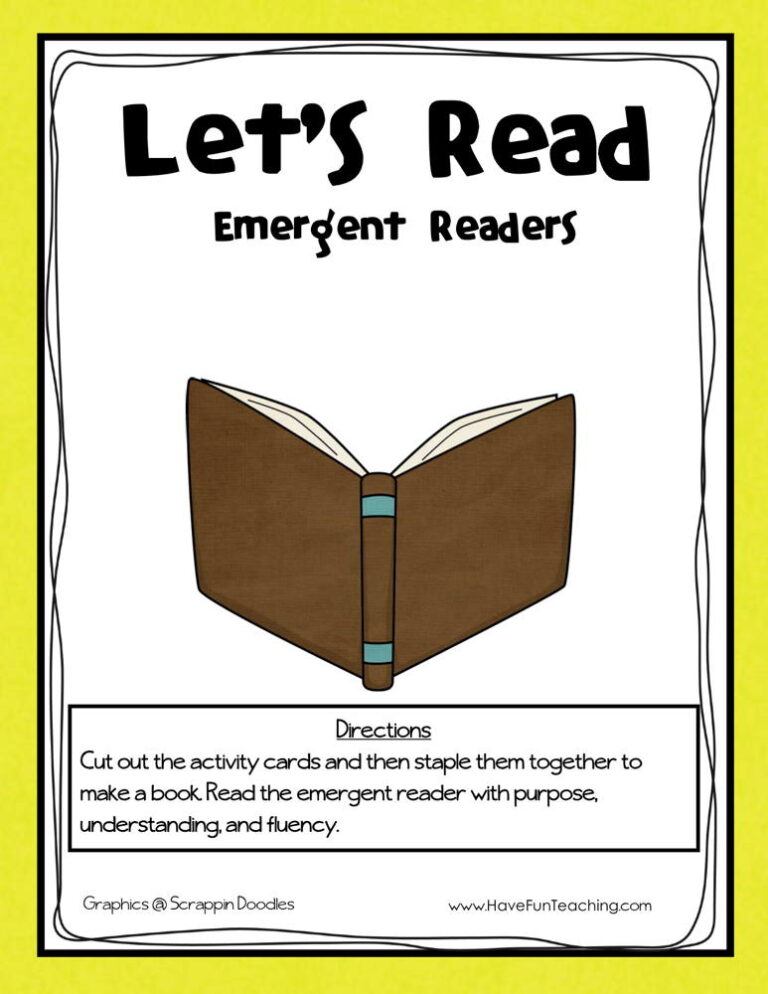
This Let's Read emergent readers activity is a cut-and-tape mini book for PreK to 1st grade that builds sight word fluency. Answer key included for the practice page.
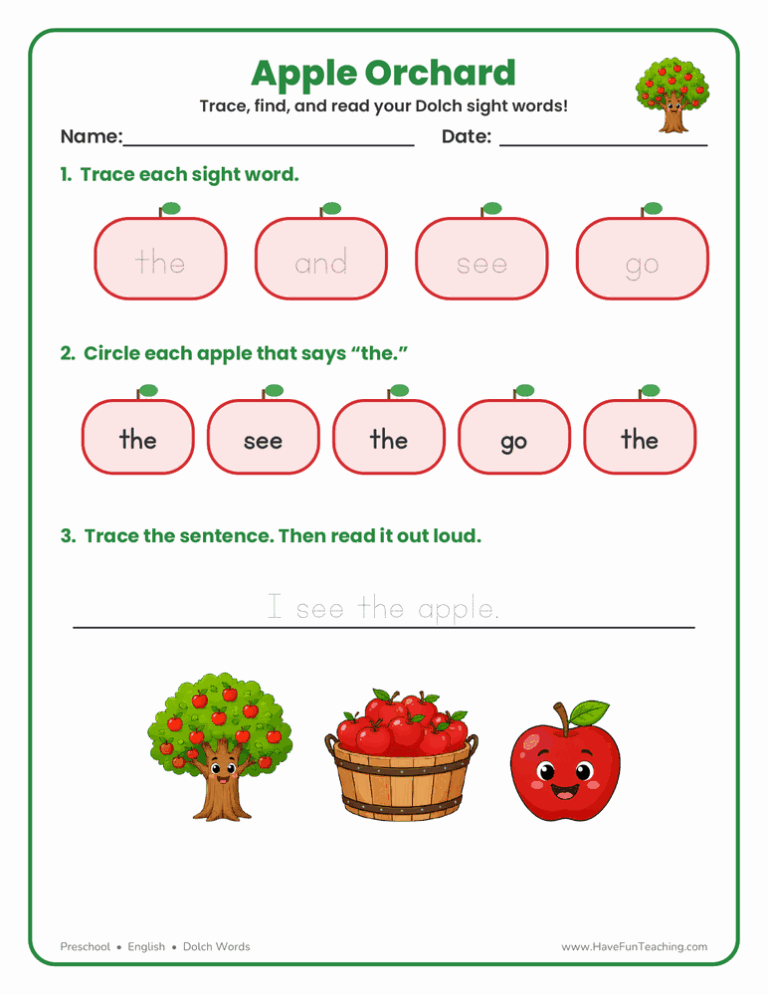
Dolch words are a list of common words kids see again and again in books. The pre-primer list is where preschoolers start, with tiny but mighty words like the, a, I, see, and, go, can, look. Little ones learn to recognize these words by sight instead of sounding them out, which helps them read simple sentences sooner. They spot them in favorite picture books and point them out on signs. The best moment is when a preschooler reads "I can see" in a little book and grins from ear to ear!
Our favorite ways to teach Dolch words
With preschoolers we keep sight words short, sweet and playful. A few words at a time is plenty.
Read a little book together
Read a short emergent reader and point to each word as you go. Pause on the sight word and let kids say it. Seeing the word in a real sentence shows them why it matters.
Why it works: showing first, practicing together, then letting kids try alone is the "gradual release" model teachers have relied on for decades (Pearson and Gallagher, 1983).
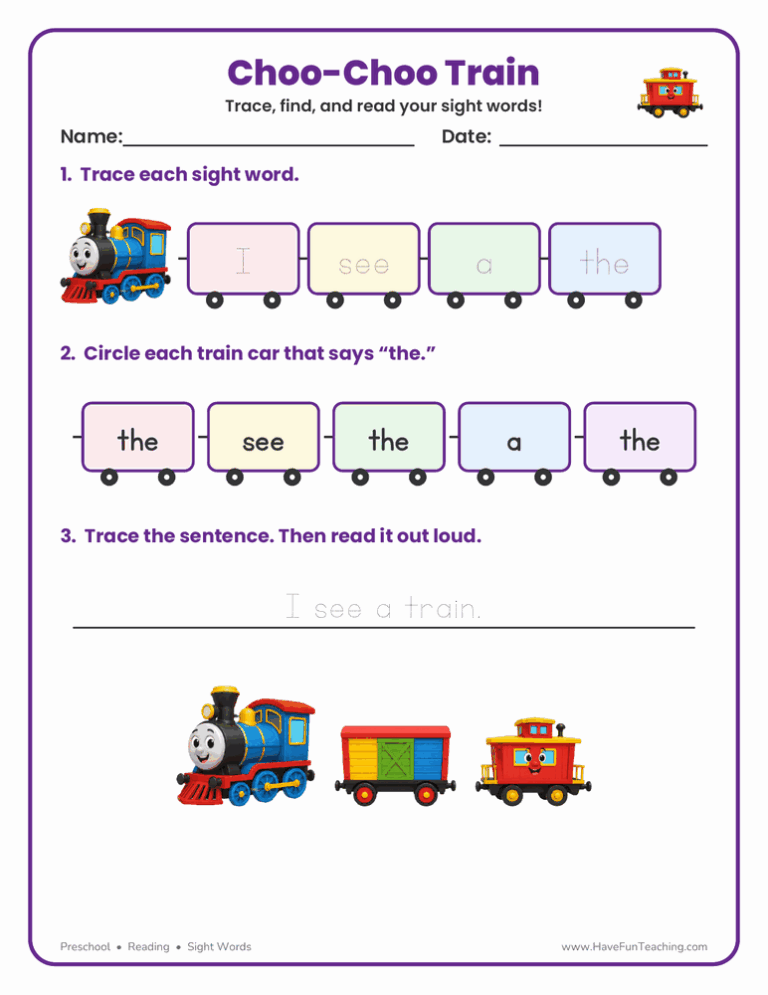
Add one new sight word to a train each week and review the old cars every day. Little ones love watching the train grow, and the daily ride keeps every word fresh.
Why it works: spreading practice out over days is one of the two most effective study methods in a major research review (Dunlosky and colleagues, 2013).
Preschoolers usually start with the Dolch pre-primer list, which includes simple words like the, a, I, see, can, go and look. These words show up in almost every early book.
Should preschoolers learn sight words?
A few sight words can help preschoolers feel like readers, as long as it stays playful. Focus on fun practice and lots of read-alouds rather than drilling.
How many sight words should a preschooler know?
There is no set number. Many preschoolers learn a handful of pre-primer words, and that is a great start before kindergarten.
How can I teach Dolch words at home?
Pick one or two words, write them big and play games like hide and seek with them. Point them out in bedtime stories so your child sees them in real books.
Written by the Have Fun Teaching team of elementary teachers and homeschoolers. Research: Pearson, P. D., & Gallagher, M. C. (1983). The instruction of reading comprehension. Contemporary Educational Psychology, 8(3). Dunlosky, J., Rawson, K. A., Marsh, E. J., Nathan, M. J., & Willingham, D. T. (2013). Improving Students' Learning With Effective Learning Techniques. Psychological Science in the Public Interest, 14(1). Mayer, R. E. (2009). Multimedia Learning (2nd ed.). Cambridge University Press.
3 days free
2:39Ready to print!
Printables · Songs · Games
Loved by 2 million teachers & families
Where learning feels like play.
Printables, songs and games for every subject, Preschool through 6th. Ready to teach today, and kids beg for more.
$0due today
then $39.97$35.97for your first year, and $39.97 a year after that.

 Try it withLet's Read Emergent Readers ActivityActivitiesOpen it →





