Skip to content
Start My 3 Free Days $0 today · cancel anytime

Preschool Rhyming Resources

6 preschool rhyming resources: 4 activities and 1 worksheet. How teachers use these

Preschool Rhyming Resources

6 preschool rhyming resources: 4 activities and 1 worksheet. How teachers use these

Activity
ActivityPreschoolRhyming Words Matching Activity

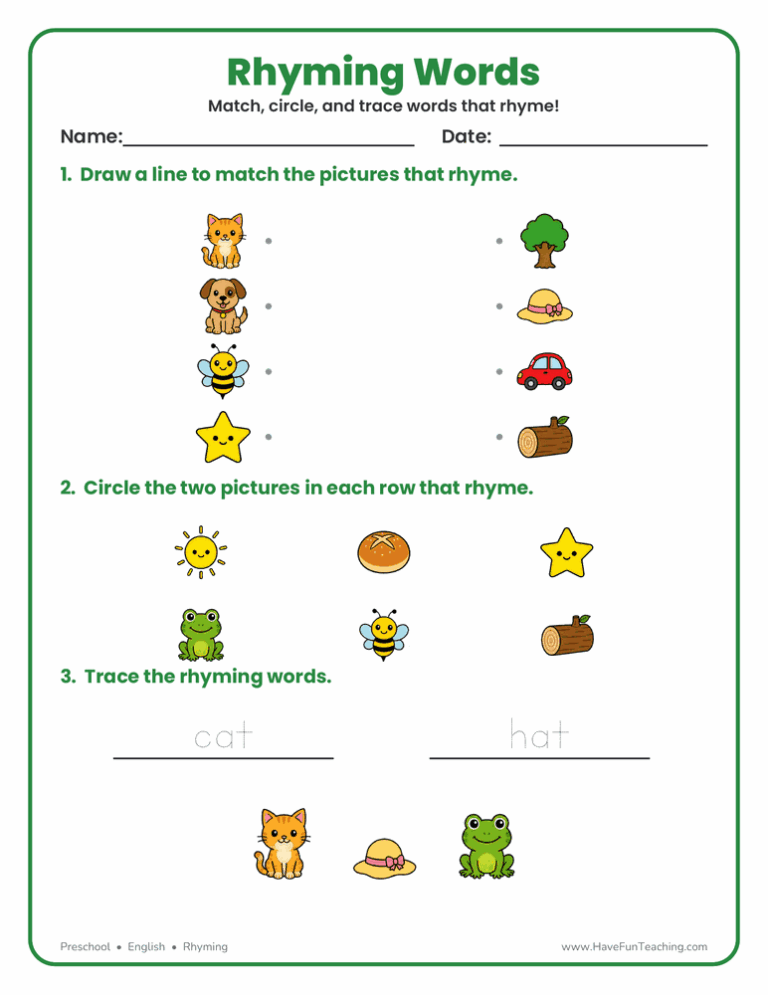
This rhyming words matching activity lets PreK to 1st grade children match picture cards that rhyme, like cat and hat. A practice page and answer key included.

Activity
ActivityPreschoolRhyming Words Christmas Activity

Match rhyming pictures like star and car in this rhyming words Christmas activity for preschool to 1st grade, with ornament picture cards and a practice page. An answer key is included.

Activity
ActivityPreschoolBack to School Rhyming Activity

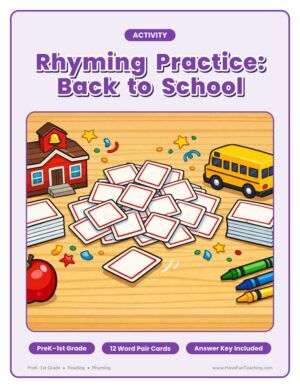
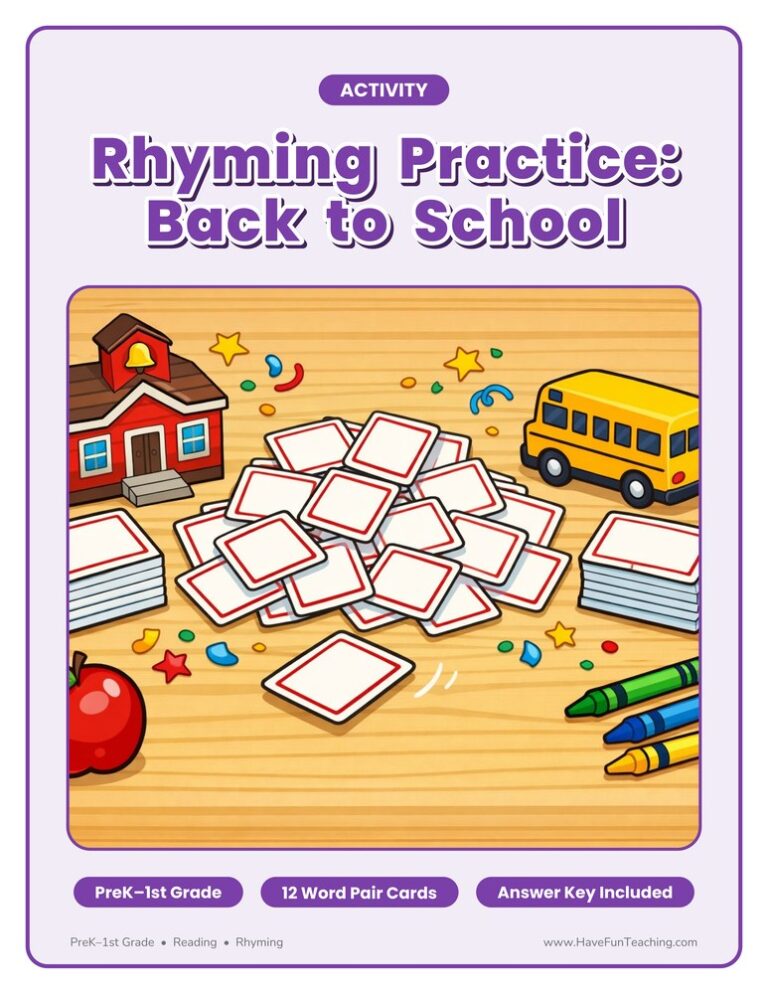
This back to school rhyming activity has preschool to 1st grade children sort 12 word pair cards to the school or the bus by rhyme. Answer key included for quick checking.

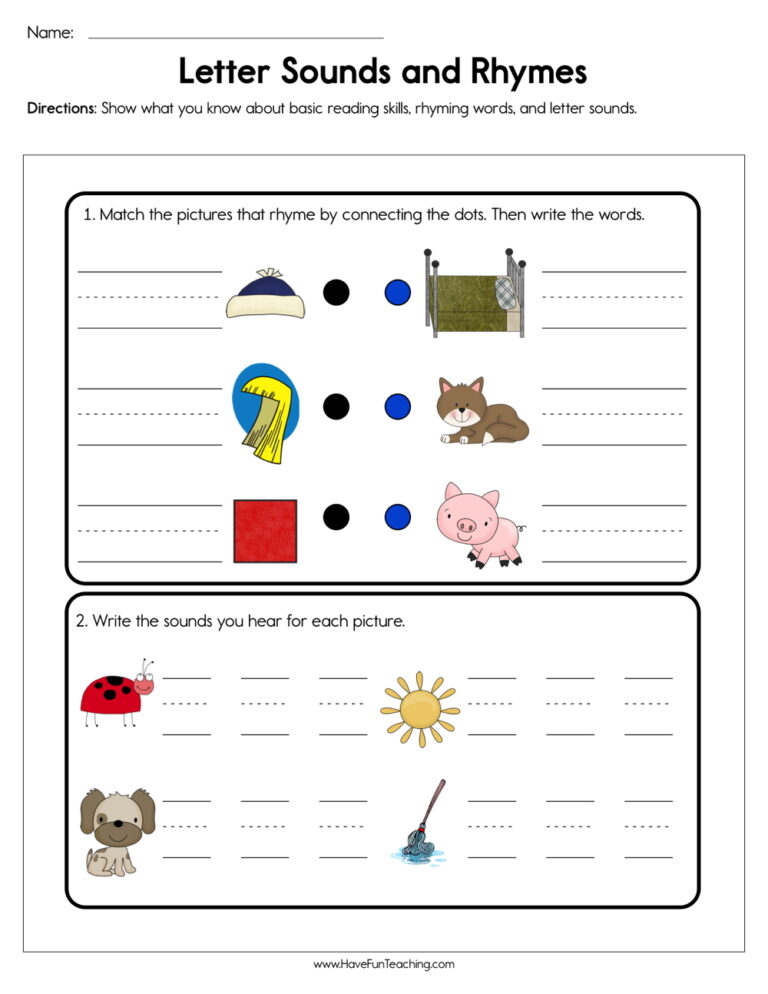
PreschoolLetter Sounds and Rhymes Worksheet

Using Letter Sounds and Rhymes Worksheet, students match the pictures that rhyme by connecting the dots and writing the words.

Activity
ActivityPreschoolRhyme It Picture Cards Rhyming Activity

This rhyme it picture cards rhyming activity has Preschool to 1st Grade students sort twelve picture cards into four rhyme families. Answer key included for quick checking.

From our teachers' playbook

Cat, hat, bat, that!

What do preschoolers learn about rhyming?

Preschoolers learn to hear when two words sound the same at the end, like cat and hat. First they notice rhymes in songs and books, then they tell whether two words rhyme, and finally they start making up rhymes of their own (even silly ones like "dog, log, fog, blog!"). It is all about listening, not reading. The click moment is when a child shouts out a rhyme before you finish the line of a favorite book.

Our favorite ways to teach rhyming

Rhyming is a listening game first. These moves keep little ears tuned in.

Thumbs up, thumbs down

Say two words: "cat, hat." Thumbs up if they rhyme, thumbs down if they don't. Stretch the ending sound a little, "c-AT, h-AT," so kids can really hear the match.

Why it works: the National Reading Panel found that systematic, explicit phonics teaching clearly improves how children learn to read.

Rhyme It Picture Cards Rhyming ActivityTry it withRhyme It Picture Cards Rhyming ActivityActivitiesOpen it →

Match the pairs

Spread rhyming picture cards face up and let kids find the pairs that sound alike. Saying each word out loud as they match is the important part.

Why it works: in a well-known study, a few short sessions of a simple number board game measurably boosted young children's number skills (Ramani and Siegler, 2008).

Rhyming Words Matching ActivityTry it withRhyming Words Matching ActivityActivitiesOpen it →

Finish my rhyme

Read a familiar rhyming book and pause before the rhyming word. Kids fill in the blank. When they can, switch to new lines you make up on the spot.

Why it works: the U.S. Department of Education's guide for teaching elementary math recommends moving from hands-on objects to drawings to numbers.

Cat and Hat Rhyming WorksheetTry it withCat and Hat Rhyming WorksheetWorksheetsOpen it →

Rhyming questions, answered

At what age do children understand rhyming?

Many children start to hear rhymes around age 3 to 4, and most can tell whether two words rhyme by age 4 to 5. Making their own rhymes usually comes a bit later.

Why is rhyming important for preschoolers?

Rhyming trains kids to hear the sounds inside words, which is a big step toward reading. Kids who can rhyme are getting ready to learn word families like -at and -an.

What if my child can't hear rhymes yet?

That is very normal. Keep reading rhyming books and singing songs every day, and exaggerate the rhyming words. Hearing it often is what builds the skill.

Do nonsense words count as rhymes?

Yes! If a child says "cat, zat," they heard the ending sound, and that is exactly the skill. Celebrate it.