
Skip to content
Start My 3 Free Days $0 today · cancel anytime

Preschool Main Idea Resources

3 preschool main idea resources: 2 worksheets, 1 activity and 1 assessment. How teachers use these

Preschool Main Idea Resources

3 preschool main idea resources: 2 worksheets, 1 activity and 1 assessment. How teachers use these

Activity
ActivityPreschoolMain Idea and Details Activity

Sort picture cards in this main idea and details activity for PreK to 1st grade. Children match details to Farm, Beach, Birthday and Rain, then practice on a worksheet. Answer key included.

Worksheet
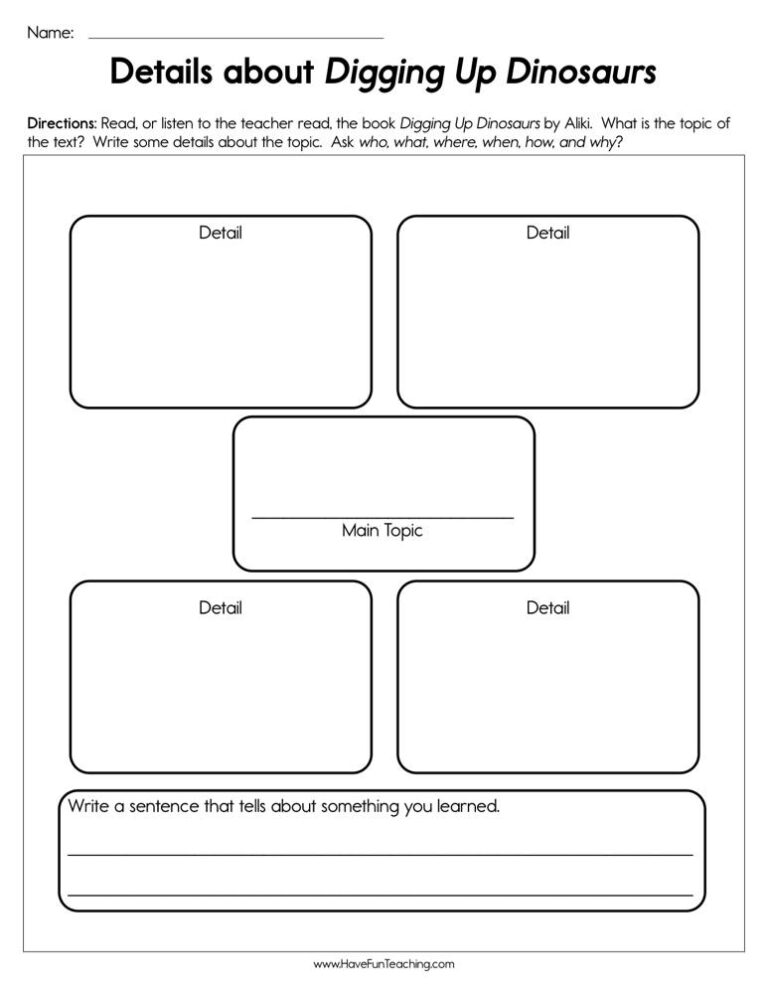
WorksheetPreschoolDetails about Digging Up Dinosaurs Worksheet

This Details about Digging Up Dinosaurs Worksheet helps students identify the main idea and key details while reading a passage about dinosaurs.

From our teachers' playbook

What's this story mostly about?

What do preschoolers learn about main idea?

Preschoolers aren't writing main idea sentences yet, but they can absolutely answer the big question: "What was this book mostly about?" After a read-aloud, they learn to name the topic in a few words, like "a lost mitten" or "digging up dinosaurs," and to point to a picture that shows it. They also start noticing little details that go with the big idea. The click moment is when a child says "It's about a dog!" and then adds, all on their own, "and he got muddy and had a bath."

Our favorite ways to grow main idea thinking

Main idea starts with talking, pointing and pictures. These moves fit right into story time.

Big idea, little details

Draw a big umbrella on chart paper and write the topic on top, like "dinosaurs." Kids add little details underneath: bones, big teeth, digging. The umbrella picture shows them that the details all belong to one big idea.

Why it works: kids understand an idea best when they touch it, then draw it, then write it, the order the U.S. Department of Education recommends for elementary math.

Main Idea and Details ActivityTry it withMain Idea and Details ActivityActivitiesOpen it →

Point to the proof

After reading a short page, ask "What is this mostly about?" and have kids point to the picture that shows it. Then ask for one more thing they saw. Pointing lets even quiet kids answer.

Why it works: children learn more from words and pictures together than from words alone (Mayer, 2009).

Details about Digging Up Dinosaurs WorksheetTry it withDetails about Digging Up Dinosaurs WorksheetWorksheetsOpen it →

One-question check

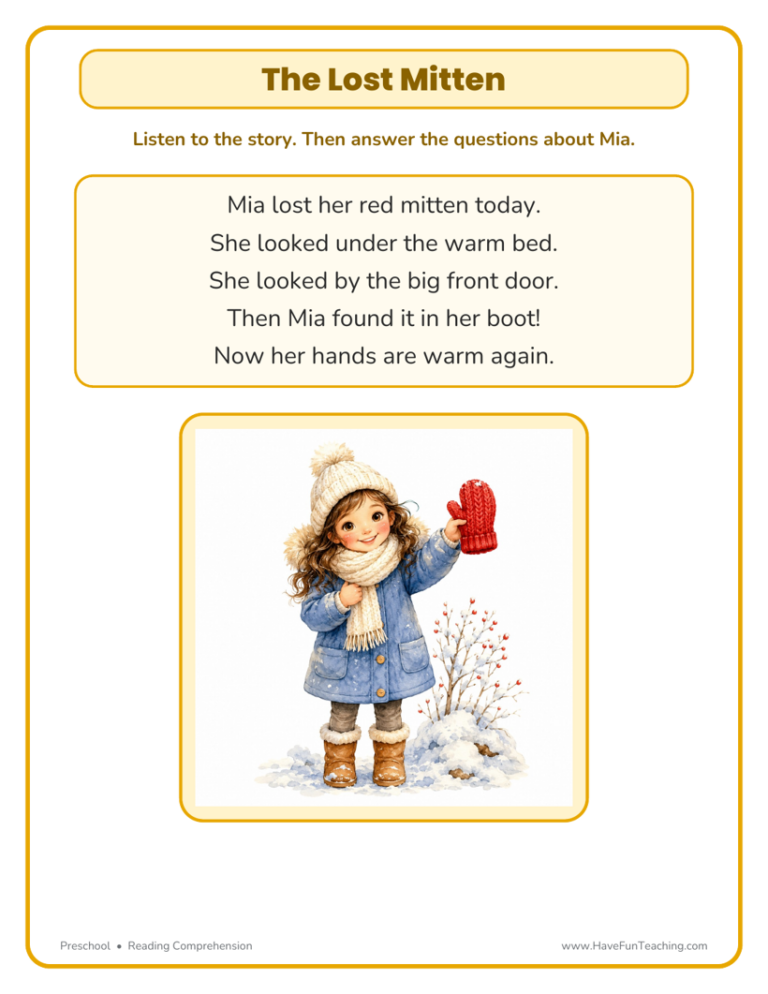
Read a short story like the lost mitten aloud and ask just one question: "What was this story mostly about?" Note who can name the topic. It is a gentle way to see who is ready for more.

Why it works: mixing different kinds of problems in one practice set helped students do far better on a later test (Rohrer and Taylor, 2007).

The Lost Mitten Reading Comprehension WorksheetTry it withThe Lost Mitten Reading Comprehension WorksheetWorksheetsOpen it →

Questions parents and teachers ask

Can preschoolers understand main idea?

Yes, in a simple way. They can tell what a story or picture is mostly about in a few words, like "a lost puppy." Writing main idea sentences comes much later.

How do I teach main idea to a 4-year-old?

After reading, ask "What was this book mostly about?" and accept a short answer. Use pictures, and sort objects into groups so they see how small things fit under one big idea.

What is the difference between main idea and details?

The main idea is what the whole story is mostly about. Details are the little parts that tell more about it, like what the character did or what things looked like.

What books are good for main idea practice?

Simple nonfiction picture books about one topic, like trucks, bugs or dinosaurs, are perfect. Every page is about the same big idea, so kids can see the pattern.



