
Skip to content
Start My 3 Free Days $0 today · cancel anytime

Preschool Emotions Resources

2 preschool emotions resources: 1 song and 1 video. How teachers use these

Preschool Emotions Resources

2 preschool emotions resources: 1 song and 1 video. How teachers use these

PreschoolEmotions Clip Art

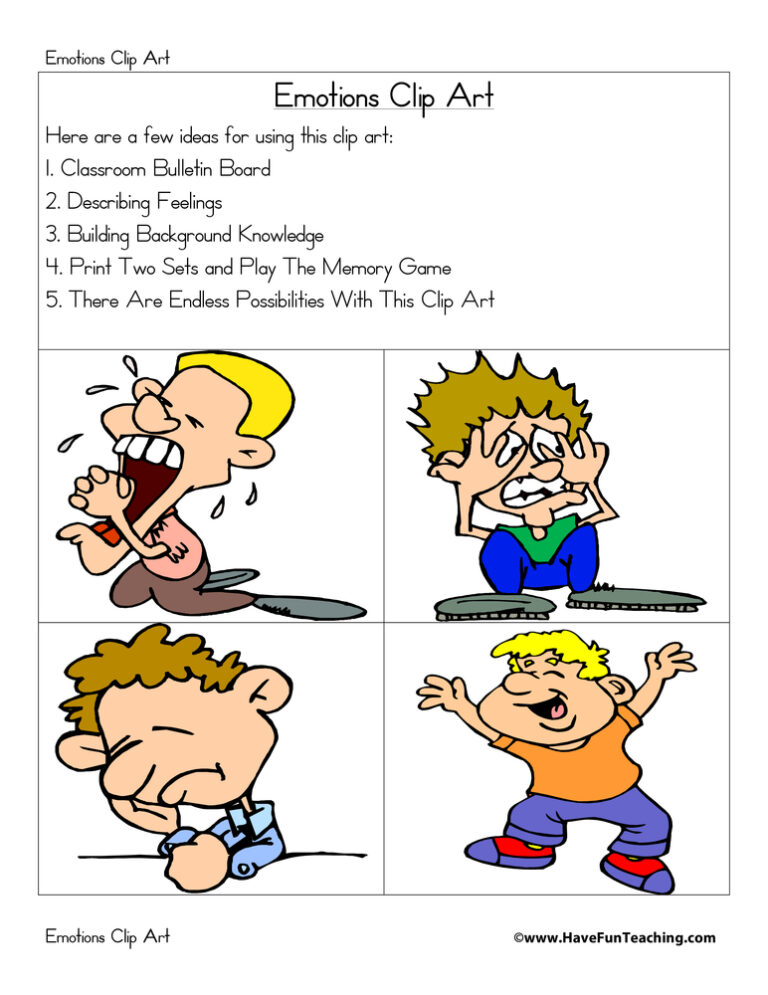
This Emotions Clip Art is a perfect addition to any bulletin board, flyer, or other printable that you use in your classroom.

From our teachers' playbook

Happy, sad, mad and everything in between

What do preschoolers learn about emotions?

Preschool is when little ones learn that feelings have names. Kids start to recognize happy, sad, mad, scared and surprised on faces, including their own in a mirror. They learn that all feelings are okay, but some choices are better than others when we feel big feelings, like taking a deep breath instead of throwing a toy. They also start noticing how friends feel. The magic moment is when a three-year-old says, "I'm frustrated," instead of melting down.

Our favorite ways to teach emotions

Little kids learn feelings through songs, faces and stories. These moves fit right into circle time.

Sing it when it goes wrong

Mistakes bring big feelings, so we sing about them! Play the mistake song at circle time, then sing the chorus whenever a block tower falls or juice spills. A familiar tune helps kids calm down and try again.

Why it works: words set to a repeating melody are easier to recall than the same words spoken (Wallace, 1994).

Oops I Made A Mistake SongTry it withOops I Made A Mistake SongSongsOpen it →

Feelings face cards

Show photos of children with different expressions and ask, "How does she feel? How do you know?" Kids point to clues like a frown or wide eyes. Naming the clues helps them read faces in real life.

Why it works: children learn more from words and pictures together than from words alone (Mayer, 2009).

Emotions Clip ArtTry it withEmotions Clip ArtOpen it →

Name your own feelings out loud

Share your feelings throughout the day: "I feel happy because the sun is out!" or "I'm a little frustrated, so I'm taking a deep breath." Kids copy what they see, so modeling words and calm-down moves teaches more than any lesson.

Why it works: showing first, practicing together, then letting kids try alone is the "gradual release" model teachers have relied on for decades (Pearson and Gallagher, 1983).

What's on this page

Teacher favorites right now: Oops I Made A Mistake Song and Emotions Clip Art.

Questions teachers and parents ask about preschool emotions

What emotions should preschoolers know?

Start with the big five: happy, sad, mad, scared and surprised. As kids grow, add words like frustrated, excited, proud and worried so they can describe their feelings more exactly.

How do I teach a preschooler about feelings?

Name feelings as they happen, for your child and for yourself. Read picture books and ask how characters feel. Songs and face cards make the words easier to remember.

How do I help my preschooler calm down?

Teach one or two simple tools, like smelling the flower and blowing out the candle for deep breaths, or squeezing a soft toy. Practice them when your child is calm so they are ready when big feelings come.

Why is learning emotions important for preschoolers?

Kids who can name their feelings are better at handling them, getting along with friends and focusing in class. It is one of the most useful skills a preschooler can learn.



