Skip to content
Start My 3 Free Days $0 today · cancel anytime

Earth Science Activities

10 Earth Science activities. Teacher favorites: Go Green Recycle Activity and Solar System Activity. How teachers use these

Earth Science Activities

10 Earth Science activities. Teacher favorites: Go Green Recycle Activity and Solar System Activity. How teachers use these

Activity
ActivityPreschoolGo Green Recycle Activity

This go green recycle activity helps preschool to 3rd grade students sort everyday items into paper, plastic, metal, and glass, with a practice page and answer key included.

Activity
Activity2nd GradeSolar System Activity

This solar system activity is a Space Race game where 2nd to 5th Grade students spin, write and color the eight planets in order. Includes trivia cards, practice and answer key.

Activity
Activity1st GradeSun Activity

This sun activity sends 1st and 2nd grade children on a read-the-room hunt for twelve sun fact cards, with a recording sheet, a Yes or No practice page and answer keys included.

Activity
Activity1st GradeWeather Wiz Activity

This weather wiz activity has 1st to 3rd graders read weather fact cards, decide if each is sunny, rainy, snowy or cloudy, and record them on a sort chart. Answer key included.

Activity
Activity1st GradeMoon Activity

Send students on a read-the-room moon activity with 12 fact cards, a recording sheet and a Yes or No practice page for 1st and 2nd grade, answer key included, so learning about the moon feels like an adventure.

Activity
ActivityKindergartenSolar System Sequencing Planets Activity

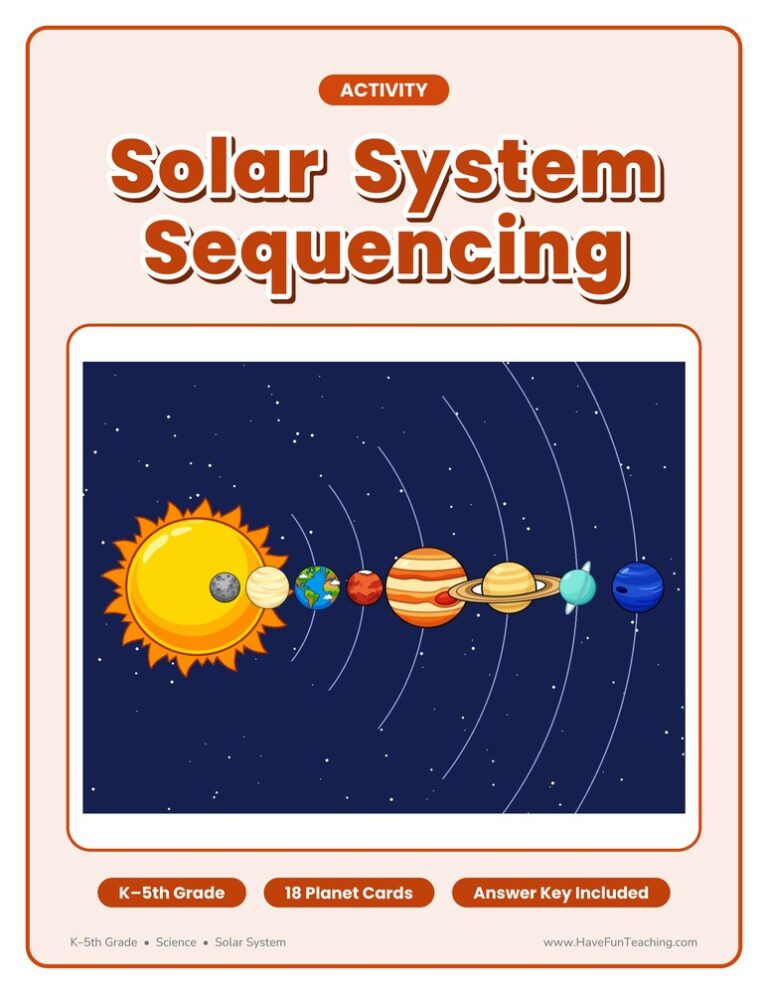
In this solar system sequencing planets activity, kindergarten to 5th grade students put the eight planets in order from the Sun and match their names. Answer key included.

Activity
ActivityKindergartenWeather Activity

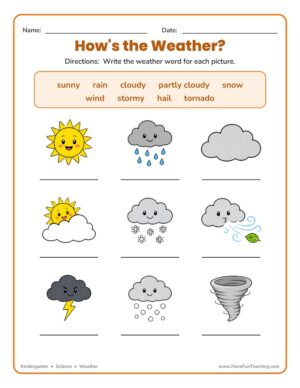
This weather activity helps Kindergarten to 2nd grade students match weather pictures to weather words, spin a weather wheel and graph a week of weather. Answer key included for quick checking.

Activity
Activity3rd GradeName That Landform Smartboard Game

Using Name That Landform Smartboard Game, students look at each picture and decide what type of landform is shown

Activity
Activity2nd GradeJeopardy Natural Disasters Activity

UsingJeopardy Natural Disasters Activity, students play to review facts about natural disasters that occur on Earth.

Activity
Activity1st GradeIts Just a Phase Phases of the Moon Activity

UsingIts Just a Phase Phases of the Moon Activity, students put the phases of the moon in order so they can understand the pattern of the moon.

From our teachers' playbook

Rocks, rain, and a planet that never sits still

What do kids learn in earth science?

Earth science is the study of our planet: what it's made of, what changes it, and its place in space. Young kids observe weather, seasons, day and night, and sort rocks by color and texture. By 3rd through 5th grade they're tracing the water cycle, learning how weathering and erosion carve the land, exploring fossils and soil, and naming the layers of the Earth from crust to inner core. They also learn why we have seasons: Earth's tilt, not its distance from the sun. The click is when kids realize the ground under their sneakers is still changing, just very, very slowly.

Our favorite ways to teach earth science

Earth science is everywhere outside your classroom door. These moves bring it inside and make it stick.

Be a rock detective

Hand each table a few rocks and a magnifying glass. Kids describe color, texture and shiny spots, then sort them their own way and explain their rule. Observing real rocks before reading about them gives the vocabulary something to hold on to.

Why it works: kids understand an idea best when they touch it, then draw it, then write it, the order the U.S. Department of Education recommends for elementary math.
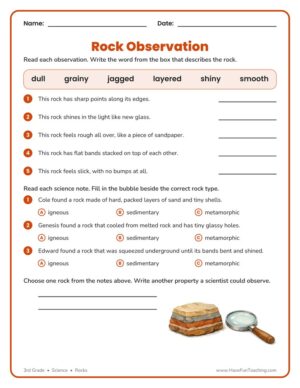
Rock Observation WorksheetTry it withRock Observation WorksheetWorksheetsOpen it →

Draw the cycle

Have kids draw the water cycle as a big circle with arrows: evaporation, condensation, precipitation, collection. Then cover one label and ask what's missing. A labeled diagram they made themselves is easier to remember than a paragraph.

Why it works: children learn more from words and pictures together than from words alone (Mayer, 2009).

Water Cycle WorksheetTry it withWater Cycle WorksheetWorksheetsOpen it →

Sing the seasons

A catchy song makes the order of the seasons, and the reason for them, easy to recall. Play it at the start of the unit and again before the quiz. Kids will be humming it at lunch, and that's the point.

Why it works: a catchy, repeating tune gives the brain a hook to hang words on, so sung text is remembered better (Wallace, 1994).

Seasons SongTry it withSeasons SongSongsOpen it →

What's on this page

Teacher favorites right now: Go Green Recycle Activity, Solar System Activity and Sun Activity.

Earth science: your questions

What topics are in elementary earth science?

The big ones are weather and seasons, the water cycle, rocks and minerals, soil, fossils, weathering and erosion, natural resources, and the solar system. Younger grades focus on observing and describing, while older grades explain how and why things change.

What's the difference between weathering and erosion?

Weathering breaks rock into smaller pieces. Erosion carries those pieces away to a new place, usually by water, wind or ice. A simple way to remember it: weathering breaks, erosion takes.

How do I explain why we have seasons?

The Earth is tilted. As it travels around the sun, the half tipped toward the sun gets more direct sunlight and longer days, so it has summer. A flashlight and a tilted ball show this in a minute.

What are the layers of the Earth for kids?

From the outside in: the crust, which we live on, the mantle, the outer core, which is liquid, and the inner core, which is solid. Comparing them to a peach or an egg makes it easy to picture.

How can I teach earth science at home?

Start a rock collection, keep a weekly weather chart, or watch a puddle disappear over a sunny afternoon. Ask your child to explain what they see. Talking it through builds the science vocabulary.