
Skip to content
Start My 3 Free Days $0 today · cancel anytime

Robotics Resources

2 robotics resources: 2 worksheets, 1 assessment and 1 activity. How teachers use these

Robotics Resources

2 robotics resources: 2 worksheets, 1 assessment and 1 activity. How teachers use these

Assessment
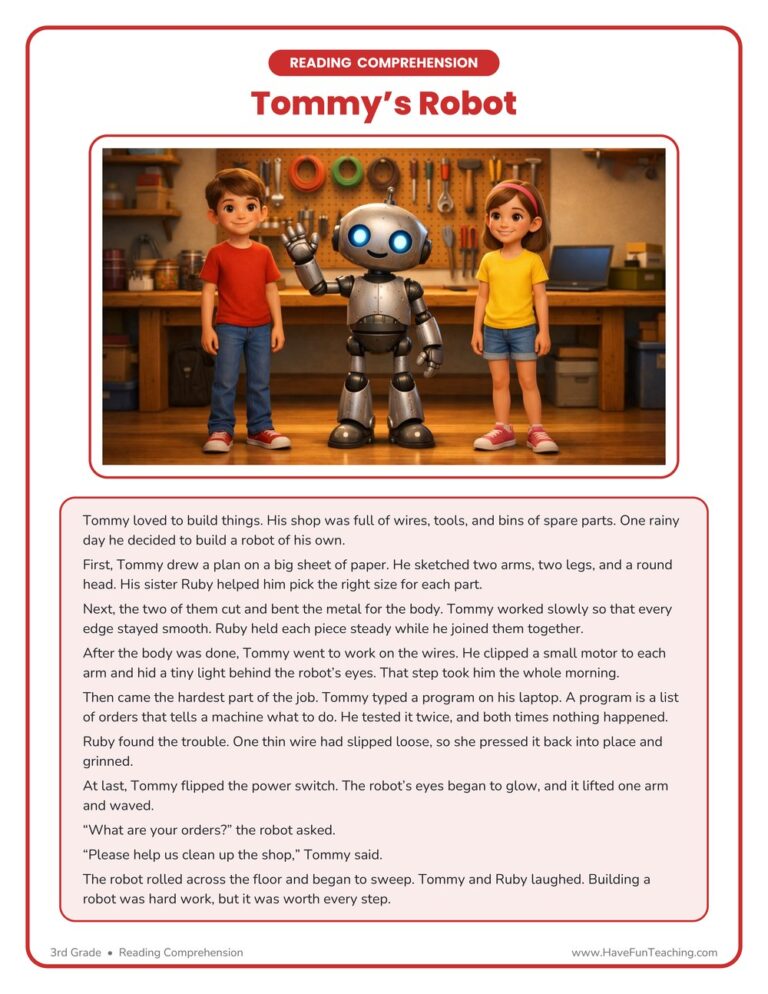
Assessment3rd GradeTommy's Robot Reading Comprehension Worksheet

This Tommy's Robot Reading Comprehension Worksheet gives 3rd graders an original story about building a robot, then checks how well they followed each step. Answer key included, so comprehension practice takes no prep.

Activity
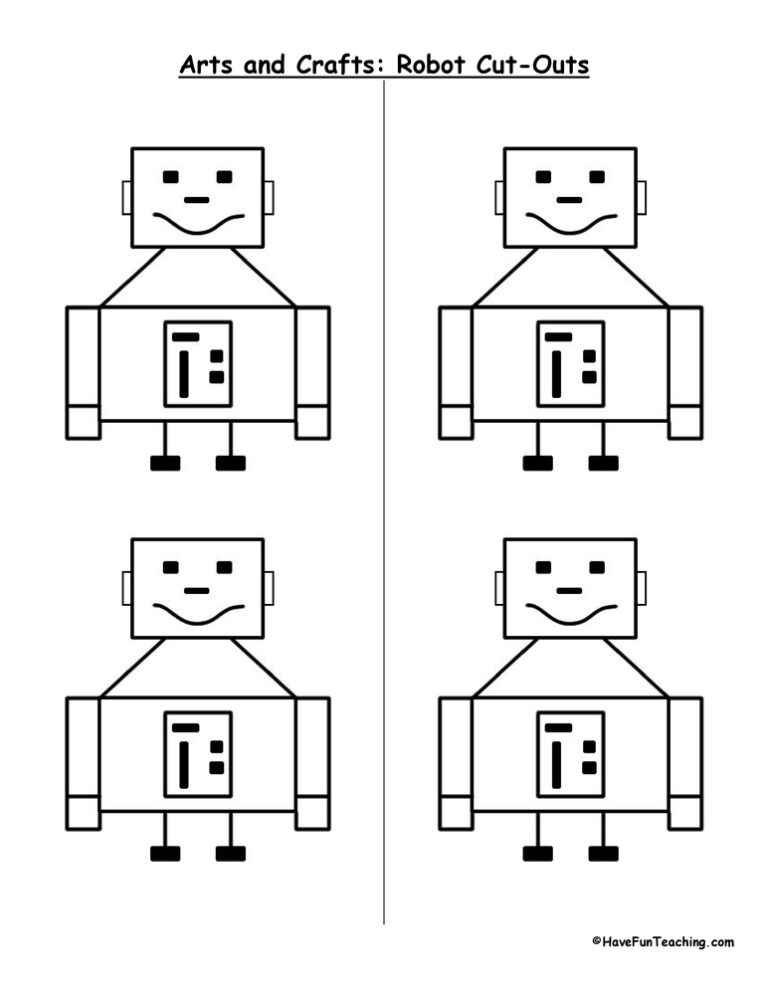
Activity3rd GradeRobot Cut Outs

This robot cut outs worksheet gives 3rd grade students four robots to fill with ideas for helpful robot jobs, then color and cut out, building a bright technology bulletin board the whole class can enjoy.

From our teachers' playbook

Beep boop, let's build and code!

What do kids learn about robotics?

Robotics introduces kids to how machines sense, think and act. Young learners discover that a robot follows instructions step by step, so the order of commands matters. Older students learn that robots use sensors to take in information, a program to decide what to do, and motors to move. Along the way, kids practice problem-solving, testing and fixing mistakes, which engineers call debugging. The click moment is when a robot does exactly what you told it, even when that wasn't what you meant!

Our favorite ways to bring robotics into the classroom

You don't need expensive kits to start. These moves teach robot thinking with paper, people and a little imagination.

Program a human robot

One student plays the robot and the class gives exact commands: "step forward two, turn right." The robot follows them literally. Kids quickly learn that clear, ordered instructions are the heart of coding.

Why it works: in a well-known study, a few short sessions of a simple number board game measurably boosted young children's number skills (Ramani and Siegler, 2008).

Robot Cut OutsTry it withRobot Cut OutsActivitiesOpen it →
Design a robot with a job

Have students design a robot that solves a real problem, like cleaning up toys. They label its sensors, its "brain" and the parts that move. Cut-out pieces make it easy for younger kids to build and explain their design.

Why it works: kids understand an idea best when they touch it, then draw it, then write it, the order the U.S. Department of Education recommends for elementary math.

Robot Cut OutsTry it withRobot Cut OutsActivitiesOpen it →

Read, then engineer

Read a short robot story and ask what problem the robot solved and how. Then students suggest one improvement. It ties reading comprehension to engineering thinking.

Why it works: shuffled practice teaches kids to choose the right strategy, not just repeat one, and it improved test scores in research (Rohrer and Taylor, 2007).

Tommy's Robot Reading Comprehension WorksheetTry it withTommy's Robot Reading Comprehension WorksheetWorksheetsOpen it →

Questions teachers and parents ask

What age can kids start learning robotics?

Kids can start robot thinking as early as preschool and kindergarten with unplugged games like giving step-by-step commands. Building and simple coding usually begin around ages 6 to 8.

How do I teach robotics without a robot kit?

Use unplugged activities: human robot games, arrow-card mazes and robot design drawings. They teach sequencing, sensors and debugging with no technology needed.

What are the main parts of a robot?

Most robots have sensors to gather information, a controller or program to make decisions, and motors or other parts to move. Kids can remember it as sense, think, act.

What skills does robotics teach?

Robotics builds sequencing, problem-solving, teamwork and persistence. Kids learn to test an idea, find what went wrong, and try again.

Keep exploring


