
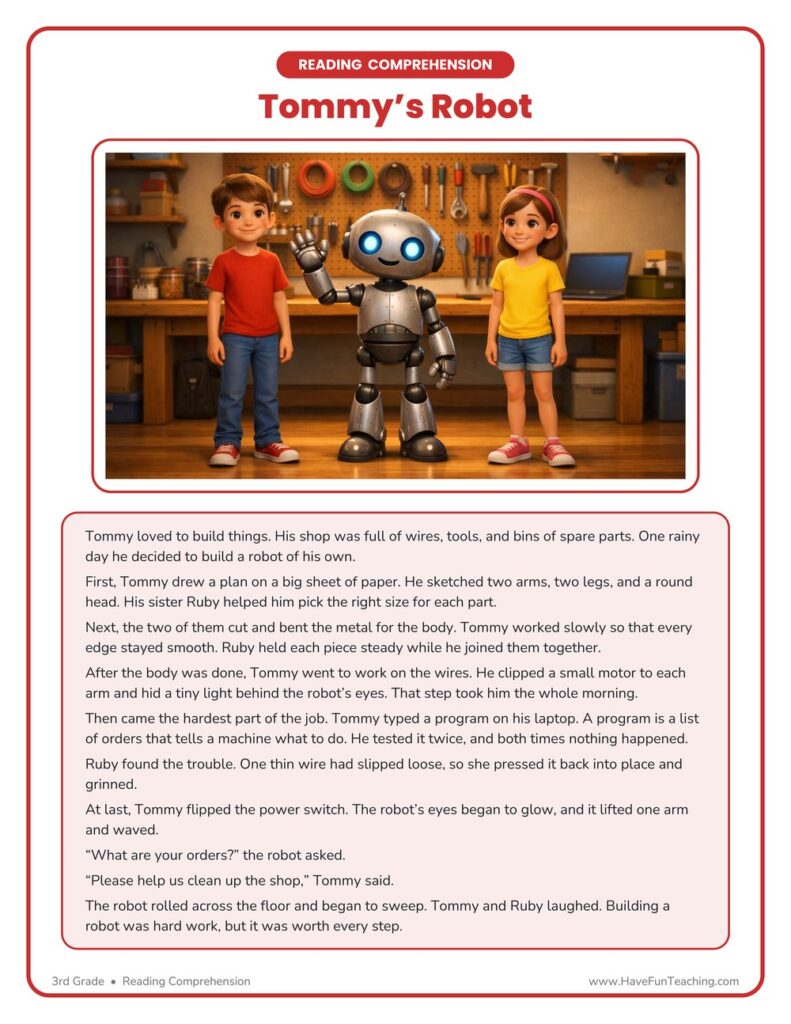
Tommy’s Robot Reading Comprehension Worksheet
This Tommy’s Robot Reading Comprehension Worksheet gives 3rd graders an original story about building a robot, then checks how well they followed each step. Answer key included, so comprehension practice takes no prep.
$6.97
Or free with a membership — members pay $3.33/mo for all 10,000+ resources. See plans
Want this one free?
Tell us where to send it and it’s yours — no card, no catch.
One free resource per teacher. We’ll also send free teaching ideas each week — unsubscribe anytime.
Teaching is easier with a membership
Unlimited printables, games & videos for PreK–6th — for your classroom or homeschool. Cancel anytime.
Start your 3-day free trial$0 today · cancel anytime · Instant access to 10,000+ resources
About this resource
Description
Reading comprehension in third grade is about more than recognizing words — it is about following what happens, in what order, and why it matters. This Tommy’s Robot Reading Comprehension Worksheet gives your students an original story about a boy who builds a robot one careful step at a time, then asks them to prove they understood it. Sequencing is one of the first comprehension skills a third grader is tested on, because a reader who can retell the steps of a story in order is a reader who is truly tracking the text instead of skimming it.
The 3rd grade reading comprehension worksheet opens with a full-page illustrated story written and measured at a third grade reading level. Students read about Tommy and his sister Ruby as they plan, cut, wire, program, and finally switch on their homemade robot. On the questions page they fill in bubbles for four multiple choice items, complete a sentence about the last step, and then write out longer answers using details pulled straight from the passage. Use it for guided reading, as a quick comprehension check, as homework, or as an early-finisher activity.
What’s Included
- 1 print-ready PDF worksheet
- Answer key
- 1 original third grade story passage plus 7 comprehension questions (4 multiple choice, 1 fill-in, 2 written responses)
This Tommy’s Robot Reading Comprehension Worksheet helps children in three clear ways. First, the story is built around sequence words — first, next, after, then, at last — so students practice noticing the signals that hold a text together. Second, the questions move up in difficulty, starting with main idea and vocabulary in context and finishing with written answers that require text evidence, which is exactly the pattern of a state reading assessment. Third, the included answer key lets a teacher or parent check work immediately and reteach while the story is still fresh.
Teachers and parents can stretch this activity in a lot of fun directions. Have students cut the steps of the story apart and rebuild them in order on a pocket chart, or retell the whole build to a partner using only sequence words. Ask children to design their own robot on paper and write four numbered steps for making it. You can also pair the passage with a building or STEM center, where students follow written directions in order and see how much the sequence matters when the pieces have to fit.
Related Resources
What teachers say
Reviews
You must be logged in to post a review.
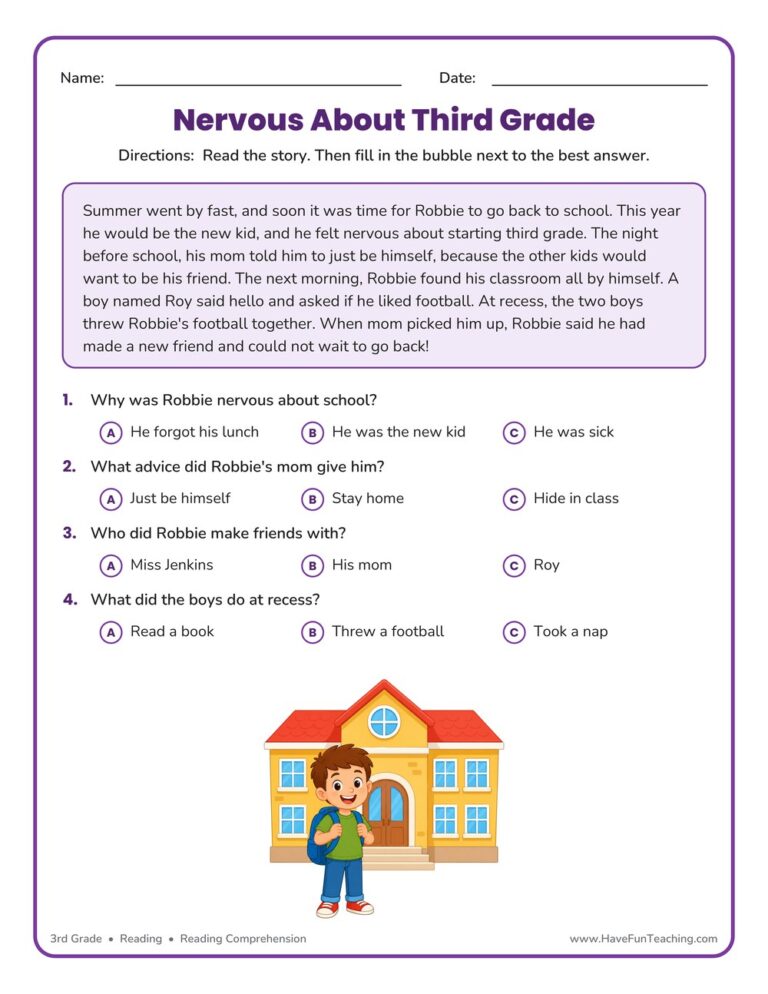
The Nervous About Third Grade Reading Comprehension Worksheet lets 3rd graders read a relatable back-to-school story about Robbie and answer multiple-choice questions. Answer key included — a no-prep way to build reading comprehension confidence.
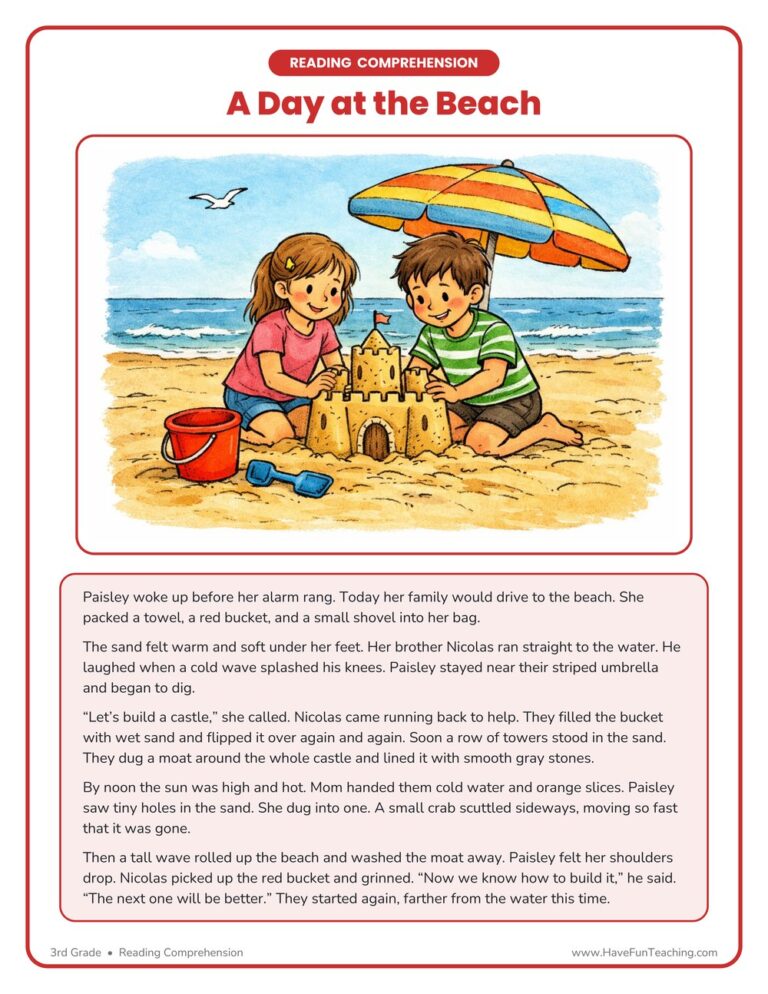
This A Day at the Beach Reading Comprehension Worksheet gives 3rd Grade readers a short beach story with seven mixed questions and an answer key included, so comprehension practice stays quick and clear.
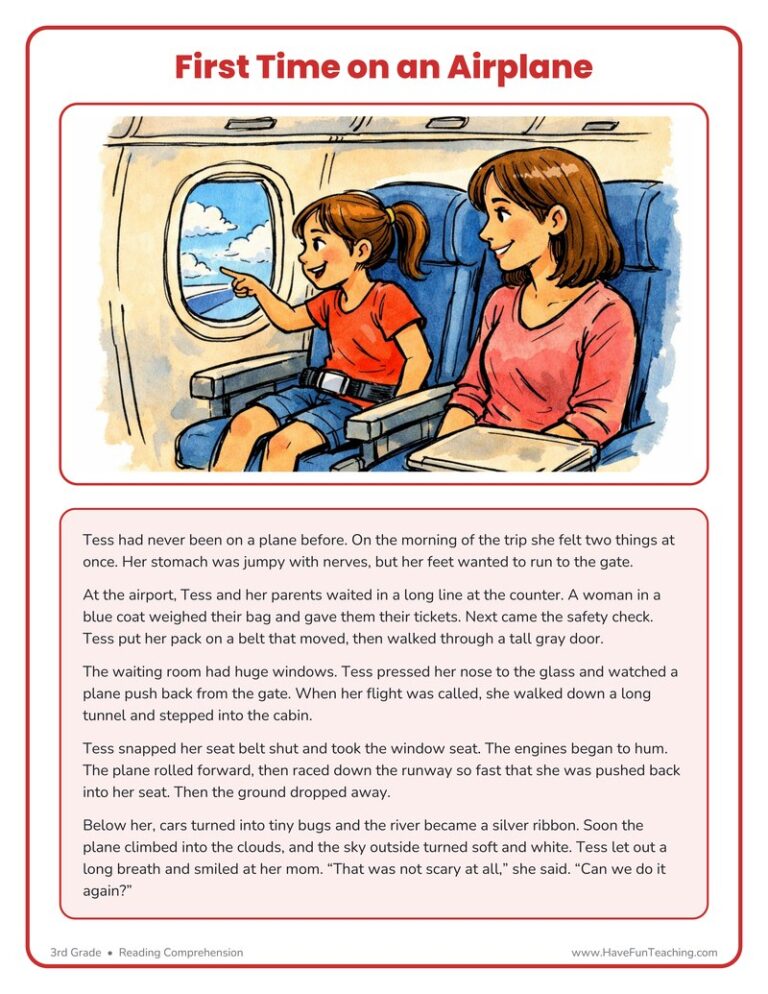
A First Time on a Plane reading comprehension worksheet where 3rd graders read a short story about a girl's first flight and answer questions about it. Answer key included for fast, no-prep practice.

This feelings worksheet gives 3rd grade students a short passage about emotions plus reading comprehension questions and a reading-response prompt. Includes a complete answer key, a gentle way to build reading skills and emotional awareness.
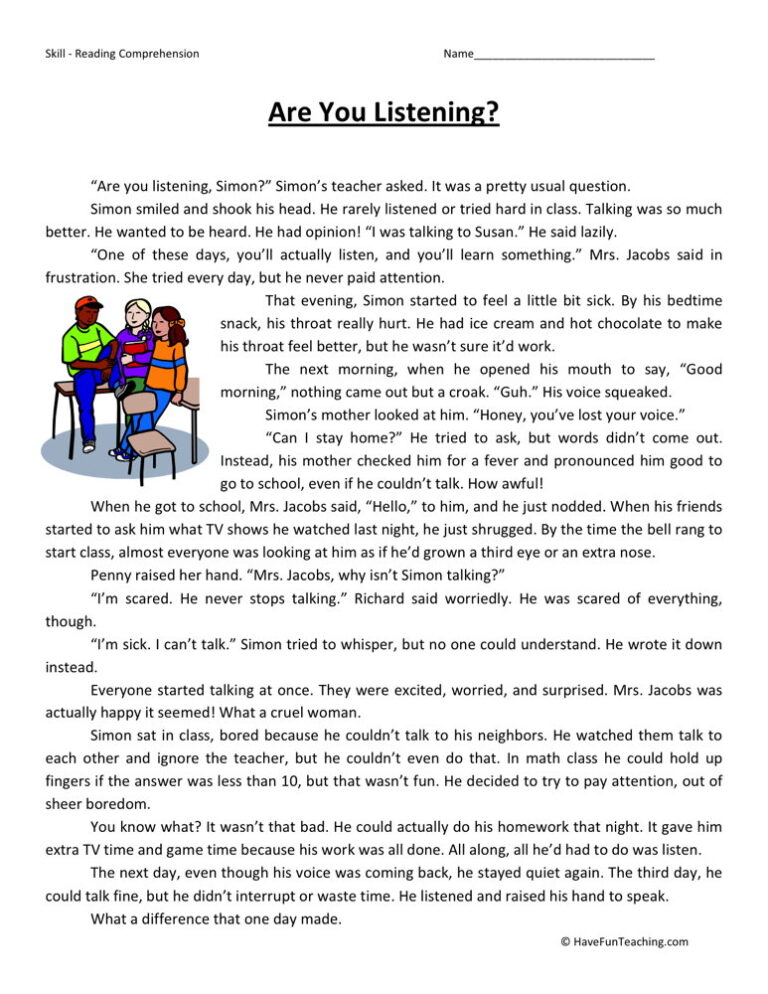
This Are You Listening? Reading Comprehension Worksheet gives 3rd Grade readers a short story and question set, with an answer key included, so they can practice finding evidence right in the text.
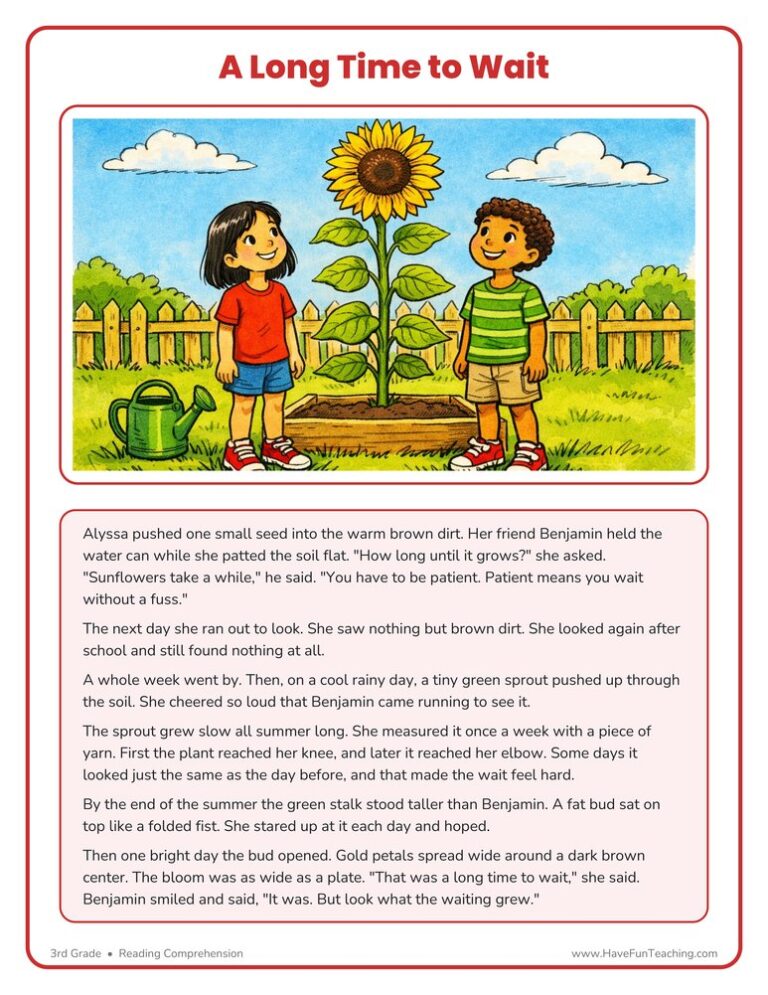
This A Long Time to Wait reading comprehension worksheet gives 3rd graders an original story about patience plus main idea, vocabulary, sequence, and written-response questions. Answer key included for easy no-prep practice.
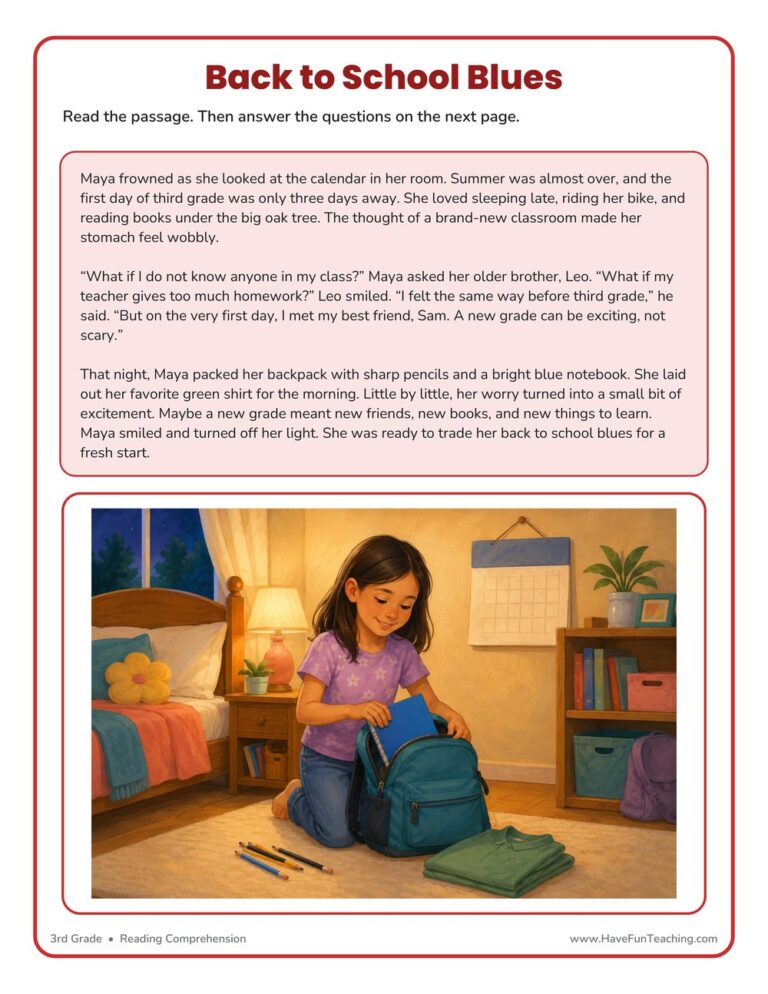
The Back to School Blues Reading Comprehension Worksheet gives 3rd grade students a short, relatable story with comprehension questions to build reading skills. An answer key is included so practice feels easy and confident.
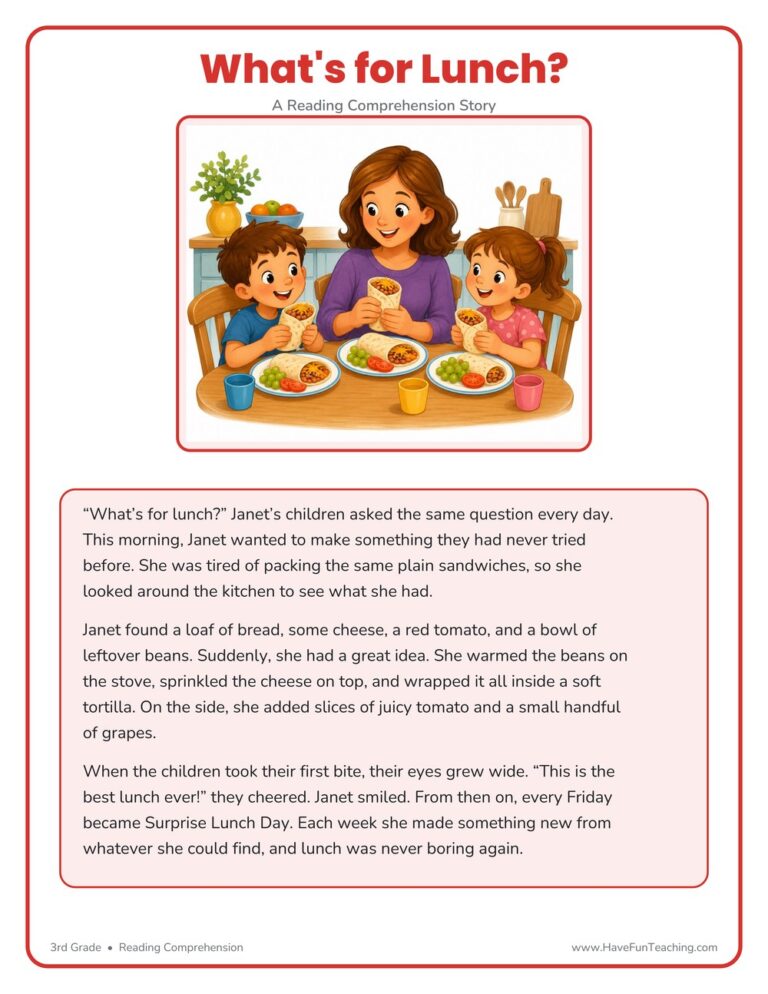
The What’s for Lunch? Reading Comprehension Worksheet gives 3rd graders a fun story about a surprise lunch, with multiple-choice, fill-in-the-blank, and short-response questions. Answer key included for quick, no-prep reading practice.

This read a recipe worksheet gives 3rd grade students a banana-bread recipe to read, then four multiple-choice questions and a written response. An answer key is included, so following directions is easy to check.
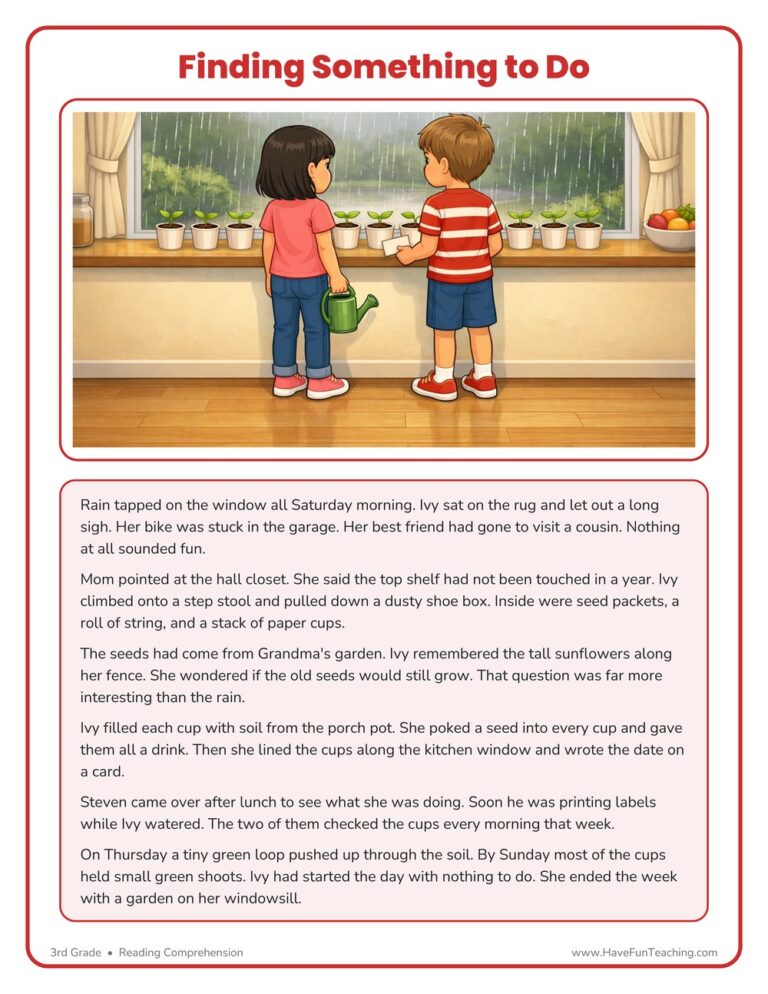
This finding something to do - reading comprehension worksheet has 3rd grade students read a short story and answer questions using text evidence. An answer key is included, so checking work takes a moment.
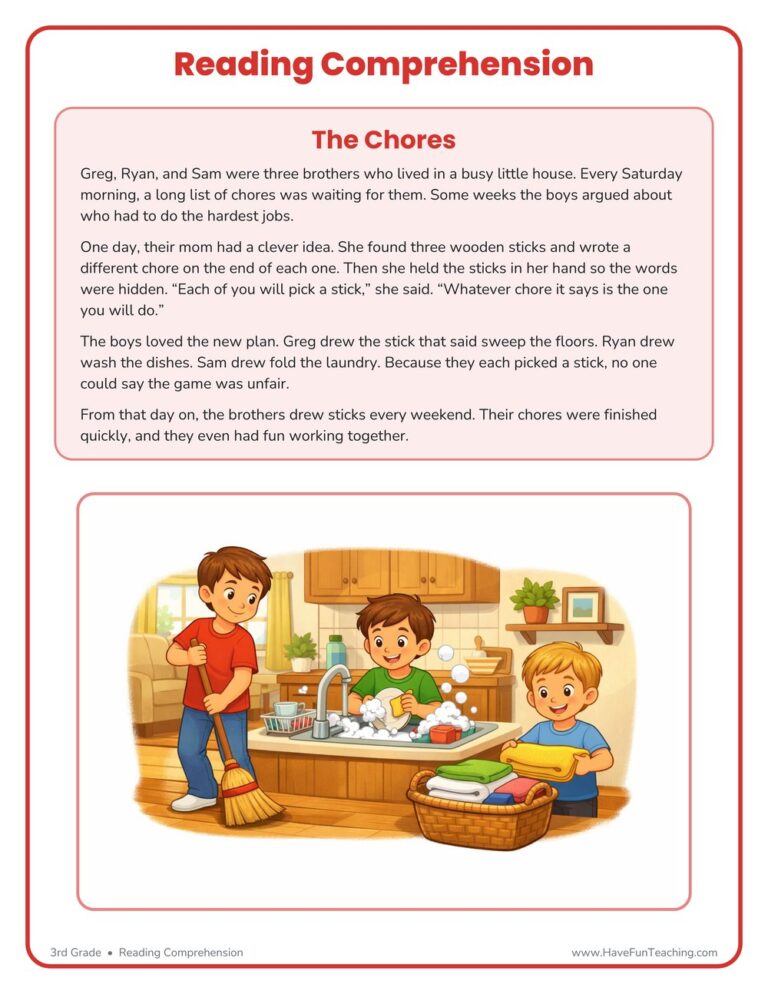
The Chores Reading Comprehension Worksheet helps 3rd grade students read a fun story about three brothers sharing household chores, then answer questions to check understanding. An answer key is included to make grading easy.
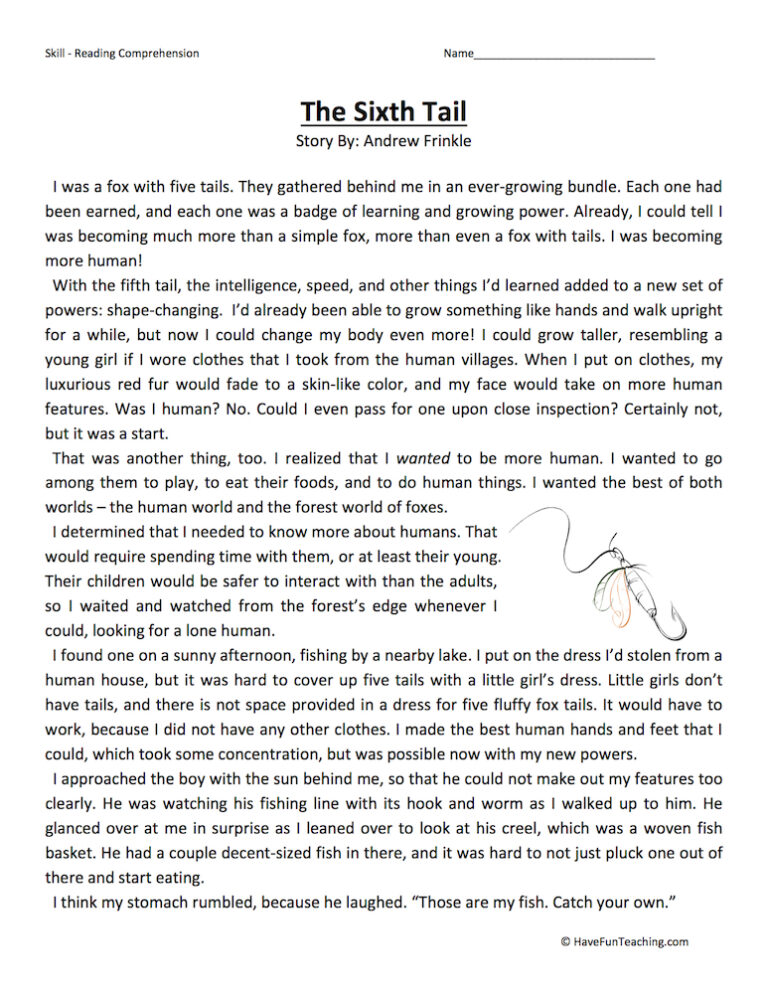
The Sixth Tail Reading Comprehension Worksheet pairs an original 3rd grade fox story with four multiple-choice questions and a written response. The answer key is included, so close reading practice is ready in one print.

Reviews
There are no reviews yet