Skip to content
Start My 3 Free Days $0 today · cancel anytime

6th Grade Planets Resources

2 6th grade planets resources: 2 songs and 1 video. How teachers use these

6th Grade Planets Resources

2 6th grade planets resources: 2 songs and 1 video. How teachers use these

Video
Video6th GradePlanets Song (Animated Music Video)

While watching the Planets Song (Animated Music Video), students learn about the order of planets in our solar system as well as cool facts about each planet.

Song
Song6th GradePlanets Song (MP3)

While listening to the Planets Song (MP3), students learn about the order of planets in our solar system as well as cool facts about each planet.

From our teachers' playbook

Eight worlds, one amazing system

What do 6th graders learn about planets?

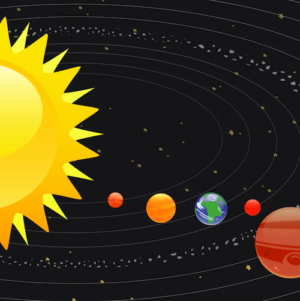
In 6th grade, students go beyond naming the planets. They compare them: the four inner rocky planets (Mercury, Venus, Earth, Mars) and the four outer gas and ice giants (Jupiter, Saturn, Uranus, Neptune). They learn how gravity keeps the planets in orbit around the sun, why planets farther away take longer to orbit, and how size, temperature and atmosphere differ. Many build a scale model and discover how huge the distances really are. The click moment is when kids realize that if Earth were a marble, Neptune would be blocks away!

Our favorite ways to make planets stick

Planets are a big topic. These moves help 6th graders organize what they learn.

Song for the order

Play the planets song to lock in the order from the sun. Then challenge students to add one fact per planet. Once the order is easy, there's more room for real science.

Why it works: words set to a repeating melody are easier to recall than the same words spoken (Wallace, 1994).
Planets Song (Animated Music Video)Try it withPlanets Song (Animated Music Video)SongsOpen it →
Scale the solar system

Use toilet paper or a long hallway to build a distance model. Students calculate where each planet goes. Seeing the empty space between planets is a jaw-dropper.

Why it works: kids understand an idea best when they touch it, then draw it, then write it, the order the U.S. Department of Education recommends for elementary math.

Planets Song (MP3)Try it withPlanets Song (MP3)SongsOpen it →

Compare and contrast

Mix up planet fact cards and have students sort them into inner and outer planets, then explain the pattern. Comparing makes the differences meaningful.

Why it works: shuffled practice teaches kids to choose the right strategy, not just repeat one, and it improved test scores in research (Rohrer and Taylor, 2007).

Planets Song (MP3)Try it withPlanets Song (MP3)SongsOpen it →

What's on this page

Teacher favorites right now: Planets Song (Animated Music Video) and Planets Song (MP3).

Questions teachers and parents ask

What are the 8 planets in order?

Mercury, Venus, Earth, Mars, Jupiter, Saturn, Uranus and Neptune, starting from the sun.

What is the difference between inner and outer planets?

The inner planets are small and rocky. The outer planets are much larger and made mostly of gas and ice, and they all have rings.

Why is Pluto not a planet?

In 2006, scientists reclassified Pluto as a dwarf planet because it hasn't cleared other objects out of its orbit.

What keeps planets in orbit?

The sun's gravity pulls on the planets, while their forward motion keeps them from falling in. Together, this keeps them moving in orbits.