Skip to content
Start My 3 Free Days $0 today · cancel anytime

3rd Grade Arbor Day Resources

4 3rd grade Arbor Day resources: 2 songs, 2 videos, 1 activity and more. How teachers use these

3rd Grade Arbor Day Resources

4 3rd grade Arbor Day resources: 2 songs, 2 videos, 1 activity and more. How teachers use these

Video
Video3rd GradeGoing Green Song (Animated Music Video)

Using the Going Green Song (Animated Music Video), students learn all about ways to reduce, reuse, and recycle and so much more through a catchy video!

Video
Video3rd GradeGoing Green Song (MP3)

Using the Going Green Song (MP3), students learn all about ways to reduce, reuse, and recycle and so much more through a catchy song!

Activity
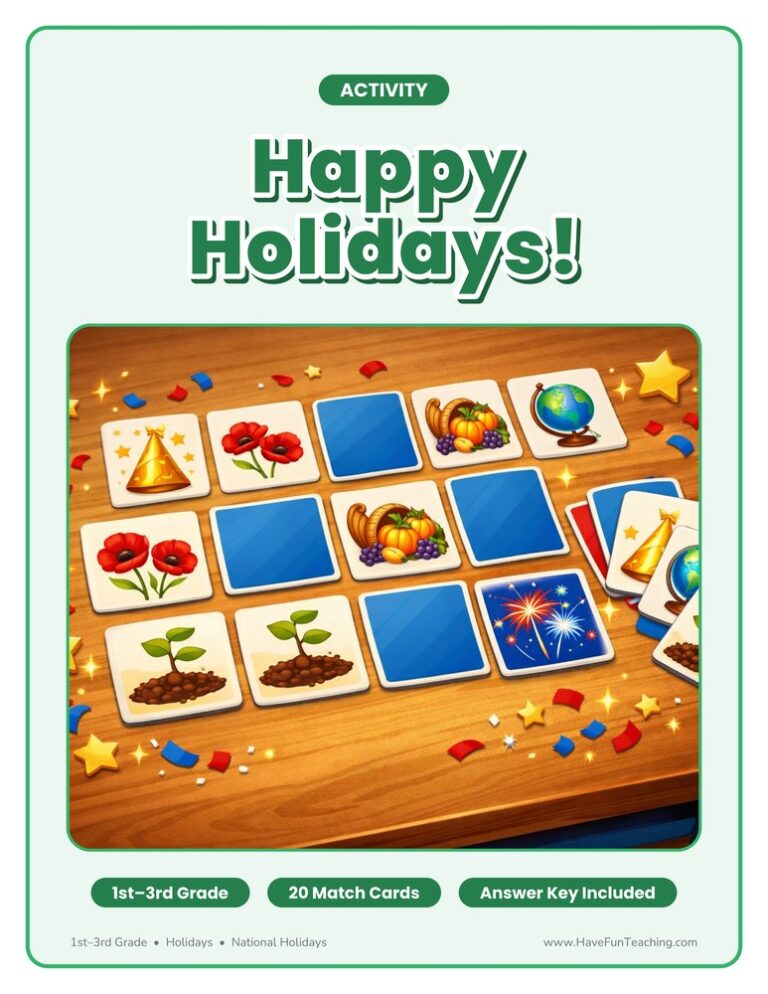
Activity3rd GradeHappy Holidays National Holidays Activity

This happy holidays national holidays activity has 1st-3rd grade students match picture clue cards to ten U.S. holidays and their dates. Answer key included for easy checking.

Assessment
Assessment3rd GradeThe Catching Tree Reading Comprehension Worksheet

This The Catching Tree Reading Comprehension Worksheet gives third graders a non-fiction passage about how a wide tree catches what the wind carries, four multiple choice questions, and a written response. An answer key is included.

From our teachers' playbook

Let's hear it for the trees!

What do 3rd graders learn about Arbor Day?

Arbor Day is a holiday for planting and caring for trees. Third graders learn that it started in Nebraska in 1872, when a man named J. Sterling Morton encouraged people to plant trees on the wide, open prairie, and that National Arbor Day is now celebrated on the last Friday in April. They learn what trees give us: oxygen, shade, homes for animals, food and wood. They also connect it to taking care of the planet. The click comes when kids realize a tree they plant this year could still be standing when they are grandparents.

How we teach Arbor Day

Arbor Day is a great excuse to mix science, reading and a little outdoor time.

Read about a tree

Read a short story about a tree together, then answer questions and find the evidence in the text. Ask kids how the tree helped the characters. A holiday passage is real reading practice wrapped in a celebration.

Why it works: pulling an answer out of memory makes it stick far better than rereading it, one of the strongest findings in learning research (Dunlosky and colleagues, 2013).

The Catching Tree Reading Comprehension WorksheetTry it withThe Catching Tree Reading Comprehension WorksheetAssessmentsOpen it →

Sing about going green

Play a going green song and have kids list every way to help the earth they hear. Then add "plant a tree" to the list and talk about why it matters. Music turns a list of good habits into something they remember.

Why it works: words set to a repeating melody are easier to recall than the same words spoken (Wallace, 1994).

Going Green Song (Animated Music Video)Try it withGoing Green Song (Animated Music Video)SongsOpen it →

Make a tree of thanks

Have each student write one thing trees give us on a paper leaf and add it to a big paper tree on the wall. By the end, the tree is full of facts the class gathered together.

Why it works: going from real objects to pictures to symbols is a core recommendation of the U.S. Department of Education's elementary math guide.

Tree Cut OutsTry it withTree Cut OutsActivitiesOpen it →

Questions parents and teachers ask

When is Arbor Day?

National Arbor Day is celebrated in the United States on the last Friday in April. Some states celebrate on different dates that match the best tree-planting season where they live.

Who started Arbor Day?

J. Sterling Morton started Arbor Day in Nebraska in 1872. On that first Arbor Day, people planted about one million trees.

Why are trees important for kids to learn about?

Trees give us oxygen, shade, food and wood, and they are homes for birds, insects and other animals. Learning about trees helps kids understand ecosystems and caring for the earth.

What are easy Arbor Day activities for 3rd grade?

Plant a seed in a cup, do bark rubbings with crayons, read a story about trees or count the rings on a tree slice. Kids love hands-on activities they can take home.