Skip to content
Start My 3 Free Days $0 today · cancel anytime

3rd Grade Predictions Resources

5 3rd grade predictions resources: 5 worksheets and 1 graphic organizer. How teachers use these

3rd Grade Predictions Resources

5 3rd grade predictions resources: 5 worksheets and 1 graphic organizer. How teachers use these

Worksheet
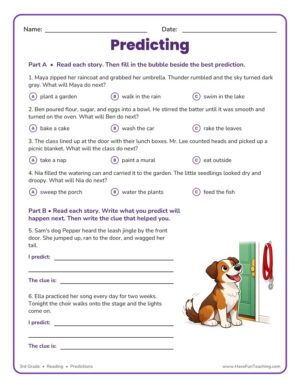
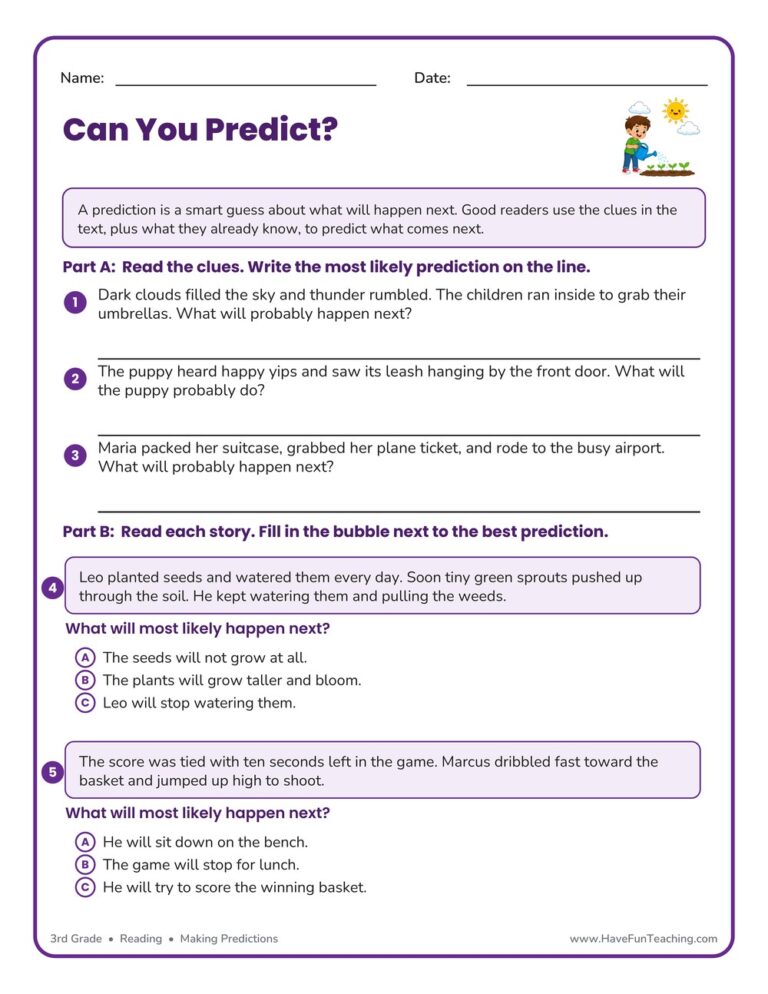
Worksheet3rd GradeMaking Predictions Worksheet

This Making Predictions Worksheet has 3rd graders use text clues to predict what happens next, with write-in and multiple-choice questions. Answer key included for easy, no-prep reading practice.

Worksheet
Worksheet3rd GradeNarrative Writing Worksheet

This narrative writing worksheet for 3rd grade pairs an original tall tale with prediction questions and six lines to finish the story. An answer key is included, so young writers build real storytelling confidence.

Worksheet
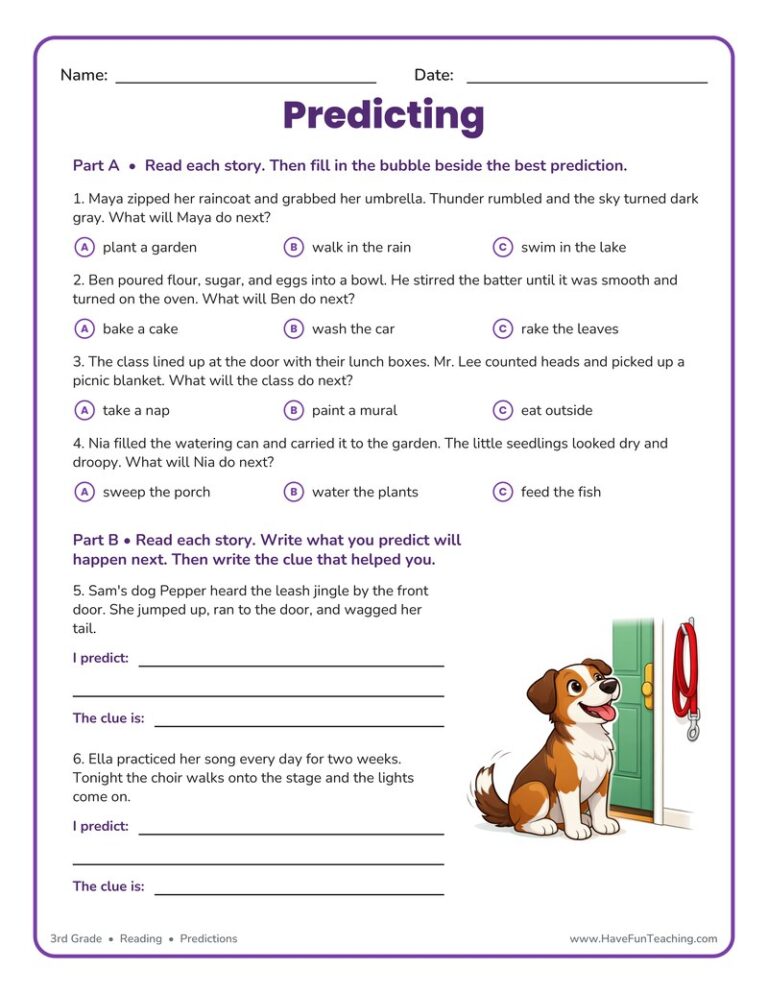
Worksheet3rd GradePredicting Worksheet

This Predicting Worksheet gives 3rd Grade readers six short stories to think through, choosing and writing predictions from story clues. An answer key is included, so students practice evidence-based thinking with almost no prep.

Worksheet
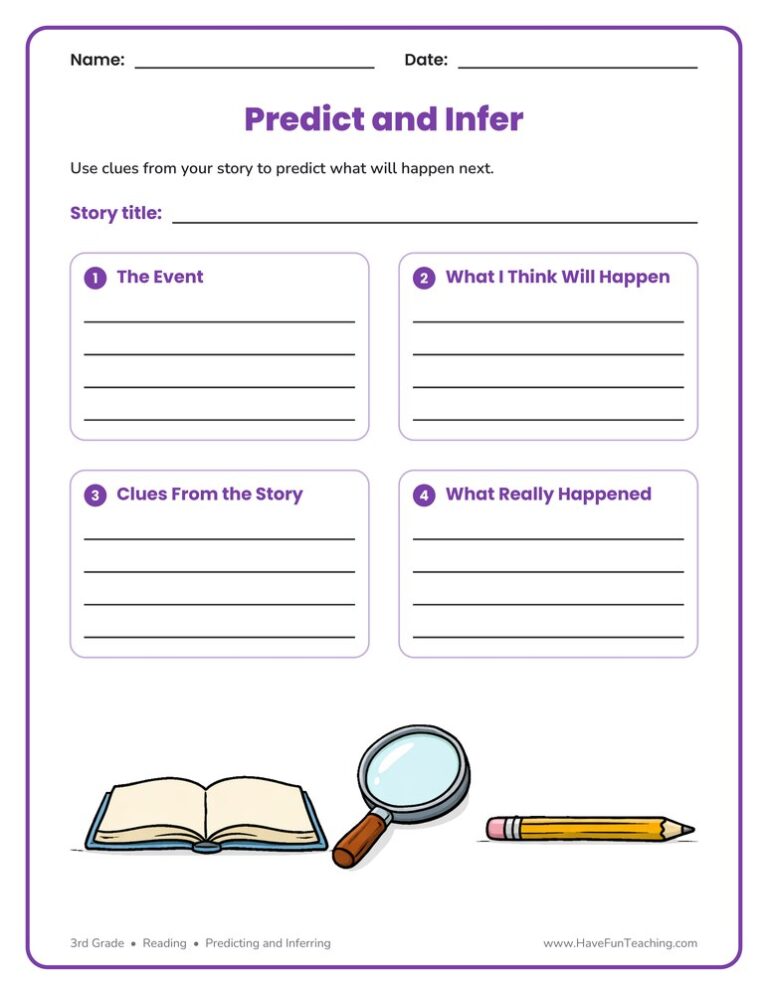
Worksheet3rd GradePredict and Infer Graphic Organizer

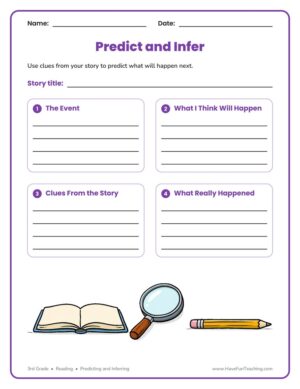
This predict and infer graphic organizer worksheet gives 3rd grade readers one page to name an event, predict what happens next, list the clues behind the guess, and then check it against the real ending.

Worksheet
Worksheet3rd GradeMissing File Predictions Worksheet

Students read four short stories and decide what happens next in this Missing File Predictions Worksheet for 3rd grade. An answer key is included, so prediction practice takes no prep at all.

From our teachers' playbook

Detectives with a book

What do 3rd graders learn about making predictions?

Third graders learn that a good prediction is not a wild guess. It is a smart guess built from clues: the title, the pictures, what a character just did, and what they already know. They stop while reading, predict what will happen next, and then check whether they were right. If not, they change their prediction. The click moment is when a student says, "I knew it, because on page 12 she was hiding the key!"

Our favorite ways to teach predictions

Predicting keeps kids engaged and thinking while they read. These moves make it a habit.

Stop, predict, prove

Read aloud and stop at an exciting moment. Think out loud: "I predict he will run, because he looked scared." Then kids make their own prediction with a "because" and check it after the next page.

Why it works: handing over the work step by step, from teacher to student, is one of the most widely used teaching frameworks (Pearson and Gallagher, 1983).

Making Predictions WorksheetTry it withMaking Predictions WorksheetWorksheetsOpen it →
Organize the clues

Use a graphic organizer with three boxes: clue, what I know, my prediction. Filling it in shows kids that predictions come from evidence, and it moves them toward making inferences too.

Why it works: children learn more from words and pictures together than from words alone (Mayer, 2009).

Predict and Infer Graphic OrganizerTry it withPredict and Infer Graphic OrganizerGraphic OrganizersOpen it →

Prediction check-in

After each chapter, ask students to rate their prediction: right, partly right or changed. Quick checks like this help kids see that changing a prediction is part of good reading.

Why it works: pulling an answer out of memory makes it stick far better than rereading it, one of the strongest findings in learning research (Dunlosky and colleagues, 2013).

Predicting WorksheetTry it withPredicting WorksheetWorksheetsOpen it →

Questions teachers and parents ask

How do I teach predictions in 3rd grade?

Model it with a read-aloud: stop, make a prediction, and explain the clue that led you there. Then have kids do the same with a "because" sentence and check it as they keep reading.

What is the difference between a prediction and an inference?

A prediction is about what will happen next. An inference is about what is happening now that the author did not say directly. Both use clues from the text and what the reader already knows.

Is it okay if my child's prediction is wrong?

Yes. Good readers change their predictions as they learn more. What matters is that the prediction was based on clues and that they notice when the story goes a different way.

How can I practice predicting at home?

Pause during bedtime reading and ask, "What do you think will happen next? Why?" Movies and TV shows work too.