Skip to content
Start My 3 Free Days $0 today · cancel anytime

Expository Writing Resources

5 expository writing resources: 4 test prep, 4 assessments, 4 workbooks and more. How teachers use these

Expository Writing Resources

5 expository writing resources: 4 test prep, 4 assessments, 4 workbooks and more. How teachers use these

Worksheet
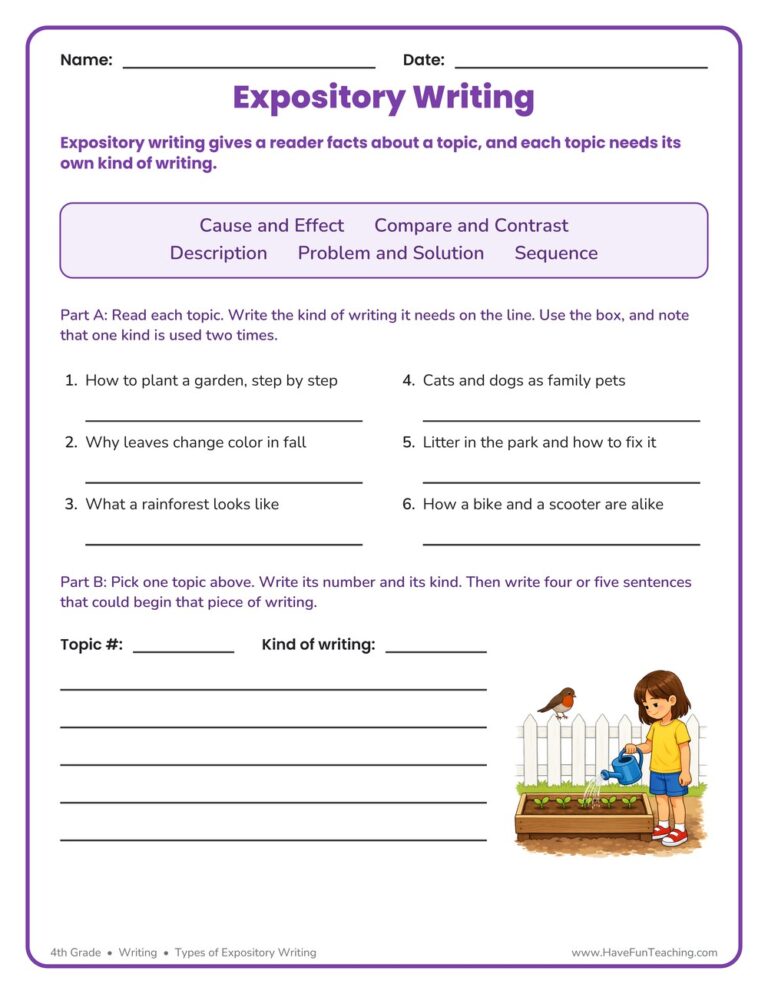
Worksheet4th GradeTypes of Expository Writing Worksheet

This Types of Expository Writing Worksheet has 4th graders name the structure six topics call for, then draft an opening of their own. An answer key is included, so structure practice takes no prep.

Workbook
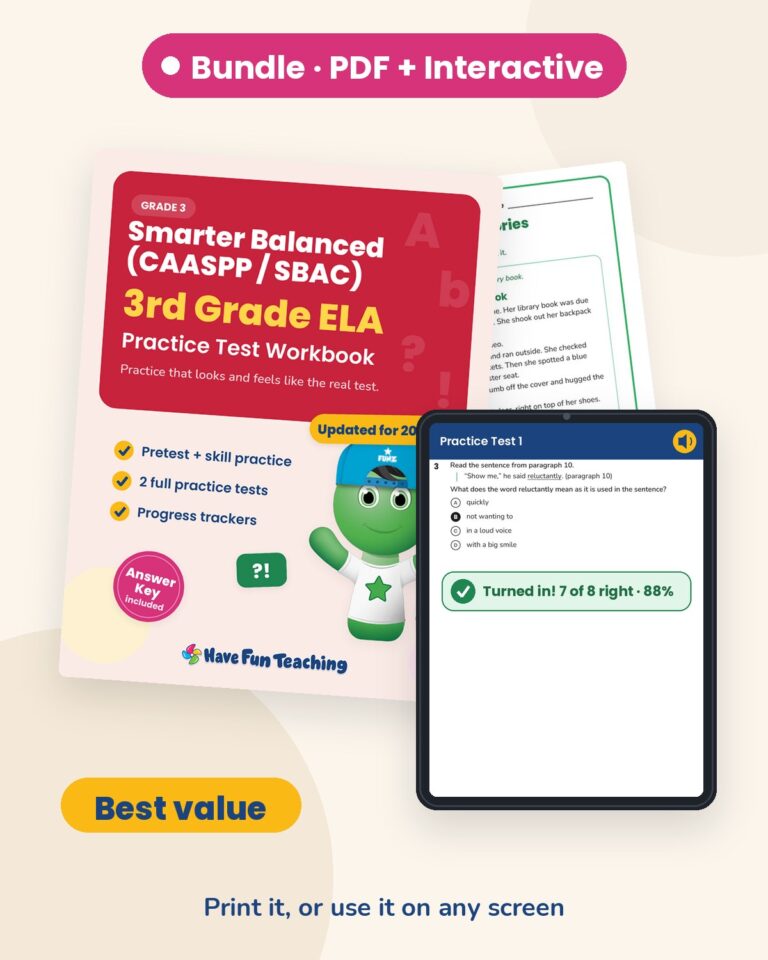
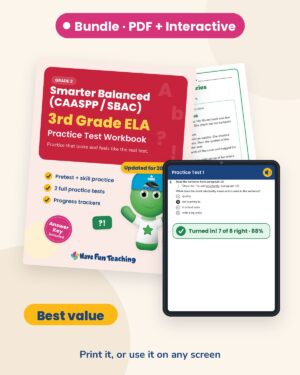
Workbook3rd GradeSmarter Balanced (CAASPP / SBAC) 3rd Grade ELA Practice Test Workbook

A Smarter Balanced (CAASPP / SBAC) 3rd grade ELA practice test workbook for teachers, with a pretest, skill practice for all 24 standards, mixed review and 2 full-length practice tests. Answer key included, so test prep is ready to go.

Workbook
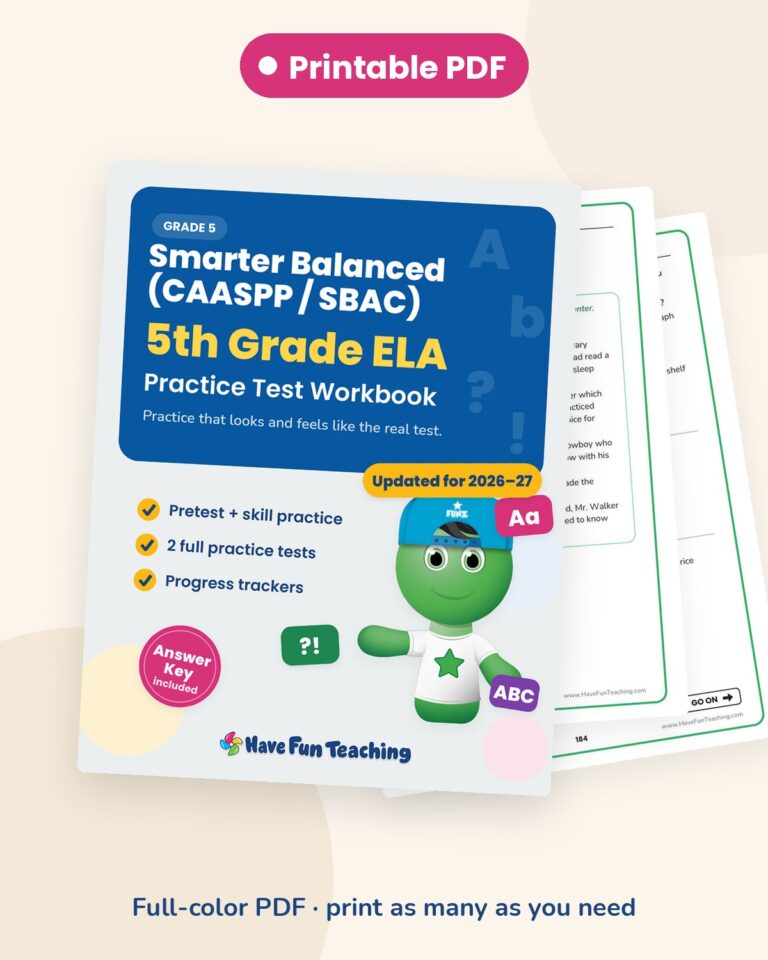
Workbook5th GradeSmarter Balanced (CAASPP / SBAC) 5th Grade ELA Practice Test Workbook

A Smarter Balanced (CAASPP / SBAC) 5th grade ELA practice test workbook for teachers, with a pretest, skill practice for all 24 standards, mixed review and 2 full-length practice tests. Answer key included, so test prep is ready to go.

Workbook
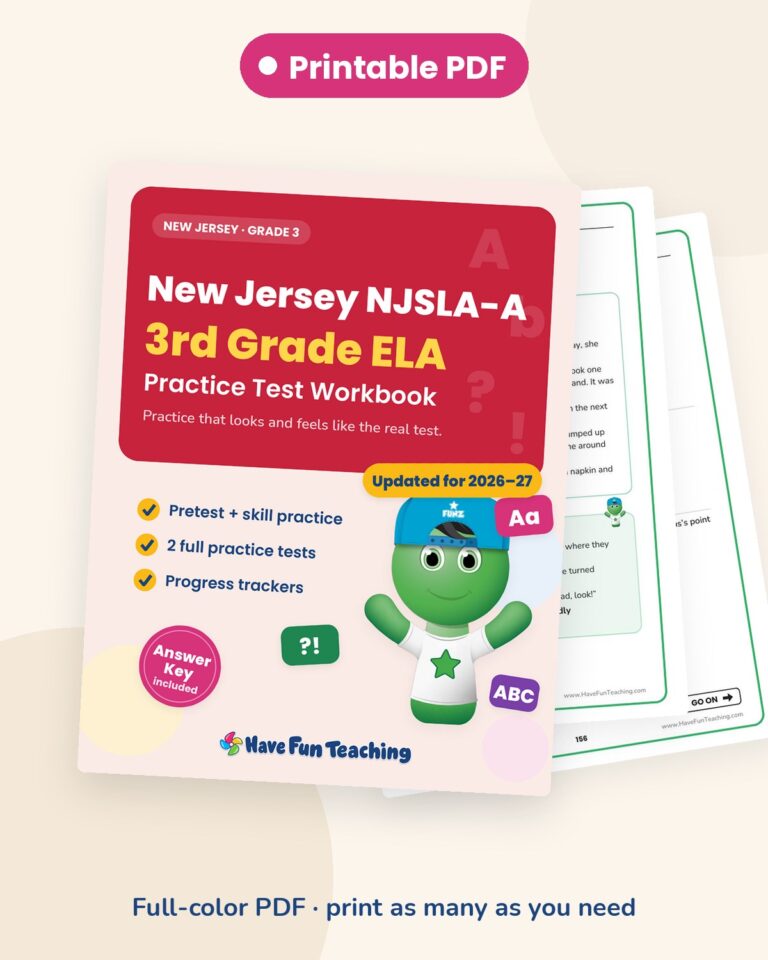
Workbook3rd GradeNew Jersey NJSLA-A 3rd Grade ELA Practice Test Workbook

A NJSLA-A 3rd grade ELA practice test workbook for teachers, with a pretest, skill practice for all 19 standards, mixed review and 2 full-length practice tests. Answer key included, so test prep is ready to go.

Workbook
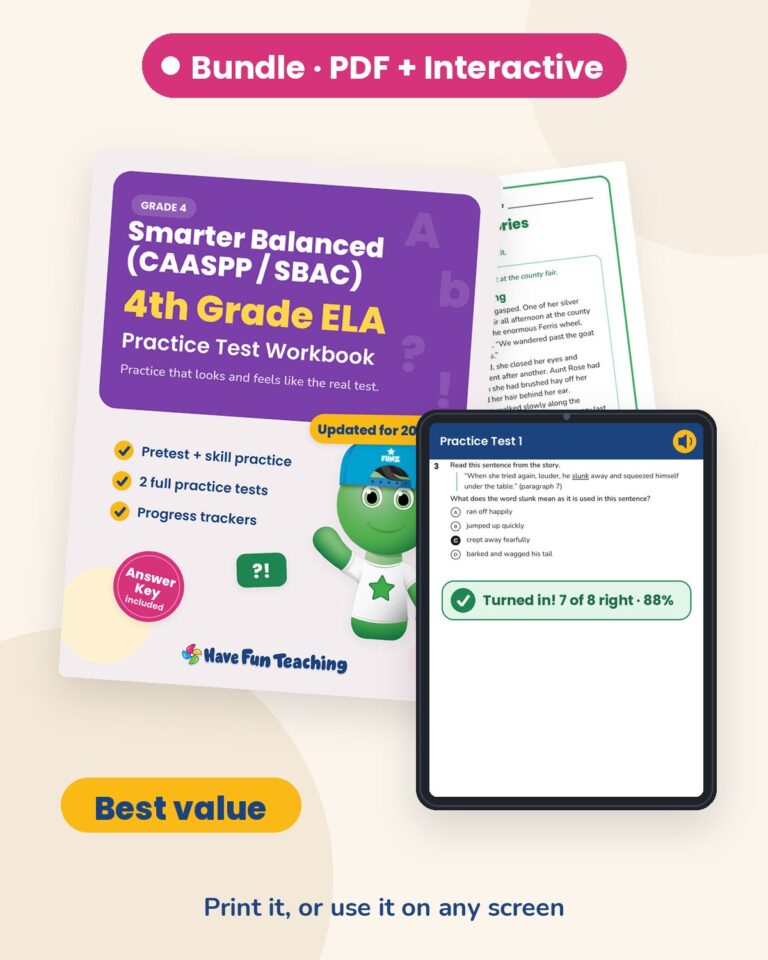
Workbook4th GradeSmarter Balanced (CAASPP / SBAC) 4th Grade ELA Practice Test Workbook

A Smarter Balanced (CAASPP / SBAC) 4th grade ELA practice test workbook for teachers, with a pretest, skill practice for all 24 standards, mixed review and 2 full-length practice tests. Answer key included, so test prep is ready to go.

From our teachers' playbook

Teach the reader something new

What do kids learn about expository writing?

Expository writing explains or informs. Kids learn to pick a topic, gather facts and teach the reader something, without sharing their opinion. Younger writers name a topic and share a few facts with a closing sentence. Older writers organize their writing with a clear introduction, body paragraphs and a conclusion, and they use structures like compare and contrast, cause and effect, or how-to steps. They also learn linking words like for example, also and as a result. The click moment comes when a classmate reads the piece and learns something brand new.

Our favorite ways to teach expository writing

Kids write better nonfiction when they know their topic and know their structure.

Match the structure

Show the main types of expository writing, like how-to, compare and contrast, and cause and effect, each with a simple organizer. Kids pick the one that fits their topic before writing. Choosing a structure first makes writing much easier.

Why it works: children learn more from words and pictures together than from words alone (Mayer, 2009).
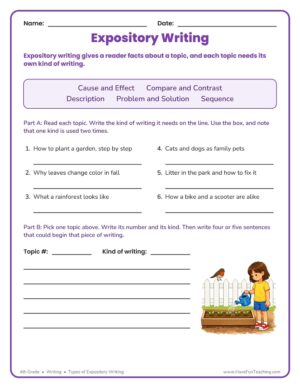
Types of Expository Writing WorksheetTry it withTypes of Expository Writing WorksheetWorksheetsOpen it →
Questions about teaching expository writing

What is expository writing?

Expository writing explains or informs the reader about a topic using facts. It does not include the writer's opinion. Reports, how-to guides and articles are all expository.

What are the types of expository writing?

Common types include description, sequence or how-to, compare and contrast, cause and effect, and problem and solution. Each type uses a different structure to organize facts.

What is the difference between expository and persuasive writing?

Expository writing informs with facts. Persuasive writing tries to convince the reader of an opinion. Kids can ask themselves: am I teaching or convincing?

How can I help my child with expository writing at home?

Ask your child to explain how to do something they love, step by step. Write it down together and test it out. Reading nonfiction together builds topic knowledge too.

Keep exploring