
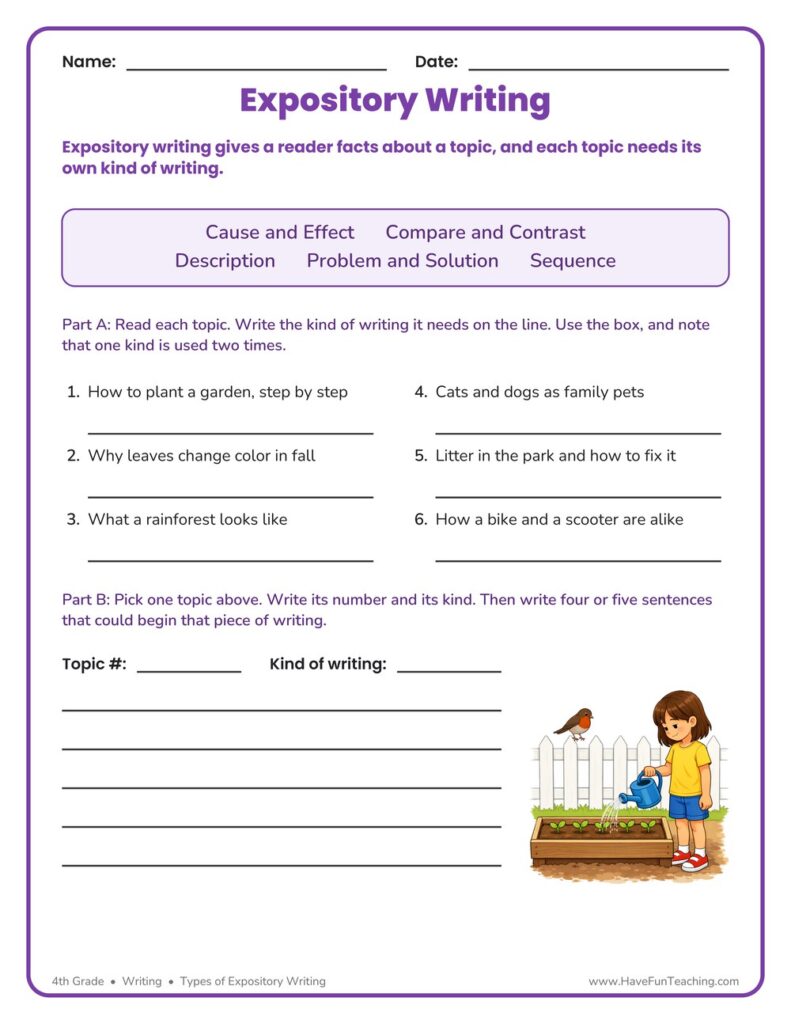
Types of Expository Writing Worksheet
This Types of Expository Writing Worksheet has 4th graders name the structure six topics call for, then draft an opening of their own. An answer key is included, so structure practice takes no prep.
$6.97
Or free with a membership — members pay $3.33/mo for all 10,000+ resources. See plans
Want this one free?
Tell us where to send it and it’s yours — no card, no catch.
One free resource per teacher. We’ll also send free teaching ideas each week — unsubscribe anytime.
Teaching is easier with a membership
Unlimited printables, games & videos for PreK–6th — for your classroom or homeschool. Cancel anytime.
Start your 3-day free trial$0 today · cancel anytime · Instant access to 10,000+ resources
About this resource
Description
Expository writing is the writing students use whenever they explain something to a reader, and it shows up in almost every subject they study. A science report, a how-to guide, a book review, and a paragraph comparing two animals are all expository, but each one is organized in a different way. This Types of Expository Writing Worksheet introduces the five text structures fourth graders are expected to recognize and use: description, sequence, compare and contrast, cause and effect, and problem and solution. Once students can name the structure a topic calls for, planning a piece of writing stops feeling like guesswork and starts feeling like a choice they know how to make.
This 4th grade expository writing worksheet moves from recognizing structures to using one. In Part A, students read six real writing topics and decide which kind of expository writing each topic needs, writing the answer on the line. The five kinds sit in a box at the top of the page for reference, and one of them is used twice, so students have to read the topic carefully instead of crossing choices off a list. In Part B, they choose one of those topics, name its structure, and draft the first four or five sentences of that piece. Use it as an independent practice page, as a warm-up before a longer writing assignment, or as a quick check before a unit test.
What’s Included
- 1 print-ready PDF worksheet
- Answer key
- 6 identify-the-structure items and 1 guided drafting activity
There are three reasons this Types of Expository Writing Worksheet helps students learn the skill. First, it separates the five structures clearly, so students stop treating all informational writing as one thing and start hearing the difference between explaining why something happens and explaining how to do it. Second, the topics are everyday ones, which keeps the thinking on structure rather than on unfamiliar content. Third, the drafting section asks students to actually produce writing in the structure they picked, which is the step that turns a label into a usable skill.
Teachers and parents can extend the lesson in simple ways. Read a short nonfiction article together and ask students to name its structure and point to the words that gave it away, such as first, because, unlike, or instead. Post the five kinds on an anchor chart and add student examples to it all year. Hand out one topic and have small groups write it two different ways to see how the structure changes the piece. Signal words also make a quick partner game: one student reads a sentence, and the other names the structure it belongs to.
Related Resources
What teachers say
Reviews
You must be logged in to post a review.
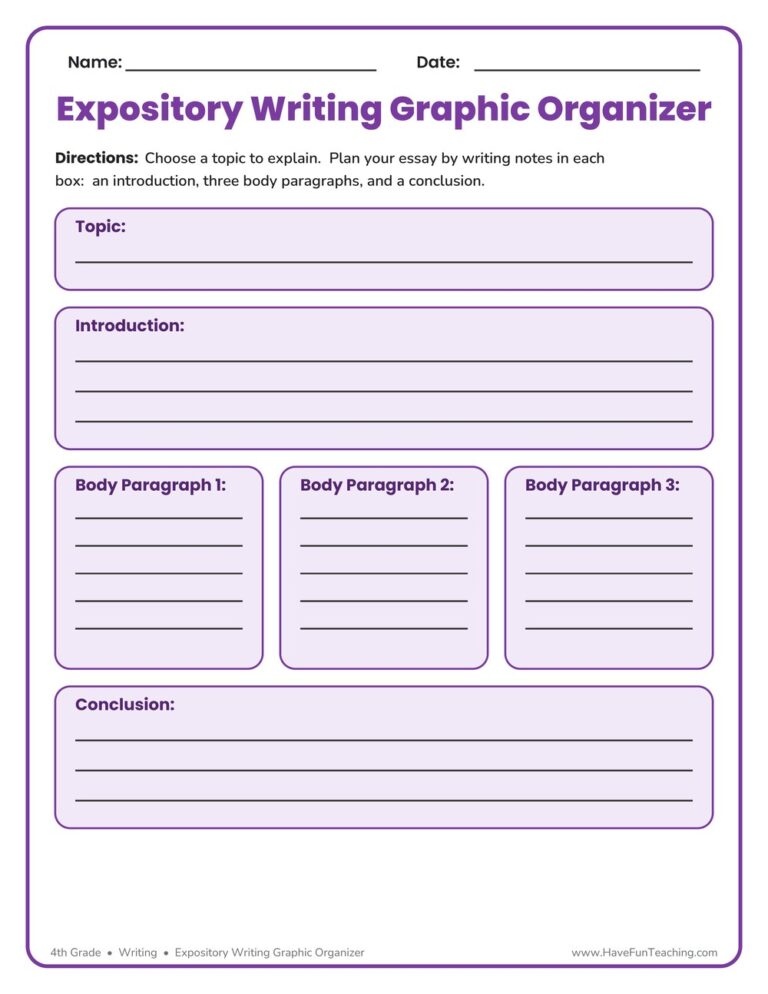
This expository writing graphic organizer worksheet helps 4th grade students plan an informational essay with boxes for a topic, introduction, three body paragraphs, and a conclusion — an easy, no-prep way to organize ideas before drafting.
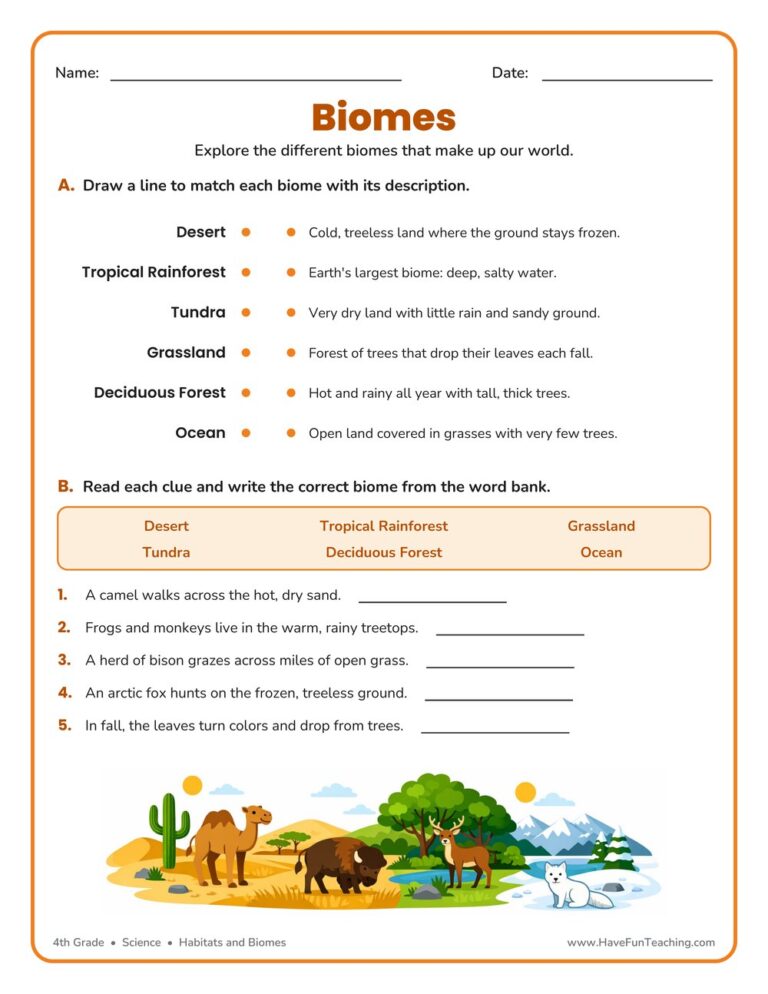
This Biomes Worksheet helps 4th grade students match major biomes to their climates and identify each one from real-world clues. Includes an answer key for fast, no-prep science practice at home or school.
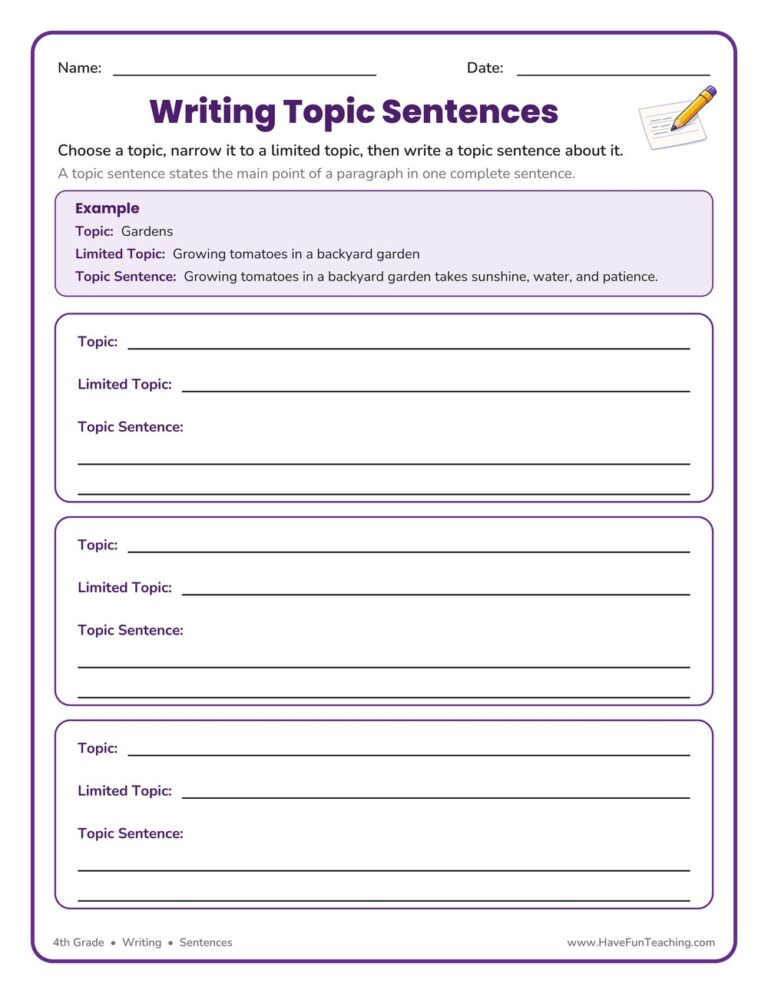
This Writing Topic Sentences Worksheet gives 4th grade students a worked example and three guided frames to move from a broad topic to a focused topic sentence. Perfect for no-prep paragraph-writing practice at home or school.

This Muscular System Research Worksheet has 4th graders name the three muscle types, sort voluntary and involuntary actions, and explain their thinking. Answer key included, so checking work takes seconds.
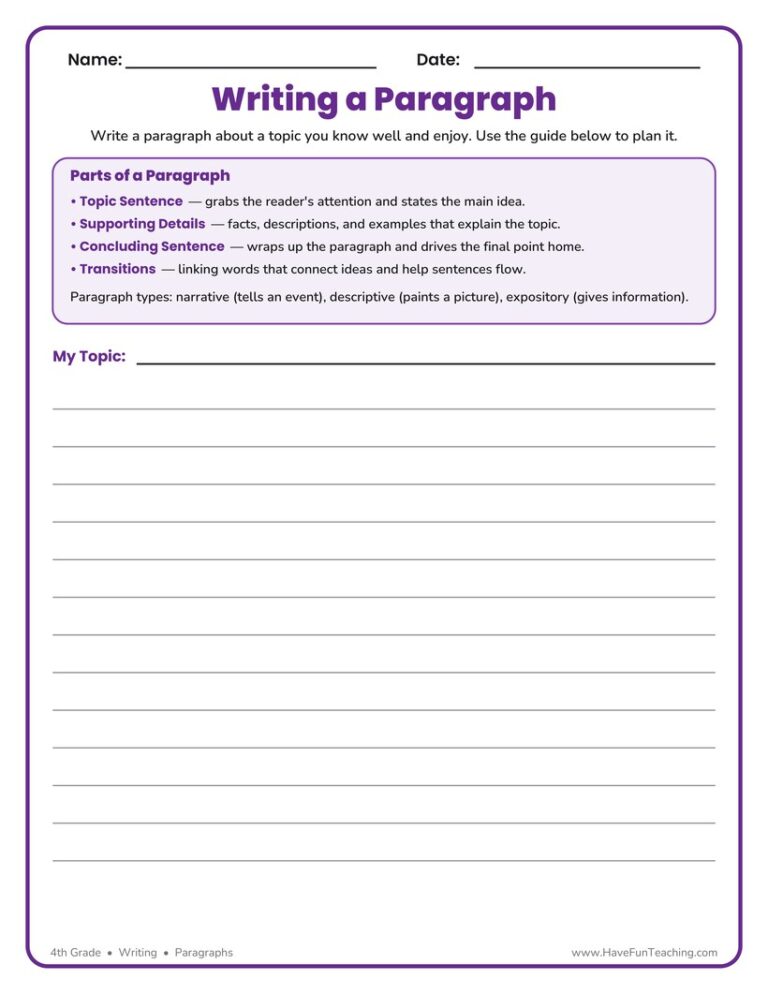
A guided writing paragraphs worksheet for 4th grade, with a parts-of-a-paragraph reference box and a full page of lined space. Students plan a topic sentence, supporting details, and a conclusion, then write with confidence.
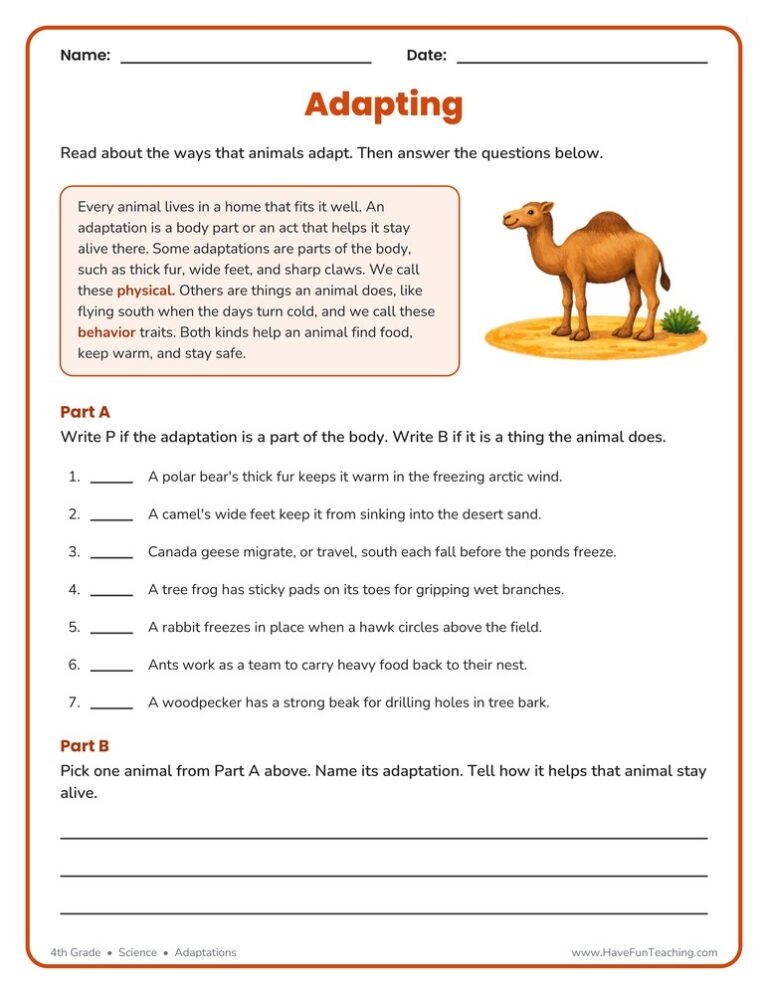
This adaptation worksheet has 4th graders sort seven animal traits into physical and behavioral adaptations, then explain how one helps an animal survive. Answer key included for fast, no-prep life science practice.

This complete incomplete chocolate sentences worksheet helps 4th graders spot sentence fragments and fix them by adding subjects and predicates. An answer key is included for easy checking.
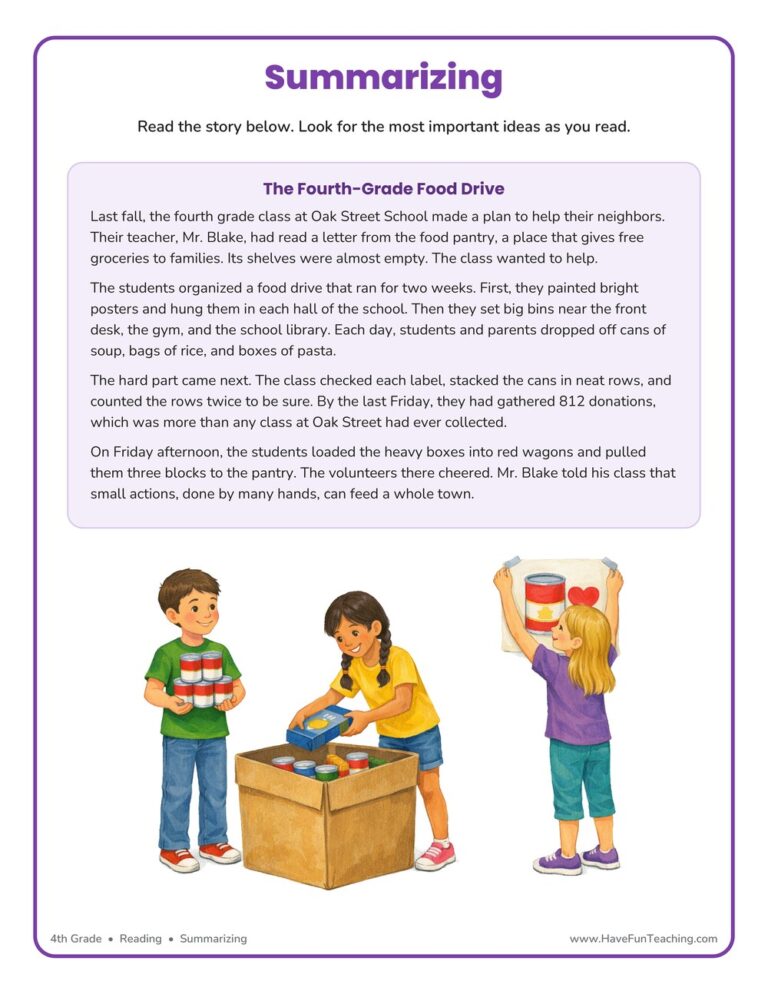
This Summarizing Worksheet asks 4th graders to read an original story, map it on a who, what, where, when, and how organizer, then write a short summary. Answer key included for fast, no-prep practice.

This Narrative Writing Brainstorming Worksheet helps 4th grade students sort story sentences into beginning, middle and end, then plan their own story, with a complete answer key.

Using this Subject Predicate New Sentences Worksheet, students rewrite the subject or predicate to make a new sentence.

A one-page research notes worksheet where 4th graders record their topic, source, facts, definitions, details, and quotations in one place, so their notes stay organized from the first source to the last.

Songs for Kids Download by Have Fun Teaching has 18 fun and educational songs for kids.

Reviews
There are no reviews yet