
Skip to content
Start My 3 Free Days $0 today · cancel anytime

Grammar Flash Cards

10 grammar flash cards. Teacher favorites: Contractions Flash Cards and Action Verbs Flash Cards. How teachers use these

Grammar Flash Cards

10 grammar flash cards. Teacher favorites: Contractions Flash Cards and Action Verbs Flash Cards. How teachers use these

Flash Cards
Flash CardsKindergartenContractions Flash Cards

These contractions flash cards help kindergarten to 4th grade students see how two words join to make a contraction, with 24 fold-over cards and a practice page. Answer key included.

Flash Cards
Flash CardsPreschoolAction Verbs Flash Cards

These action verbs flash cards help preschool through 3rd grade children name 18 actions with fold-over picture and word cards and model sentences. A practice page and answer key are included.

Flash Cards
Flash CardsKindergartenAdjective Flash Cards

These adjective flash cards help kindergarten through 4th grade children describe 18 bright pictures with fold-over word cards and model sentences. A practice page and answer key are included.

Flash Cards
Flash CardsKindergartenPrefix Flash Cards

These prefix flash cards help kindergarten to 4th grade students learn 24 common prefixes, their meanings and an example word for each. Fold-over cards, a practice page and an answer key are included.

Flash Cards
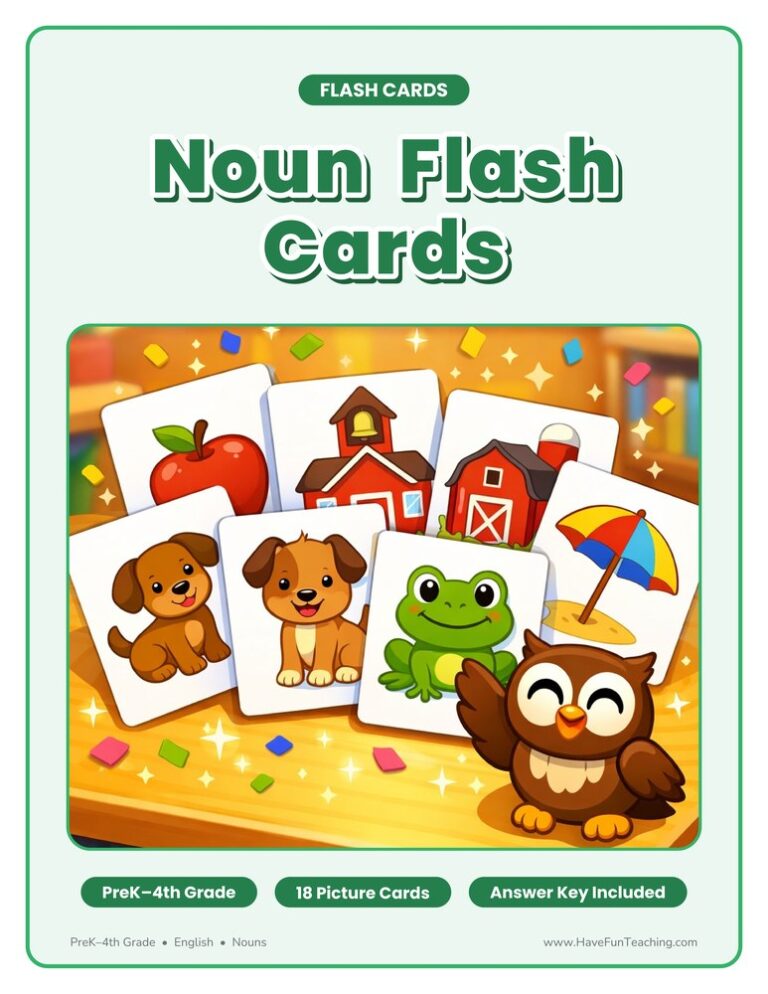
Flash CardsPreschoolNoun Flash Cards

These noun flash cards for preschool to 4th grade pair 18 bright pictures with their nouns so children learn people, places, animals, and things. Answer key included.

Flash Cards
Flash CardsKindergartenSuffix Flash Cards

Students learn 24 common suffixes, their meanings and example words with these suffix flash cards for kindergarten to 4th grade. Fold-over cards, a practice page and an answer key are included.

Flash Cards
Flash CardsPreschoolOpposites Flash Cards

Opposites flash cards for Preschool through 1st Grade: 12 fold-over picture cards teach 24 opposite words, with a practice page and answer key included for fun, hands-on vocabulary review.

Flash Cards
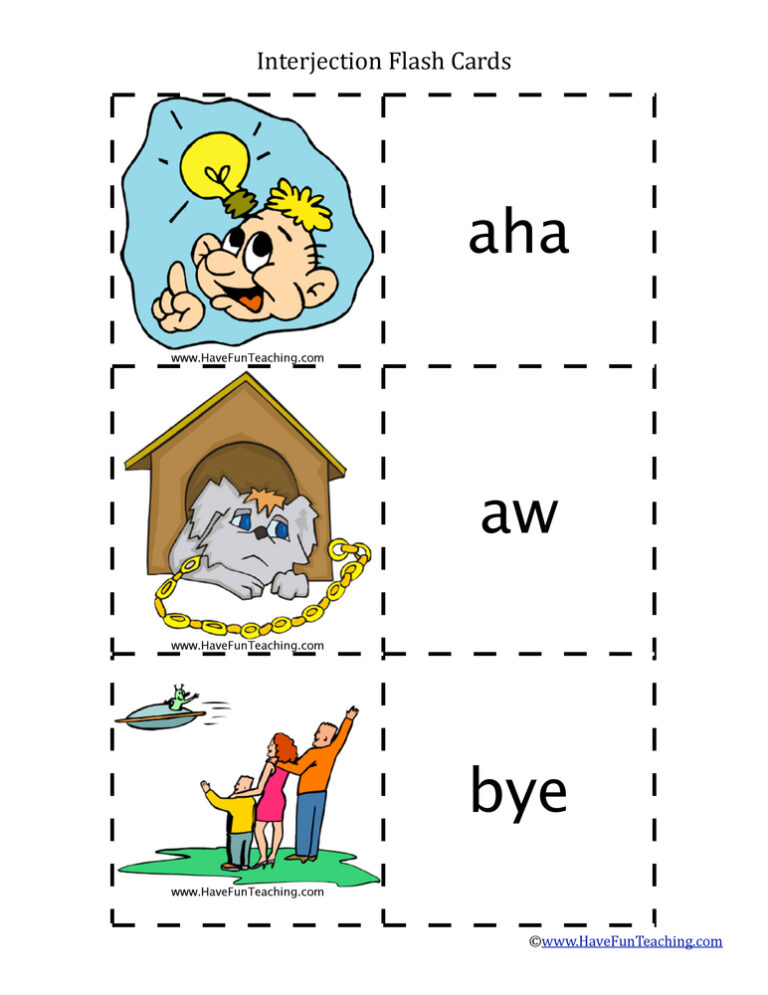
Flash CardsKindergartenInterjection Flash Cards

These interjection flash cards teach K to 4th grade students 18 lively words like Wow! and Oops!, the feelings they show and how to use them. A practice page and answer key are included.

Flash Cards
Flash CardsKindergartenCommon and Proper Nouns Flash Cards

Using this Common and Proper Nouns Flash Cards, students sort the Common and Proper Flash Cards to the appropriate category.

Flash Cards
Flash CardsKindergartenVerb Flash Cards

These verb flash cards give kindergarten to 2nd grade children 24 fold-over action picture cards, each with its verb and a short model sentence. Answer key included.

From our teachers' playbook

Fix it, polish it, make it shine

What do kids learn about grammar?

Grammar is the set of rules that makes writing clear. Young kids learn that a sentence is a complete thought that starts with a capital letter and ends with a punctuation mark. As they grow, they learn nouns, verbs, adjectives and pronouns, make subjects and verbs agree, and fix fragments and run-ons. By 3rd grade and up, kids edit their own writing for capitals, commas and spelling, and combine short sentences into stronger ones: Sam ran. Sam jumped. → Sam ran and jumped. The click is when kids start catching their own mistakes.

Our favorite ways to teach grammar

Grammar sticks when kids use it in real sentences. These are our go-to moves.

Edit out loud

Write a sentence full of mistakes on the board and fix it out loud: "This sentence starts with a lowercase letter, so I need a capital." Then kids find and fix the rest with a partner. Hearing how a good editor thinks is half the lesson.

Why it works: showing first, practicing together, then letting kids try alone is the "gradual release" model teachers have relied on for decades (Pearson and Gallagher, 1983).

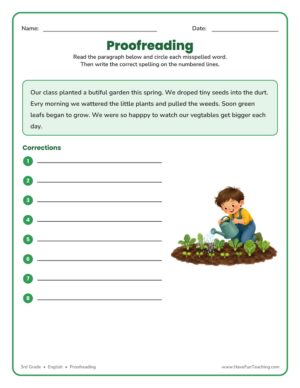
Editing Sentences WorksheetTry it withEditing Sentences WorksheetWorksheetsOpen it →

Daily fix-it sentence

Start each day with one broken sentence to fix in under three minutes. Rotate the mistakes: capitals Monday, punctuation Tuesday, and so on. Little daily practice keeps every rule fresh without a big grammar unit.

Why it works: short practice spread over several days beats one long session, according to a large review of learning research (Dunlosky and colleagues, 2013).

Fixing Sentences WorksheetTry it withFixing Sentences WorksheetWorksheetsOpen it →

Combine the sentences

Give kids two short, choppy sentences on strips and have them glue them together into one smooth sentence using and. Then try it with their own writing. Building sentences teaches grammar and makes writing sound better at the same time.

Why it works: kids understand an idea best when they touch it, then draw it, then write it, the order the U.S. Department of Education recommends for elementary math.

Compound Predicates Sentences WorksheetTry it withCompound Predicates Sentences WorksheetWorksheetsOpen it →
What's on this page

Teacher favorites right now: Contractions Flash Cards, Action Verbs Flash Cards and Adjective Flash Cards.

Grammar questions we hear a lot

What grammar should elementary students know?

Elementary students learn complete sentences, capitalization, end punctuation and commas, parts of speech, subject-verb agreement, verb tenses and how to fix fragments and run-ons.

What's the best way to teach grammar to kids?

Teach grammar in real sentences instead of long lists of rules. Short daily editing practice, modeling corrections and having kids fix their own writing works much better than worksheets alone.

What is a sentence fragment?

A sentence fragment is an incomplete sentence that's missing a subject or a verb, or doesn't finish a thought. Ran to the store is a fragment, but She ran to the store is complete.

How do I help my child with grammar at home?

Read together and talk about why authors use capitals and punctuation. When your child writes, have them read it aloud. Kids often hear mistakes before they see them.



