
Skip to content
Start My 3 Free Days $0 today · cancel anytime

Earth Day Worksheets

12 Earth Day worksheets. Teacher favorites: Reduce, Reuse, Recycle Sorting Worksheet and Reduce, Reuse, Recycle Worksheet. How teachers use these

Earth Day Worksheets

12 Earth Day worksheets. Teacher favorites: Reduce, Reuse, Recycle Sorting Worksheet and Reduce, Reuse, Recycle Worksheet. How teachers use these

Worksheet
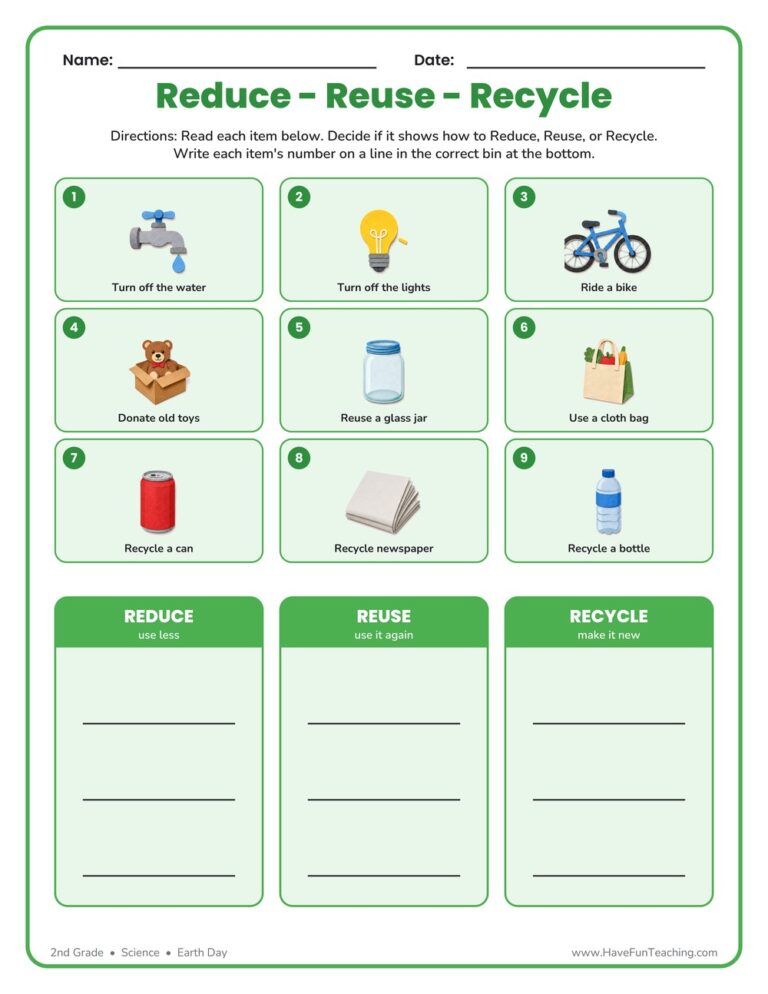
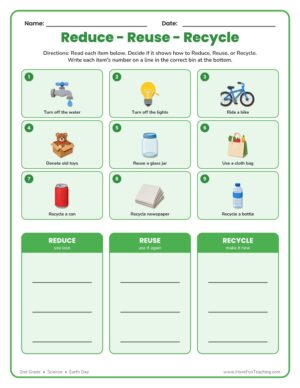
Worksheet2nd GradeReduce, Reuse, Recycle Sorting Worksheet

A second grade Reduce, Reuse, Recycle Sorting Worksheet where students sort nine everyday items into the correct earth-friendly bin. Answer key included — a quick, no-prep Earth Day activity for home or classroom.

Worksheet
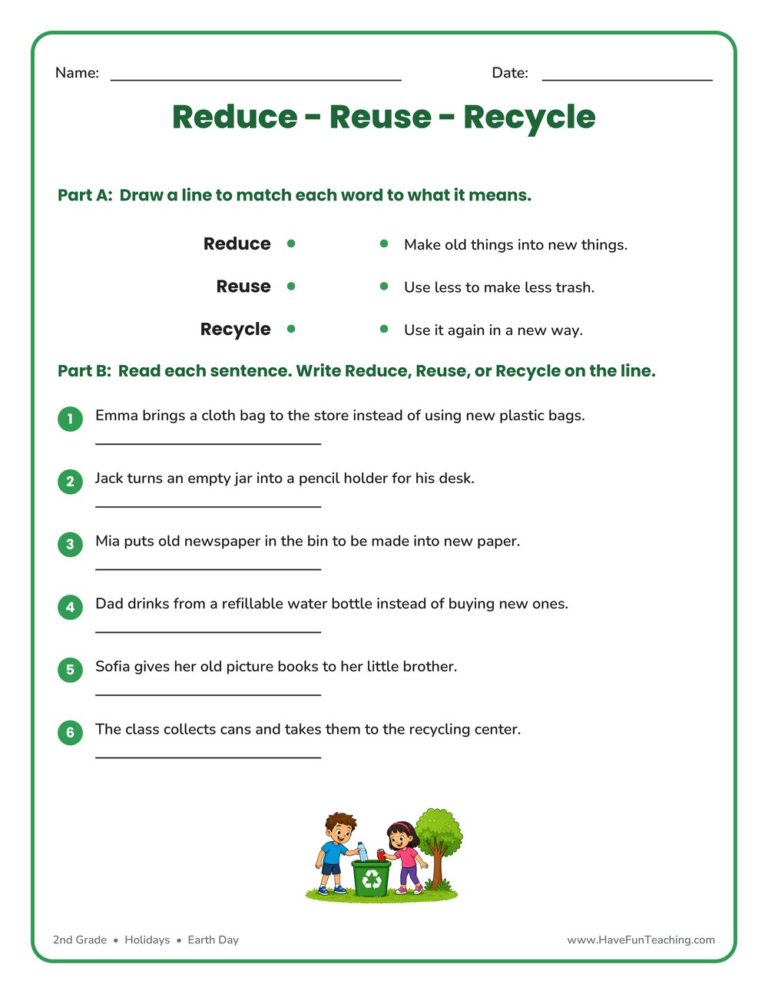
Worksheet2nd GradeReduce, Reuse, Recycle Worksheet

This Reduce, Reuse, Recycle worksheet helps 2nd grade students learn the three Rs by matching each word to its meaning and sorting Earth Day scenarios. Answer key included for quick, no-prep practice.

Worksheet
WorksheetKindergartenRecycle Worksheet

This recycle worksheet asks kindergarten students to circle each object that belongs in the recycling bin. Nine familiar pictures, no reading required, and an answer key is included so checking takes seconds.

Worksheet
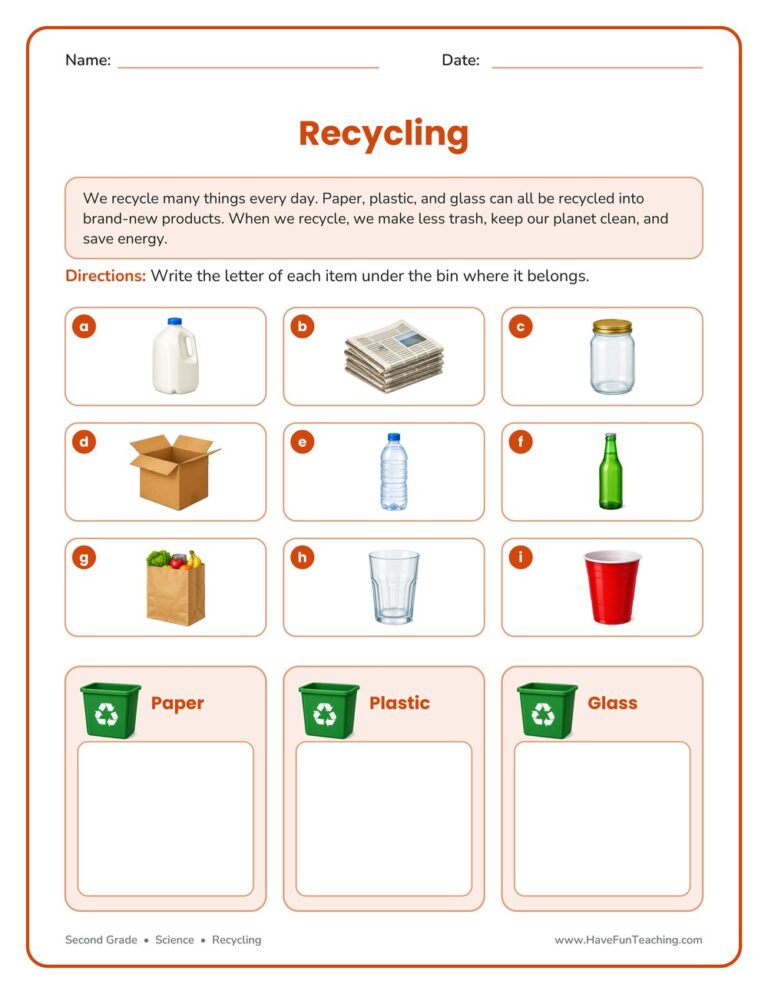
Worksheet2nd GradeRecycling Sort Worksheet

A recycling sort worksheet for second grade, where students sort paper, plastic, and glass items into the correct bins. Includes an answer key—a hands-on Earth Day science activity for classrooms and homeschool.

Worksheet
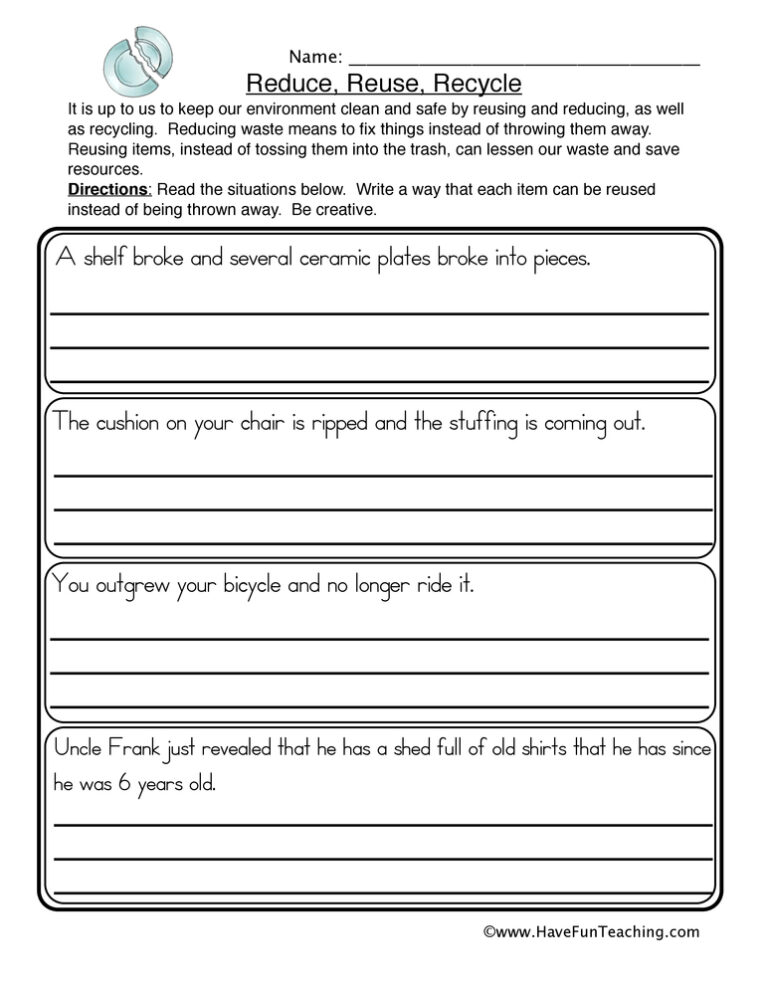
Worksheet3rd GradeReduce, Reuse, Recycle Scenarios Worksheet

Read six real-life situations and decide whether each one shows reducing, reusing, or recycling on this reduce, reuse, recycle scenarios worksheet for 3rd grade. Answer key included, so Earth Day science practice takes no prep.

Worksheet
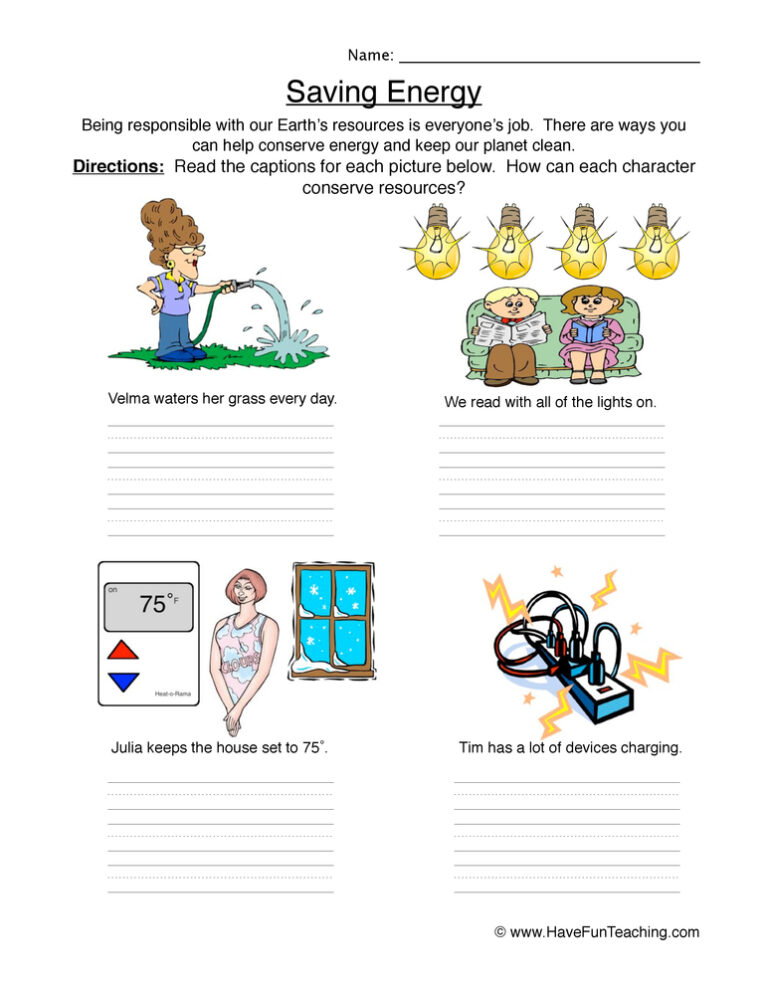
Worksheet3rd GradeConserving Resources Worksheet

This Conserving Resources Worksheet asks 3rd Grade students to study four everyday scenes and write one way to stop the waste, then name two family water-saving habits. An answer key is included.

Worksheet
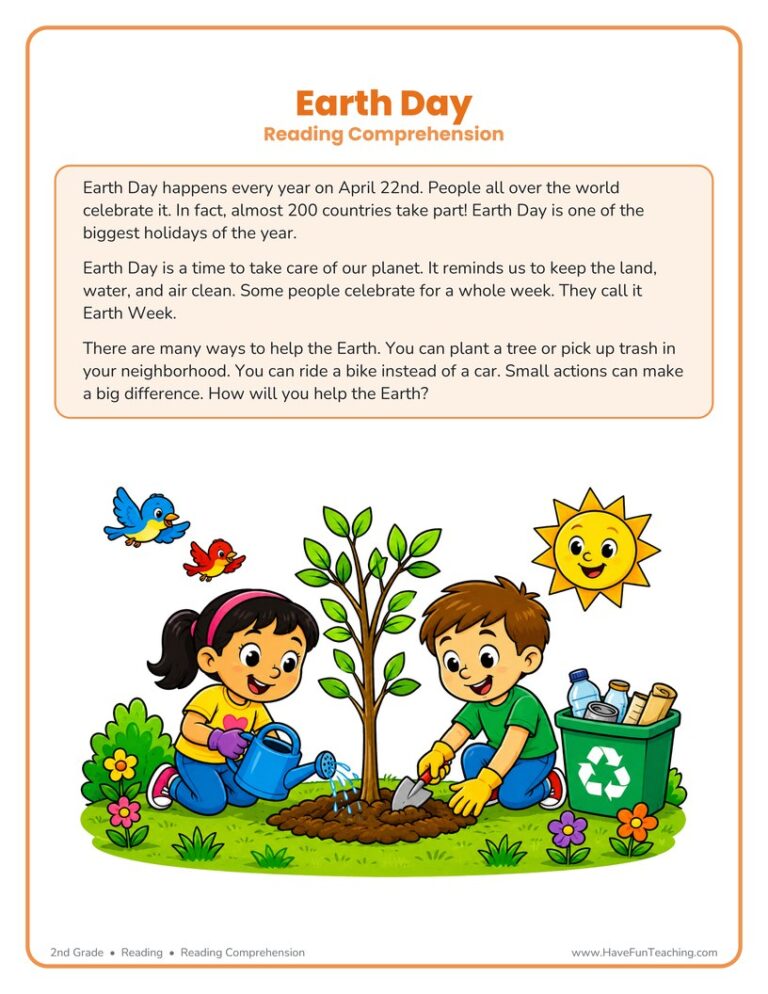
Worksheet2nd GradeEarth Day Reading Comprehension Worksheet

This Earth Day Reading Comprehension Worksheet gives 2nd grade readers a short passage and six questions to build key comprehension skills. Answer key included — perfect for no-prep Earth Day practice at home or in class.

Worksheet
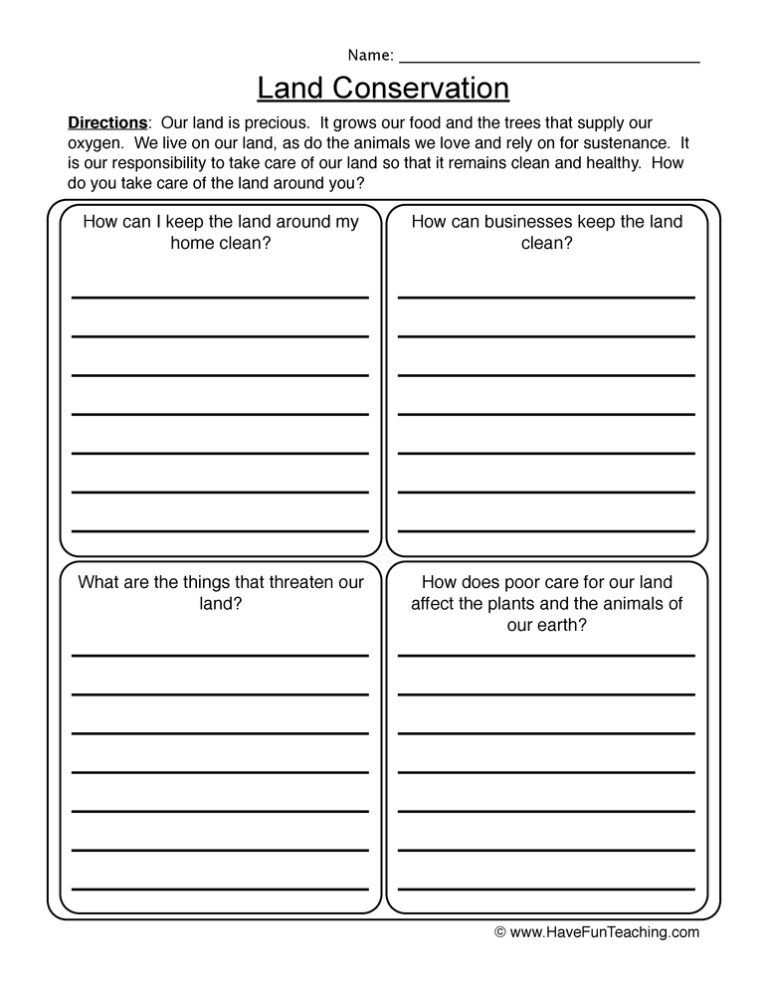
Worksheet3rd GradeLand Conservation Worksheet

This land conservation worksheet helps 3rd graders learn earth science words, sort actions that protect or harm the land, and solve a clean-up word problem. An answer key is included for easy checking.

Worksheet
Worksheet1st GradeRecycle Writing Paper

This recycle writing paper worksheet gives 1st graders an Earth Day prompt and ten roomy lines to write about recycling cans, bottles and boxes while building neat, confident handwriting.

Worksheet
Worksheet2nd GradeReduce, Reuse, Recycle Items Worksheet

A reduce, reuse, recycle items worksheet for 2nd grade: three labelled cards where children draw their own example of each idea and write a sentence about it. A simple way to make Earth Day personal.

Worksheet
Worksheet3rd GradeEarth Day Crossword Puzzle

This Earth Day Crossword Puzzle gives 3rd grade students eight clue based answers about recycling, compost and saving water, with no word bank to copy from. An answer key is included, so children can check their own spelling.

Worksheet
Worksheet3rd GradeSupport the Point Worksheet

Practice finding reasons with this support the point worksheet for 3rd grade. Students read a short recycling article, answer questions about the author's point, and use evidence. An answer key is included.

From our teachers' playbook

Little hands, big planet!

What do kids learn on Earth Day?

Earth Day falls on April 22, and it's a day to think about how we take care of our planet. Kids learn the three big ideas: reduce (use less), reuse (use it again) and recycle (turn it into something new). They sort everyday items, talk about saving water and energy, and see how small habits at home and school add up. The click moment is when a kid looks at a juice box and says, "Wait, we could reuse that!"

Our favorite ways to teach Earth Day

Earth Day sticks when kids do something real with it. These moves turn a holiday into habits.

Start with a song

Kick off the week with a catchy going-green song, then sing it again during cleanup time. Kids hum the words while they sort the recycling, and the vocabulary sticks without any extra drilling.

Why it works: a catchy, repeating tune gives the brain a hook to hang words on, so sung text is remembered better (Wallace, 1994).

Going Green Song (Animated Music Video)Try it withGoing Green Song (Animated Music Video)SongsOpen it →
Sort a real recycling bin

Bring in a clean bag of paper, plastic, cans and scraps. Kids sort them into reduce, reuse and recycle piles, then match their piles on a worksheet. Touching real items makes the three words mean something.

Why it works: kids understand an idea best when they touch it, then draw it, then write it, the order the U.S. Department of Education recommends for elementary math.

Reduce, Reuse, Recycle Sorting WorksheetTry it withReduce, Reuse, Recycle Sorting WorksheetWorksheetsOpen it →

What would you do?

Show a quick scene: a running faucet, a lunch with lots of wrappers. Kids decide which R fits and draw a better choice. Picturing real situations helps kids carry the idea home.

Why it works: pairing a picture with each word gives kids two ways to remember it, a well-tested principle of how people learn (Mayer, 2009).

Reduce, Reuse, Recycle Scenarios WorksheetTry it withReduce, Reuse, Recycle Scenarios WorksheetWorksheetsOpen it →

Questions parents and teachers ask us

When is Earth Day?

Earth Day is on April 22 every year. Many schools celebrate all week with recycling projects, cleanups and nature activities.

How do I explain Earth Day to kids?

Keep it simple: Earth Day is a day to help take care of our planet. Talk about reduce, reuse and recycle, and pick one thing the family or class can do, like using a refillable water bottle.

What are easy Earth Day activities for the classroom?

Sorting recyclables, a schoolyard cleanup, planting seeds, making art from reused materials and singing a going-green song are all quick wins. Pair one with a short reading or writing task.

What is the difference between reduce, reuse and recycle?

Reduce means using less, like turning off the lights. Reuse means using something again, like a jar for pencils. Recycle means sending it off to be made into something new.



