This go green recycle activity helps preschool to 3rd grade students sort everyday items into paper, plastic, metal, and glass, with a practice page and answer key included.
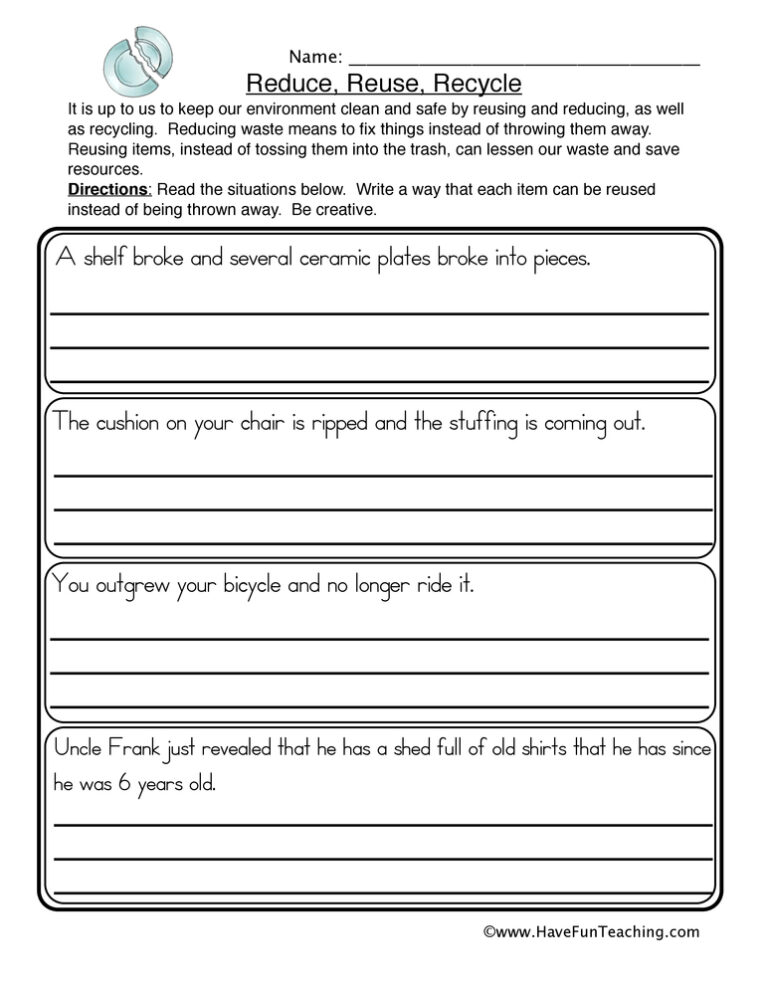
Read six real-life situations and decide whether each one shows reducing, reusing, or recycling on this reduce, reuse, recycle scenarios worksheet for 3rd grade. Answer key included, so Earth Day science practice takes no prep.
Using the Going Green Song (Animated Music Video), students learn all about ways to reduce, reuse, and recycle and so much more through a catchy video!
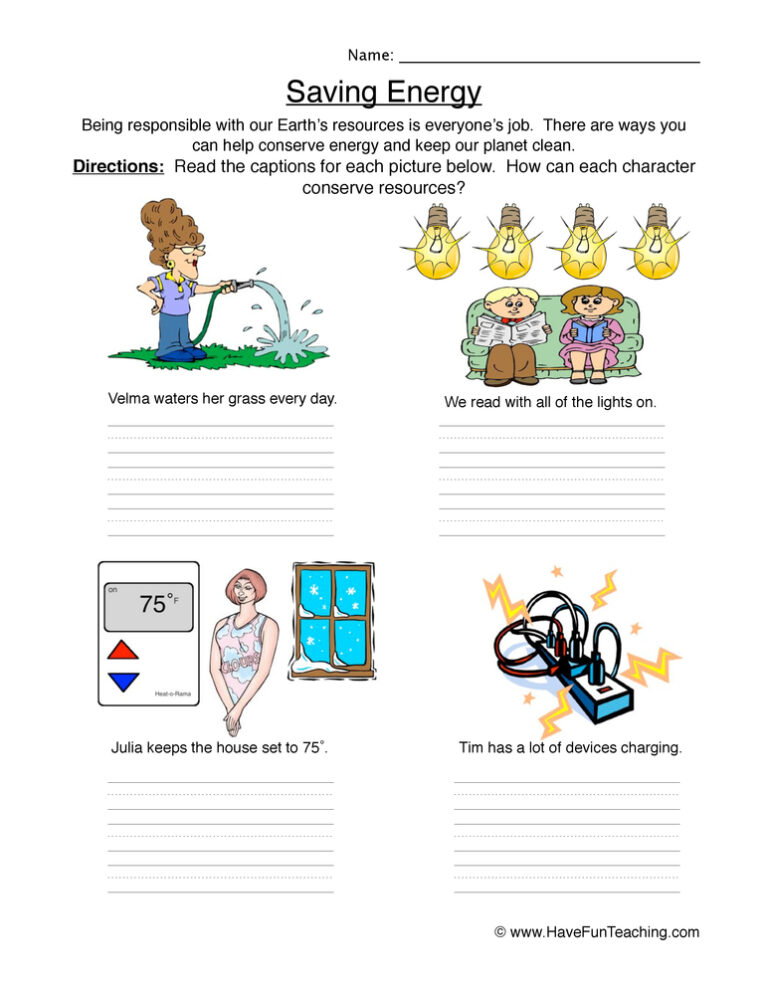
This Conserving Resources Worksheet asks 3rd Grade students to study four everyday scenes and write one way to stop the waste, then name two family water-saving habits. An answer key is included.
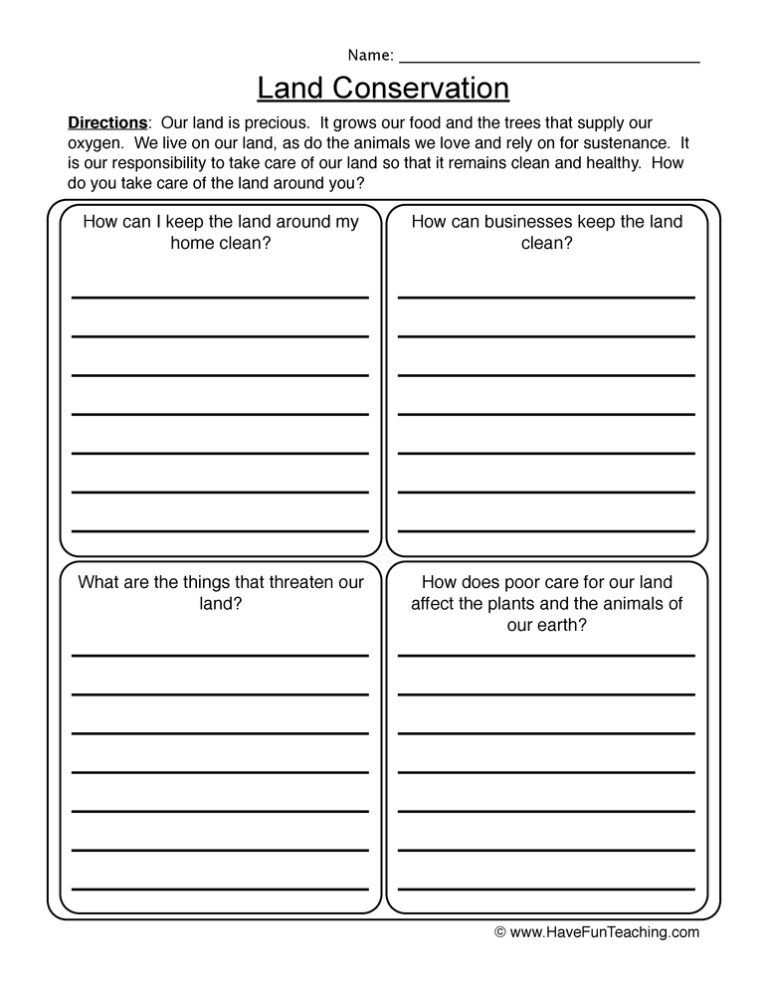
This land conservation worksheet helps 3rd graders learn earth science words, sort actions that protect or harm the land, and solve a clean-up word problem. An answer key is included for easy checking.
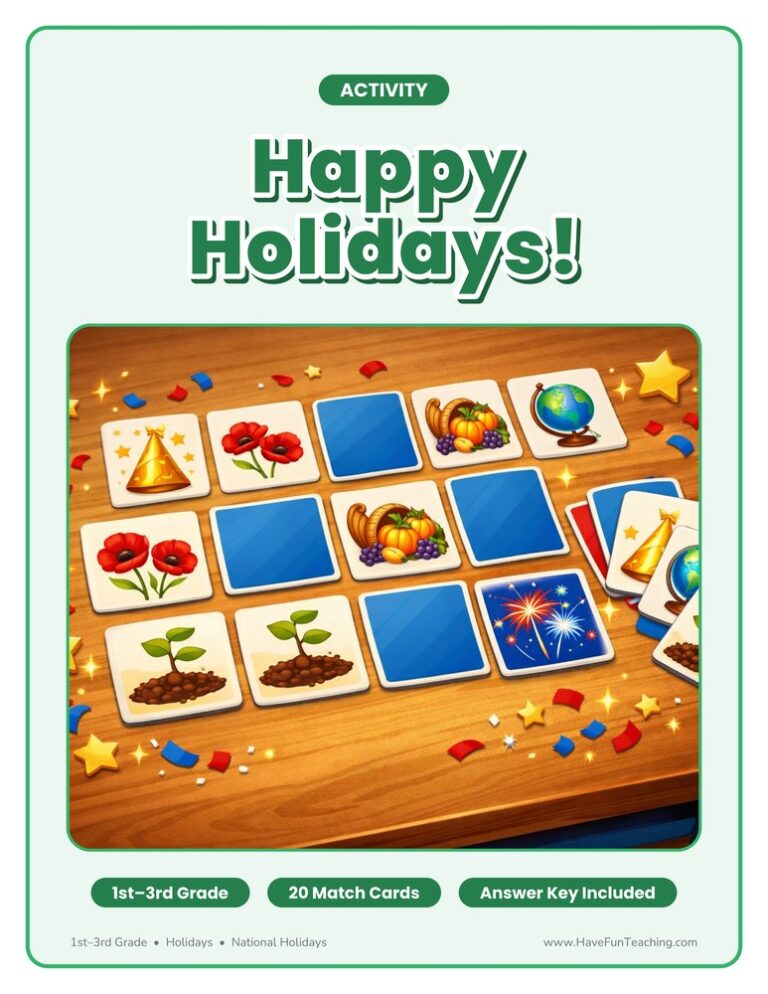
This happy holidays national holidays activity has 1st-3rd grade students match picture clue cards to ten U.S. holidays and their dates. Answer key included for easy checking.
Practice finding reasons with this support the point worksheet for 3rd grade. Students read a short recycling article, answer questions about the author's point, and use evidence. An answer key is included.
Using Earth Day Contractions Activity, students match two word phrase cards (I cannot) to contractions cards (I can't) in order to use contractions in their writing.
This Earth Day Crossword Puzzle gives 3rd grade students eight clue based answers about recycling, compost and saving water, with no word bank to copy from. An answer key is included, so children can check their own spelling.
Earth Day, celebrated every April 22, is a perfect time for third graders to connect science and citizenship. Kids learn the difference between renewable and nonrenewable resources, why conserving water, energy and land matters, and how the three R's work: reduce what you use, reuse what you can, and recycle the rest. They solve real scenarios, like what to do with an old T-shirt, and write persuasive pieces about protecting the planet. The click comes when kids notice waste around school and come up with their own plan to fix it.
Our favorite ways to teach Earth Day
Earth Day sticks when kids take action, not just color a globe. These moves help.
Kick off with a green song
Start the week with a going green song and ask kids to listen for three things people can do to help Earth. List them on chart paper and add to it all week. Music gives the unit an energetic start.
Why it works: words set to a repeating melody are easier to recall than the same words spoken (Wallace, 1994).
Give groups everyday situations, like a broken crayon or an empty jar, and have them decide: reduce, reuse or recycle? Groups defend their choice to the class. Problem-solving makes the three R's practical.
Why it works: kids understand an idea best when they touch it, then draw it, then write it, the order the U.S. Department of Education recommends for elementary math.
After a short lesson on saving water and energy, give a quick check: "Which uses less water, a bath or a short shower?" It shows who understands conservation, and kids love taking the questions home.
Why it works: a big review of study methods ranked quick self-quizzing among the most powerful ways to remember (Dunlosky and colleagues, 2013).
Earth Day is celebrated every year on April 22. It started in 1970 to raise awareness about protecting the environment.
What do 3rd graders learn about Earth Day?
They learn about natural resources, conservation, pollution and the three R's: reduce, reuse and recycle. Many classes also write about ways to protect the planet.
What is the difference between reduce, reuse and recycle?
Reduce means using less, like turning off lights. Reuse means using something again, like a water bottle. Recycle means turning used materials into something new.
What are easy Earth Day projects for kids?
Start a classroom recycling bin, plant seeds, pick up litter around school, or make art from reused materials. Small actions help kids see they can make a difference.
Written by the Have Fun Teaching team of elementary teachers and homeschoolers. Research: Wallace, W. T. (1994). Memory for music: Effect of melody on recall of text. Journal of Experimental Psychology: Learning, Memory, and Cognition, 20(6). U.S. Department of Education, What Works Clearinghouse (2021). Assisting Students Struggling with Mathematics: Intervention in the Elementary Grades. Dunlosky, J., Rawson, K. A., Marsh, E. J., Nathan, M. J., & Willingham, D. T. (2013). Improving Students' Learning With Effective Learning Techniques. Psychological Science in the Public Interest, 14(1).
3 days free
2:39Ready to print!
Printables · Songs · Games
Loved by 2 million teachers & families
Where learning feels like play.
Printables, songs and games for every subject, Preschool through 6th. Ready to teach today, and kids beg for more.
$0due today
then $39.97$35.97for your first year, and $39.97 a year after that.





 Try it withGoing Green Song (Animated Music Video)SongsOpen it →





