

Comma Comma Worksheet
This Comma Comma worksheet has 2nd graders write the missing comma into five dates, then rewrite a letter greeting, closing and date with the comma in place. Answer key included.
$6.97
Or free with a membership — members pay $3.33/mo for all 10,000+ resources. See plans
Want this one free?
Tell us where to send it and it’s yours — no card, no catch.
One free resource per teacher. We’ll also send free teaching ideas each week — unsubscribe anytime.
Teaching is easier with a membership
Unlimited printables, games & videos for PreK–6th — for your classroom or homeschool. Cancel anytime.
Start your 3-day free trial$0 today · cancel anytime · Instant access to 10,000+ resources
About this resource
Description
Commas are small marks that do a big job, and this comma comma worksheet gives second graders the two comma rules they meet first: one comma after the day of the week, and one comma between the day of the month and the year. Once a child can see that Saturday needs a comma before June, and that May 7 needs one before 2026, dates stop looking like a pile of words and start reading like a real calendar. The same mark then shows up in the greeting and the closing of every friendly letter they write, which is exactly where second grade punctuation standards point.
Part A prints five sentences with a date inside each one, and every single word space is the same width, so the page never hints at which gap is the right one. The child reads the date and writes the comma in. Part B moves from spotting to writing: three short lines from a letter, a greeting, a closing and a date, each copied again onto a full-width rule with the comma in place. This 2nd grade punctuation worksheet prints on one sheet, needs no prep, and comes with a completed answer key so a teacher, a tutor or a parent can check it in seconds.
What’s Included
- 1 print-ready PDF worksheet
- Answer key
- 5 write-in-the-comma date sentences and 3 rewrite-the-line items
Three things make this resource work. First, the two rules are taught together but practised separately, so a child is never guessing which one applies. Second, the uniform word spacing in Part A means the answer has to be reasoned out rather than spotted, which is what makes the practice stick. Third, Part B asks for the comma to be written inside a whole copied line, which is the step that carries the skill into the child’s own letters and journals. A comma comma worksheet used this way builds an editing habit, not just a right answer.
Try it beyond the page. Have the class write the date at the top of every paper for a week and check each other’s commas. Write a real thank-you note to the school librarian or a class helper and let students place the commas in the date, the greeting and the closing themselves. Read the date off a wall calendar each morning and ask where the comma would go if it were written down. At home, families can address a birthday card together, or look at the dates printed on library books and food labels and spot the commas that are already there.
Related Resources
What teachers say
Reviews
You must be logged in to post a review.
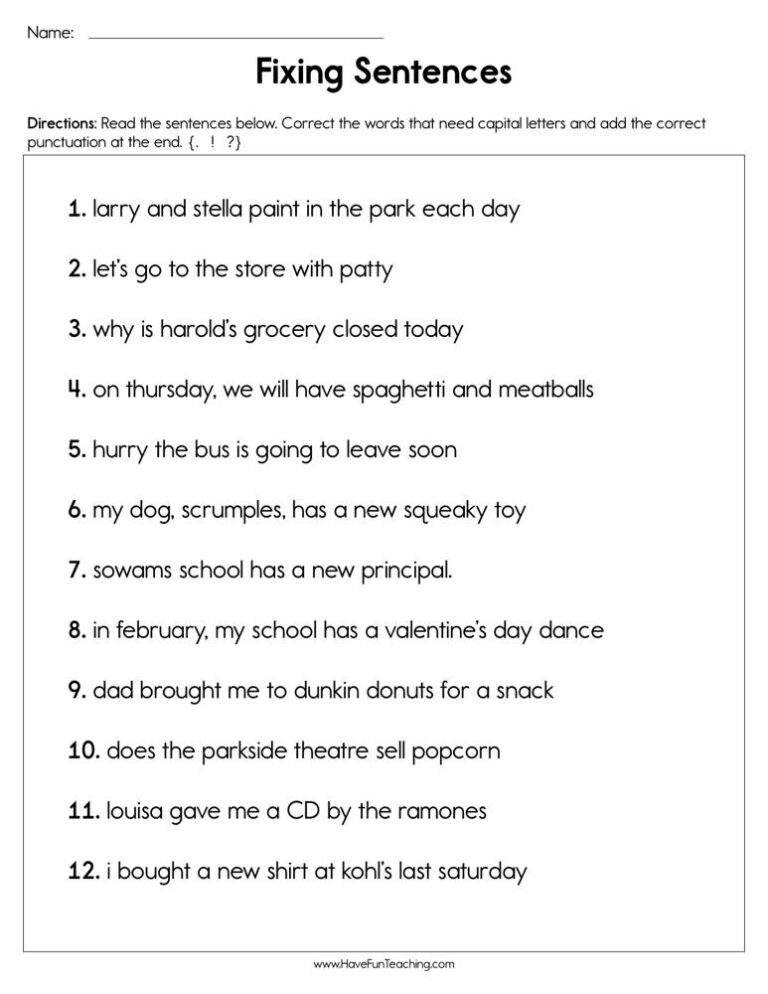
This editing sentences worksheet gives 2nd graders eight sentences to rewrite with the correct capital letters and end marks. Includes a complete answer key—perfect for quick, no-prep proofreading practice at home or school.
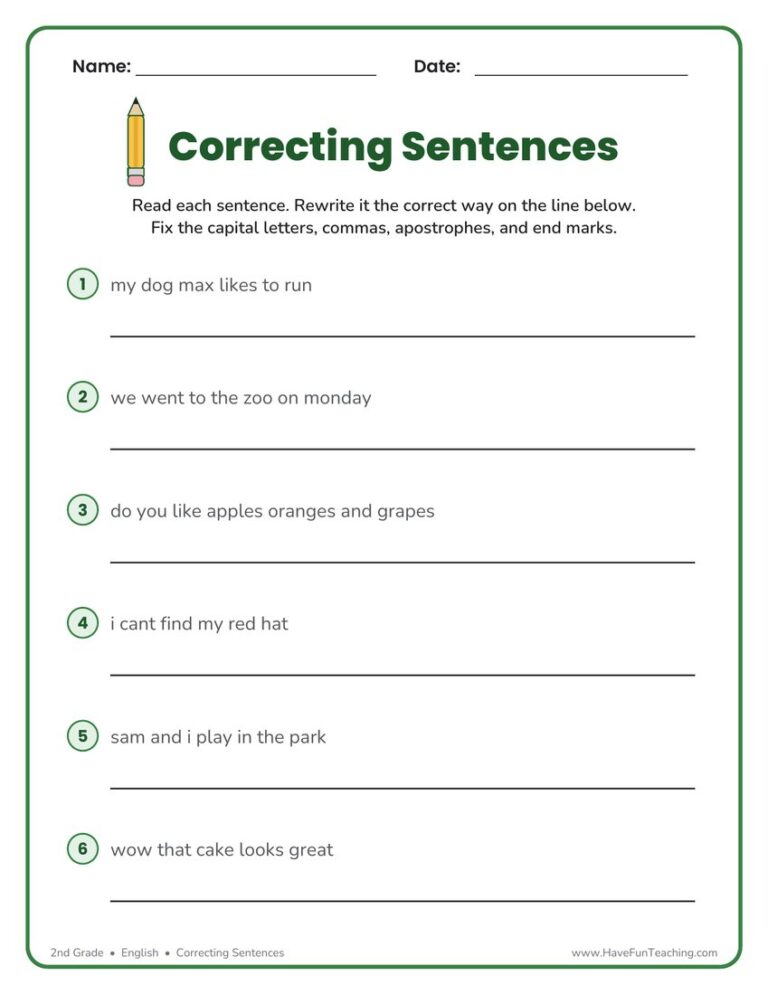
A 2nd grade correcting sentences worksheet where students rewrite six sentences to fix capital letters, commas, apostrophes, and end marks. Includes an answer key for quick, no-prep proofreading practice.
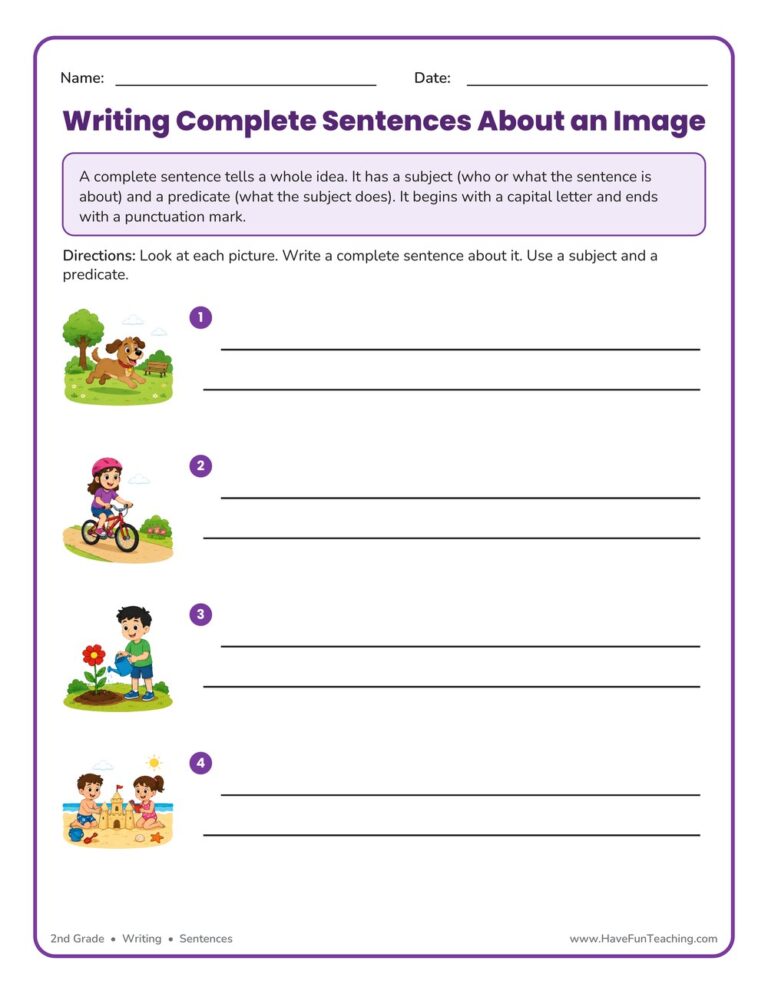
This Writing Complete Sentences About an Image Worksheet gives 2nd graders four picture prompts to practice building sentences with a subject and predicate. Includes sample answers — great for no-prep grammar and writing practice.
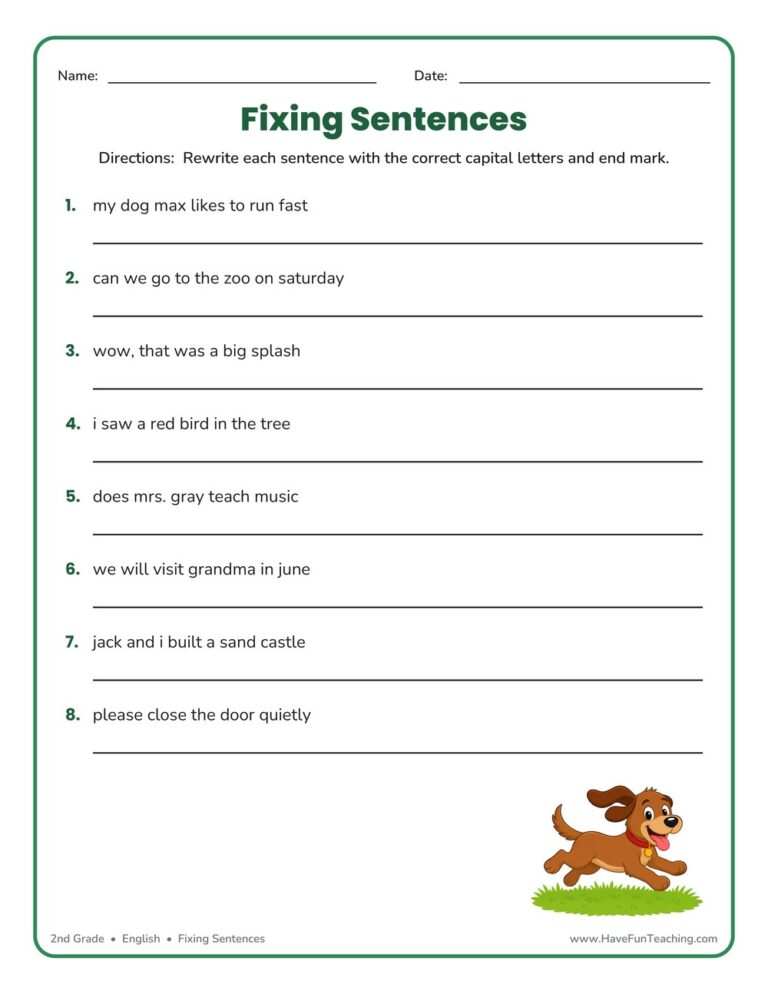
This Fixing Sentences Worksheet gives 2nd graders eight sentences to rewrite with the correct capital letters and end marks. Includes a complete answer key — perfect for no-prep grammar and editing practice.
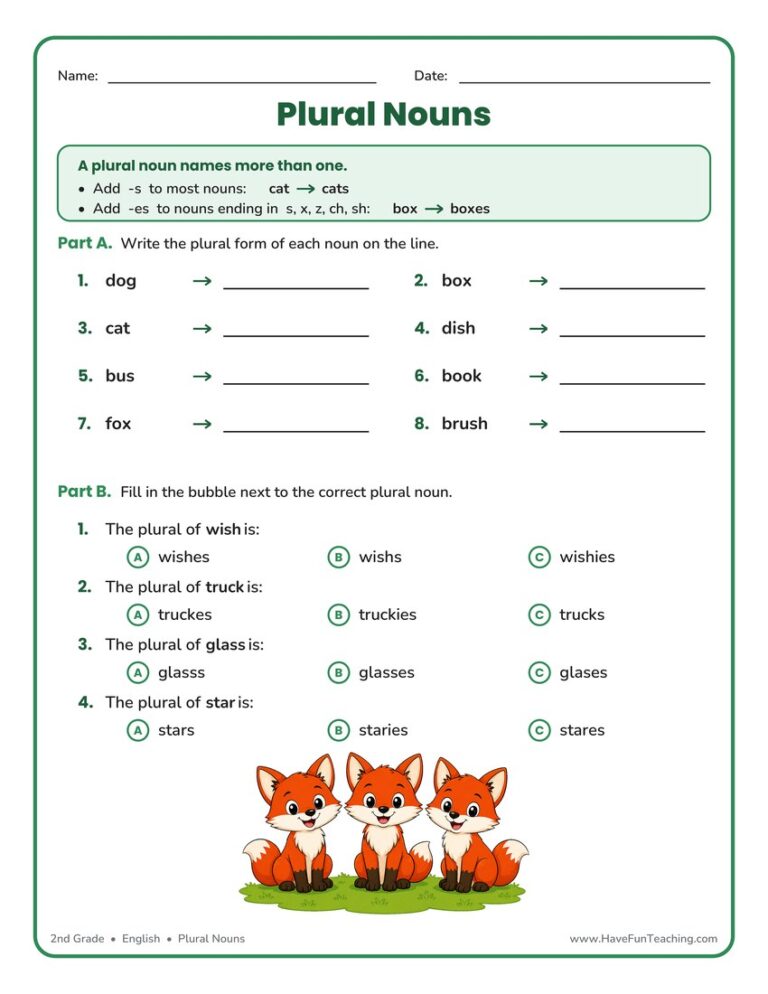
The Creating Plural Nouns Worksheet gives 2nd graders two-part practice turning singular nouns into plurals with the -s and -es rules. Includes a complete answer key for quick, no-prep grammar practice at home or school.

This Correcting Capitalization Worksheet gives 2nd graders six sentences to fix, rewriting each one with capital letters for names, places, months, and sentence beginnings. Answer key included for quick, no-prep grammar practice.

This Correcting Punctuation Worksheet helps 2nd graders rewrite eight sentences with correct capital letters, commas, and apostrophes. Includes an answer key for quick, no-prep editing practice.
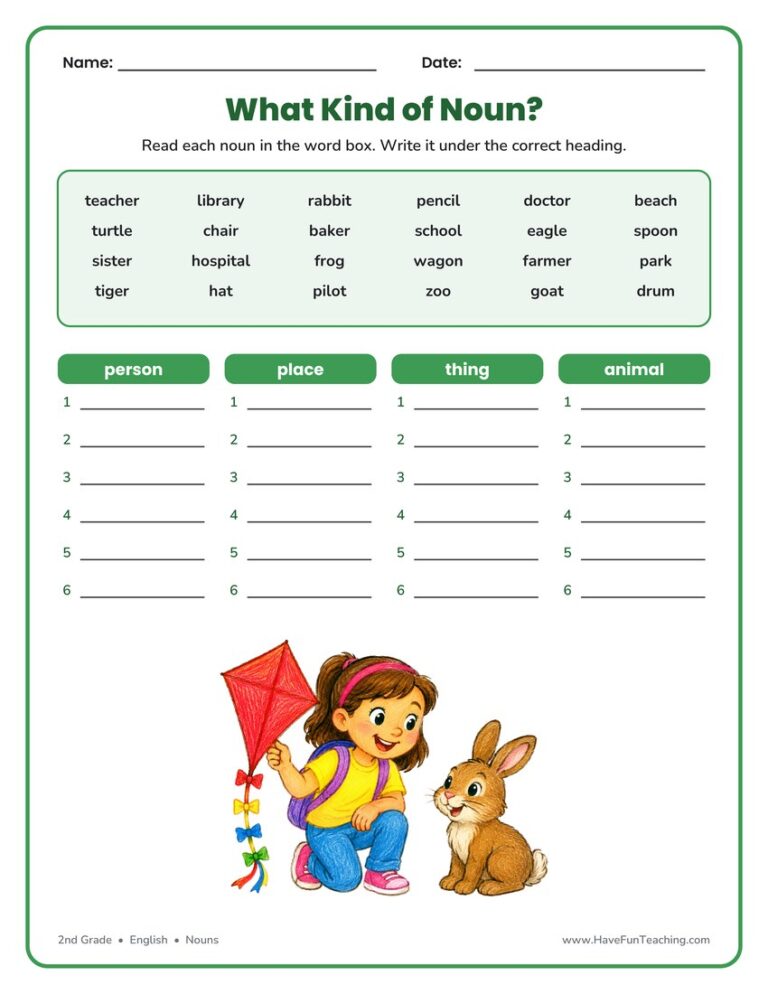
Students sort twenty-four nouns into person, place, thing, and animal categories on this 2nd grade sorting nouns worksheet. Includes a complete answer key for fast, no-prep grammar practice.

This capitalization and end punctuation worksheet gives 2nd graders practice choosing end marks and rewriting sentences with correct capital letters. Includes an answer key to build careful, confident writers.

A Speaking in Complete Sentences Worksheet that helps 2nd graders tell a whole sentence from a fragment, find the naming part, and say and write one about a picture. Answer key included for confident sentence practice.

This finding nouns worksheet asks 2nd graders to circle nine nouns inside a short story, then sort each one under Person, Place, or Thing. Answer key included for quick, no-prep grammar practice.

This Adding Adjectives Worksheet gives 2nd grade students fun practice finding, choosing, and writing describing words in sentences. An answer key is included, so learning to use adjectives feels clear and rewarding.

Reviews
There are no reviews yet