

Comma List Worksheet
This comma list worksheet asks 3rd graders to add the missing commas to six sentences and then write three lists of their own. An answer key is included, so grading takes seconds.
$6.97
Or free with a membership — members pay $3.33/mo for all 10,000+ resources. See plans
Want this one free?
Tell us where to send it and it’s yours — no card, no catch.
One free resource per teacher. We’ll also send free teaching ideas each week — unsubscribe anytime.
Teaching is easier with a membership
Unlimited printables, games & videos for PreK–6th — for your classroom or homeschool. Cancel anytime.
Start your 3-day free trial$0 today · cancel anytime · Instant access to 10,000+ resources
About this resource
Description
A list of three or more things needs commas to keep it clear, and third graders meet that rule everywhere — in the books they read, in the sentences they write, and on every writing test they sit. Without commas, “I packed an apple a sandwich and a cookie” runs together into one long blur. This comma list worksheet gives students focused practice placing commas between the items in a series so their own sentences read the way they mean them to.
The page opens with the rule and a worked example, then gives six sentences that are missing their commas. Students read each sentence, find where one thing ends and the next begins, and add the commas themselves. The lists grow as the page goes on — three items, then four, then a series of verbs instead of nouns — so students cannot fall into a single pattern. The second half asks them to write three lists of their own, which is where the rule stops being a worksheet exercise and starts being their own punctuation. This commas in a series worksheet works well as independent practice, as a grammar warm-up, or as a quick check before a writing assignment.
What’s Included
- 1 print-ready PDF worksheet
- A rule and example box students can refer back to
- Six sentences missing their commas, including a four-item list and a series of verbs
- Three write-your-own list prompts
- A complete answer key
There are three reasons this comma list worksheet helps children learn the skill. First, students supply the punctuation instead of choosing from options, so they have to decide for themselves where one item ends. Second, the mix of three-item lists, a four-item list, and a list of actions shows that the rule is about the series itself, not about a fixed number of words. Third, writing their own lists moves the rule from recognition into production, which is where punctuation errors actually show up in student writing.
Teachers and parents can extend the practice easily. Read a sentence aloud and pause where each comma belongs so children hear the rhythm the punctuation creates. Have students list three things they did over the weekend and trade papers to check each other’s commas. Hunt for lists in a chapter book and mark them with sticky notes. At home, ask your child to write the grocery list as one sentence, commas and all.
Related Resources
What teachers say
Reviews
You must be logged in to post a review.

This Adding Commas in a Series Worksheet gives 3rd graders practice separating list items with commas, spotting misplaced commas, and writing their own list sentence. Answer key included for quick, no-prep grammar practice.
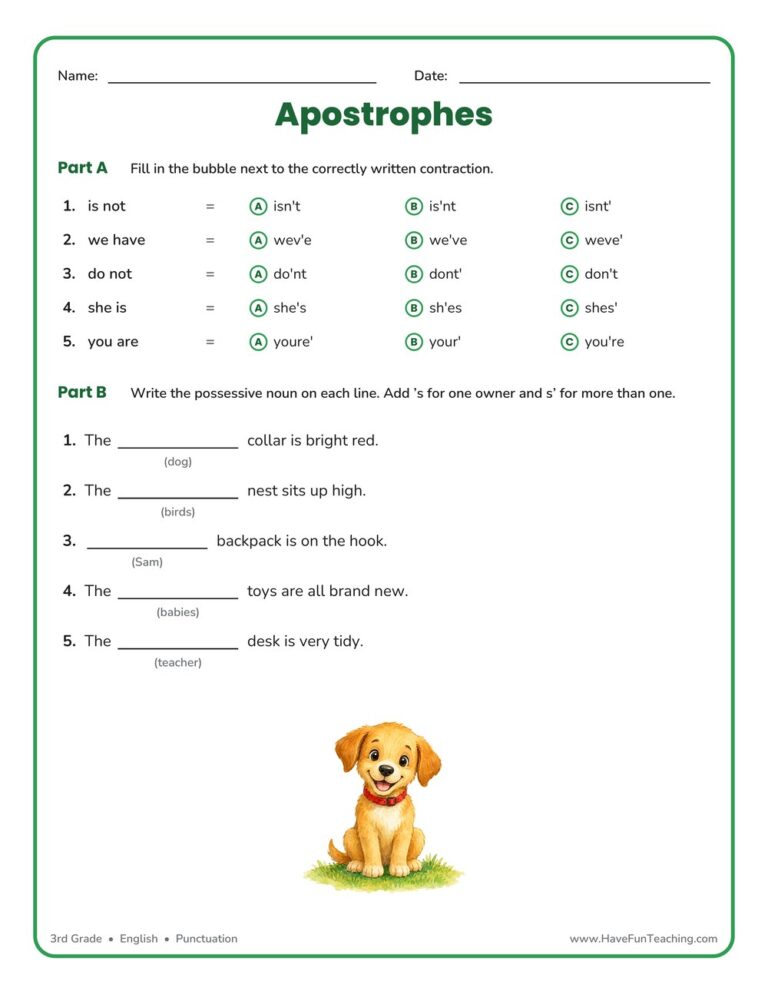
The Possession & Contraction Apostrophe Worksheet gives 3rd graders focused practice using apostrophes for contractions and possessive nouns. Includes a complete answer key — perfect for quick, no-prep punctuation practice.
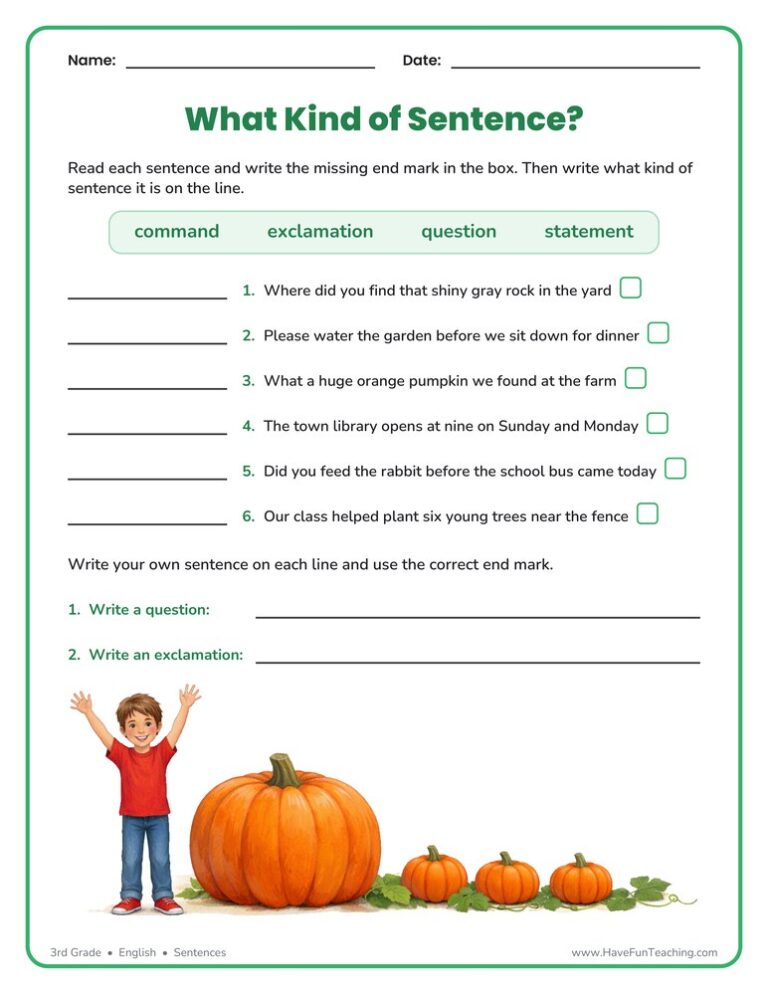
With this What Kind of Sentence? Worksheet, 3rd Grade students add the missing end mark and label each sentence as a statement, question, command, or exclamation. An answer key is included, so practice is quick to check.

This punctuation review worksheet gives 3rd graders six sentences to mark and three to rewrite with commas, quotation marks, and end marks. An answer key is included, so students can check their own editing right away.

This Adding Quotation Marks Worksheet gives 3rd graders six sentences of dialogue to punctuate and three more to write over again with the comma and the marks in place. Answer key included, so practice checks itself.

Practice apostrophes with this Have Contractions Worksheet, a 3rd grade printable where students write and rewrite all eight have contractions in real sentences. An answer key is included.

This quotation mark practice worksheet asks third grade students to rewrite six sentences with the quotation marks put in correctly, then write one of their own. An answer key is included.

This apostrophe possession worksheet gives 3rd grade students practice adding apostrophes to singular and plural owners, moving from a word box to independent writing. An answer key is included.
Using this Writing the Date Activity, students sort the Date Cards and Comma Cards into the correct sequence to show different dates.

Using Punctuation Pow Activity, students read provided sentences and determine which punctuation needs to be included to build their writing skills.

Using Including Punctuation Worksheet, students finish sentences using the correct end punctuation for the sentence type.

Using Quotation Marks Practice Worksheet, students write quotation marks correctly where they belong in each sentence so they can set off a quote or dialogue in their own writing.

Reviews
There are no reviews yet