

Counting within 1000 Worksheet
This counting within 1000 worksheet gives 2nd graders five missing-number strips and two word problems for counting on by ones and skip counting by 5s, 10s, and 100s. Answer key included for fast, no-prep practice.
$6.97
Or free with a membership — members pay $3.33/mo for all 10,000+ resources. See plans
Want this one free?
Tell us where to send it and it’s yours — no card, no catch.
One free resource per teacher. We’ll also send free teaching ideas each week — unsubscribe anytime.
Teaching is easier with a membership
Unlimited printables, games & videos for PreK–6th — for your classroom or homeschool. Cancel anytime.
Start your 3-day free trial$0 today · cancel anytime · Instant access to 10,000+ resources
About this resource
Description
Counting within 1000 is the 2nd grade skill that turns number recognition into real number sense. Students who can count on by ones across a hundred, and skip count by fives, tens, and hundreds, are the students who later add, subtract, and estimate with confidence. This counting within 1000 worksheet gives second graders focused practice with both moves, using number sequences that cross the tricky hundreds boundaries where counting most often breaks down.
This skip counting worksheet is built as five number strips plus two short word problems. In Part A, students study each row, work out whether it counts on by ones or skip counts by fives, tens, or hundreds, and fill in every missing number. Because the step is never printed, finding the pattern is part of the thinking. In Part B, two word problems ask students to continue a count out loud and write the numbers that come next. Print it as a warm-up, a math-center task, a homework page, or a quick check before a unit test.
What’s Included
- 1 print-ready PDF worksheet
- Answer key
- 5 missing-number counting strips and 2 skip counting word problems
There are three reasons this counting within 1000 worksheet helps students learn. First, every strip crosses a hundreds boundary, so students practice the exact spot where counting stalls, such as moving from 299 to 300 or from 699 to 700. Second, mixing counting on with skip counting by fives, tens, and hundreds forces students to notice the pattern instead of reciting a memorized chant. Third, the two word problems move the skill off the number strip and into a real situation, which is how state assessments ask about counting.
Teachers and parents can stretch this skill in fun ways all week. Count laps, stairs, or jumping jacks aloud by tens on the way to recess. Hand a child a stack of coins and count by fives, then by tens, and compare how quickly each count reaches the same total. Play a car game where each rider says the next number in a skip count and the group starts over on a mistake. Write a sequence on a whiteboard with two numbers erased and let the child fill them in, then trade roles so the child writes the puzzle for you.
Related Resources
What teachers say
Reviews
You must be logged in to post a review.
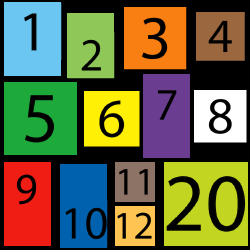
Using the Counting Songs (Classic Video Collection), students practice skip counting by all of the numbers by singing and counting along to these thirteen videos.

A kangaroo-themed Counting to 1000 by Tens and Hundreds Worksheet that helps 2nd graders complete skip-counting patterns by filling in the missing numbers. Answer key included for quick, no-prep math practice.

Using the Counting By Fives Song (Original Music Video), students practice skip counting by 5s by singing and counting along to this fun and engaging video!
Using the Counting By Ones Song (Original Music Video), students practice counting by 1s by singing and counting along to this fun and engaging video!

The Identify Place Value Worksheet gives 2nd Grade students base ten block models, three-digit numbers, and a word problem to break apart into hundreds, tens, and ones. Answer key included, so practice checks itself.

Using the Counting By Twos Song (Original Music Video), students practice skip counting by 2s by singing and counting along to this fun and engaging video!
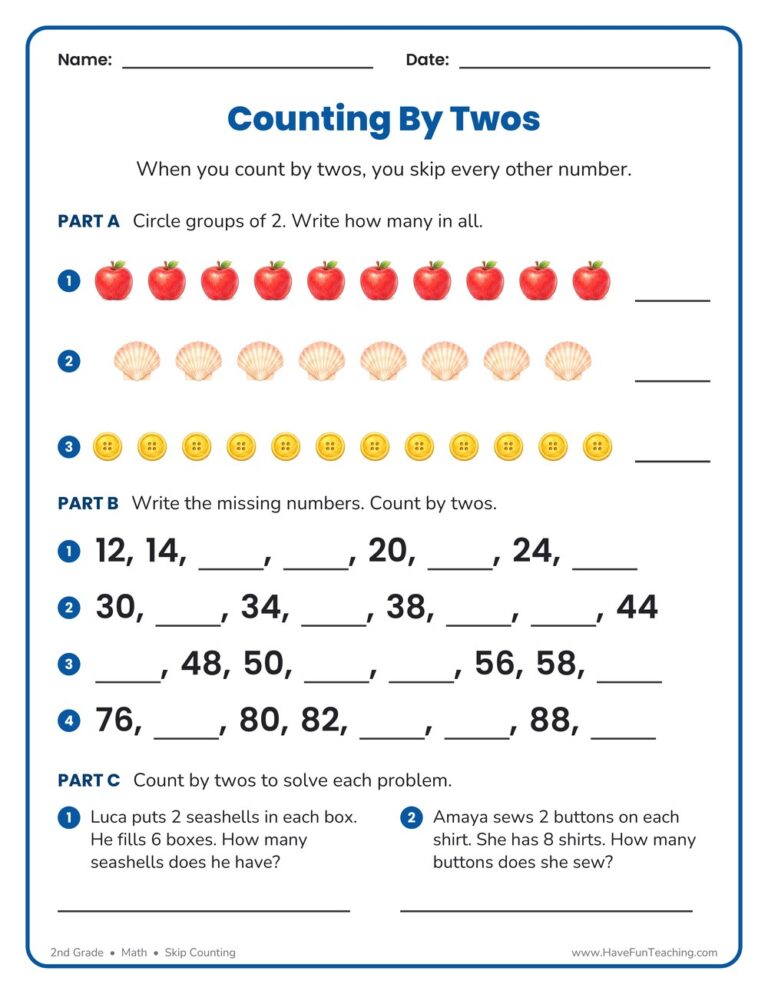
This Counting by Twos Worksheet gives 2nd Grade students hands-on practice grouping objects in pairs and finishing number patterns. An answer key is included, so checking work takes seconds.

Using the Counting By Ones Song, students practice counting by ones to fifty by singing and counting along to this fun and engaging video!
Using the Counting Songs (MP3 Album), students practice skip counting by all of the numbers by singing and counting along to these thirteen songs.
Using theCount to 100 Song (MP3), students practice counting to 100 by singing and counting along to this fun and engaging song!
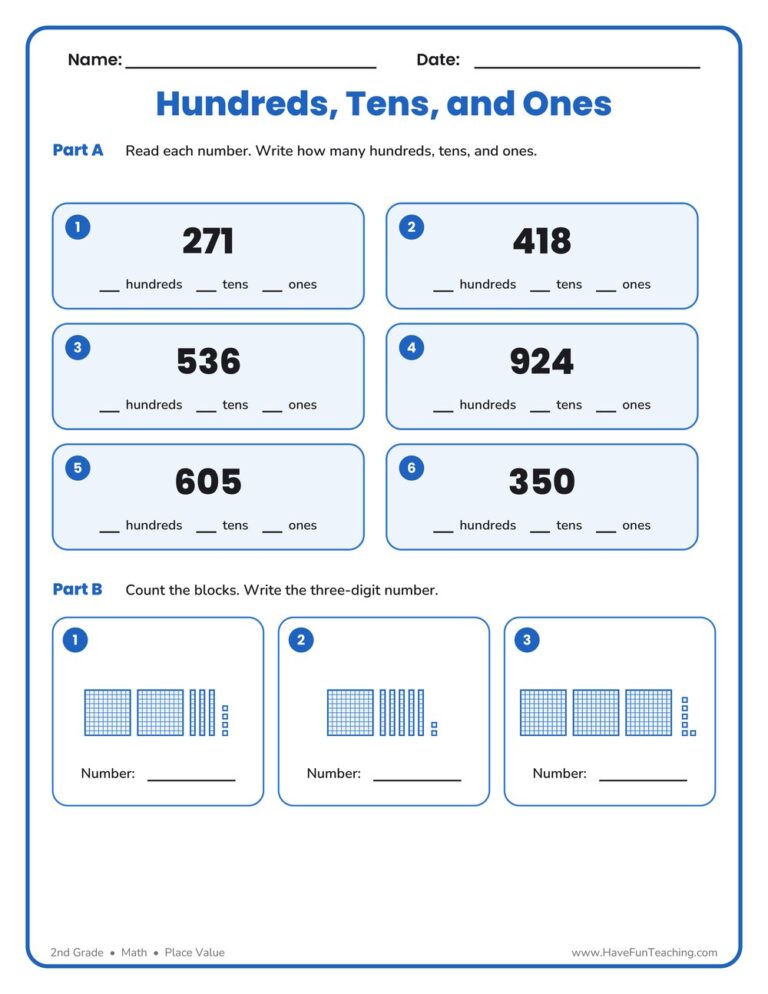
A hundreds tens and ones worksheet where 2nd graders read three-digit numbers and count base-ten blocks to name each digit’s value. Includes an answer key for fast, no-prep place value practice.

This Adding and Subtracting with Number Line Worksheet helps 2nd graders solve addition and subtraction within 100 and mark each answer on a number line. Includes a complete answer key for no-prep math practice.
Reviews
There are no reviews yet