

Fact Families Worksheet
This fact families worksheet has 1st graders write twelve column addition and subtraction facts from three number families within 20. An answer key is included for quick, no-prep checking.
$6.97
Or free with a membership — members pay $3.33/mo for all 10,000+ resources. See plans
Want this one free?
Tell us where to send it and it’s yours — no card, no catch.
One free resource per teacher. We’ll also send free teaching ideas each week — unsubscribe anytime.
Teaching is easier with a membership
Unlimited printables, games & videos for PreK–6th — for your classroom or homeschool. Cancel anytime.
Start your 3-day free trial$0 today · cancel anytime · Instant access to 10,000+ resources
About this resource
Description
A fact family is three numbers that belong together and the four addition and subtraction facts they make. When a first grader sees that 6, 8 and 14 are one family, 14 − 8 stops being a brand-new problem and becomes something she already knows. This fact families worksheet builds that habit the way first graders practice most of their math: in column form, with the numbers stacked over an equation bar and the answer written underneath.
Each of the three boxes on the page shows one family in three circles on the left. Beside them are four empty column problems, two with a plus sign and two with a minus sign. The child writes all three numbers in every problem, so the job is not just finding a sum — it is deciding which number goes on top, which goes second, and which is the answer. The families stay within 20, and two of them cross ten, which makes this solid 1st grade fact families practice. Use it for morning work, in a math center, as homework, or as a quick check. Page two is a complete answer key.
What’s Included
- 1 print-ready PDF worksheet
- 3 fact families with 12 column facts to write
- Answer key
Here are three reasons this page helps. First, writing both addition facts side by side (6 + 8 and 8 + 6) shows a child that order does not change the sum. Second, the two subtraction facts sit in the same box, so a child learns to use a sum she knows to solve a subtraction problem, which is the heart of fluency within 20. Third, the column form gives early practice lining numbers up over an equation bar, a skill that pays off when two-digit addition arrives.
Away from the page, build the families with real objects. Give your child 14 counters, split them into 6 and 8, and say all four facts out loud before writing. Hide one of the three numbers with a sticky note and ask what is missing. Roll two dice, add them, and name the family the three numbers make. A fact families worksheet like this one also gives you a quick, honest read on which children still count on their fingers.
Related Resources
What teachers say
Reviews
You must be logged in to post a review.
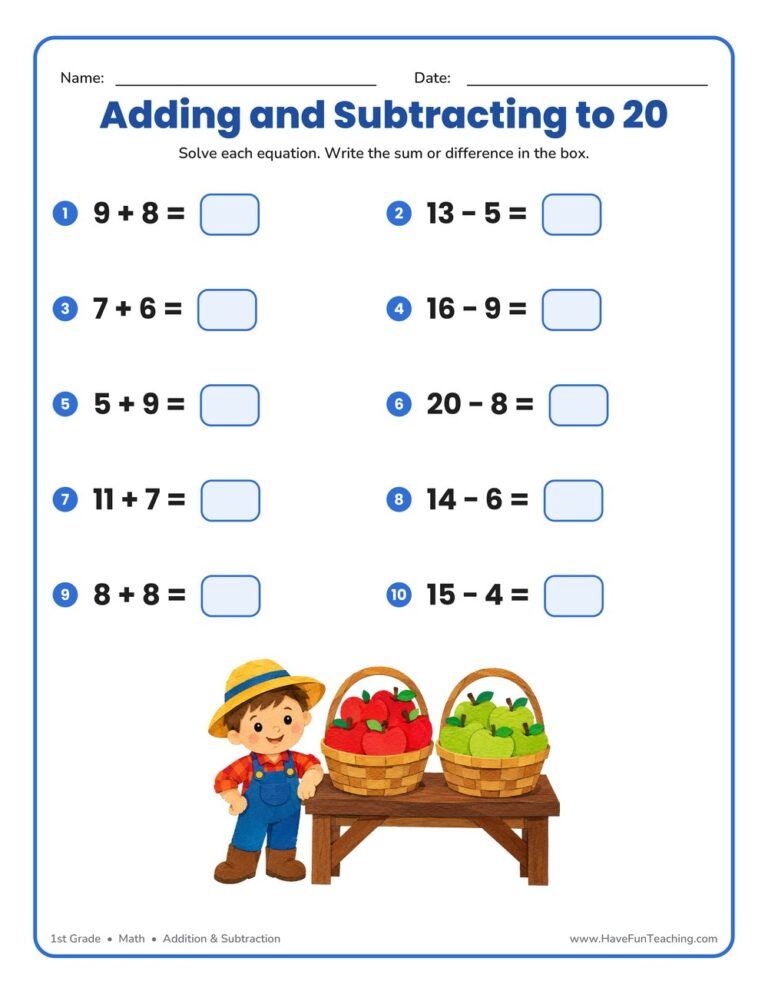
This adding and subtracting to 20 worksheet gives 1st graders ten mixed addition and subtraction equations to solve within 20. Answer key included — perfect for quick, no-prep math fact practice at home or school.

This adding and subtracting within 20 worksheet gives first graders mixed addition and subtraction fact practice with a helpful number line. Includes a complete answer key for quick, no-prep math review.
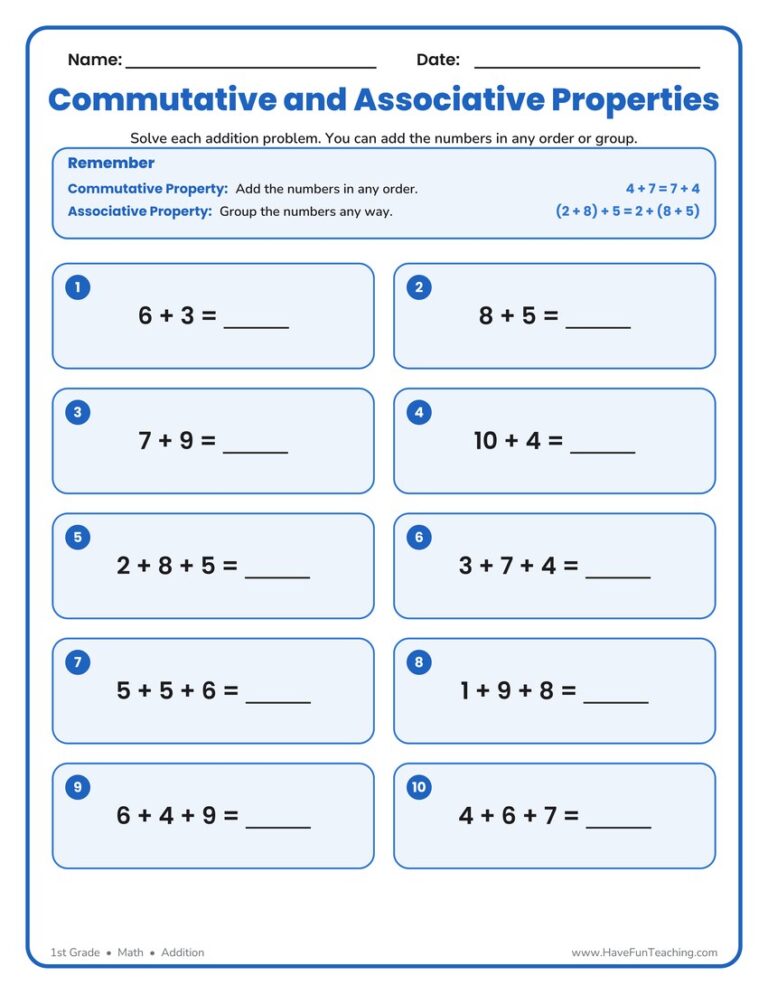
A first-grade commutative and associative properties worksheet where students solve ten addition problems by adding the numbers in any order or group. Includes an answer key and a handy reminder box for no-prep math practice.

This counting on to add worksheet helps 1st graders start from the bigger number and count forward on a number line to twenty. An answer key is included, so checking work takes seconds.
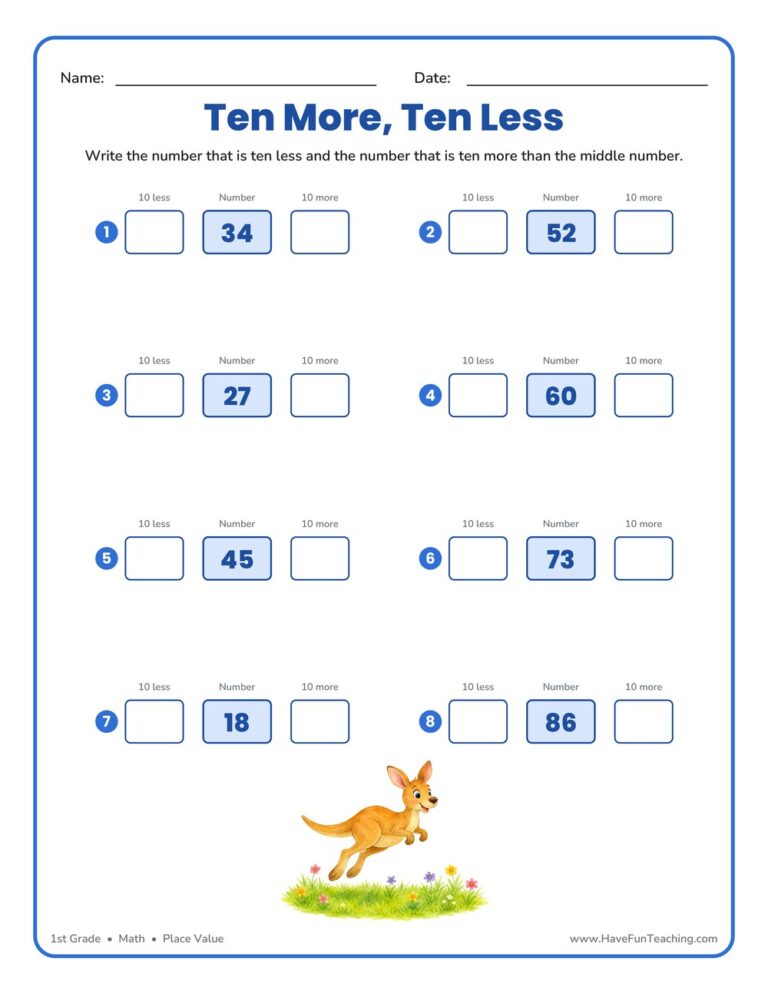
This Ten More Ten Less Worksheet gives 1st graders eight quick problems to find ten more and ten less than a two-digit number. Includes an answer key for fast, no-prep place value practice.

This Adding In Any Order Worksheet helps 1st graders see that 3 + 4 and 4 + 3 always match, using picture groups first and quick fact flips second. Answer key included, so practice takes minutes to check.

This Adding 3 Whole Numbers Within 20 Worksheet gives 1st graders twelve problems to practice adding three single-digit numbers for sums up to 20. Includes a complete answer key for fast, no-prep addition practice.

This finding the missing number worksheet gives first graders focused practice solving for the unknown number in addition and subtraction equations within 20. Includes an answer key — a quick, no-prep way to build number sense and fact fluency.
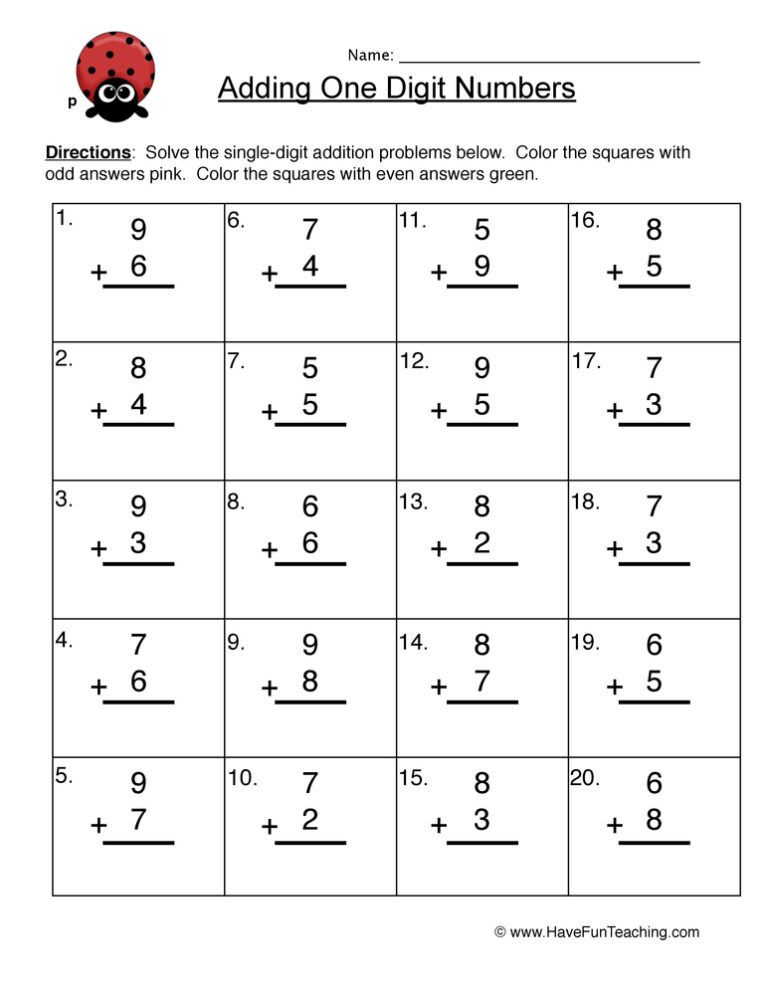
This single digit addition problems worksheet gives 1st graders twelve column facts to 18 plus an illustrated bird word problem. Answer key included, so students build fact fluency with no prep for you.

This Adding to Solve Subtraction Problems Worksheet helps 1st graders solve subtraction facts within 20 by finding the missing addend. Six paired problems and a story problem, with an answer key included, build quick and confident fact fluency.
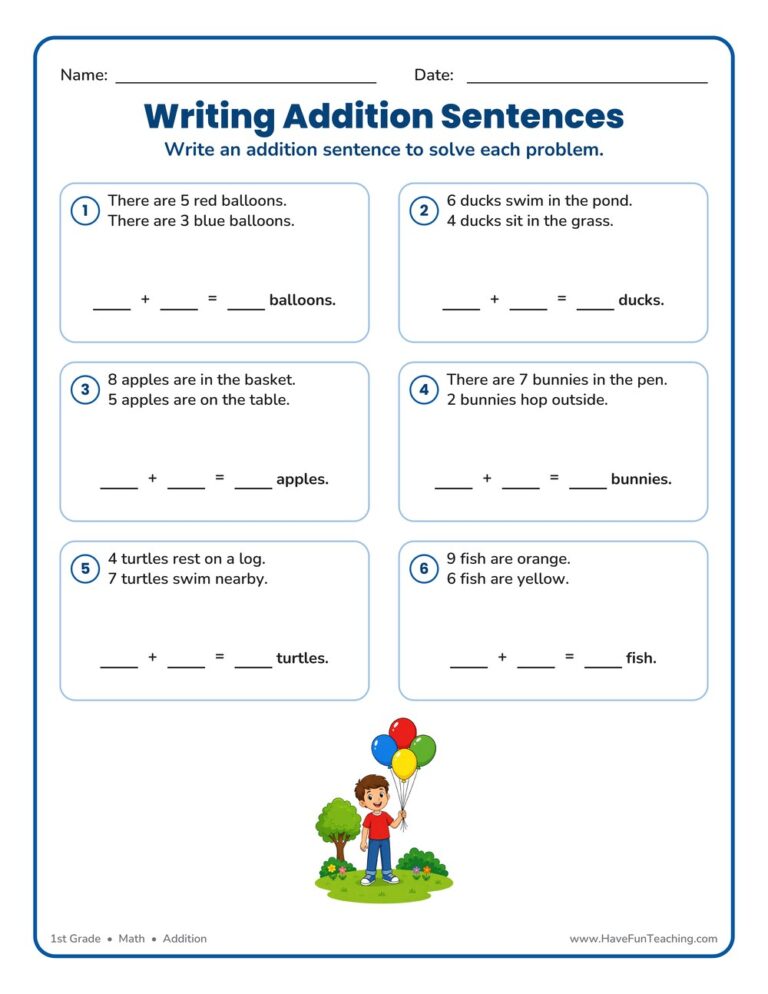
This writing addition sentences worksheet gives 1st graders six picture-friendly word problems to solve by filling in each addition number sentence. Answer key included — perfect for no-prep addition practice at home or in class.

This Adding Word Problems with 3 Numbers Worksheet helps 1st graders add three single-digit numbers using fun story problems about ducks, apples, and more. Includes a complete answer key for quick, no-prep addition practice.

Reviews
There are no reviews yet