

First Grade Sight Words Bingo
This First Grade Sight Words Bingo puts 24 Dolch words in a 5 x 5 grid with a free centre square. Call the words, colour the boxes, and turn sight word drill into a game 1st graders ask to play.
$6.97
Or free with a membership — members pay $3.33/mo for all 10,000+ resources. See plans
Want this one free?
Tell us where to send it and it’s yours — no card, no catch.
One free resource per teacher. We’ll also send free teaching ideas each week — unsubscribe anytime.
Teaching is easier with a membership
Unlimited printables, games & videos for PreK–6th — for your classroom or homeschool. Cancel anytime.
Start your 3-day free trial$0 today · cancel anytime · Instant access to 10,000+ resources
About this resource
Description
Sight words are the words a reader is meant to know on sight, without sounding them out, and the first grade Dolch list is where that automatic reading really takes hold. Words like again, could, every and know break the phonics rules a child has just learned, so they have to be met over and over until they are instant. This First Grade Sight Words Bingo turns that repetition into a game the whole class wants to play.
This 1st grade sight words activity is a one-page, no-prep board. Twenty-four first grade Dolch words sit in a five by five grid with a free star square in the middle, printed large enough for a beginning reader to take in at a glance. Call a word, let students hunt for it and colour the box, and keep going until someone has five in a row. Then challenge the winner to read every word they coloured back to you, which is where the real practice happens.
What’s Included
- 1 print-ready PDF bingo board
- 24 first grade Dolch sight words in a 5 x 5 grid
- A free star square in the centre
- A name line for the player
There are three reasons this First Grade Sight Words Bingo builds real reading fluency. First, a game gives a child a reason to look at the same word many times in a row, and repetition is the only thing that makes a sight word automatic. Second, hearing the word and then finding it in print ties the sound to the spelling, which is exactly the link a struggling reader is missing. Third, reading the coloured words back out loud at the end turns a listening game into a speaking one, so you hear who still hesitates and on which words.
Teachers and parents can stretch this board a long way. Play it as a small-group warm up while the rest of the class reads, or send it home with a list of the words for a family game. Ask students to use three of the words they coloured in a spoken sentence before they call bingo. Cover the squares with counters instead of crayon so the board can be played again tomorrow, or have children write the words they missed on the back and practise those first next time.
Related Resources
What teachers say
Reviews
You must be logged in to post a review.

While working with our Sight Words Coloring Pages Workbook, your students will color the sight word using their favorite colors. They will then practice
The Sight Word Songs Volume 1 (MP3 Album) will help students recognize 22 sight words as they are repeated, spelled, and used in sentences put to a catchy tune.

The I Song (Animated Music Video) will help students recognize the sight word I when it is repeated, spelled, and used in sentences put to a catchy tune.

The THE Song (Animated Music Video) will help students recognize the sight word THE when it is repeated, spelled, and used in sentences put to a catchy tune.

The ASK Song (Animated Music Video) will help students recognize the sight word ASK in a snap to build reading speed and and fluency while watching this fun video!
The FOR Song (MP3) will help students recognize the sight word FOR when it is repeated, spelled, and used in sentences put to a catchy tune.
The ALWAYS Song (Animated Music Video) will help students recognize the sight word ALWAYS in a snap to build reading speed and and fluency while watching this fun video!
The BRING Song (MP3) will help students recognize the sight word BRING when it is repeated, spelled, and used in sentences put to a catchy tune.

The FOR Song (Animated Music Video) will help students recognize the sight word FOR in a snap to build reading speed and and fluency while watching this fun video!

The ABOUT Song (Animated Music Video) will help students recognize the sight word ABOUT when it is repeated, spelled, and used in sentences put to a catchy tune.

The IS Song (Animated Music Video) will help students recognize the sight word IS when it is repeated, spelled, and used in sentences put to a catchy tune.
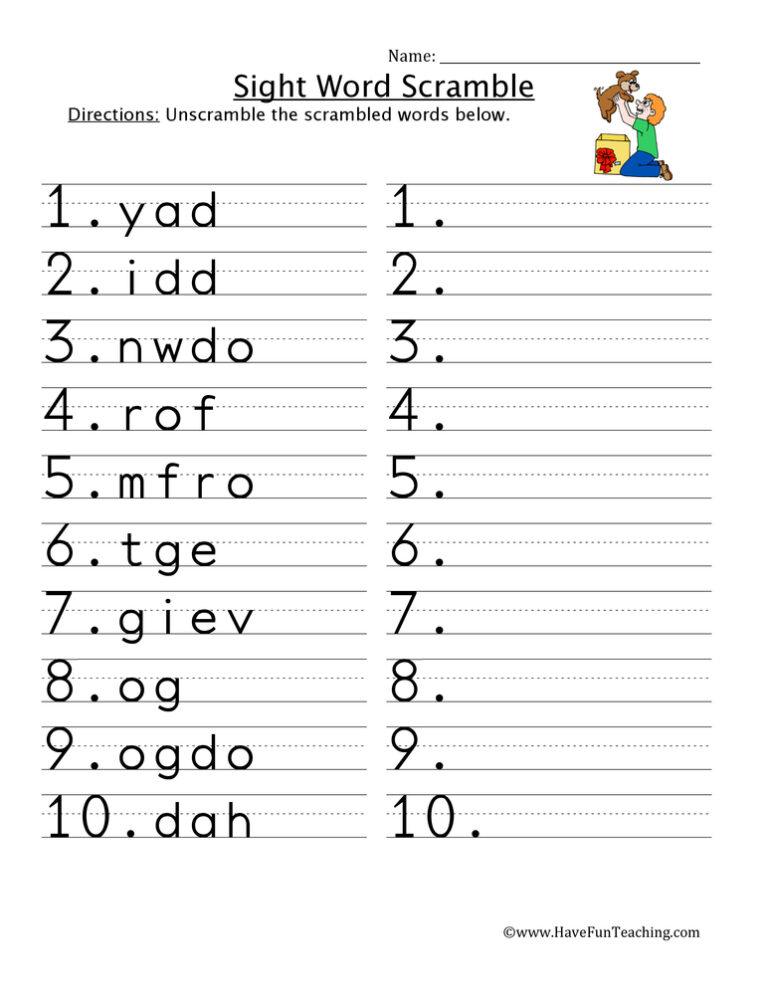
This Scrambled Sight Word Worksheet asks 1st Grade students to unscramble six first-grade sight words and use them to finish sentences. An answer key is included, so word recognition practice takes no prep at all.
Reviews
There are no reviews yet