

Fruits and Vegetables – Reading Comprehension Worksheet
This Fruits and Vegetables Reading Comprehension Worksheet gives 4th grade readers a two-page article on what really makes a food a fruit, plus questions and a full answer key. Great practice for building reading stamina.
$6.97
Or free with a membership — members pay $3.33/mo for all 10,000+ resources. See plans
Want this one free?
Tell us where to send it and it’s yours — no card, no catch.
One free resource per teacher. We’ll also send free teaching ideas each week — unsubscribe anytime.
Teaching is easier with a membership
Unlimited printables, games & videos for PreK–6th — for your classroom or homeschool. Cancel anytime.
Start your 3-day free trial$0 today · cancel anytime · Instant access to 10,000+ resources
About this resource
Description
Reading comprehension is the skill of pulling meaning out of a text, holding on to it, and using it to answer a question in your own words. This Fruits and Vegetables Reading Comprehension Worksheet gives 4th grade students an informational passage about a question kids really do argue about: is a tomato a fruit or a vegetable? Students read a two-page article that explains how a botanist sorts food by where it grew on the plant, and how a cook sorts the very same food by the way it tastes on the plate.
This 4th grade reading comprehension worksheet is a print-and-go set of four pages. Pages one and two hold the illustrated passage, page three holds the questions, and the final page is the complete answer key. Use it as a guided reading passage, an independent literacy center, a homework page, or a quick assessment before a unit on plants or healthy eating. Students read the article once for the story, then a second time with a pencil in hand, marking the sentences that answer each question.
What’s Included
- 1 print-ready PDF worksheet
- Answer key
- A two-page illustrated passage, 3 multiple-choice questions, 6 fruit-or-vegetable sorting items, and 1 written-response prompt
This Fruits and Vegetables Reading Comprehension Worksheet helps students in three ways. First, it builds reading stamina, because a two-page informational passage asks readers to hold ideas in mind across more than one page. Second, it teaches vocabulary in context: words like produce, fiber, and botanist are each defined inside the sentence that introduces them, so students practice the exact move reading assessments measure. Third, the sorting section moves students past simple recall and into application, since they have to take the rule from the passage and use it on six foods the article never labels for them.
Teachers and parents can stretch this lesson well past the page. Bring in a cucumber, a bell pepper, and a carrot, let students slice them open to hunt for seeds, and sort the pile into two groups on the table. Walk through the produce aisle together and have kids point out three surprising fruits. Start a color chart on the refrigerator and let children check off a new color each day for a week. Stronger readers can write a short paragraph arguing the cook’s side of the tomato debate, supported with evidence from the passage.
Related Resources
What teachers say
Reviews
You must be logged in to post a review.
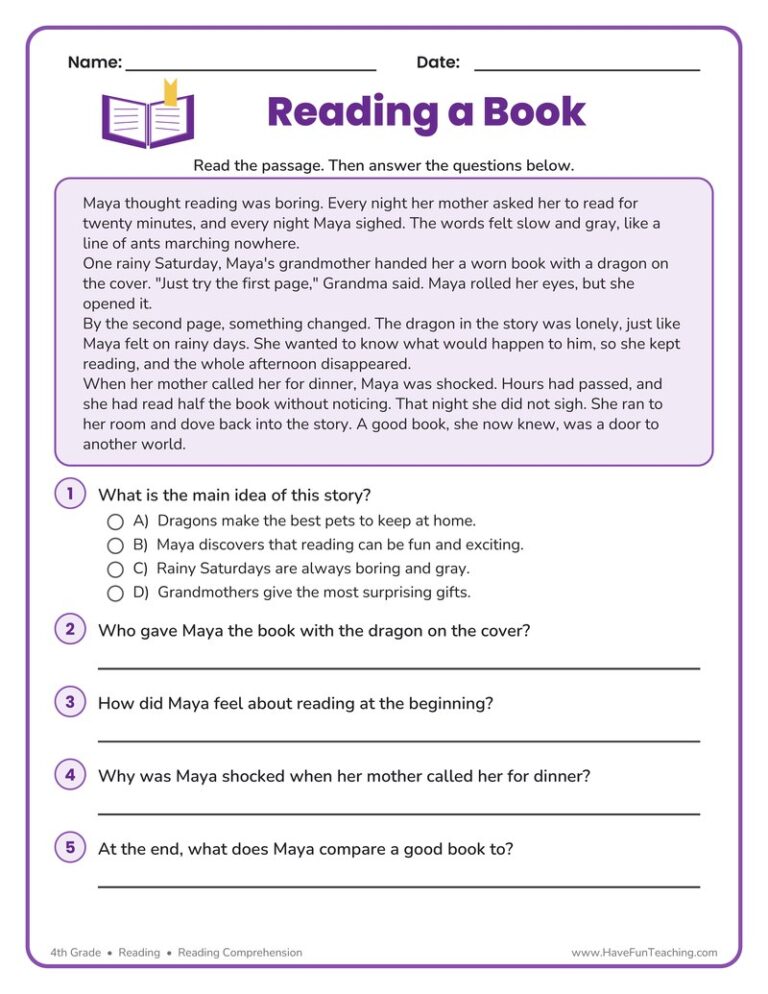
A Reading a Book Reading Comprehension Worksheet that helps 4th graders read a fun story about a girl who learns to love reading, then answer multiple-choice and short-answer questions. Includes a complete answer key for quick, no-prep practice.
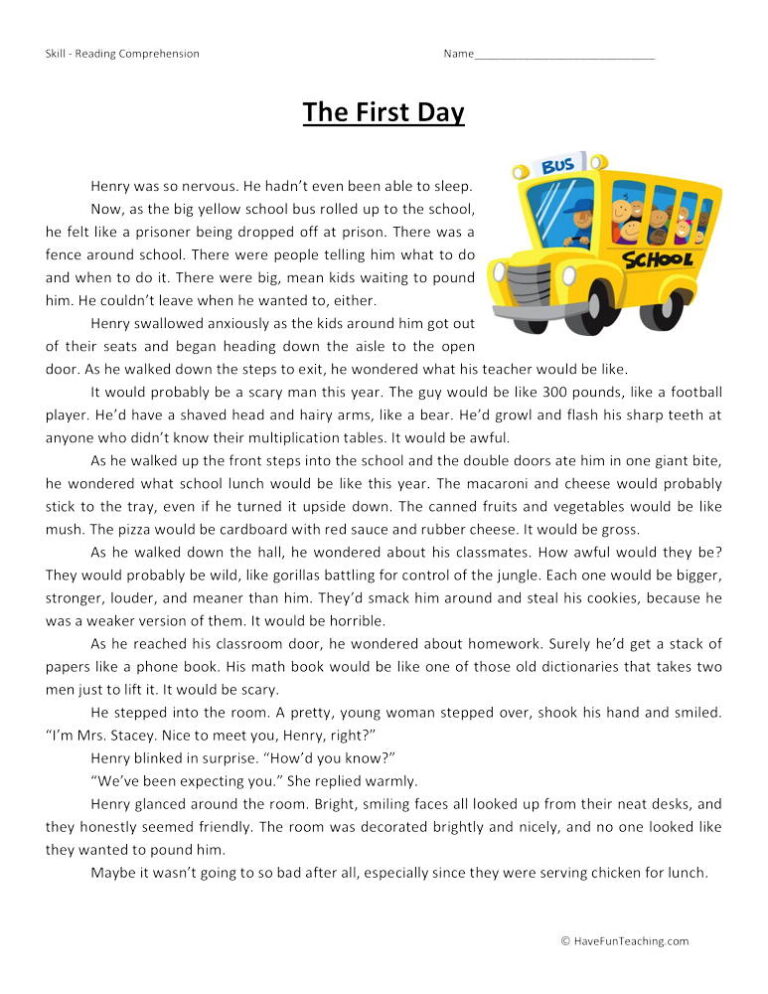
The First Day Reading Comprehension Worksheet follows a nervous new student through his first day of 4th grade, then asks readers to prove each answer with evidence from the text. Answer key included, ideal for the first week of school.

This exercising health and fitness reading comprehension worksheet gives 4th graders an illustrated nonfiction passage about exercise plus multiple-choice and written questions. Answer key included for fast, no-prep reading practice at home or in class.
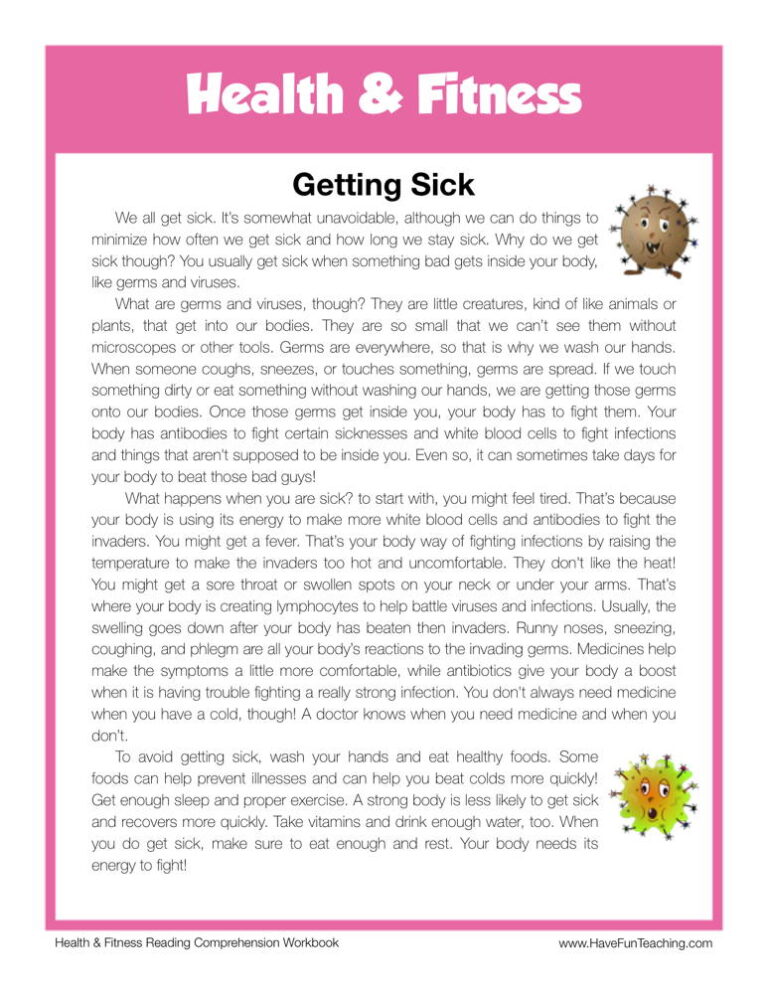
This Getting Sick Health and Fitness Reading Comprehension Worksheet gives 4th graders a non-fiction passage about germs and the immune system, plus main idea, vocabulary, and written-response questions. Answer key included for quick, no-prep practice.
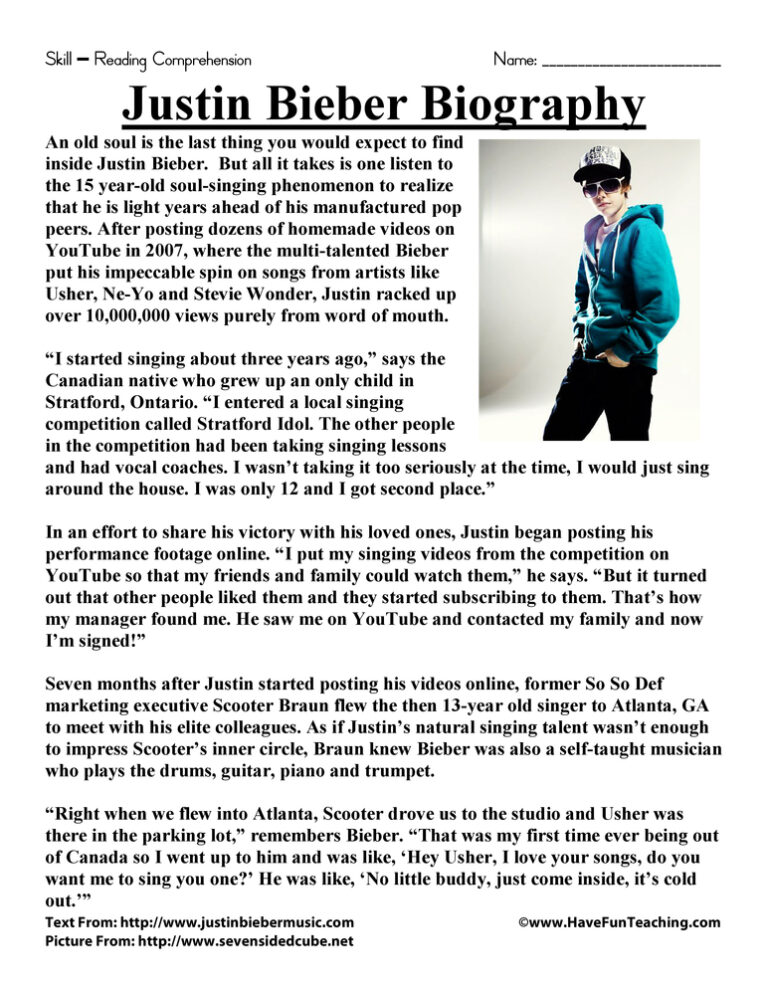
This Justin Bieber Biography Reading Comprehension Worksheet will help your students build their reading comprehension skills while reading a biography about Justin Bieber.

An original fiction story about a laptop that dies the night before a big report is due. This My Computer Died Reading Comprehension Worksheet builds 4th grade text-evidence skills, and a complete answer key is included.

The Eating Healthy Health and Fitness Reading Comprehension Worksheet gives 4th graders a nonfiction passage about nutrition plus five questions to answer. An answer key is included, making it perfect for no-prep reading and health practice.
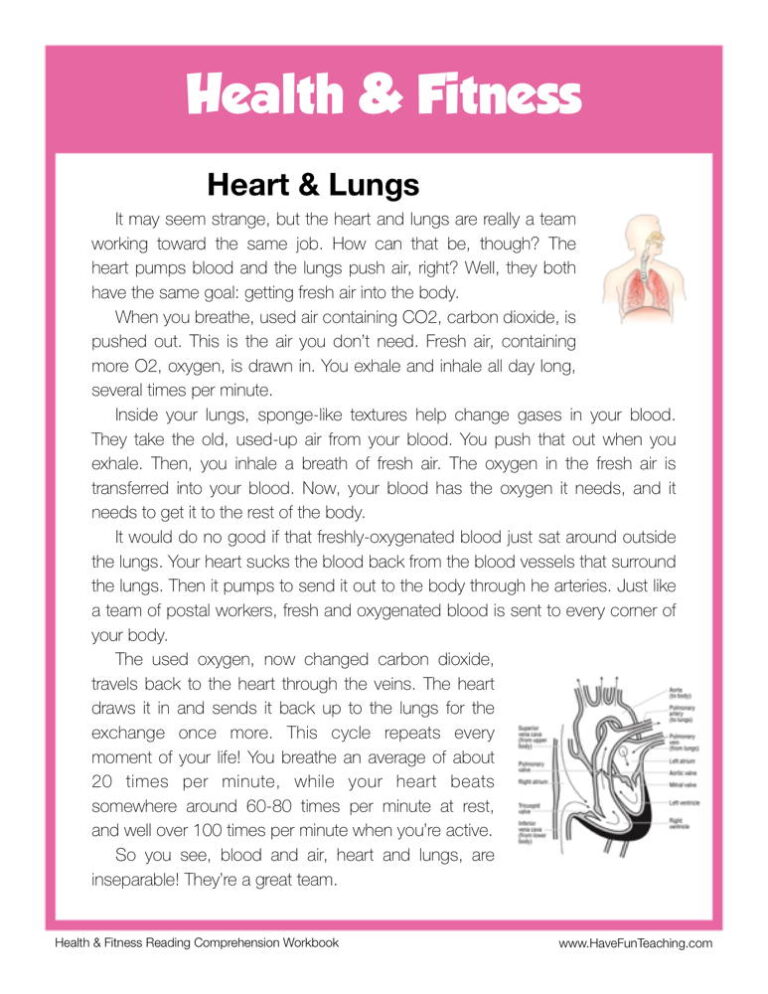
Build informational reading skills with this Heart and Lungs Health and Fitness Reading Comprehension Worksheet. Fourth graders read a two-page science passage, then answer questions about it. An answer key is included, so checking work takes seconds.
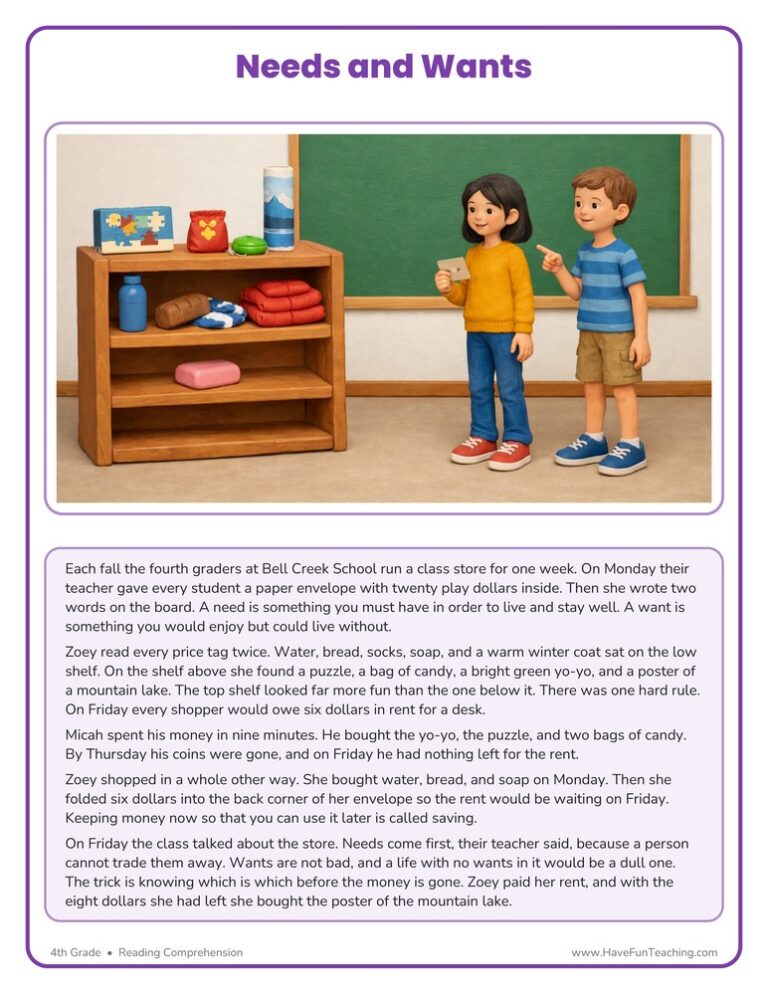
A needs and wants reading comprehension worksheet for 4th grade: read a short story about a classroom store, then answer bubble and written-response questions. Answer key included, so students can check their own evidence.
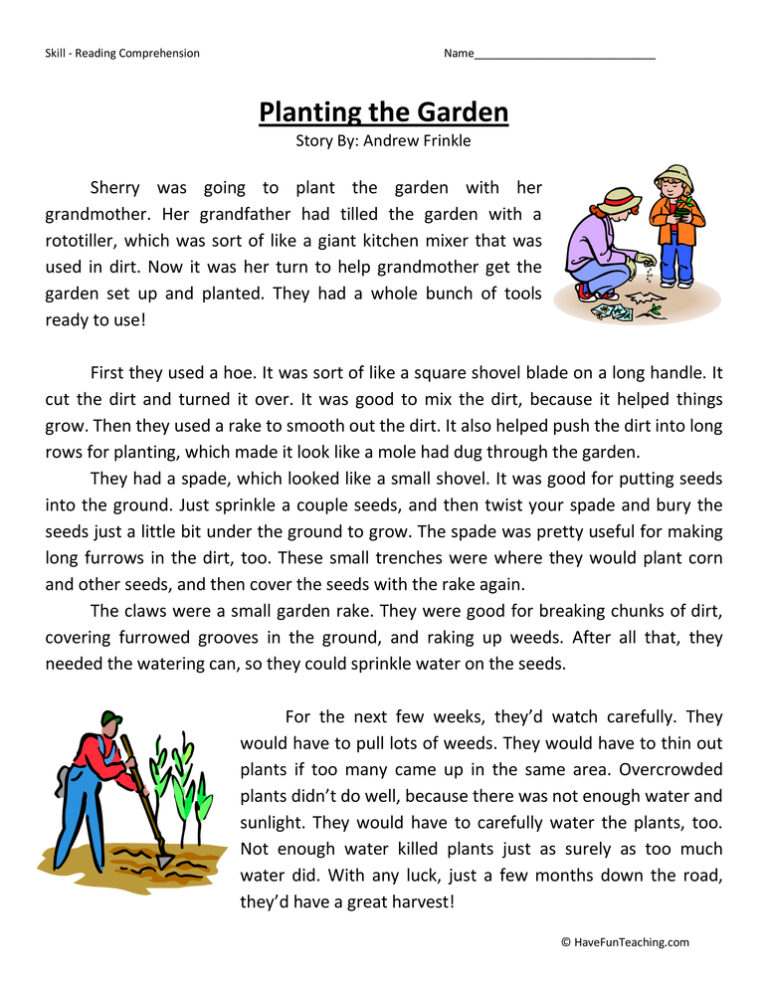
A Planting Gardens Reading Comprehension Worksheet for 4th grade, built around an original garden story with multiple-choice, sequencing, and written-response questions. Answer key included for fast, no-prep comprehension practice.
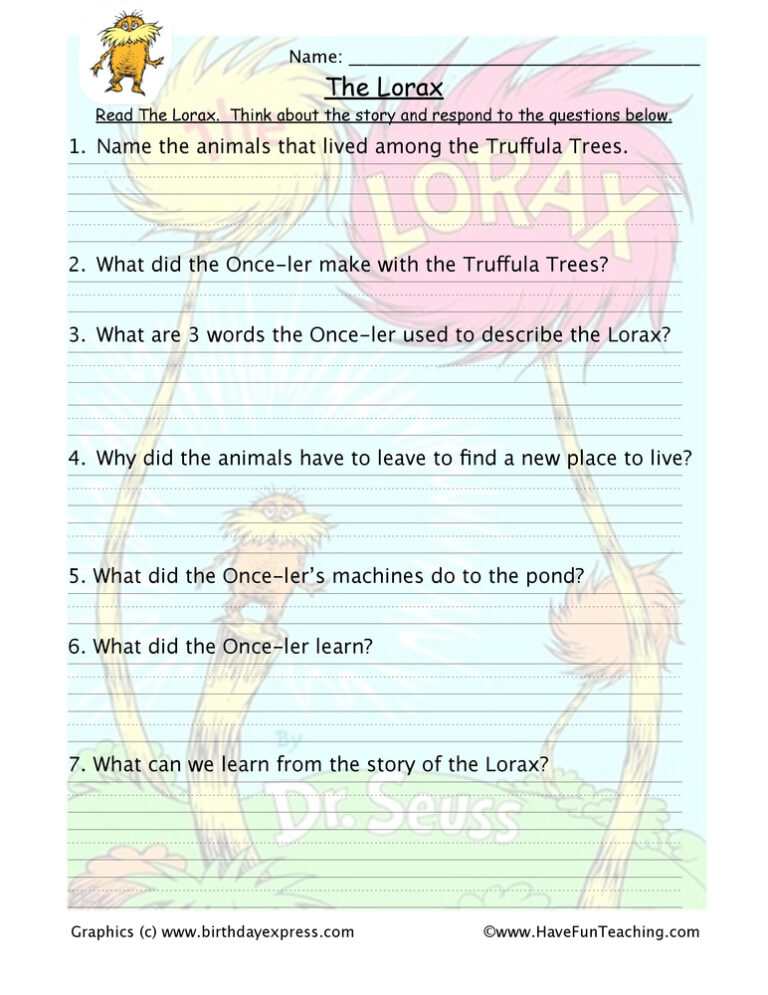
Using The Lorax Reading Comprehension Worksheet, students read and then answer questions using support from The Lorax.
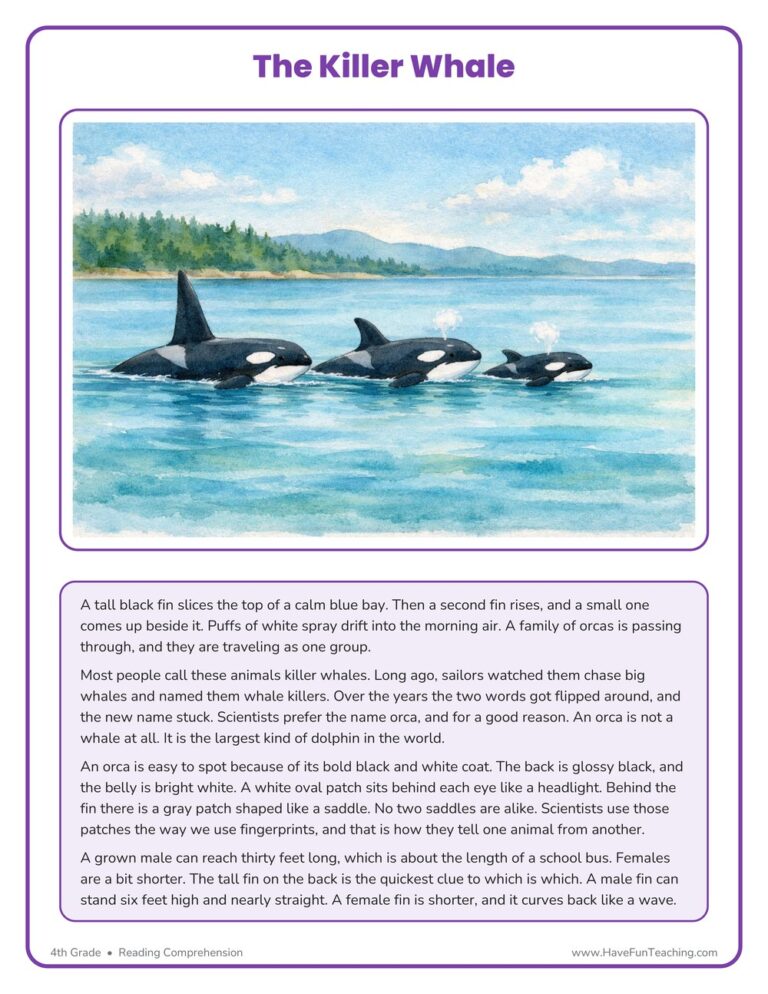
This Killer Whales Reading Comprehension Worksheet gives 4th grade students a two-page nonfiction passage about orcas plus six text-evidence questions. Answer key included, so learning about the ocean stays easy to check.




Reviews
There are no reviews yet